117.98g. 65mm. UNC/UNC. Galvano (Electrotype). Sold as seen, no returns.
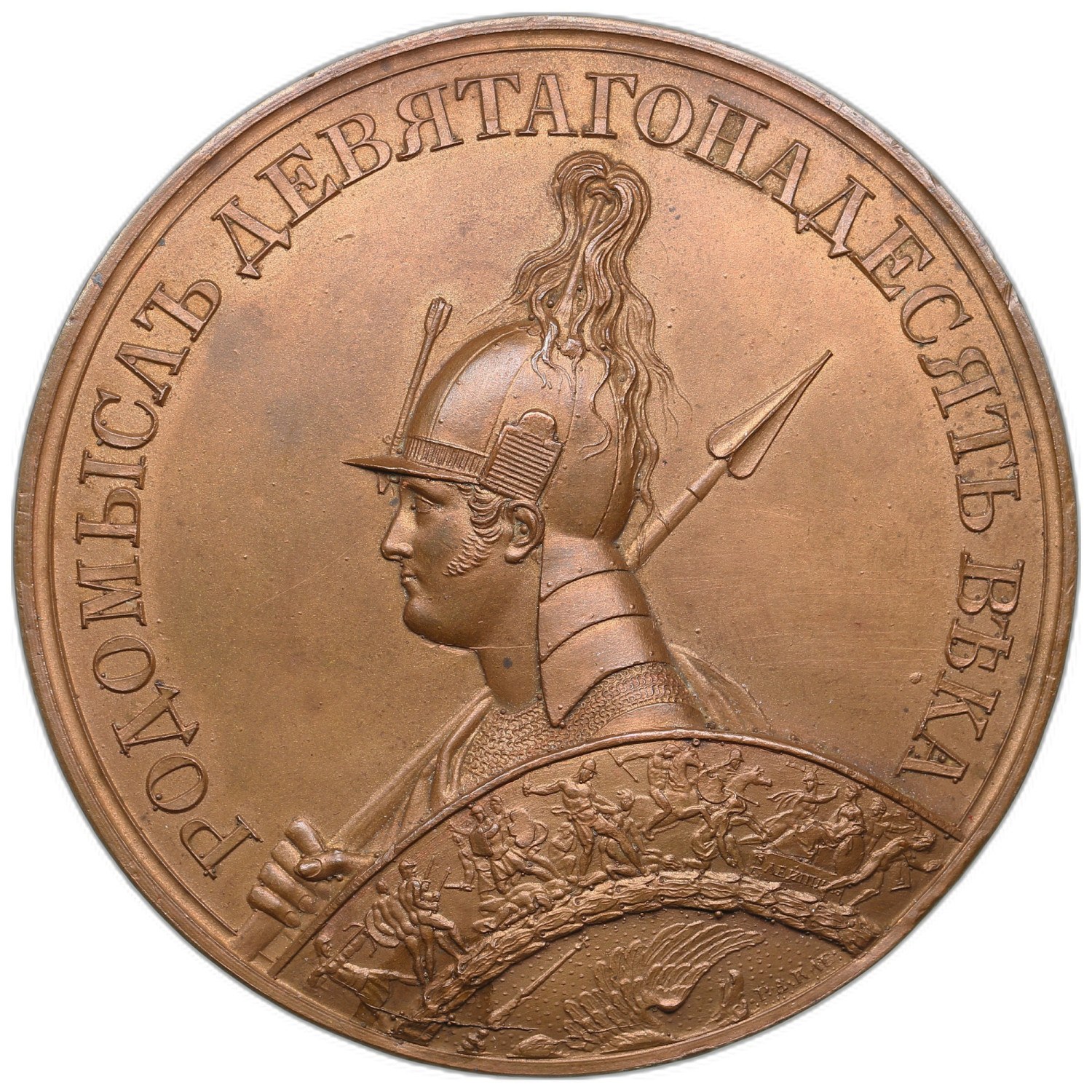
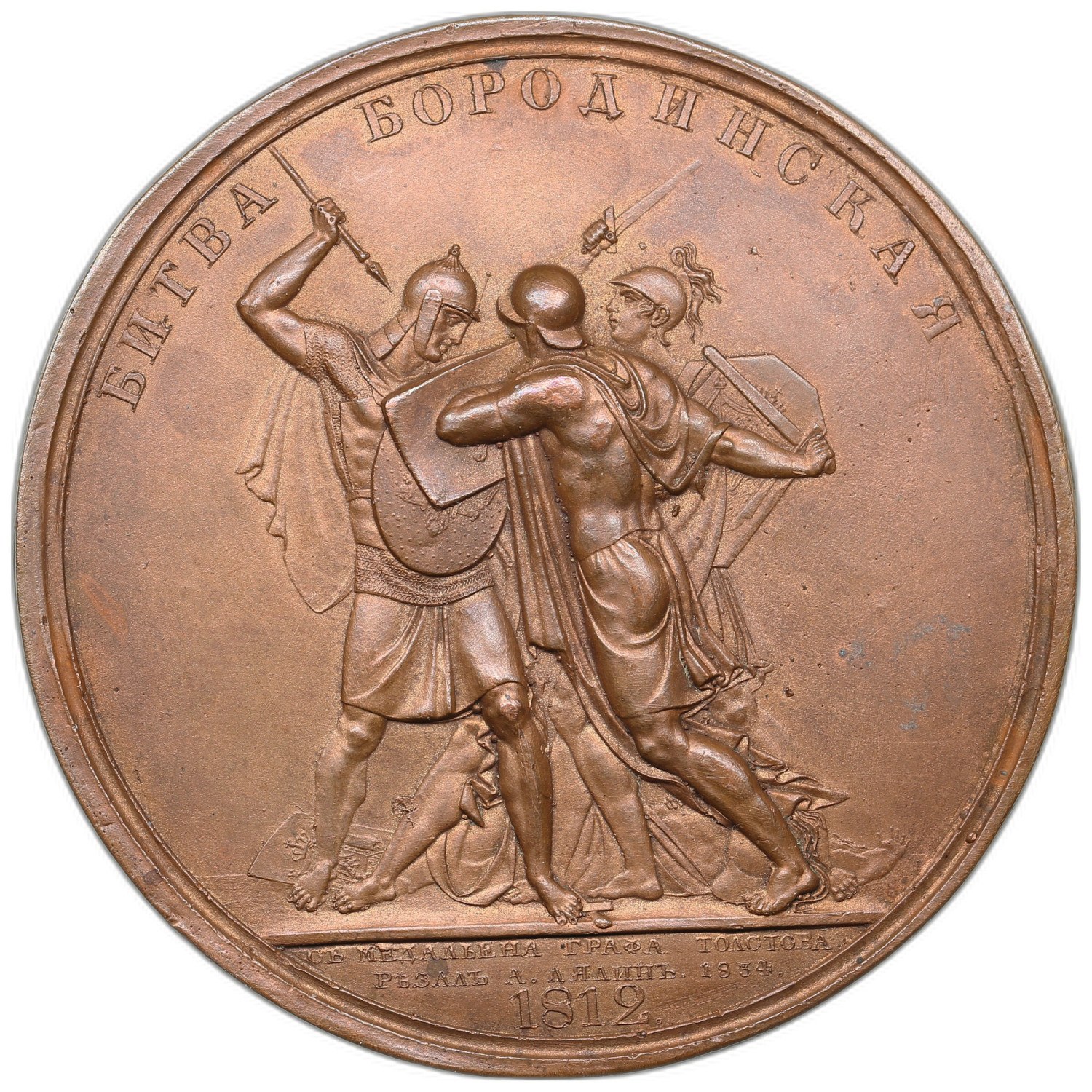
Medaliers: A. Klepikov (Р . А . КЛЕ : below the obverse); A. Lyalin (РѢЗАЛЪ А . ЛЯЛИНЪ . 1834 . below the reverse).
Diakov 1763 R1.
Obv.: Emperor Alexander I represented as Rodomysl, wearing a Slavic helmet and chainmail, holding a spear in his right hand and a shield in his left. The shield bears the Russian Imperial eagle within a laurel wreath and, around its edge, a detailed representation of the Battle of Leipzig, including a seated female figure beside a shield inscribed 1813. ЛЕЙПЦИГЪ, fleeing and fighting warriors, mounted figures and fallen soldiers. Inscription around:
РОДОМЫСЛЪ ДЕВЯТАГОНАДЕСЯТЬ ВѢКА .
(Rodomysl of the Nineteenth Century).
Rev.: Russian warrior armed with a spear and oval shield bearing the double-headed eagle defending himself against two attacking enemies, while a third defeated warrior lies on the ground, with inscription above:
БИТВА БОРОДИНСКАЯ .
(Battle of Borodino).
Below:
СЪ МЕДАЛЬЕНА ГРАФА ТОЛСТОВА . / РѢЗАЛЪ А . ЛЯЛИНЪ . 1834 . / 1812 .
(From the medallion by Count Tolstoy / Engraved by A. Lyalin, 1834 / 1812).
The Battle of Borodino was fought on 7 September 1812 between the Russian army under Mikhail Kutuzov and Napoleon’s Grande Armée during the French invasion of Russia. It was one of the largest and bloodiest single-day battles of the Napoleonic Wars. Although the Russian army subsequently withdrew and Napoleon entered Moscow, the battle failed to destroy the Russian forces and became a central symbol of Russian resistance during the campaign of 1812.