48.59g. 63mm. AU/AU. Galvano (Electrotype). Sold as seen, no returns.
Medalier: Johann Balthasar Gass (G • above the exergue on the reverse, to the left).
Diakov 194.7 (for prototype).
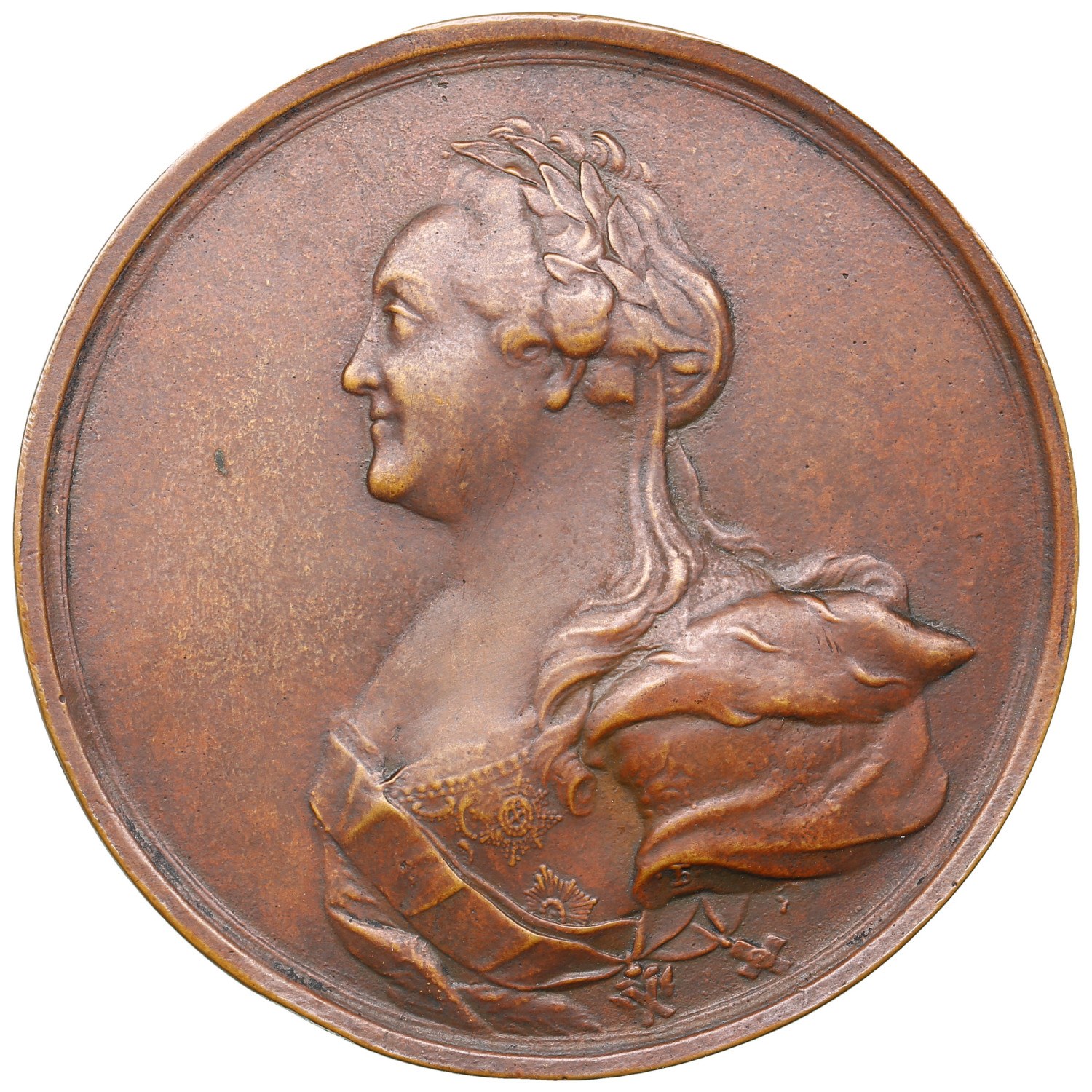
Obv.: Left-facing bust of Catherine II wearing a laurel wreath, with the engraver's initials on the truncation of the arm.
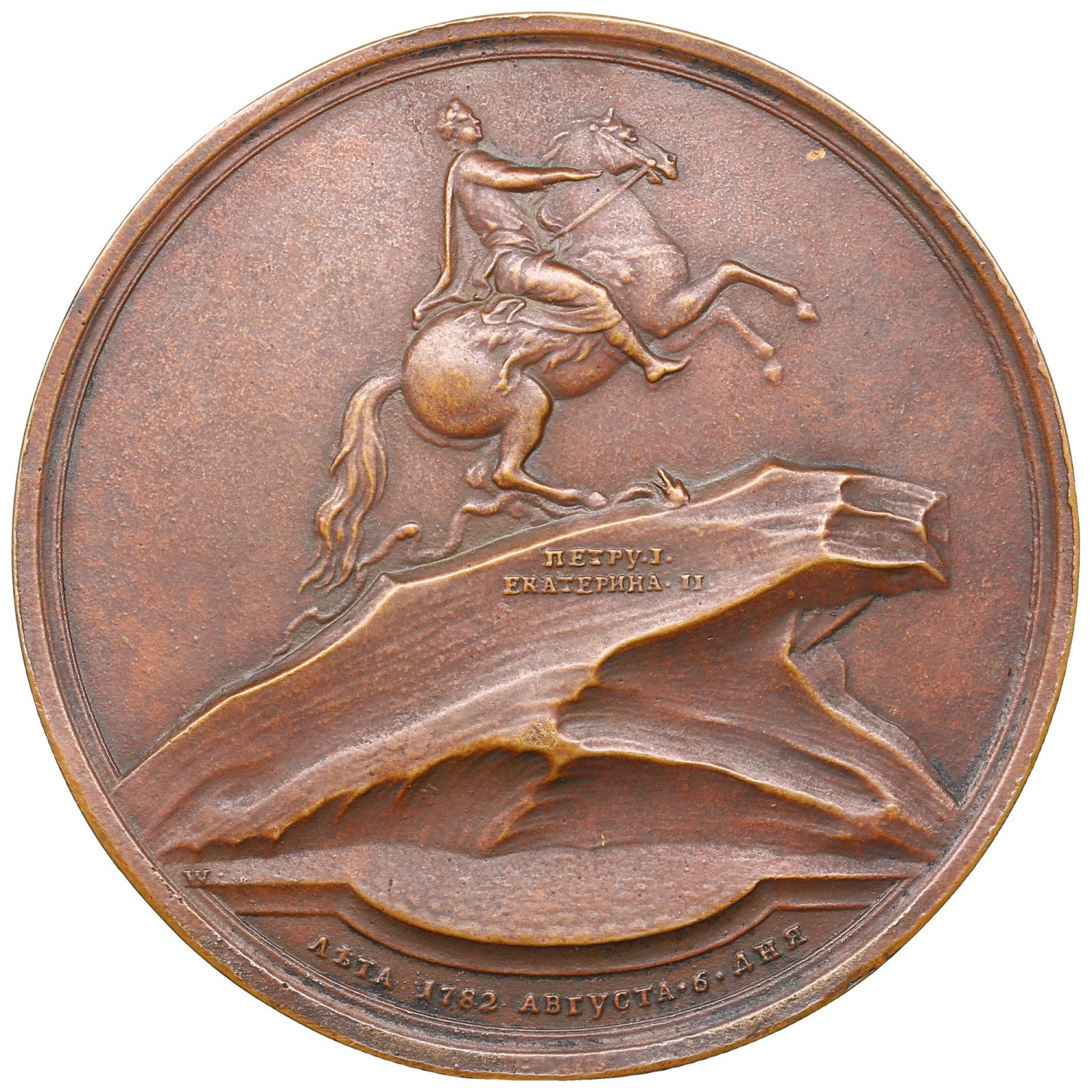
Rev.: The celebrated equestrian monument to Peter I, depicting the Emperor on horseback atop a massive granite rock. The pedestal bears the inscription:
ПЕТРУ I / ЕКАТЕРИНА II
(To Peter I, from Catherine II).
Inscription below:
ЛѢТА . 1782 . АВГУСТА 6 ДНЯ •
(6 August 1782).
The monument to Peter I, popularly known as the Bronze Horseman, was unveiled in St Petersburg on 7 August (18 August, New Style) 1782, during the reign of Catherine II. Commissioned by the Empress in 1766, the monumental equestrian statue was designed by the French sculptor Étienne-Maurice Falconet, with the head of Peter I modelled by his pupil Marie-Anne Collot. The enormous granite pedestal, known as the Thunder Stone, was transported to St Petersburg in one of the most remarkable engineering undertakings of the eighteenth century. Depicting Peter triumphantly ascending a steep rock on horseback, the monument symbolised his achievements as the founder of St Petersburg and the architect of Russia's transformation into a major European power. Its dedication, 'To Peter I from Catherine II', expressed Catherine's desire to present herself as the legitimate successor to Peter's political and reforming legacy. Situated on Senate Square, the Bronze Horseman became one of the most celebrated symbols of St Petersburg and acquired an enduring place in Russian cultural history, particularly following the publication of Alexander Pushkin's poem The Bronze Horseman in 1833.