


Norblin & Co., Warsaw, 19th/20th c.
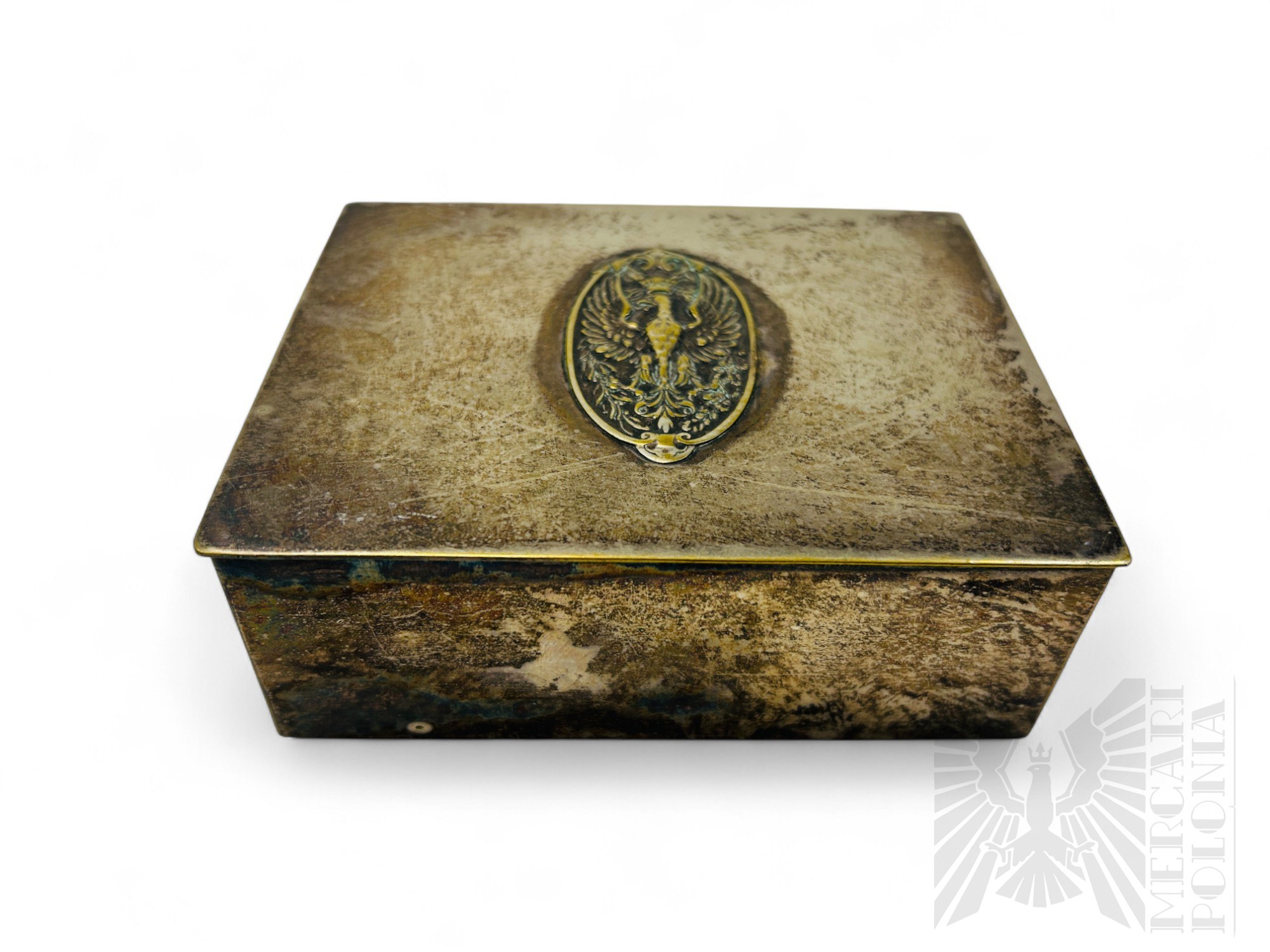
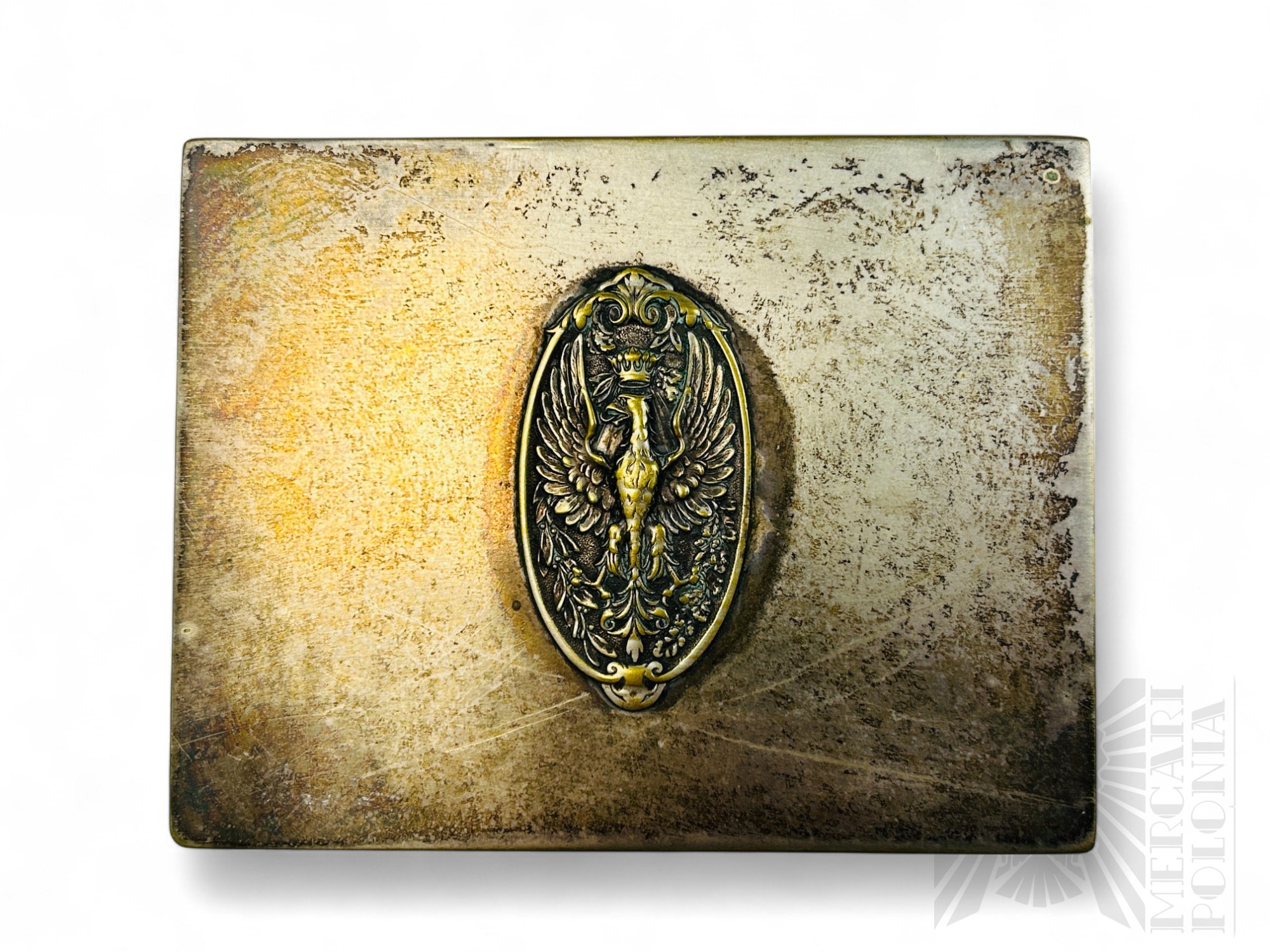
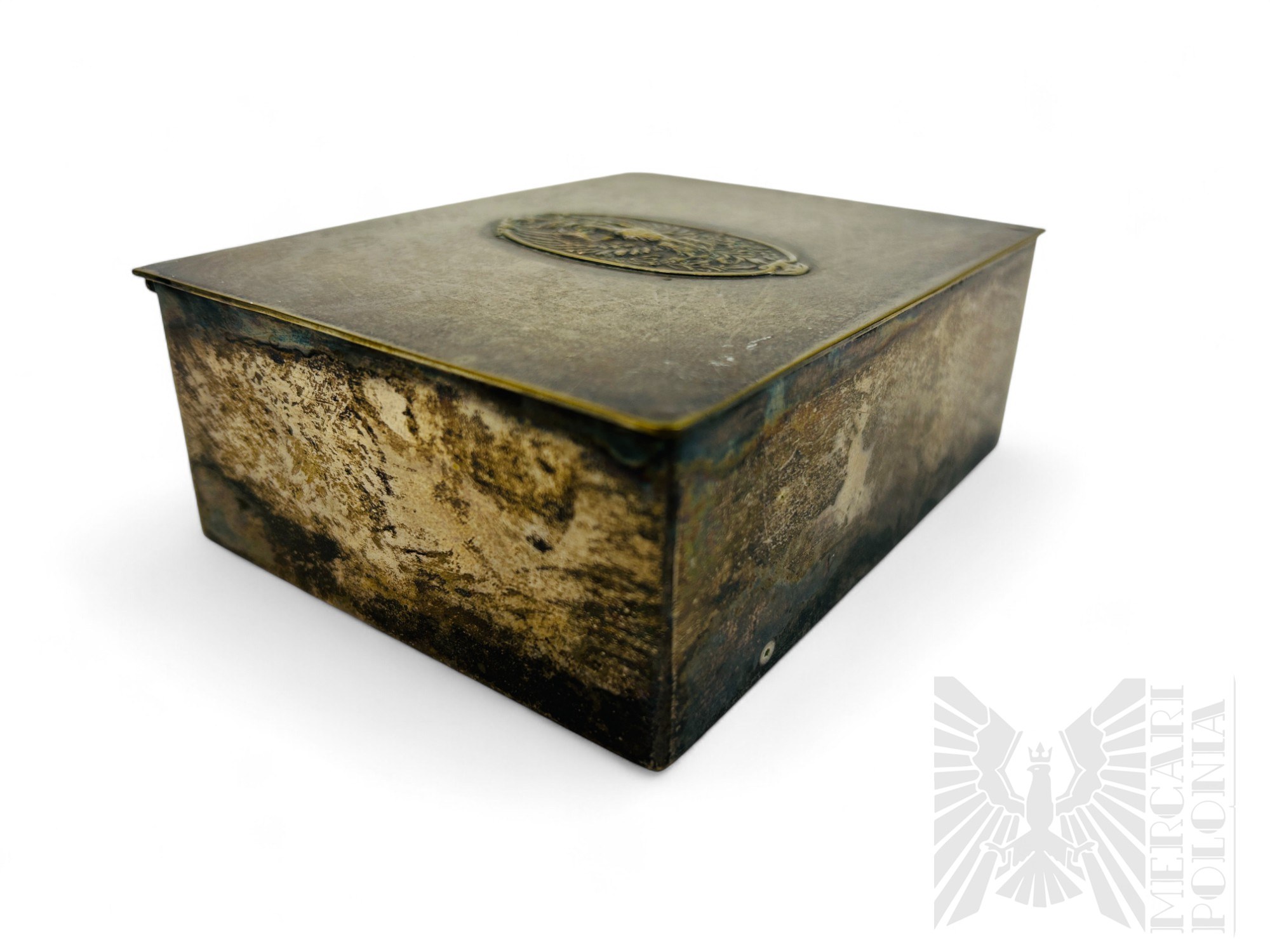
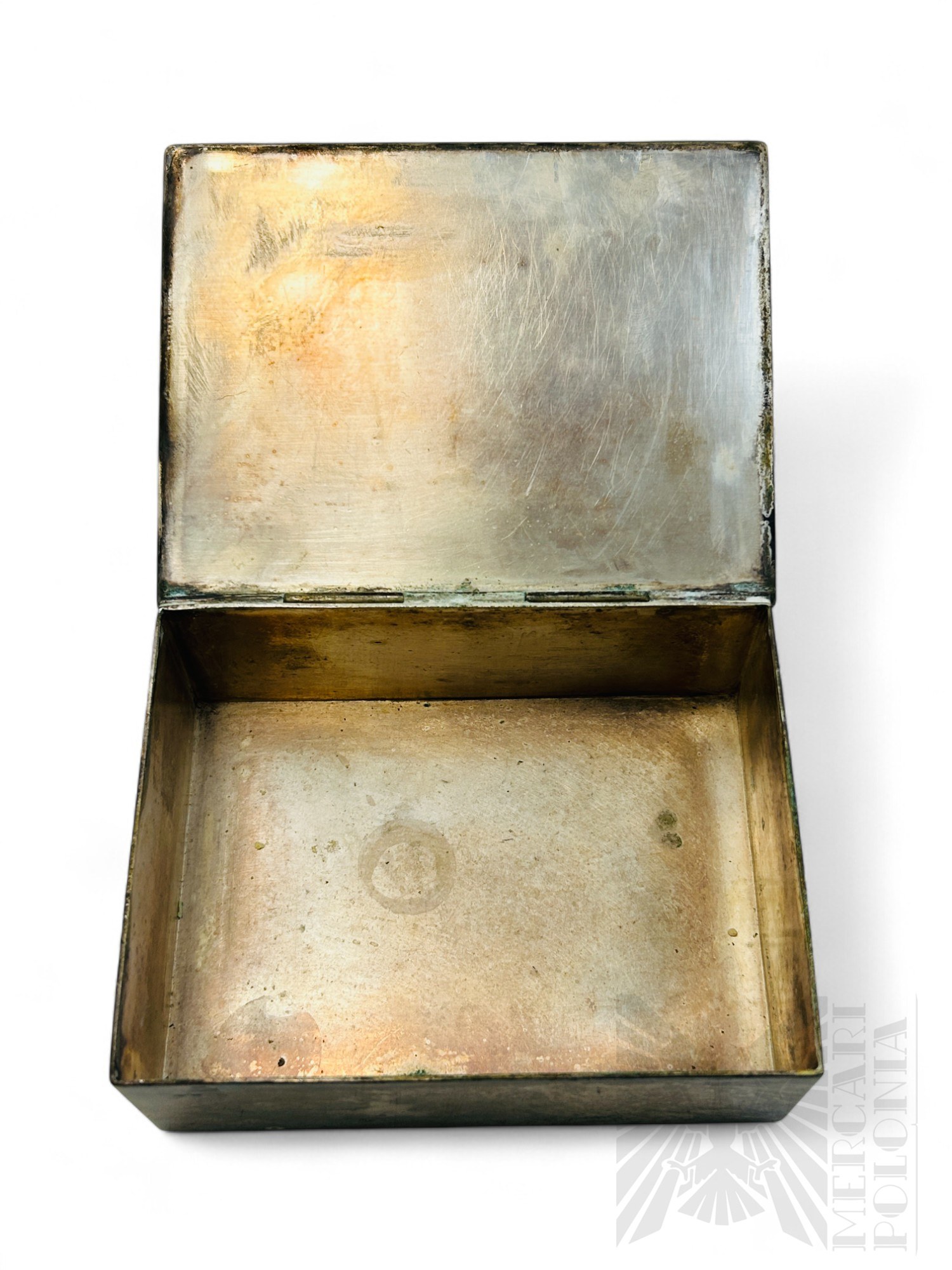
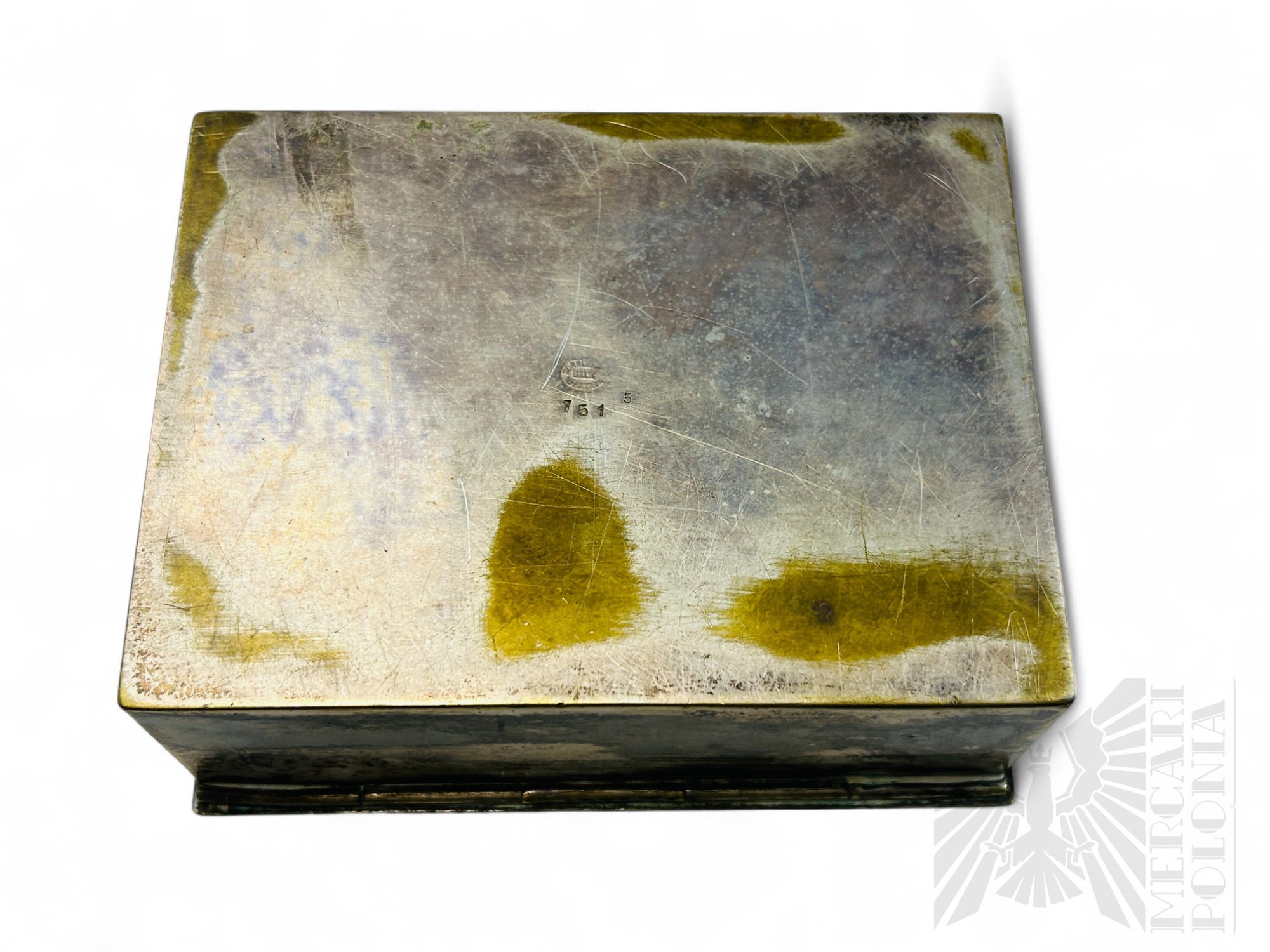
Plated patriotic casket with eagle
Silver plated metal, embossing, engraving.
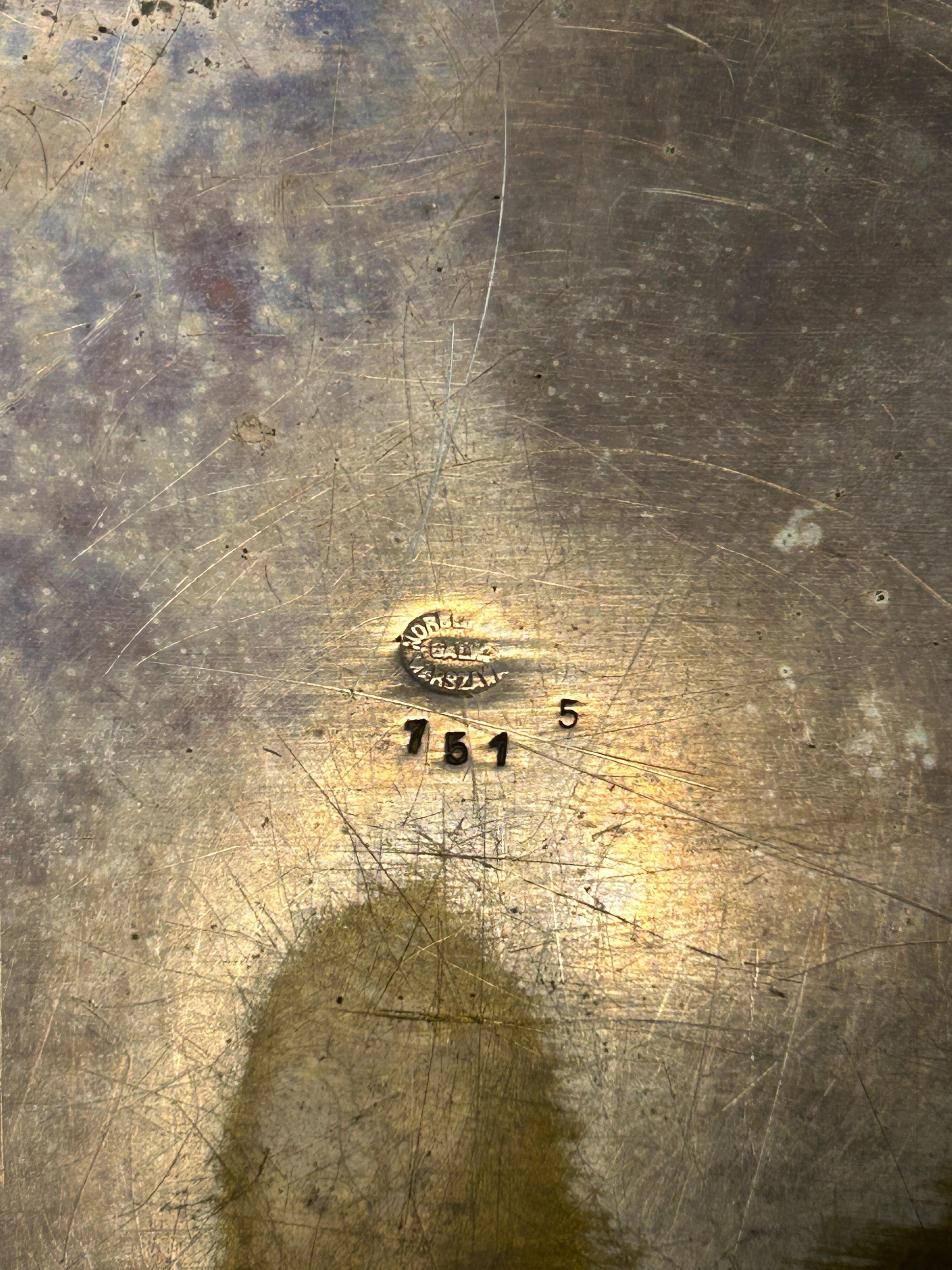
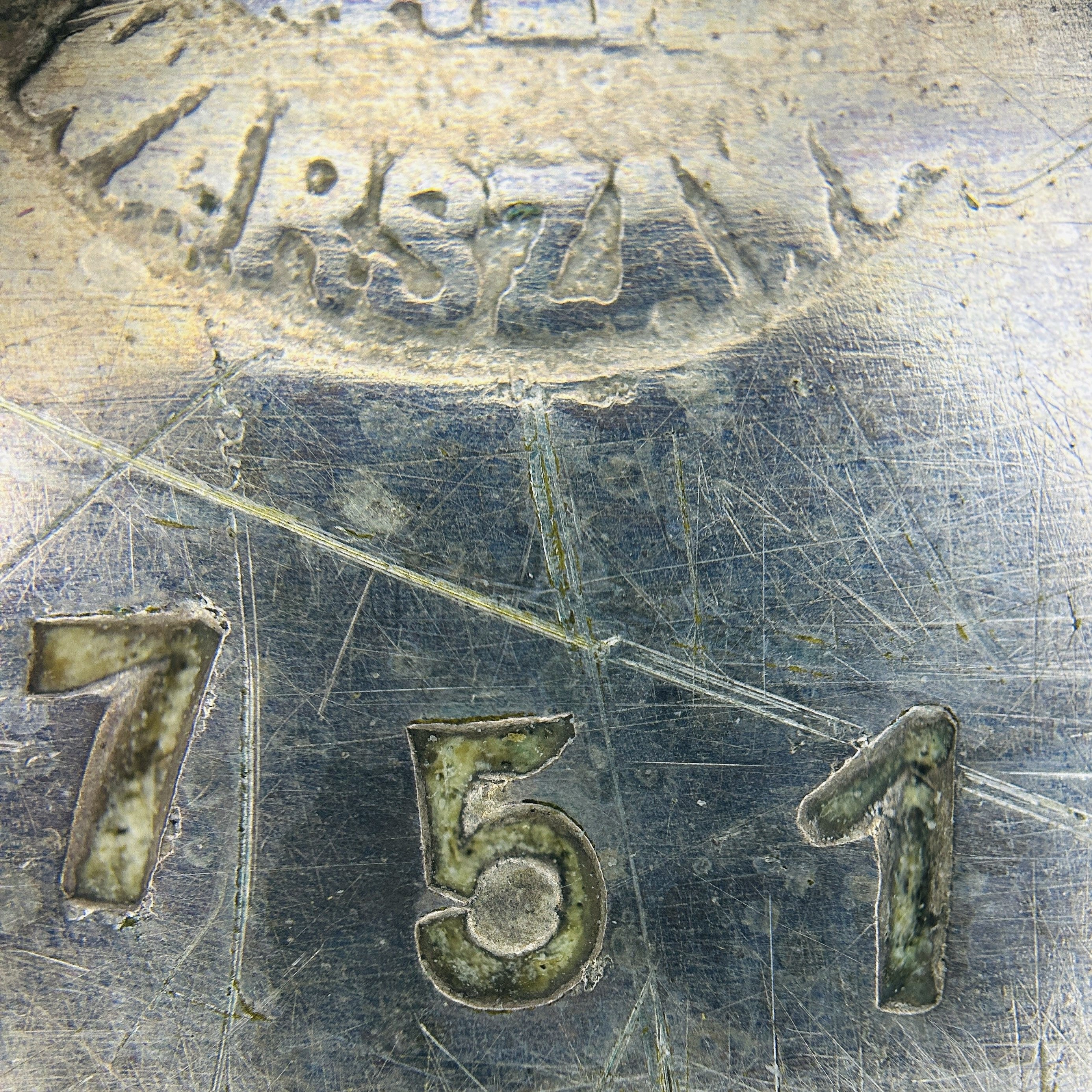
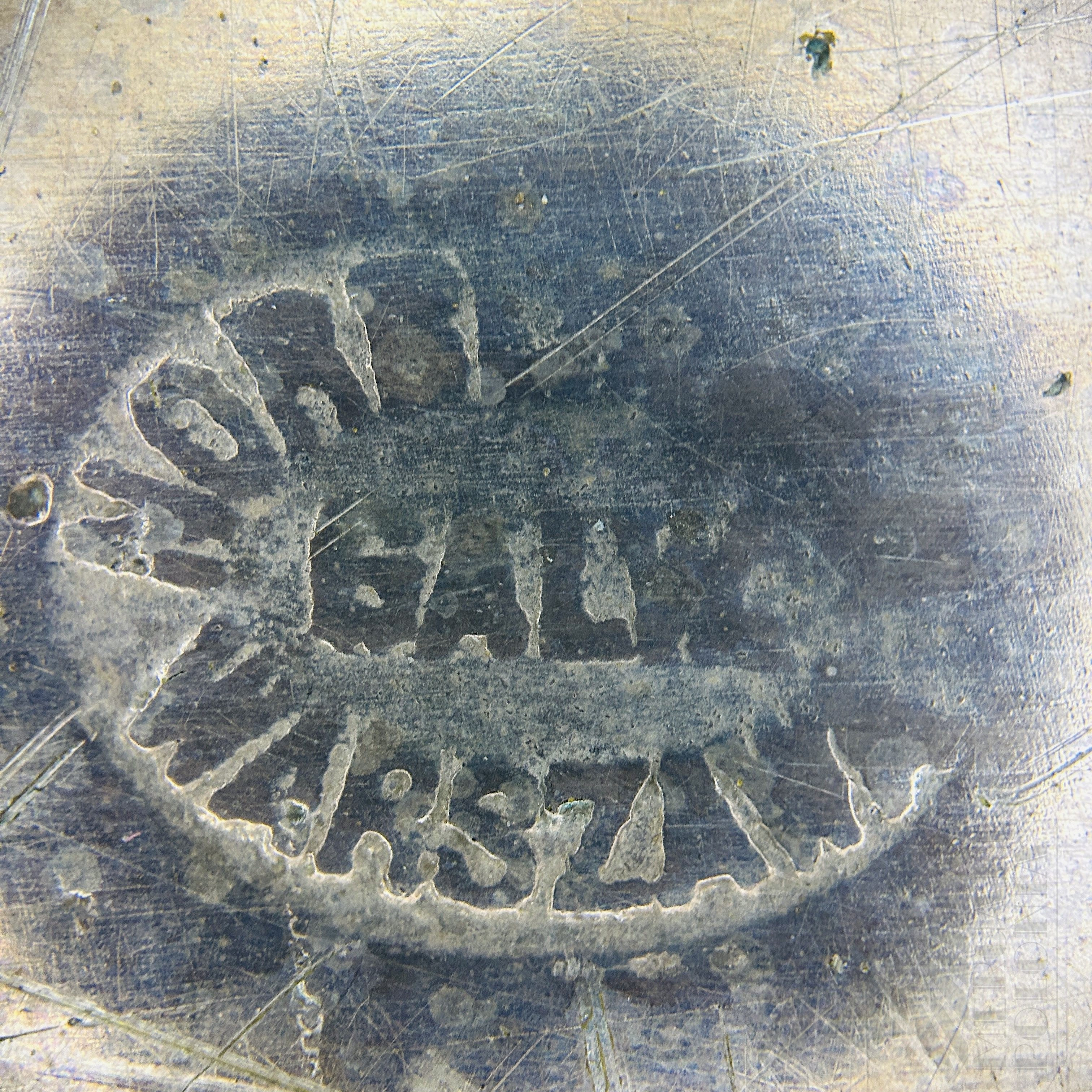
Signed on the bottom: NORBLIN & Co Galw Warsaw
Dimensions: 12.5 × 9.8 × 4.5 cm
Elegant rectangular casket of classic form, made in Warsaw factory Norblin & Co.early 20th century. The lid decorated with a central medallion with an image of a crowned eagle, surrounded by decoration in neo-Rococo style.
An object of patriotic character, typical of the partition period - a symbolic expression of Polish national identity fixed in artistic craftsmanship. Norblin's factory also made a sugar bowl with the coats of arms of Polish cities with the same eagle motif in the central axis.
-------------
Joint Stock Society of Metal Factories "Norblin, Buch Brothers and T. Werner" - An enterprise specializing in the manufacture of metal goods, known mainly for its production of silverware and platinum. It traces its origins to the "Norblin and Company" bronzing plant, founded in 1820 by Alexander Jan Konstanty Norblin. Initially located on Dluga Street in Warsaw, it was moved to Krakowskie Przedmieście in 1823; in 1834 it was relocated to Chlodna Street. In 1865 Ludwik Norblin, together with his sister Albertyna and brother-in-law Teodor Werner, purchased a metalware factory (also on Chlodna Street) from Wincenty Konstanty Norblin, which resulted in the founding of the Norblin-Werner partnership: the Norblin factory produced platinum and the Werner factory produced silver. In 1882 Ludwik Norblin bought out the Buch Brothers' plateware factory in Warsaw, at 17 Zelazna St., along with the right to use the trademark and exclusive rights to produce plateware. The company did not limit itself to the production of luxury goods: thanks to the construction of a rolling mill for nonferrous metals in the 1890s, brass and silver plate, brass, copper and silver wire, copper and brass pipes were produced, and from 1895 the plant monopolized the production of copper pipes in the Kingdom of Poland. During the Second Republic, Norblin, Buch Brothers and T. Werner was one of the largest metal companies in the country, furthermore expanding its production to include rifle ammunition. After the war, despite extensive destruction, the factory returned to limited operation, producing, among other things, wire for railroad traction; the enterprise was nationalized under the name Walcownia Metali "Warszawa". In 1982, production was finally moved to Młociny, and the complex on Zelazna Street was entered in the register of monuments.
Condition as in the photos.











Laatst bekeken
Log in om de kavellijst in te zien
Favorieten
Log in om de kavellijst in te zien