


Dimensions: Diameter 33.5 cm
Tin
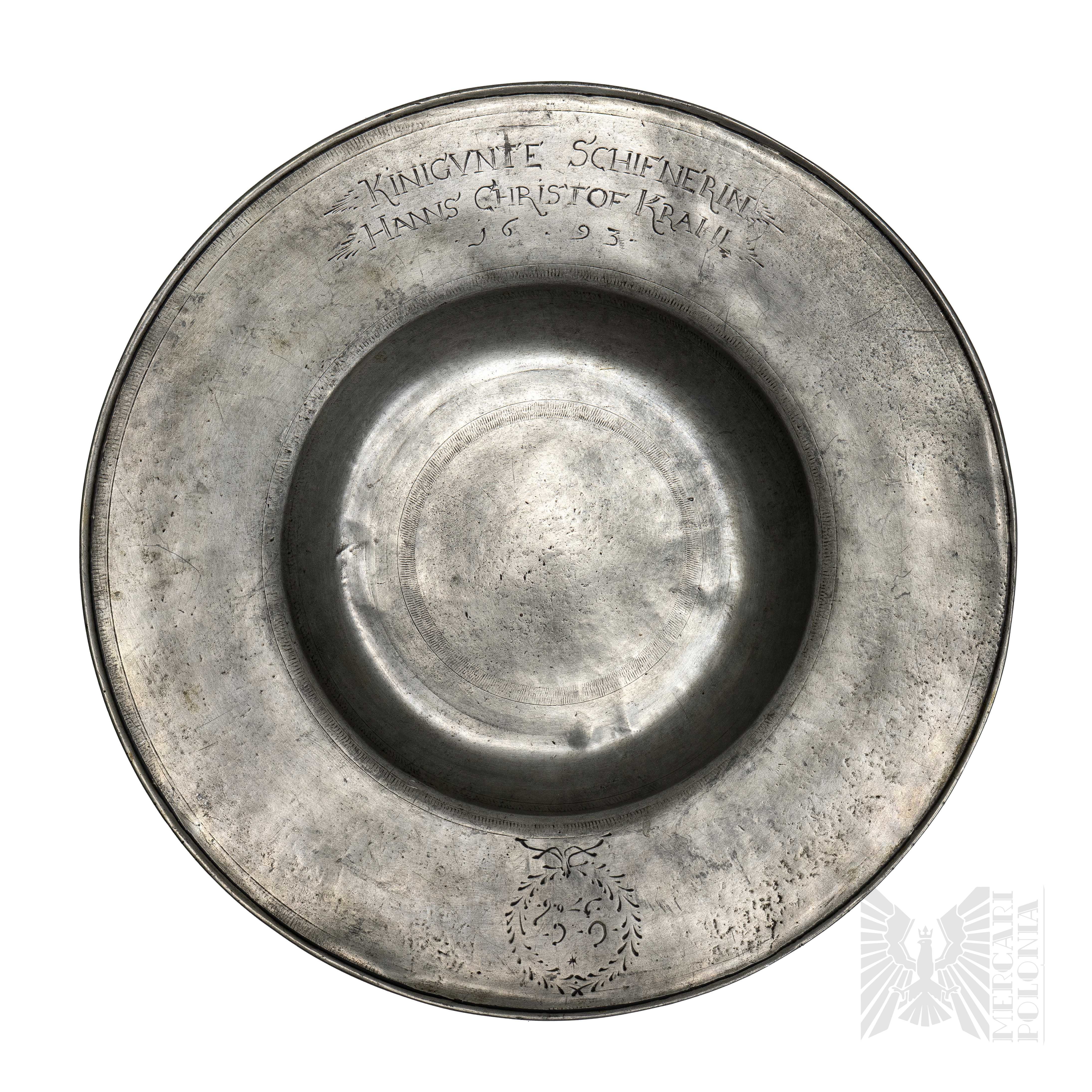
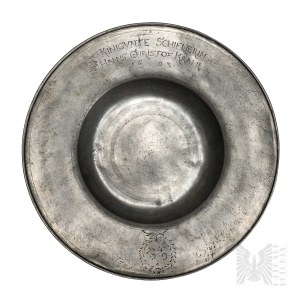
A round tin plate with a wide, flat rim and a deeply profiled center. The outer edge is gently flared and reinforced with a rim. The metal surface retains its natural silvery-gray hue, with visible patina, localized discoloration, and traces of centuries of use. The central surface of the plate remains smooth, bordered by subtle concentric lines created during the turning of the vessel.
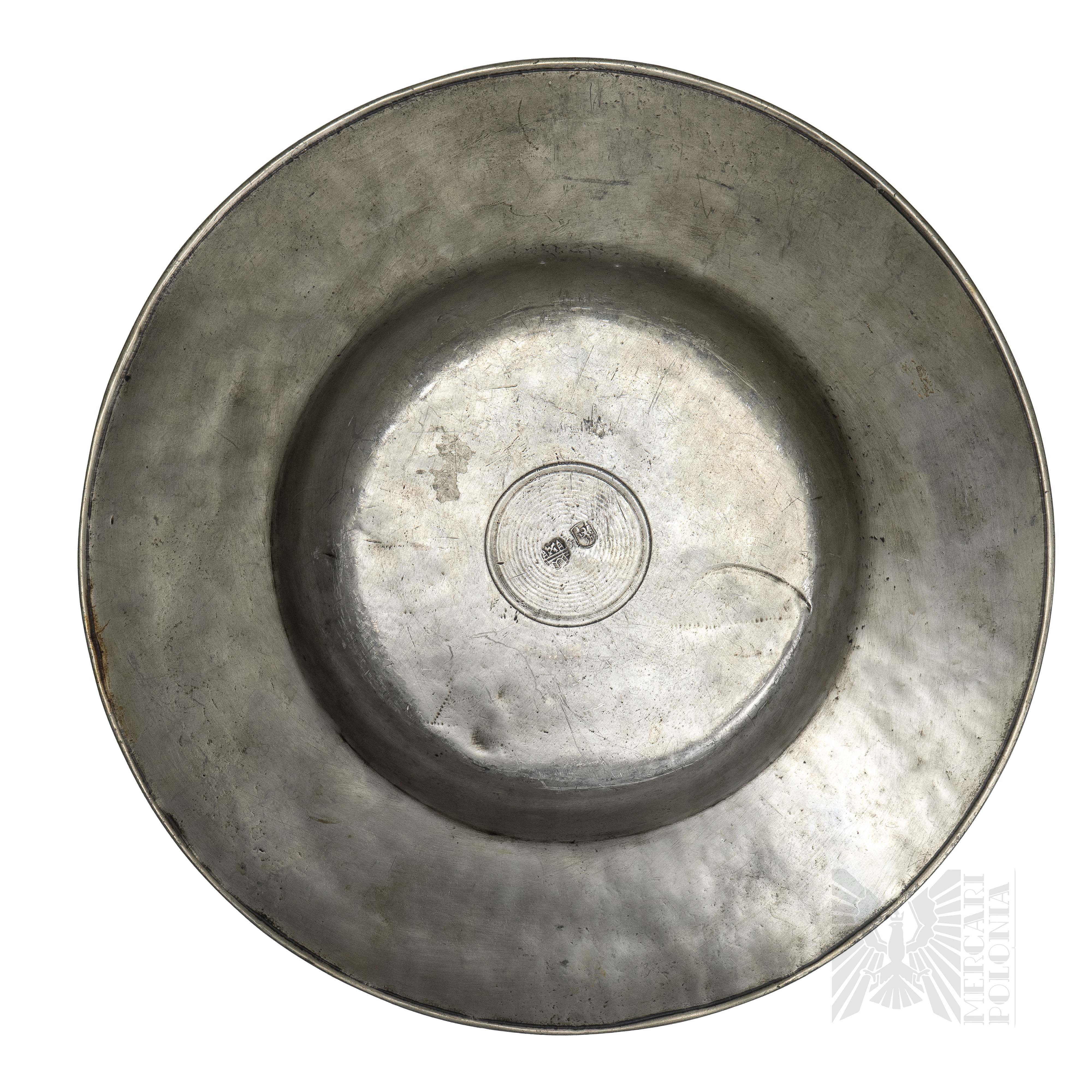
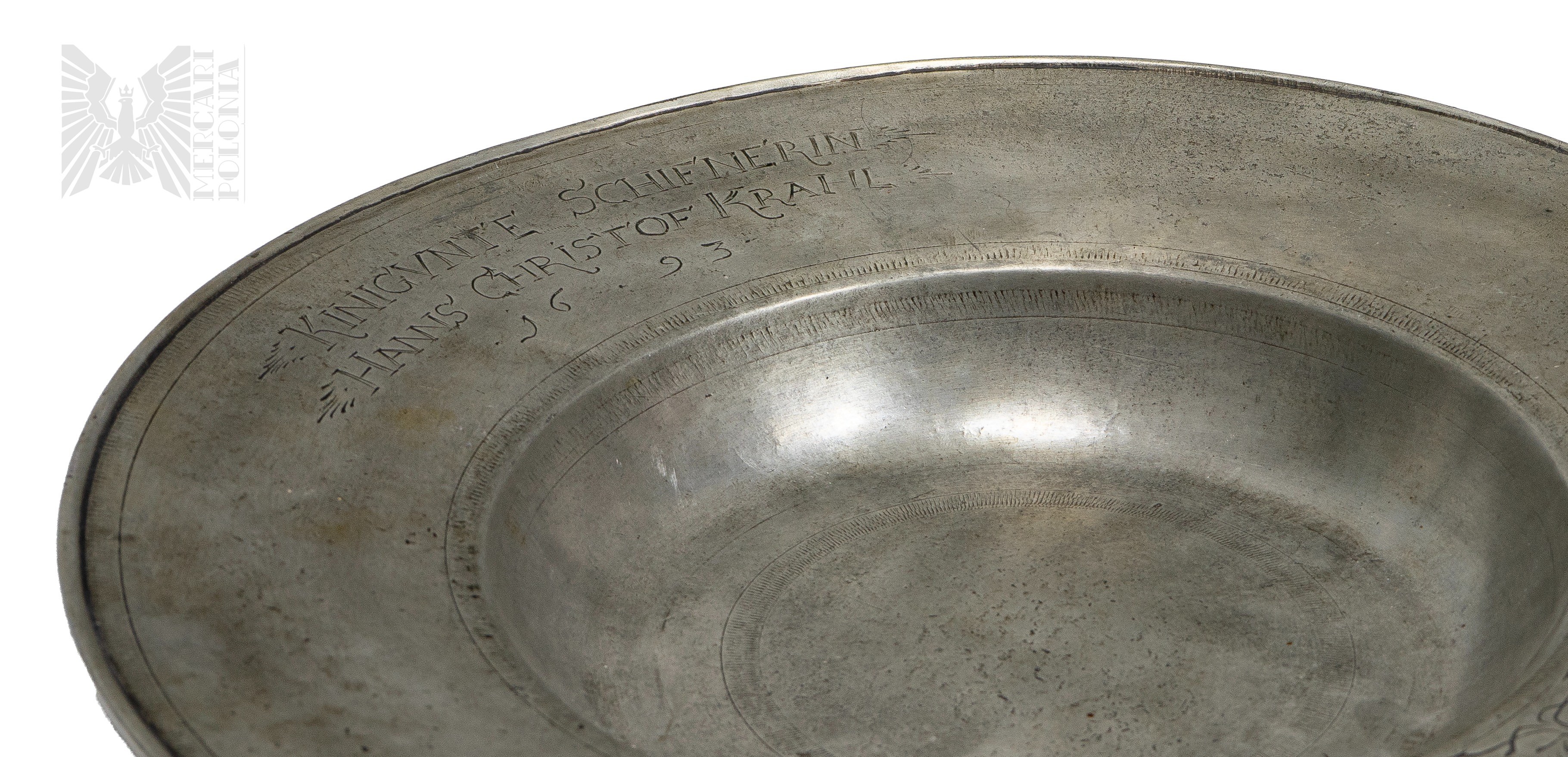
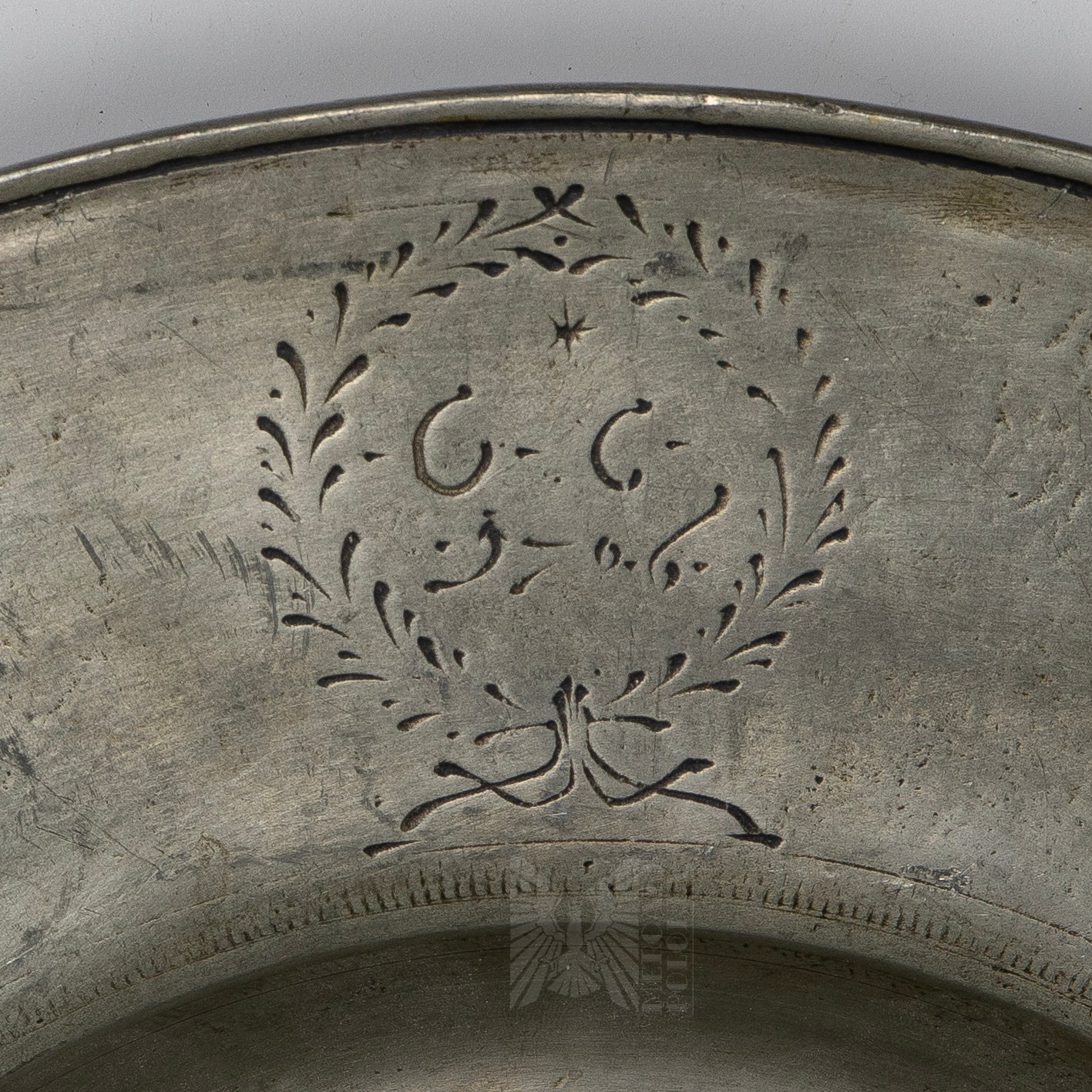
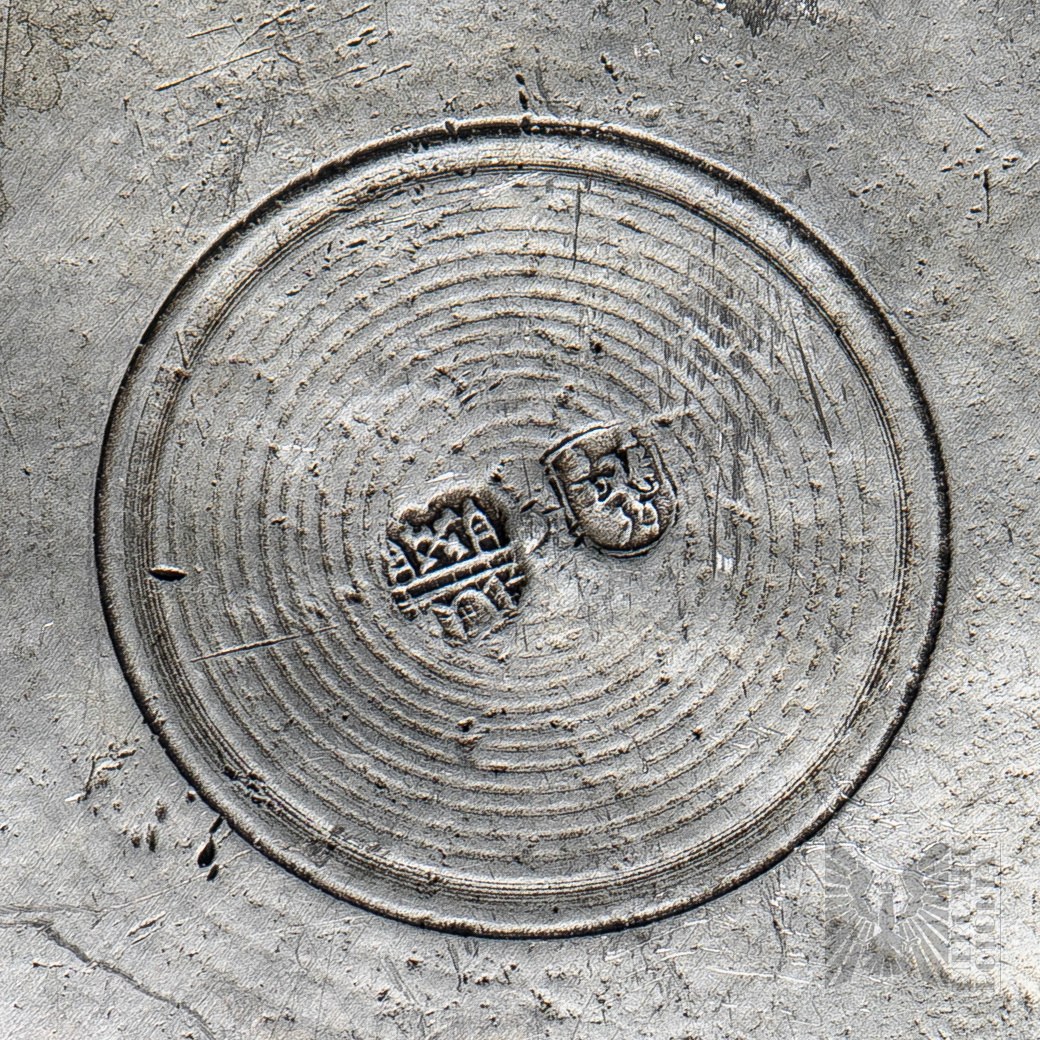
The bottom retains distinct workshop marks and maker’s marks stamped into the metal. Regular traces of craftsmanship characteristic of handmade tin vessels are also visible. In the upper part of the rim is a hand-engraved inscription in capital letters, including the first and last names of the owners or donors: “Kinigunte Schifnerin Hans Christoph Krahl”; at the bottom, within a wreath, the monogram “CC” and the date 1706. Based on the coat of arms of the town of Leipe and the foundry mark “B.L.”,
Condition as shown in the photos
Tin tableware was among the most widespread luxury crafts of the European bourgeoisie and nobility from the 16th to the 18th centuries. It offered an attractive alternative to expensive silverware while retaining a prestigious character. Plates of this type were used both during the daily meals of wealthy families and on the occasion of guild, municipal, and family celebrations.
Pieces that retain their original ownership inscriptions and dates are of particular collector’s value. Hand-engraved inscriptions often allow for the identification of the original owners, patrons, or the circumstances surrounding the object’s creation. In the case of the plate on display, the inscription bearing the date 1693 is an important element of its authenticity and documents its use in the late 17th century.
The plate on display represents a type of utilitarian tableware that, over time, has become a valuable testament to the material culture of 17th-century Europe. The preserved foundation inscription, historical workshop marks, and natural patina make it an interesting example of historical metalwork, documenting both the high skill of the silversmiths and the customs associated with marking the ownership of everyday objects.










Laatst bekeken
Log in om de kavellijst in te zien
Favorieten
Log in om de kavellijst in te zien