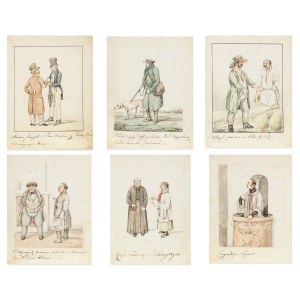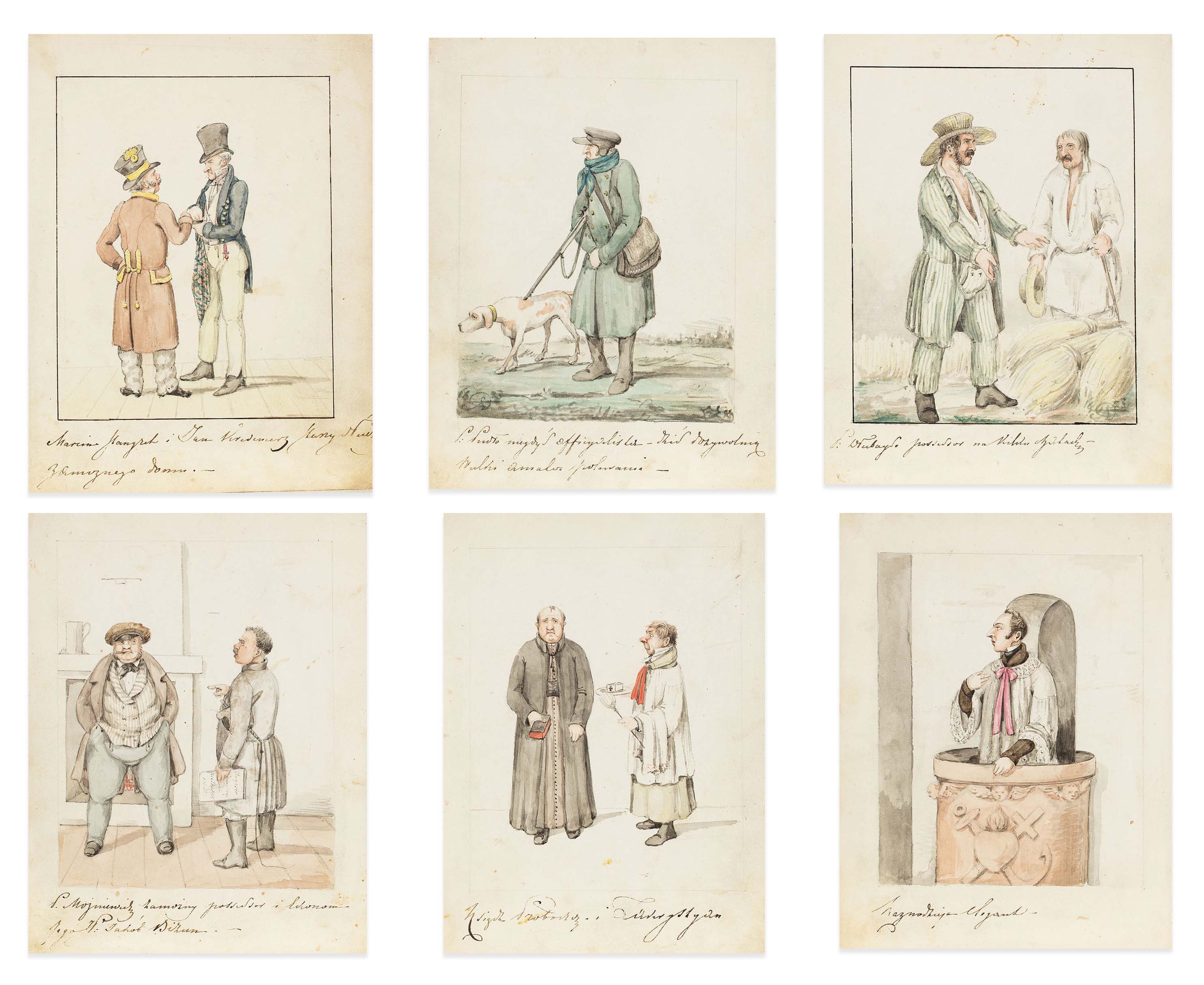
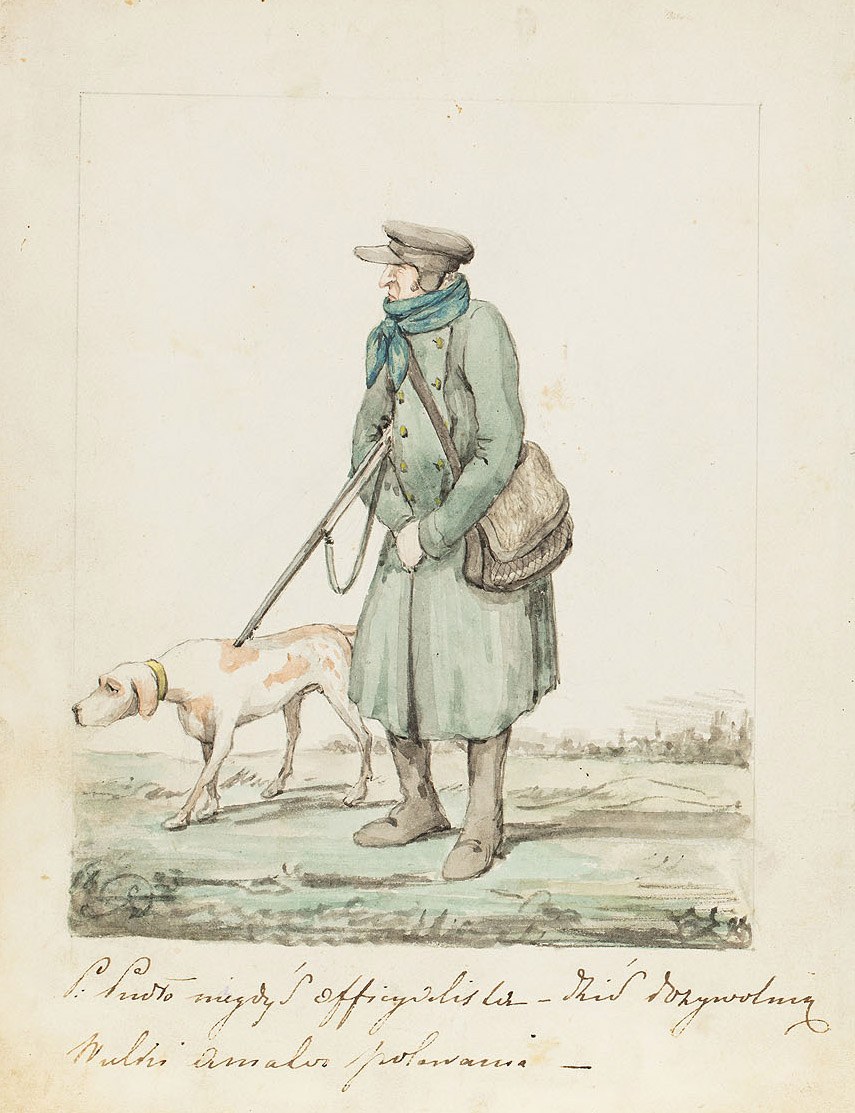
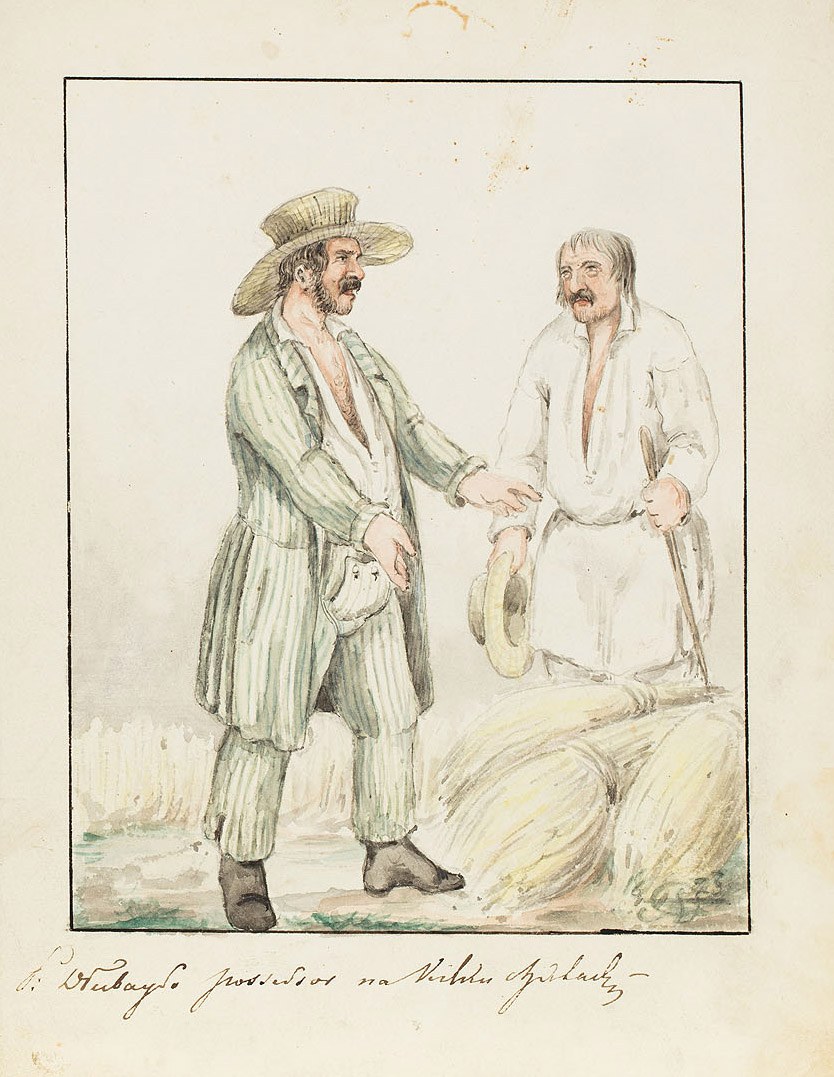
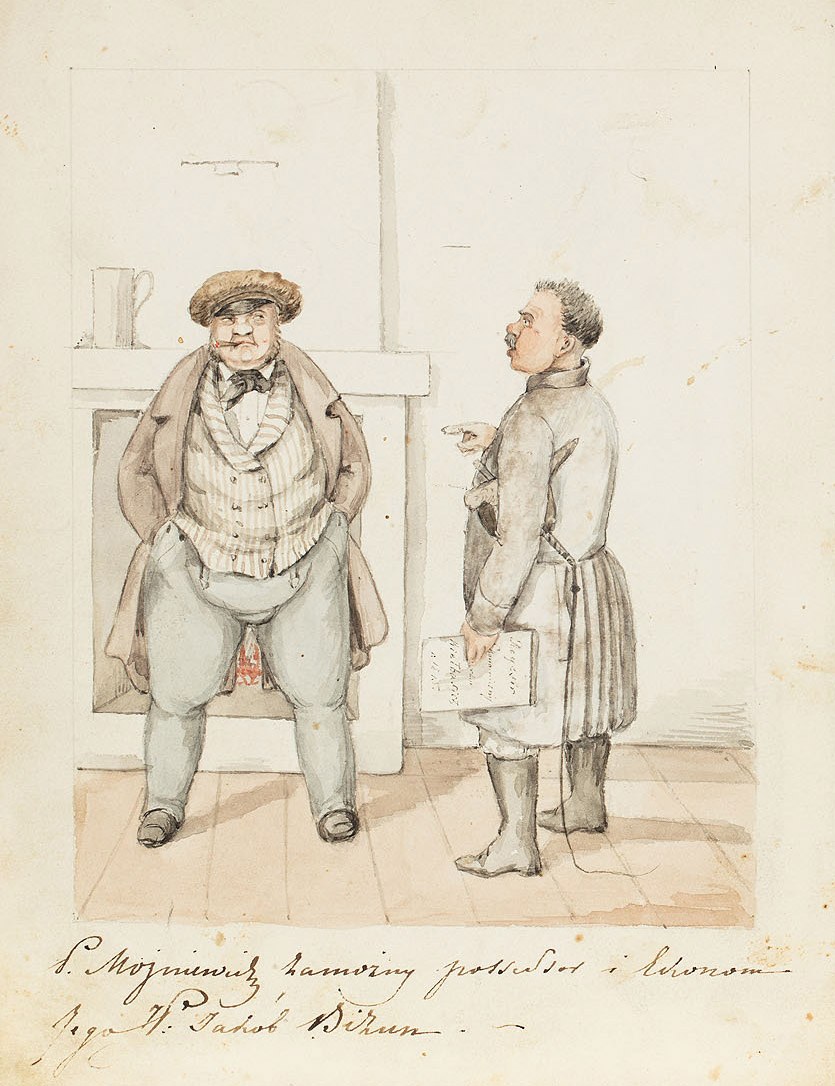
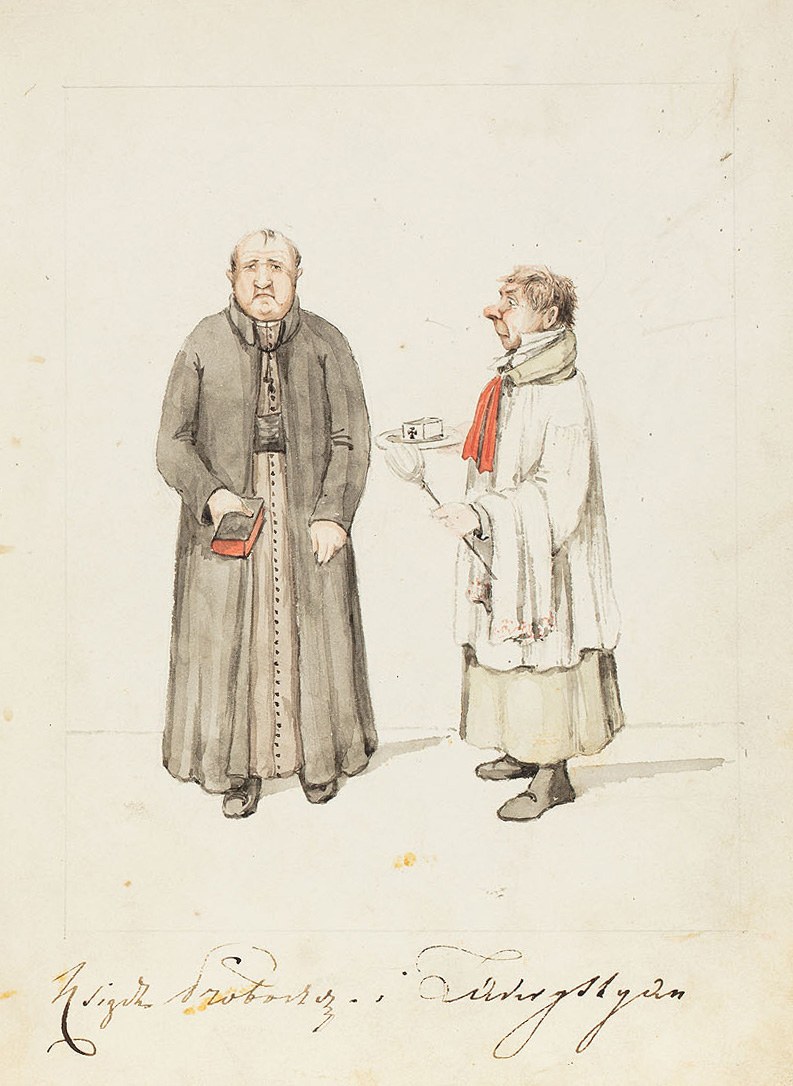
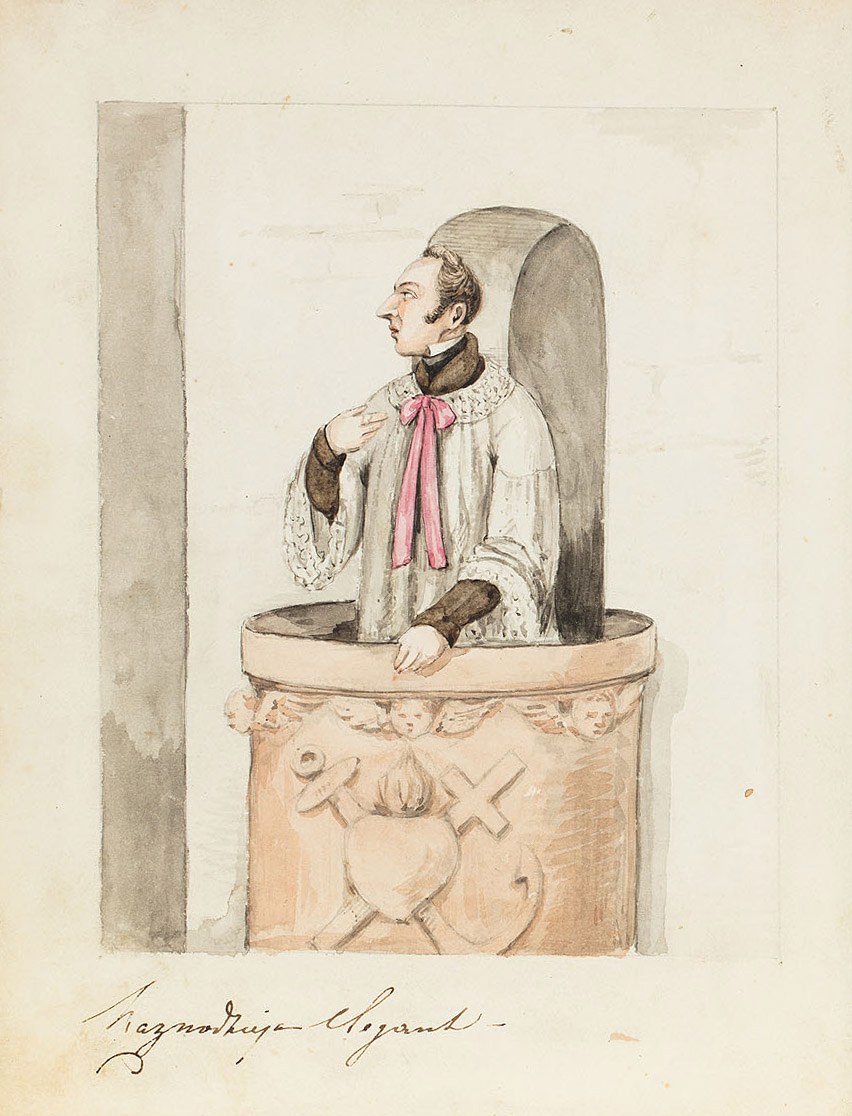
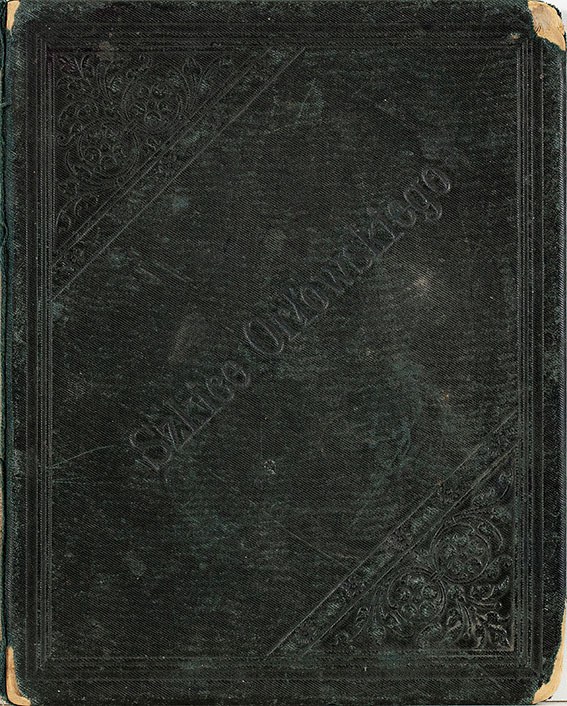
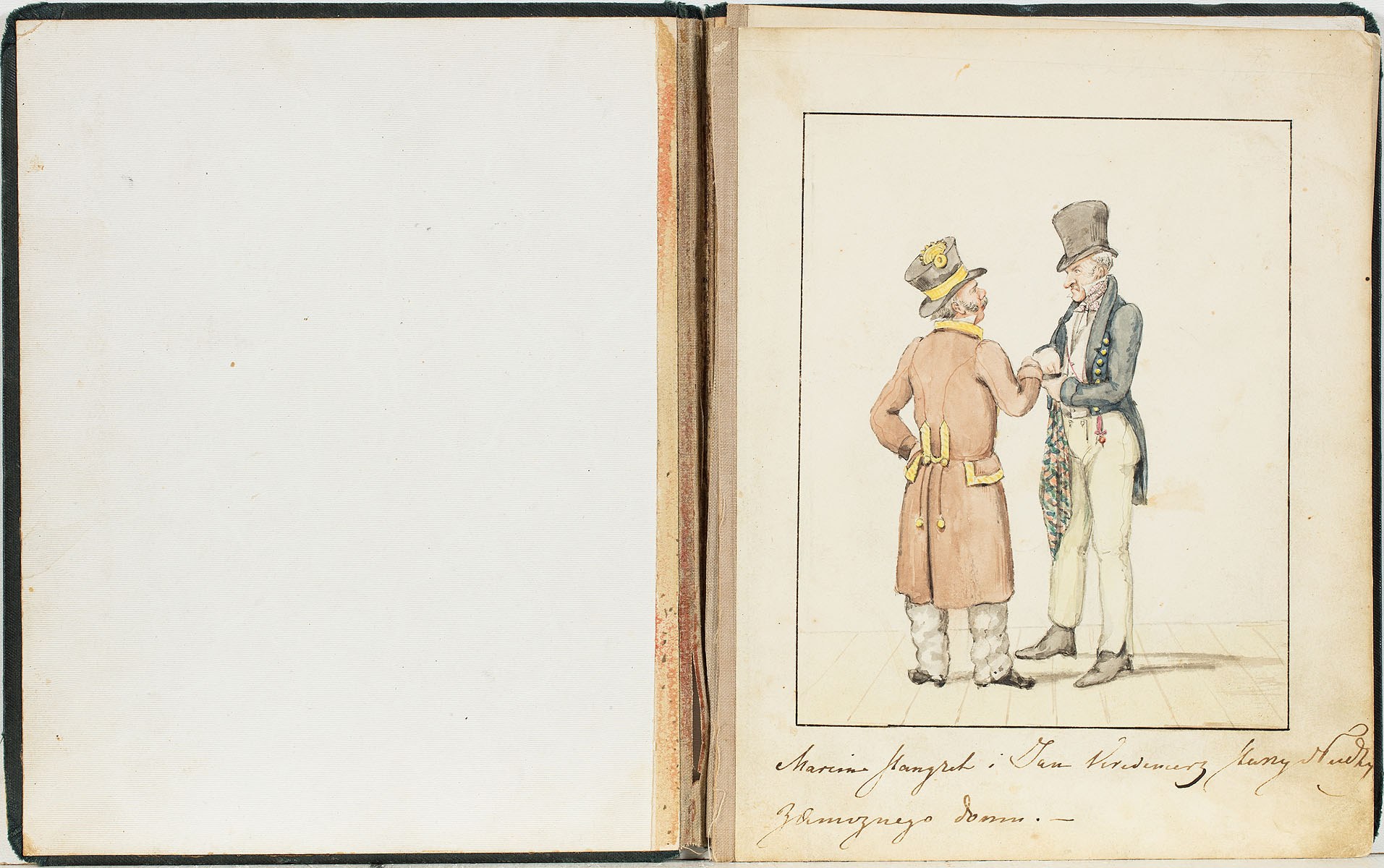
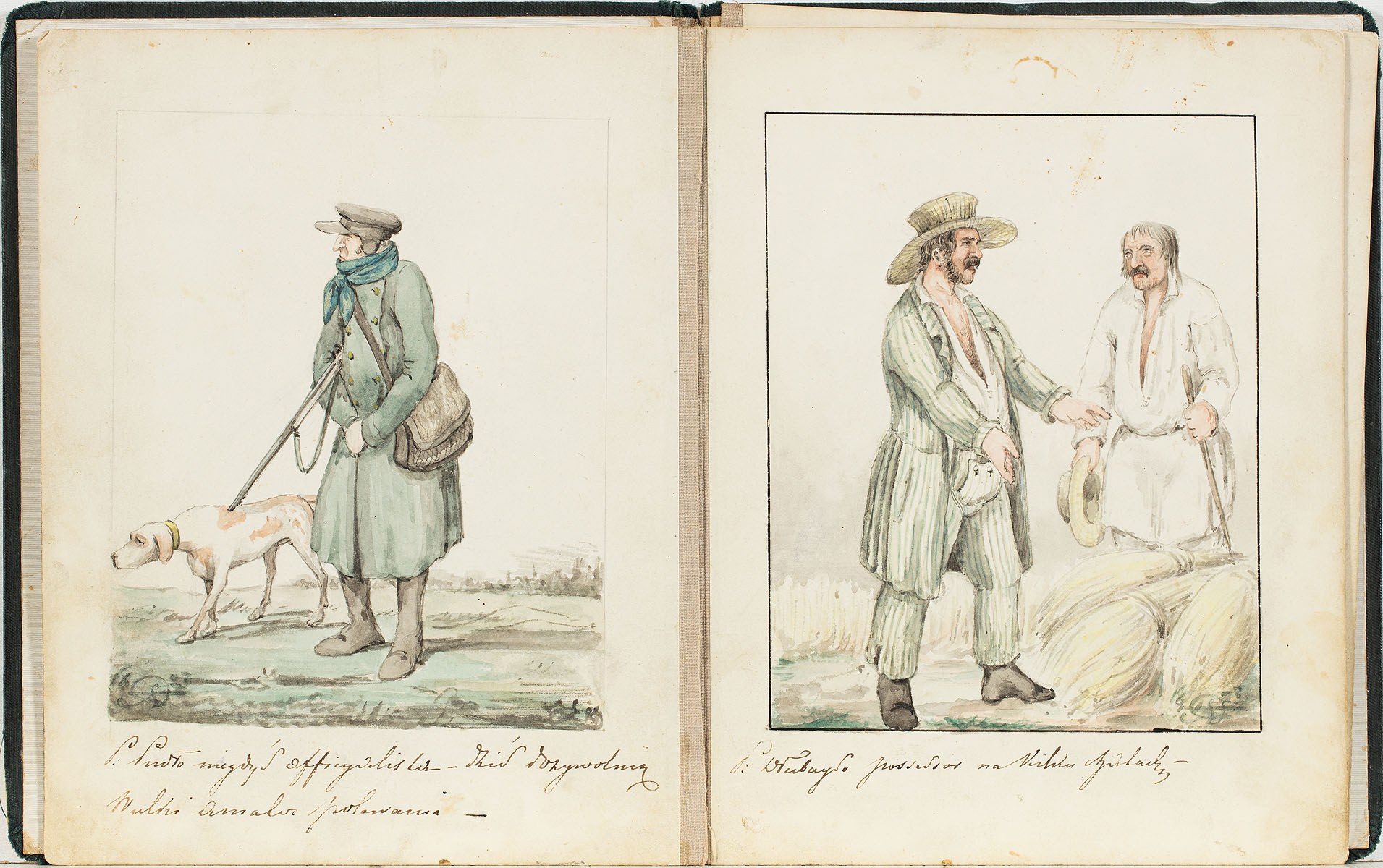
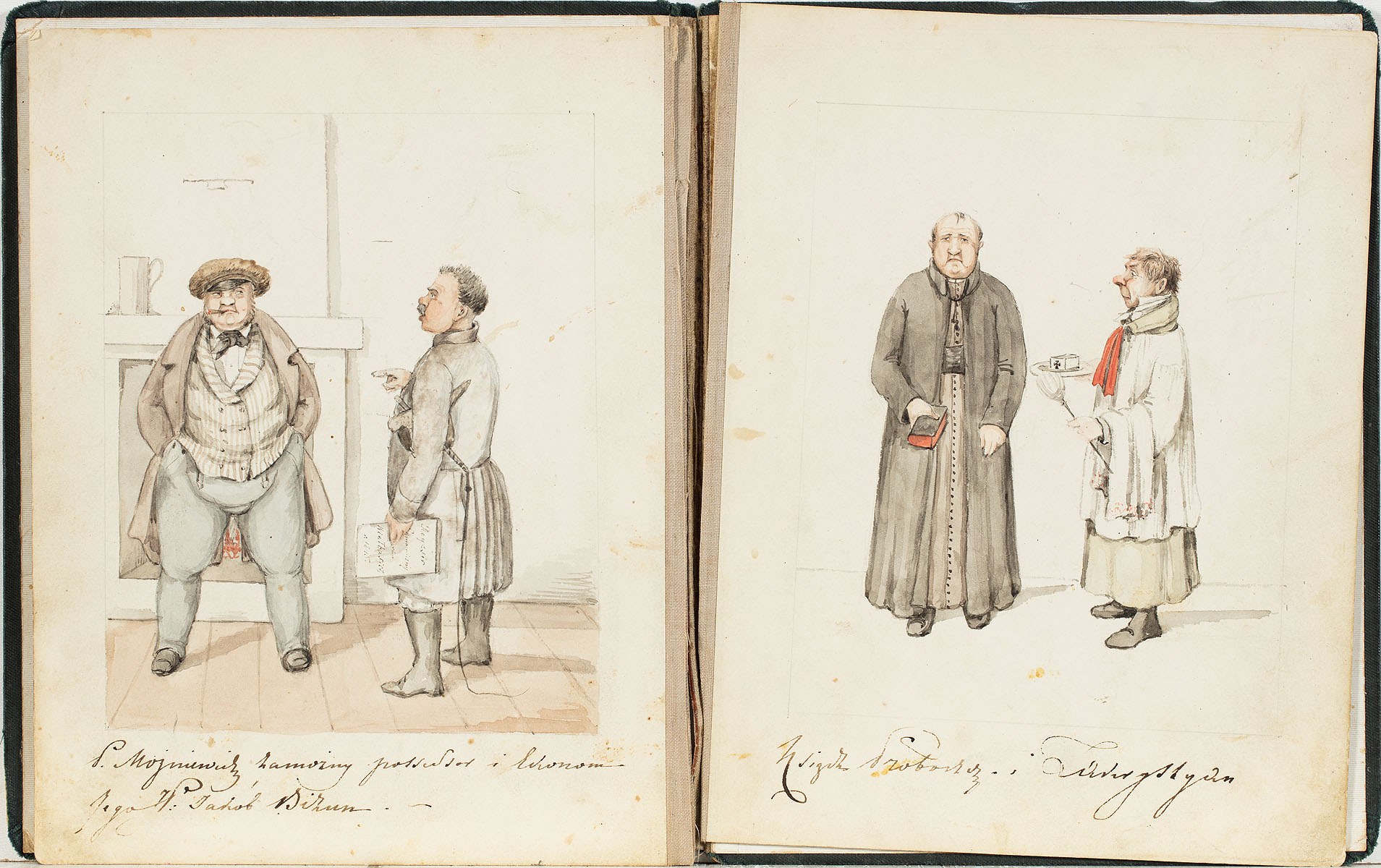
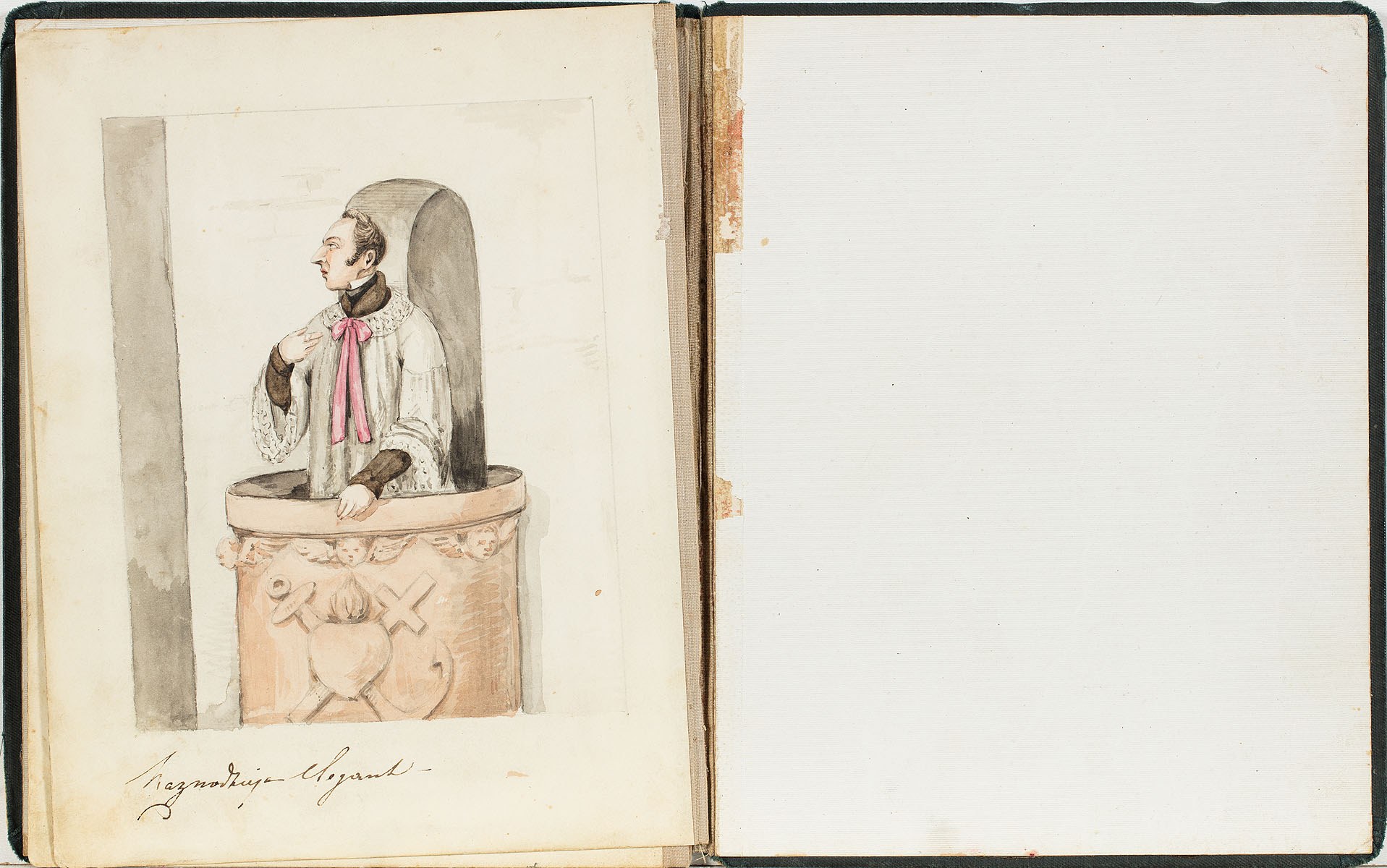
Dimensions: 20 x 15.3 cm (6 scenes)
Signing: two sheets signed with monogram: AO 1823
Provenance
France, Marlborough (USA) private collection, Bonhams Skinner, auction 02.11.2023, item 15 United States, collection of Eva Kristina Ehrenfeucht Berkeley (USA), collection of Alfred and Maria Tarski
Literature
Michałowski J.M., Karykatura Aleksander Orłowski in the Museum in Šiauliai, "Bulletin of Art History" No. 2, 1968, pp. 207-216. Husarski W., Karykatura w Polsce, Gebethner and Wolff Publishing House, Warsaw 1926, pp. 12-13.
Drawings, watercolors, gouaches and lithographs by Aleksandr Orlovsky secured his place in the pantheon of the most important Polish artists of the first half of the 19th century. Within the aforementioned, a special place is occupied by caricature, which the artist successfully practiced from around 1812, during the so-called St. Petersburg period (1802-1832).
Caricature as a genre experienced a significant flowering in the 18th century. The subtle and witty illustrations to Krasicki's "Myszeida" by Jan Piotr Norblin and, in particular, the bluntly characterized noble types and figures from the artist's "Collection of Polish Costumes" laid the foundation for caricature by seasoned masters of the genre such as Orłowski, Jan Feliks Piwarski and Franciszek Kostrzewski.
The success of satirical images by Aleksandr Orlowski was due to the spontaneous temperament, love of concise form and uncommon gift of observation that characterized this painter and draughtsman. The works on small sheets of paper in the format of a handy sketchbook were not of a portrait nature. The artist, with the skill of an inquisitive voyeur, poured on paper the scenes he observed, often close to a situational joke. After 1815, caricatures with Polish themes appeared in Orlovsky's work. Often bearing amusing titles, they aptly depicted characters of tsarist military officers or native noble types with their vices and weaknesses. The heroes of these drawings were most often clergymen, rich landowners, uniformed officers. Regardless of the caricatured model, these compositions are characterized by a free and sweeping line, full of verve and comedy.
Waclaw Husarski, an art historian, noted that the popularity of Orlovsky's caricatures due to the artist's characteristic sense of humor and observational flair subsequently resulted in a wide circle of imitators of his talent: "This very temperament, to the point of being native, in addition to his personal social qualities, gathers around him all those amateurs and semi-amateurs who can be boldly called his school; he is imitated by home-grown caricaturists, not even knowing him personally, only on the basis of his so popular works" (Husarski W., Karykatura w Polsce, Wydawnictwo Gebethnera i Wolffa, Warsaw 1926, p.13).
The caricatures remain a very interesting example of Aleksandr Orlovsky's work, especially this strand of it, which documented the artist's strong connection with his native country, its types and past.