


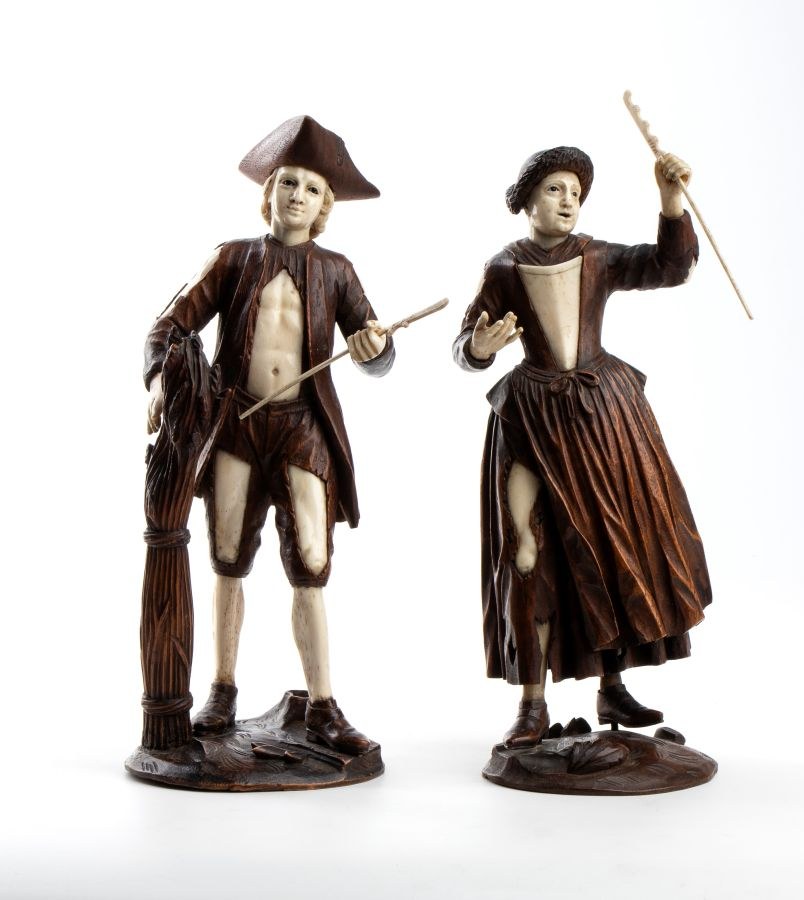
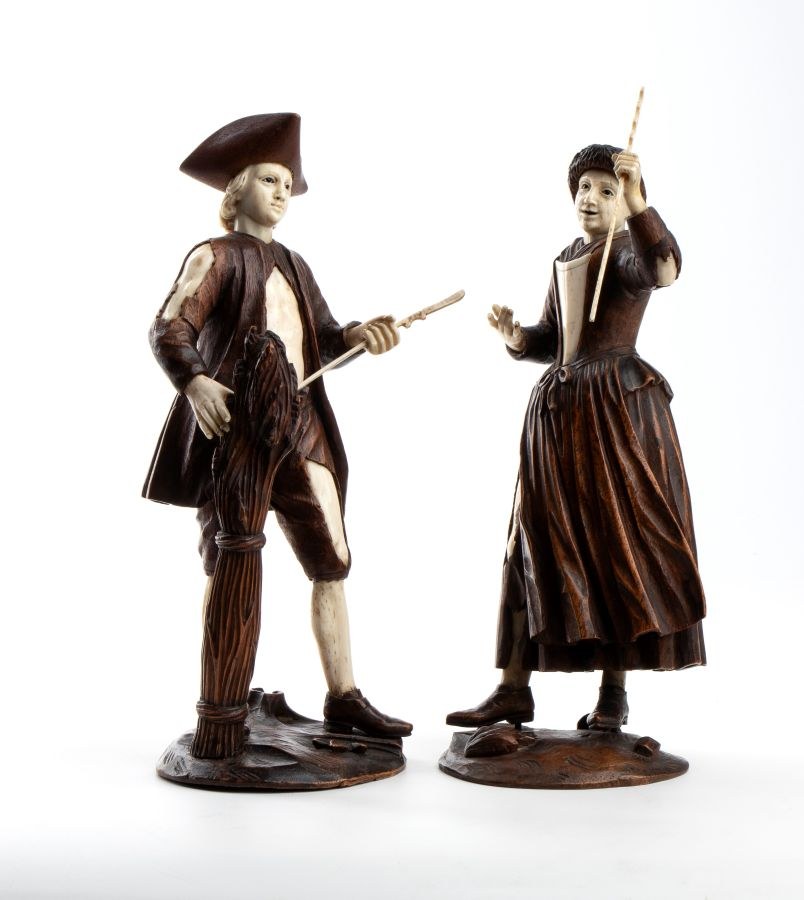
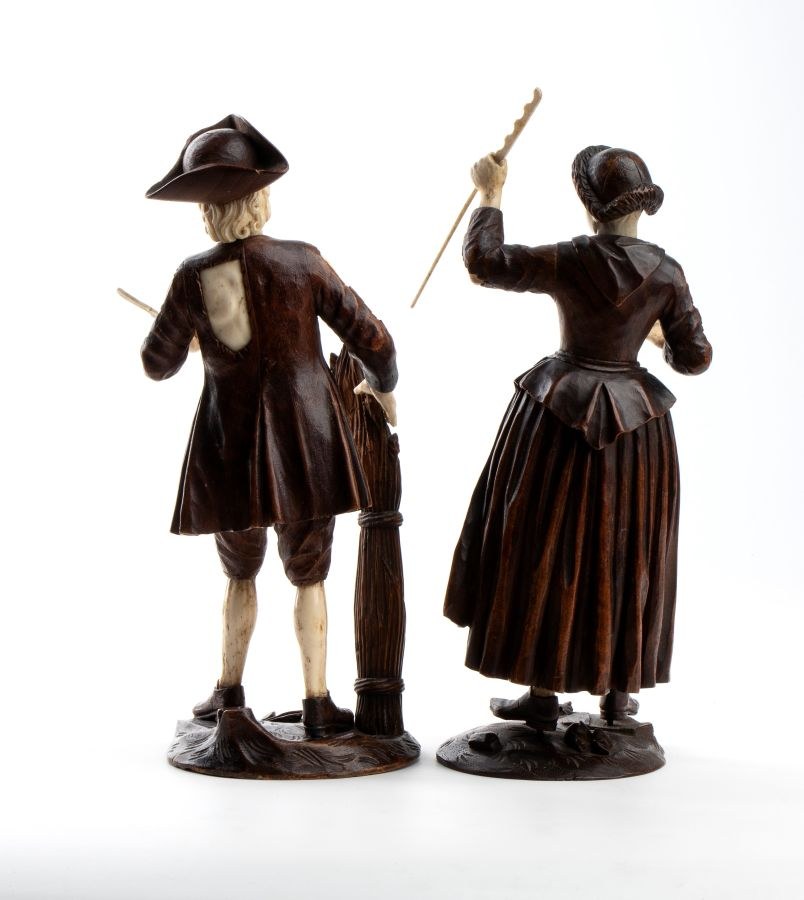
made of limewood and bone, these sculptures are carved in the round to depict figures of peasants.The figures, masterfully carved, portray two individuals dressed in tattered clothing, a clear indication of the economic hardship and poverty of the subjects represented. The ivory carvings emphasize anatomical details and facial expressions, conveying a strong pathos that makes these pieces particularly realistic and moving.The male and female figures are sculpted with remarkable attention to detail, as evident in their poses, hands, and worn clothing, which communicate the social distress embodied by these figures. The contrast between the dark wood and light ivory creates a striking visual composition, highlighting the exposed areas of skin through a refined play of light and shadow.In the context of the 18th century, representations of beggars or lower-class figures also held moral and educational significance, evoking religious themes of charity and compassion. These sculptures, therefore, may have held not only aesthetic value but also a didactic or symbolic intent, inviting the observer to reflect on the fragility of the human condition.The two sculptures are characteristic of German craftsmanship inspired by the Tyrolean sculptor Simon Troger (1683–1768).Height x width x depth male figure: 23 x 9 x 8 cm; weight: 210 gHeight x width x depth female figure: 21.5 x 8.6 x 8 cm; weight: 250 g
Item condition grading: **** good.The carvings are in a good state of preservation with the normal wear and defects commensurate with its age and use over time.Examination with a 10x magnifying loupe has shown that the inlays are made of animal bones.









Laatst bekeken
Log in om de kavellijst in te zien
Favorieten
Log in om de kavellijst in te zien