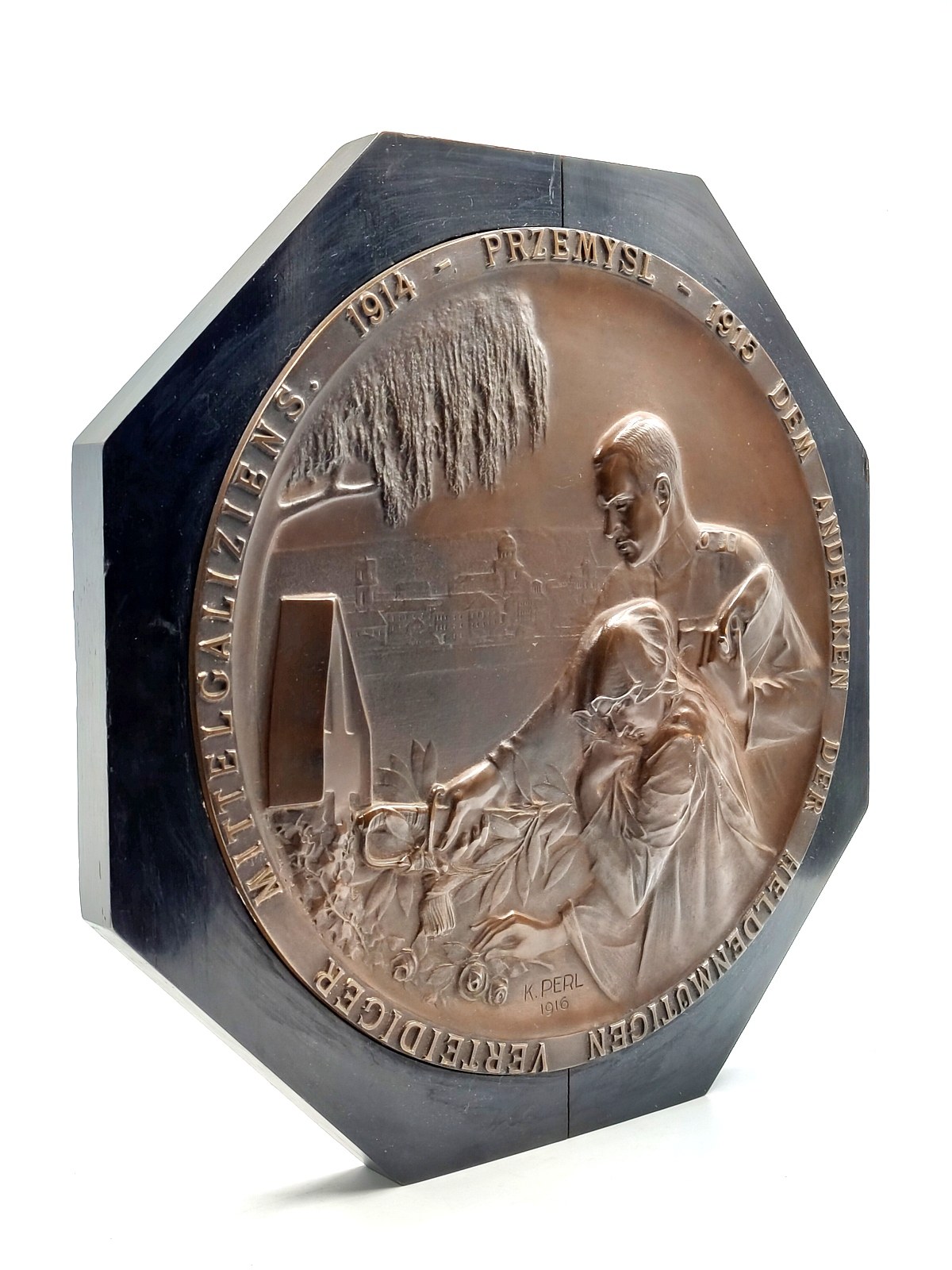
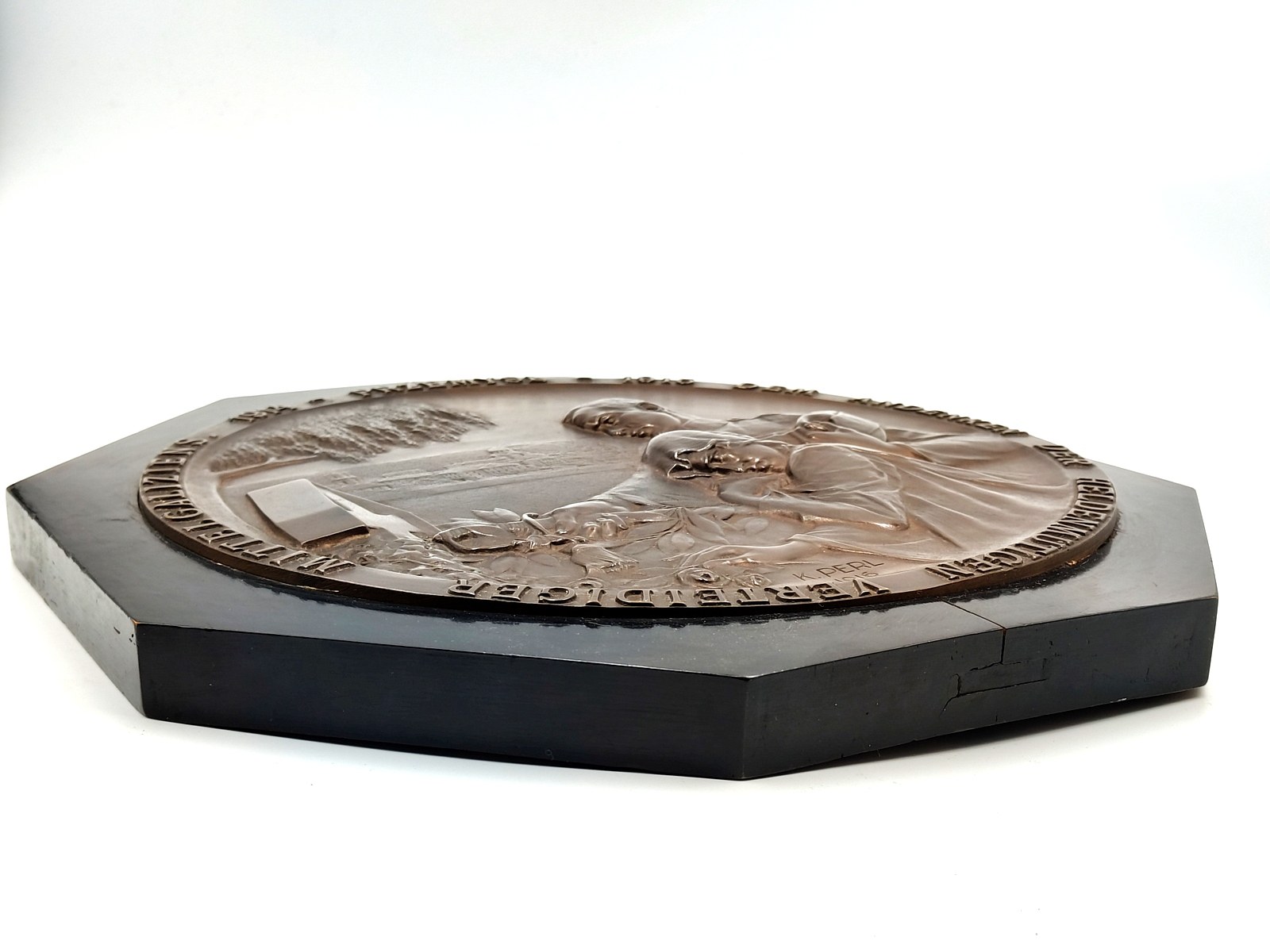
Patriotic commemorative plaque "Fortress of Przemyśl 1914-1915". - Karl Perl (1876-1965), bronze
In Memory of the Defenders of Przemyśl
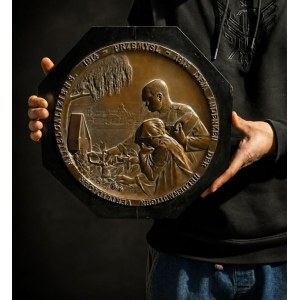
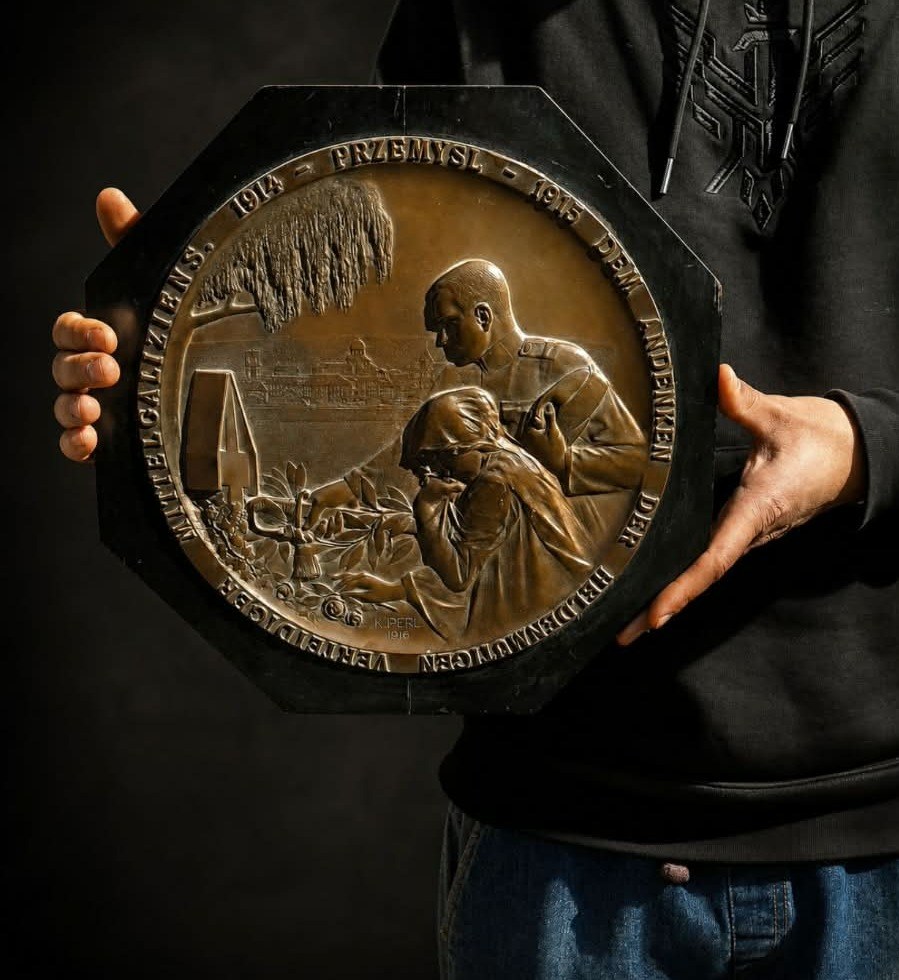
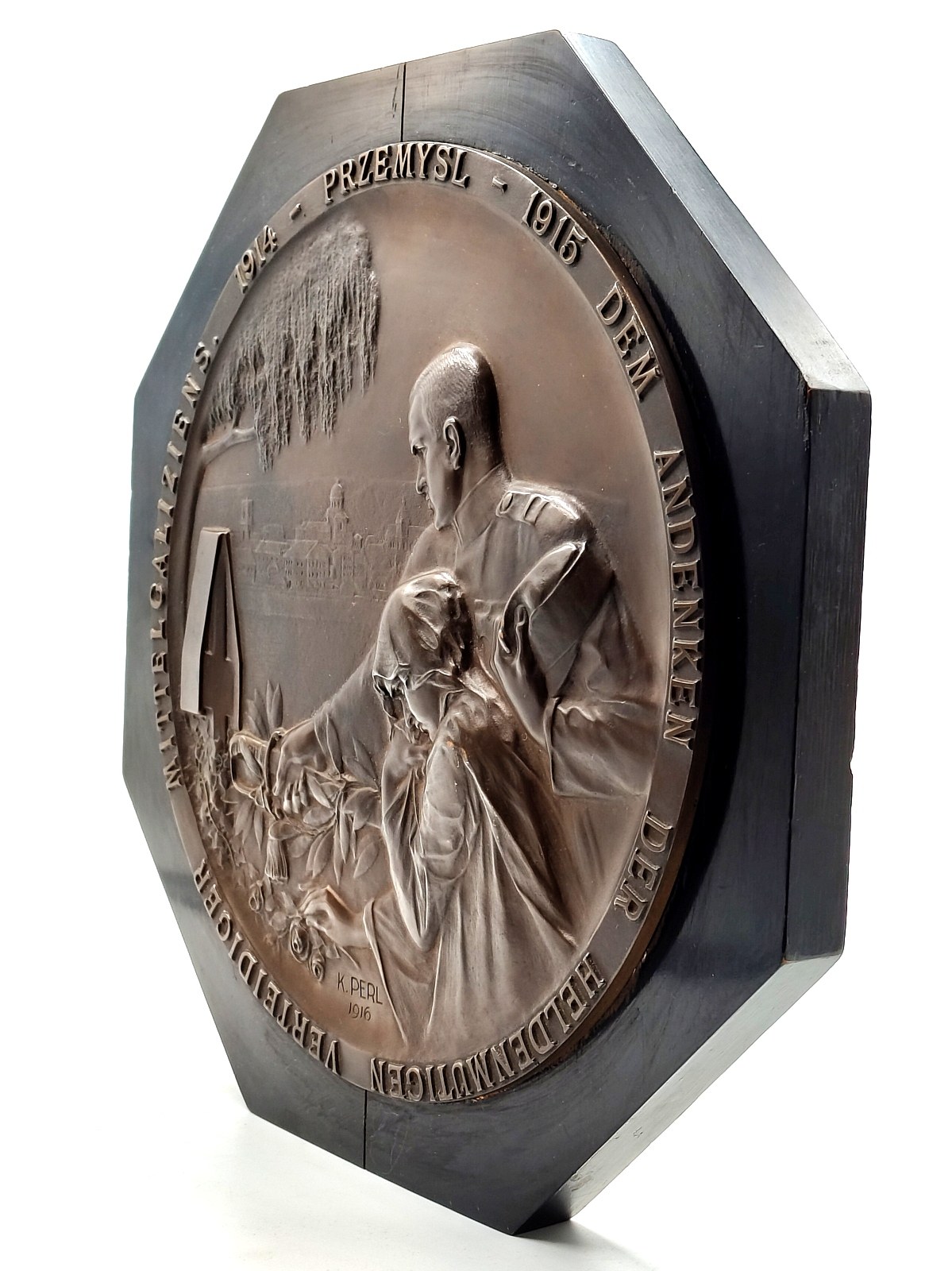
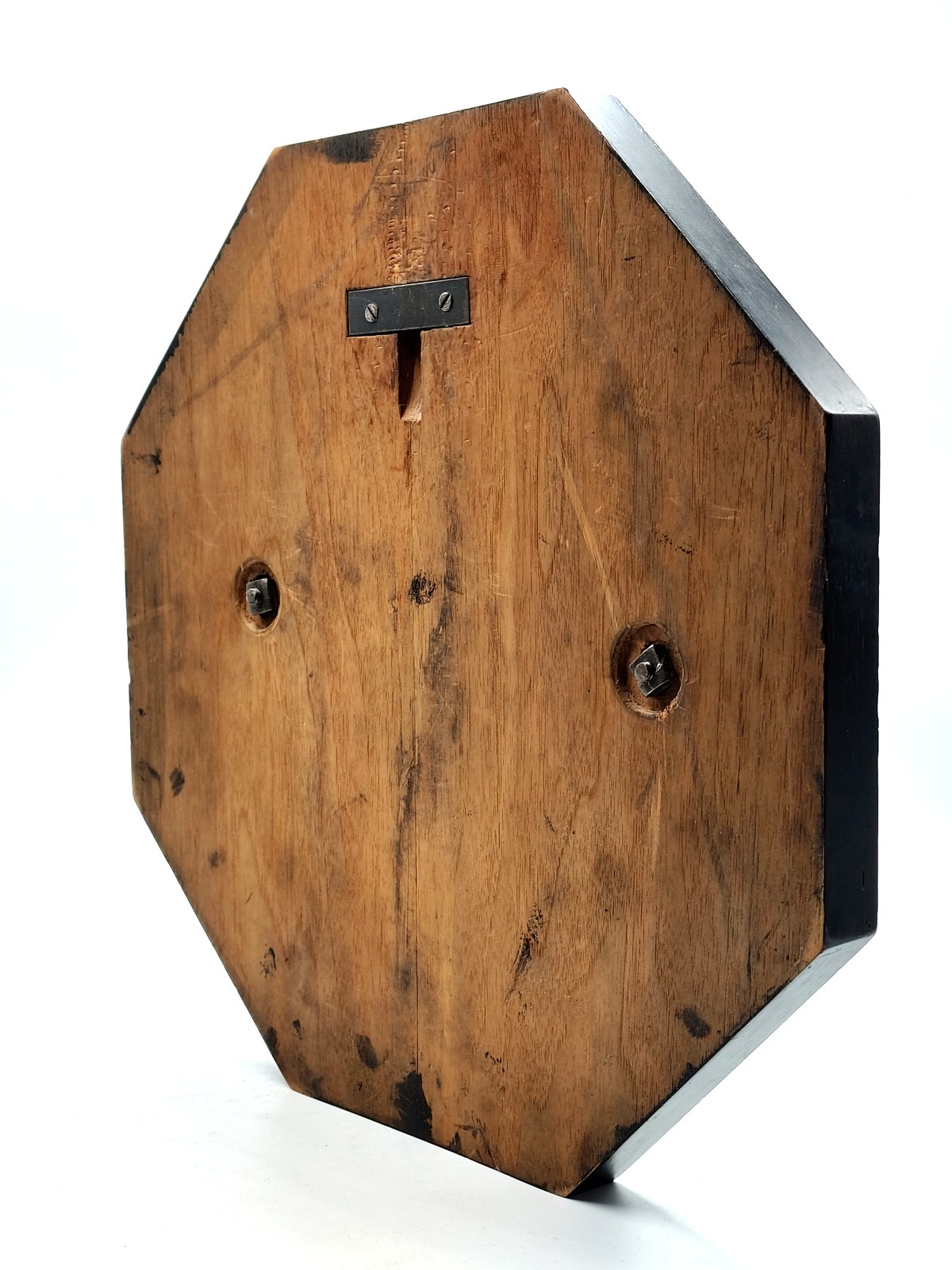
An impressive commemorative plaque made in bronze, set on an original octagonal oak base.
Overall dimensions: approx. 34.5 × 34.5 cm; diameter of the plaque approx. 29 cm.
Piece of a cabinet-like, unitary character, intended for a collector's or representative display.
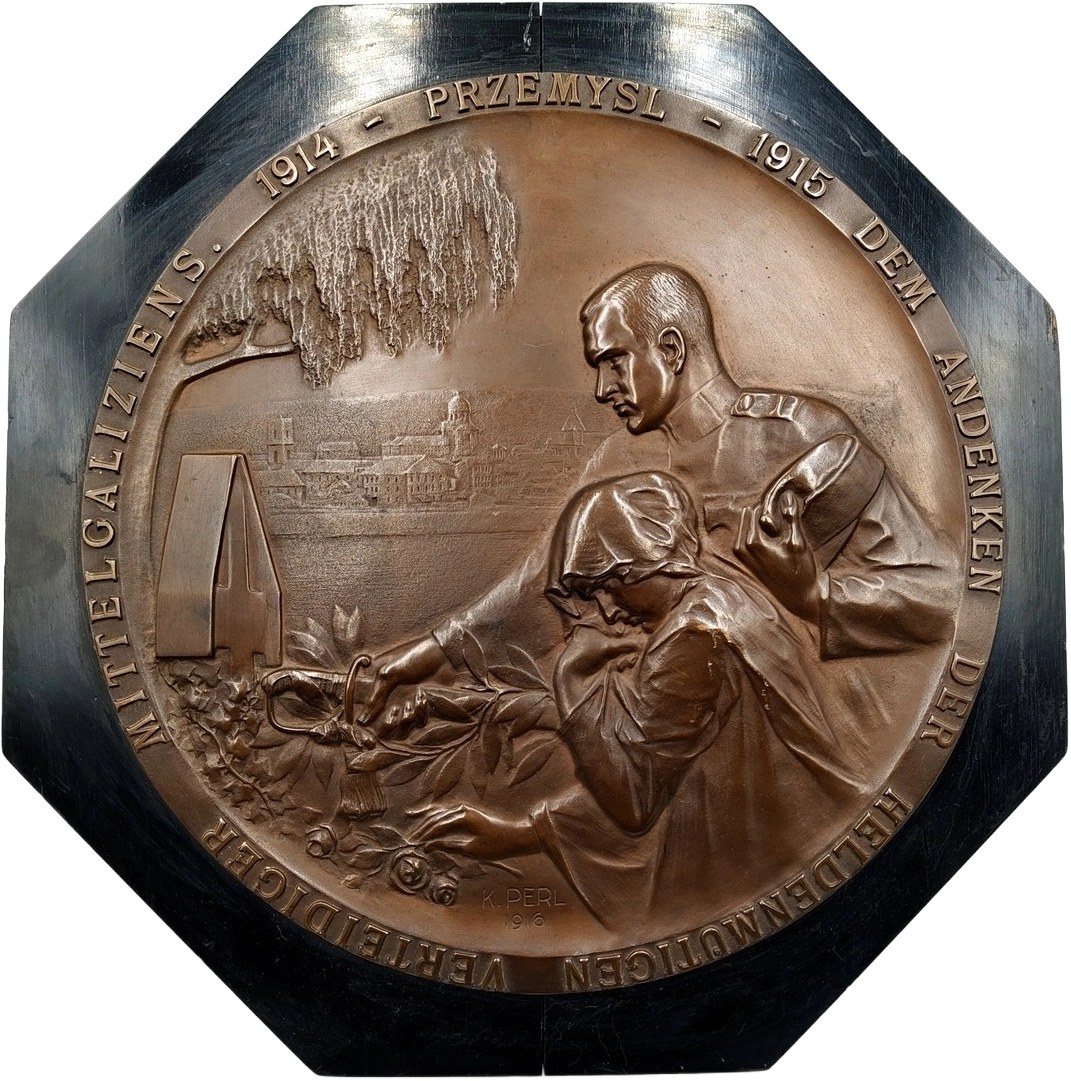
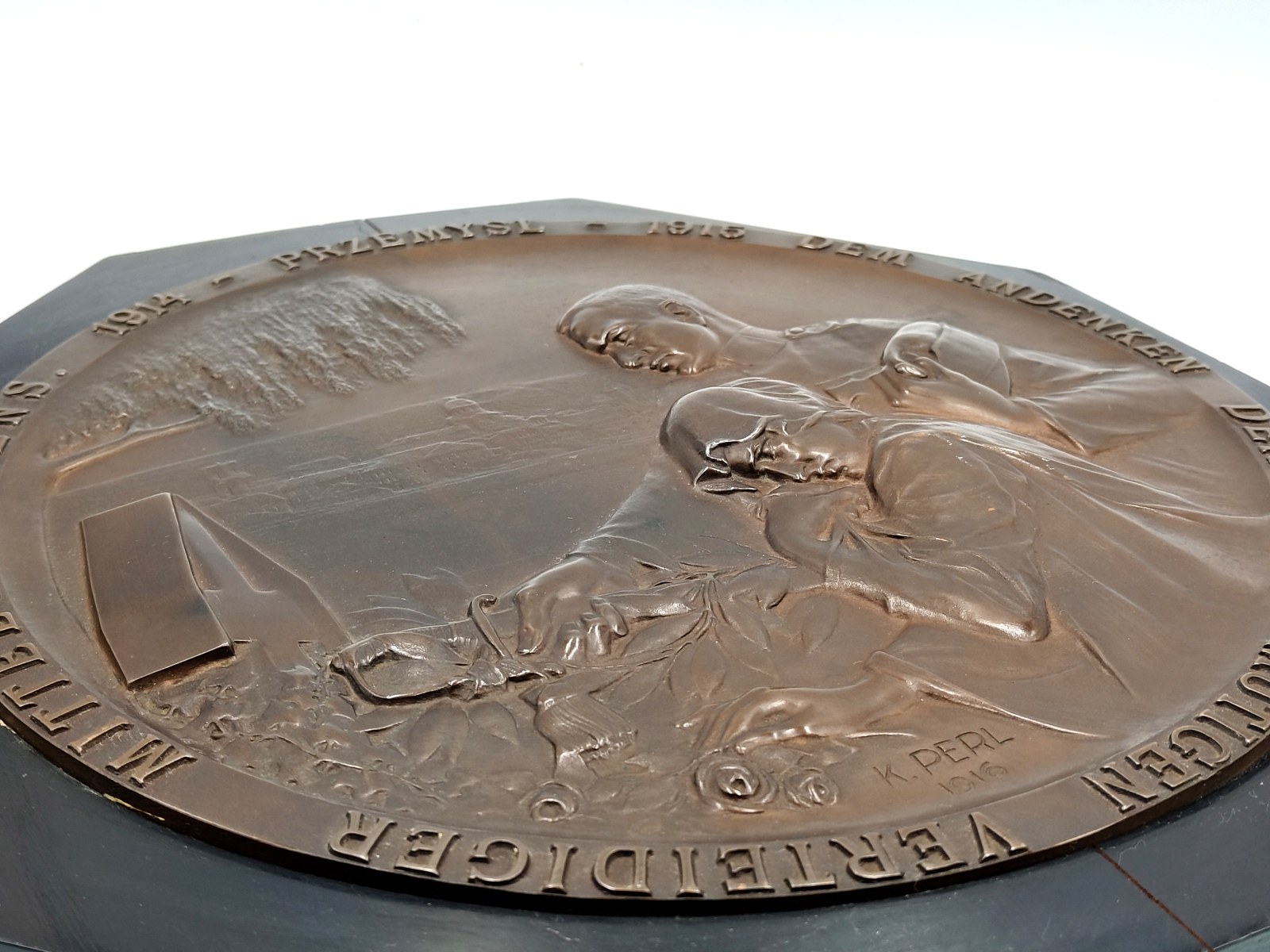
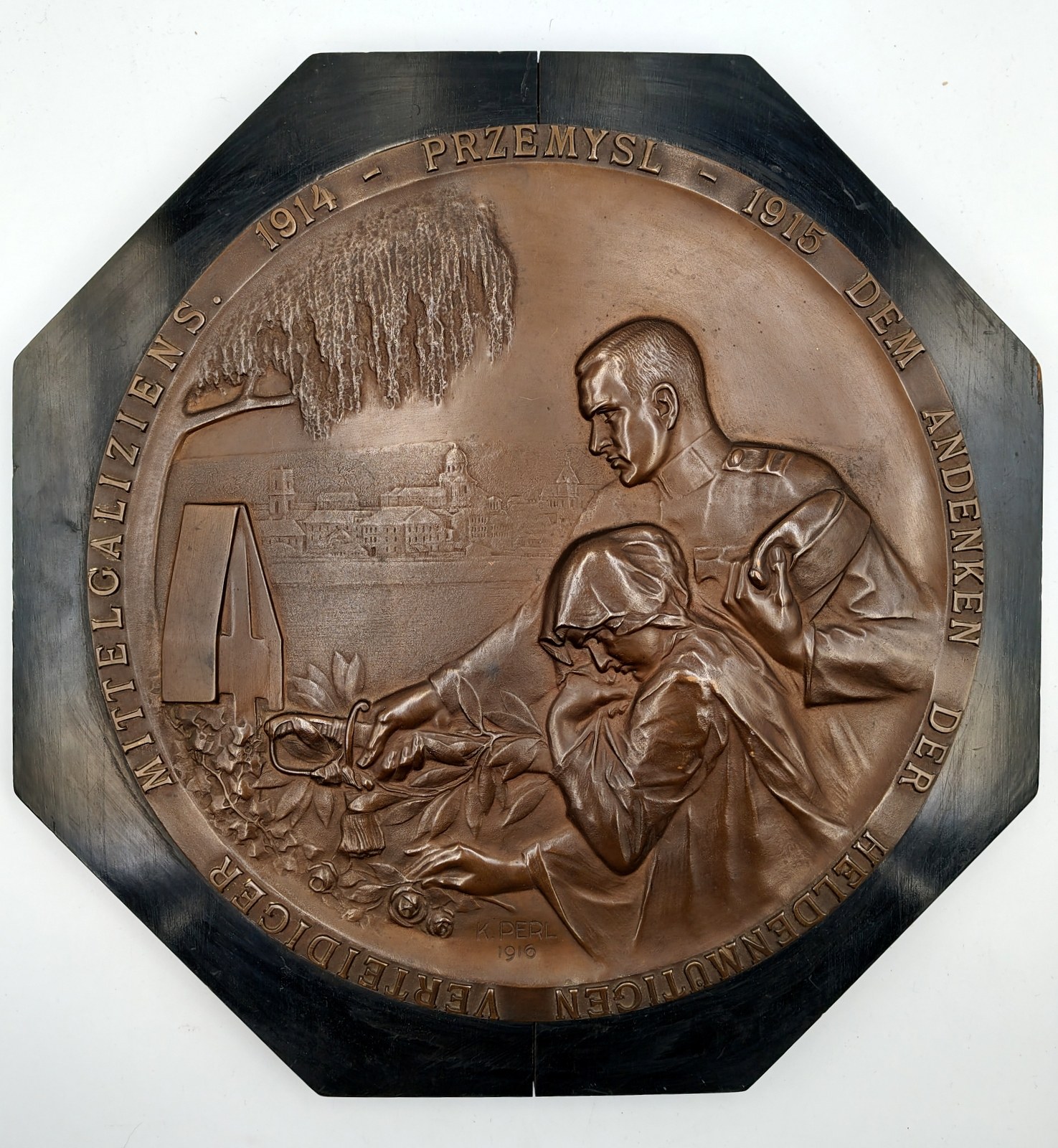
The object commemorates events related to the siege of the Przemyśl Fortress in 1914-1915 - one of the most important and tragic episodes of World War I on the Eastern Front. The inscriptions "MITTELGALIZIENS", "1914-1915", "PRZEMYSL" and "DEM ANDENKEN DER HELDENMUTIGEN VERTEIDIGER" clearly indicate a memorial character, dedicated to the defenders of Central Galicia.
The relief composition shows a scene with a strong symbolic and patriotic charge: the main scene is created by an Austro-Hungarian soldier who, in an empathetic, affectionate gesture, leans over a kneeling woman wearing a traditional headscarf, plunged into deep despair. The soldier places his hand on her back, bringing her comfort after the loss of a loved one.
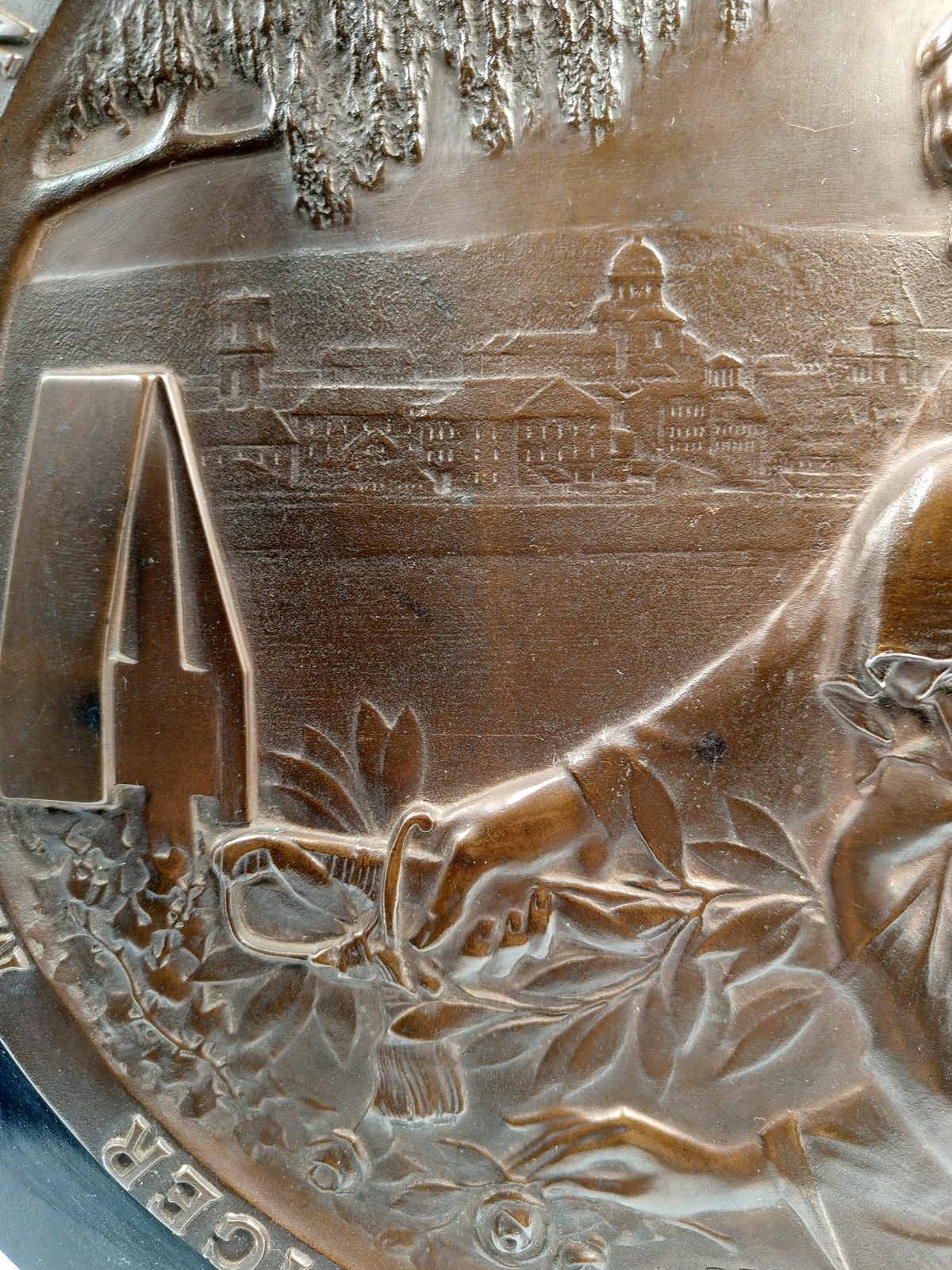
Soldier's tribute and saber: The soldier's other hand rests on the hilt of a military saber. He places this symbol of glory on a fresh grave topped with a simple soldier's cross, emphasizing the purely military nature of the tribute.
Panorama of Przemyśl: In the background, behind the symbolic weeping willow, Perl has carved a remarkably precise, artistic panorama of the city of Przemyśl. Visible are the towers of the churches rising above the city and the distinctive buildings at the foot of the castle hills.
The author of the design is Karl Perl (1876-1965) - a Viennese sculptor, medalist and representative of the late Art Nouveau (Jugendstil) and, later, Art Déco aesthetics.
He was educated at the Academy of Fine Arts in Vienna under the guidance of leading representatives of the local art school. An important place in his work was occupied by realizations of a military and commemorative nature, which was particularly evident during World War I.
During this period, he served in the Austro-Hungarian army as an artistic advisor to the 16th Division of Soldiers' Tombs of the Przemyśl Command.
In this capacity, he developed projects related to the commemoration of the fallen, including designing the permanent decoration of War Cemetery No. 500 in Tuszym in February 1917. His work related to Przemyśl and Galicia today exemplifies Austro-Hungarian memorial art and World War I medals.
The plaque is a rare example of high-class commemorative art of a cabinet nature.
A unique, museum grade item !!!