


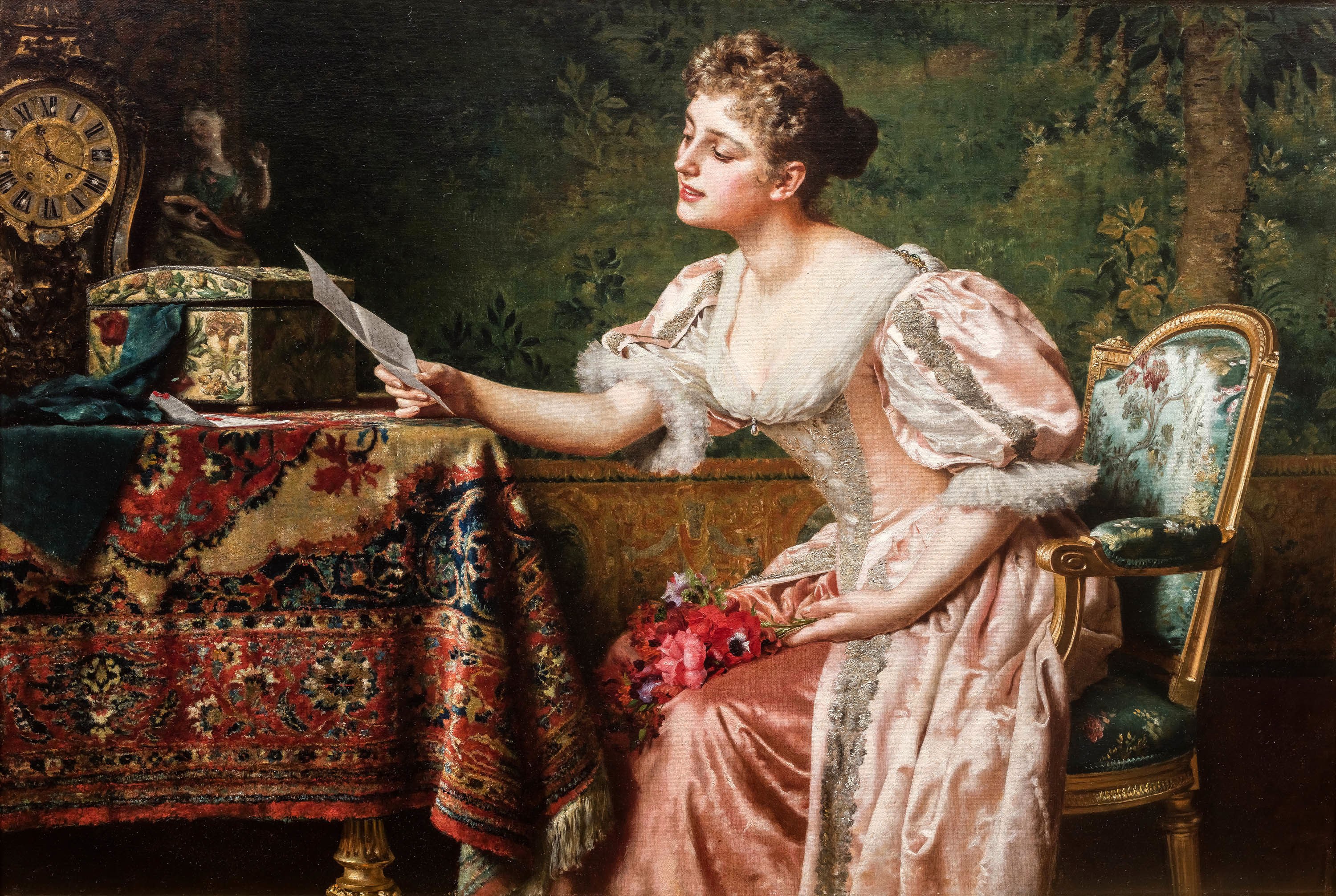
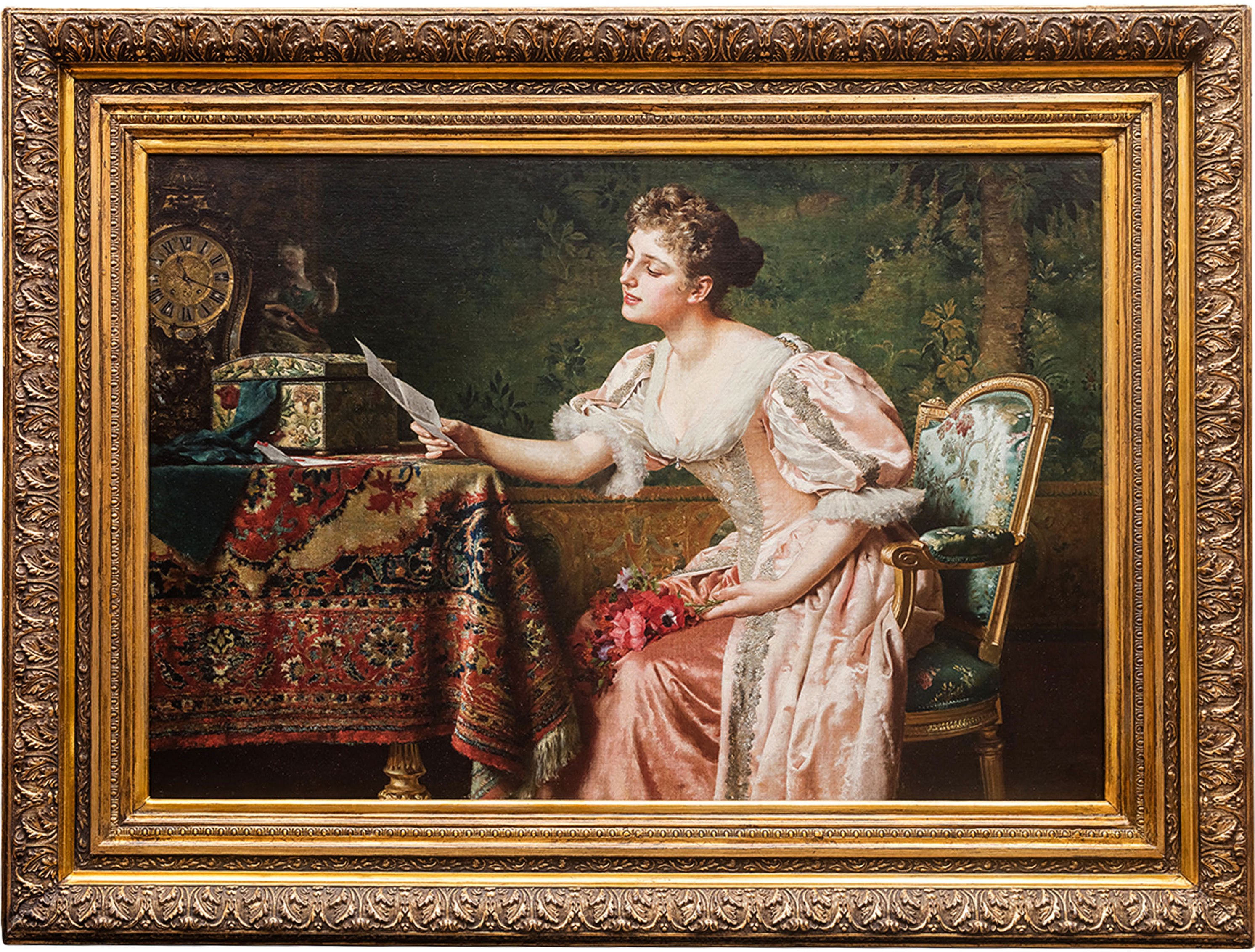
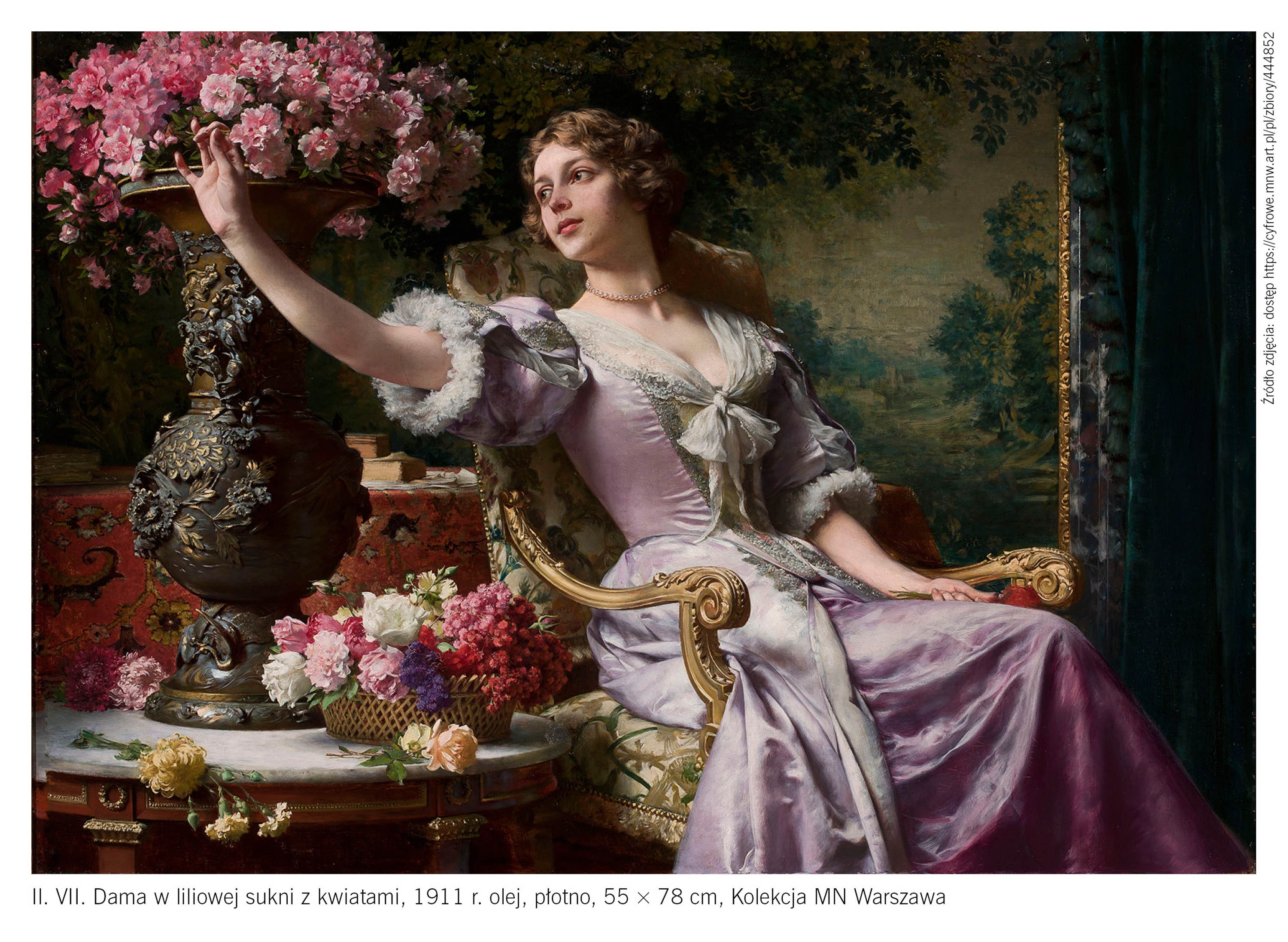
oil, canvas, 48.3 × 71.1 cm
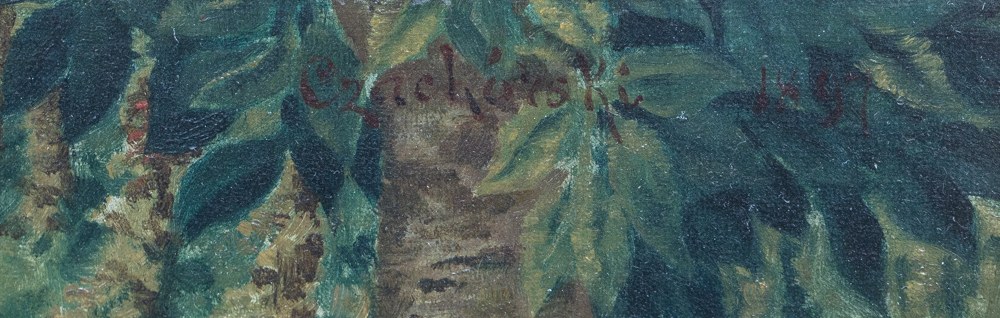
signed and dated p. g.: "Czachórski 1897"
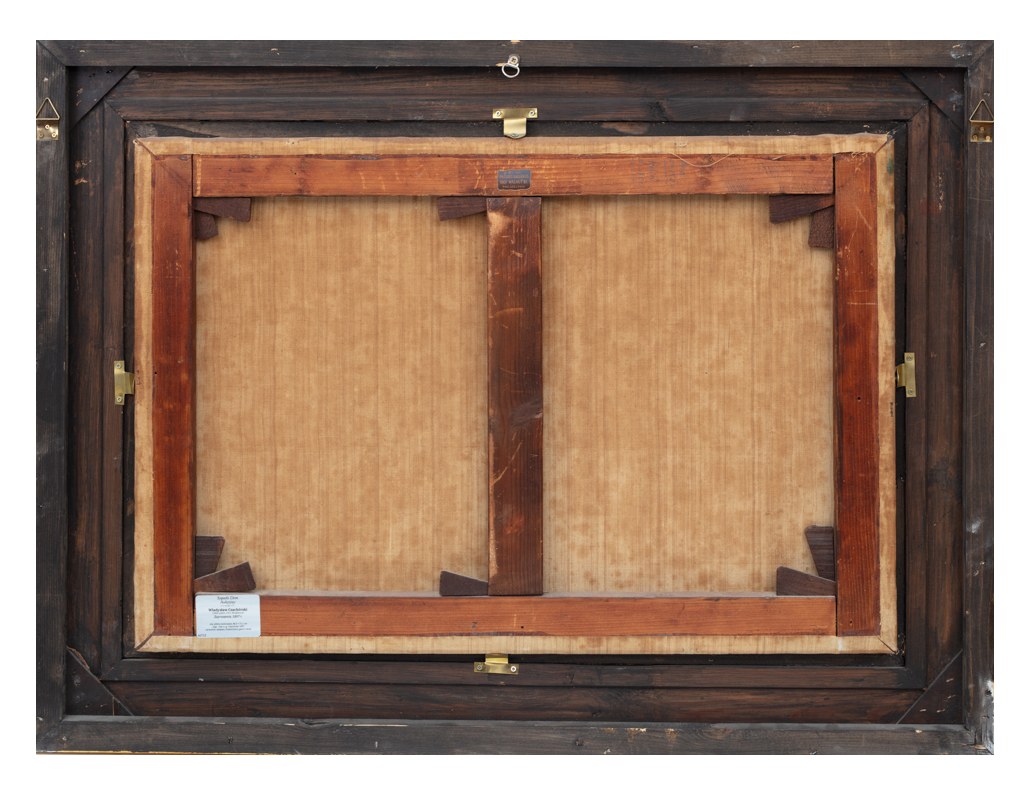
on the loom a sticker from the Philadelphia Art Gallery
Provenance:
- McClees Galleries, Philadelphia
The gallery was founded in 1845 by James McClees (1821-1887), who pioneered paper photography and documented the development of Philadelphia. In 1867 he abandoned the photography business and opened an art gallery, which was run by his son after his death (until 1920).
- Collection of Alfred E. Burk, Philadelphia, ca. 1910
Alfred E. Burk (1864-1921) was an influential industrialist and political activist in Philadelphia. Together with his brothers, Henry and Charles, he founded the Burk Brothers Company, which was active in the leather industry. They created a gigantic factory complex, earning record revenues. Alfred owned a luxurious mansion at 1500 North Broad Street in Philadelphia, built between 1907 and 1909; since 1970 the mansion has been listed in the "Philadelphia Historic Commission."
- Collection of the heirs of A.E.Burk (until 2010).
- Private collection, Poznań (purchase at Sotheby's New York auction,
19th Century European Art, October 4, 2010)
- Private collection, Poland (purchase at the Auction of Works of Art, November 30
2019, item 5, Sopot Auction House)
Reproduced:
- 19th Century European Art, Sotheby's, New York [auction catalog].
October 4, 2010, item 34, page 61;
- Works of Art Auction November 30, 2019, [catalog], Sopot Auction House.
2019, item 5.
Selected literature:
- H. Piątkowski, Władysław Czachórski, Artistic Monographs Volume XI, Warsaw 1927,
- A. Melbechowska-Luty, Czachórski Władysław, in: Słownik artystów polskich, Wrocław-Warszawa-Kraków-Gdańsk, T. I, p. 383
- Władysław Czachórski 1850-1911 on the ninetieth anniversary of the artist's death. Catalog of the exhibition [texts by L. Lameński, D. Kubacka], Lublin Museum, Lublin 2001
- W. Jaroszyński, Władysław Czachórski's life and affairs, Lublin 2004
- A. Straszewska, The role of historical costume in Władysław Czachórski's painting, [in:] Athens on the Isar. Munich Painting. Studies and sketches, edited by Eliza Ptaszyńska, Suwałki 2012, pp. 241-268
- A.Bagińska, Artist-atelier-public. The studios of Polish painters in Munich. [in:] Munich painters, pod. Eds. B.Skrzydlewska and A.Frejlich, MN Lublin 2026, pp. 30-32.
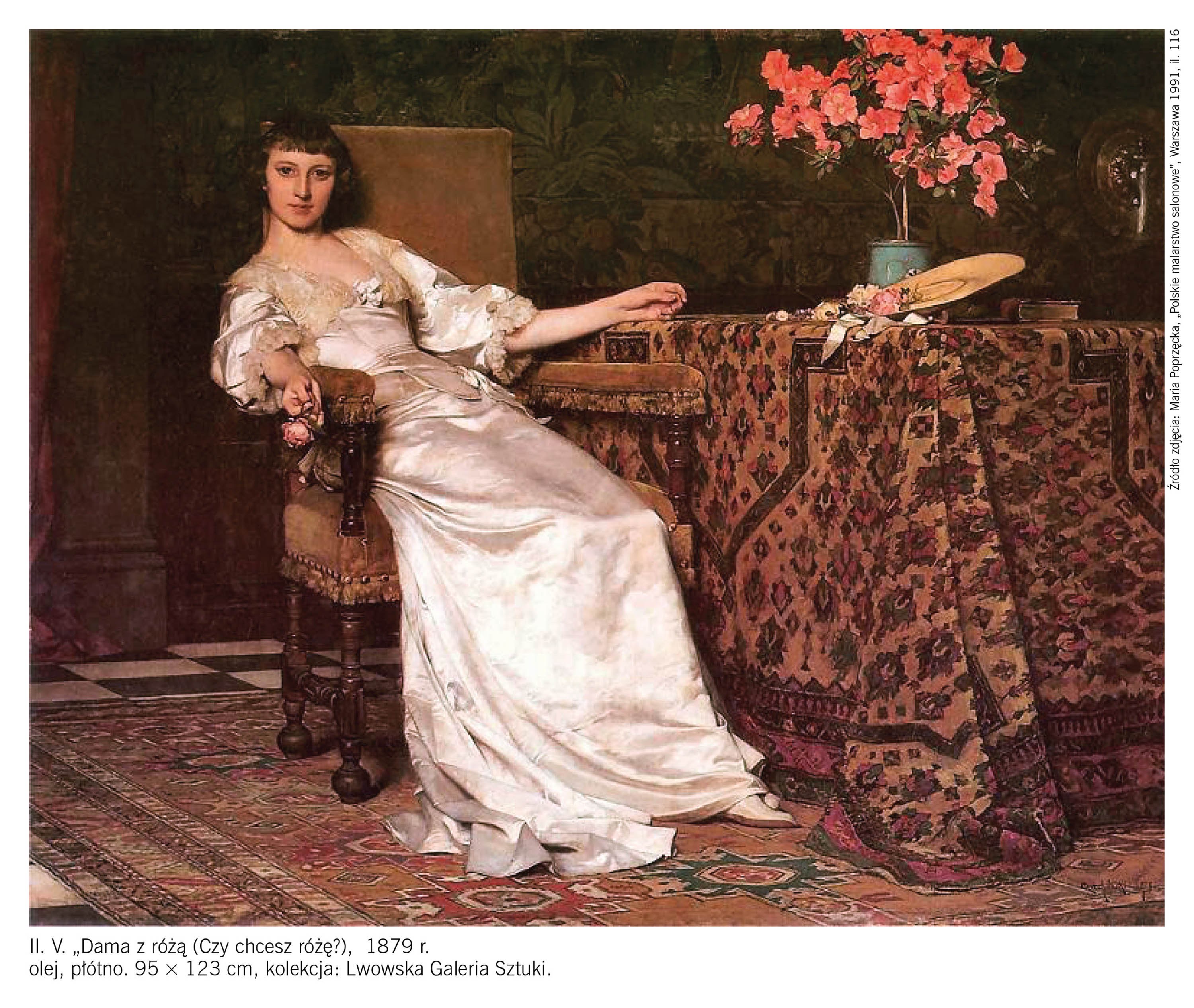
The presented painting is one of the best paintings by the brush of Władysław Czachórski. It was painted in 1897 at the height of the painter's fame. His depictions of women in satin shimmering gowns won stunning acclaim from critics and the Munich art community. His studio was regularly visited by Prince Regent Luitpold Karl Joseph Wilhelm Wittelsbach (1821-1912) and Czachórski was repeatedly invited to dine with the prince, culminating in a cigar smoking social in the regent's study. His paintings were much sought after, and many of them ended up in the prince's collection. Sometimes Czachórski returned to his best realizations refining details or looking for new compositional solutions, such as the painting Do You Want a Rose? from 1879 (from the collection of the Lviv Art Gallery, dimension 95 × 123 cm) repeated in another composition from the same year from a private collection (oil, canvas, 66 × 52.2 cm). An analogous variant of "Invitation" from 1896 is also known (in Old Master&19th Paintings Drawings&Watercolours, Christie, London, 07.07.2010, item 285, p. 154). Of his pursuit of perfection, one wrote: "He delved into the subject of his paintings with infinite diligence, still not quite satisfied with his work. If no longer a spiritual attitude, his awe of nature, his enjoyment of the world and objects, as well as his tireless conscientiousness brought him close to the masters of the Netherlands, whose works were to him an unsurpassed prototype. There was no coquetry in his smooth, free brushstrokes, which, for all their certainty, retained a subtle freshness. He strived for perfect unity of form and color, and always starting from the most precise, detailed mastery of form, he despised in his independent mastery all cheap, visual effects. He was characterized by the joy of conscious taste in choosing a motif that always matched the serious refinement of his own personality. He had class and elegance inseparable from his personality, not just his artistic personality. The Pole, in whom there was something of the Frenchman, spoke from his mature, independent paintings, from the moment he found himself and his own style." Alex Braun [1911], Wladyslaw Czachórski [in:], Halina Stępień, Artyści polscy w środowisku monachijskim w latach 1828-1914, PAN Krakow, p. 91).
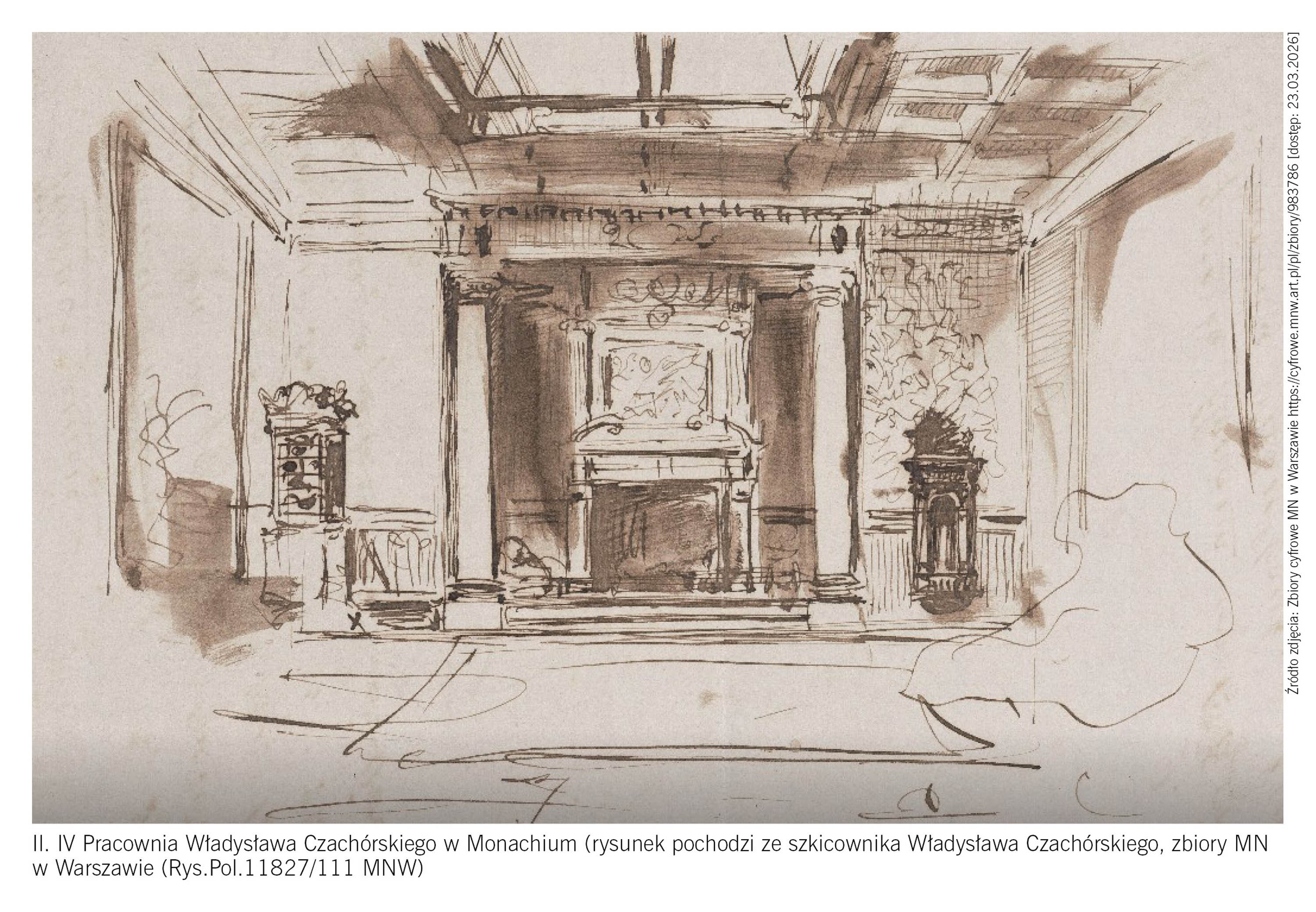
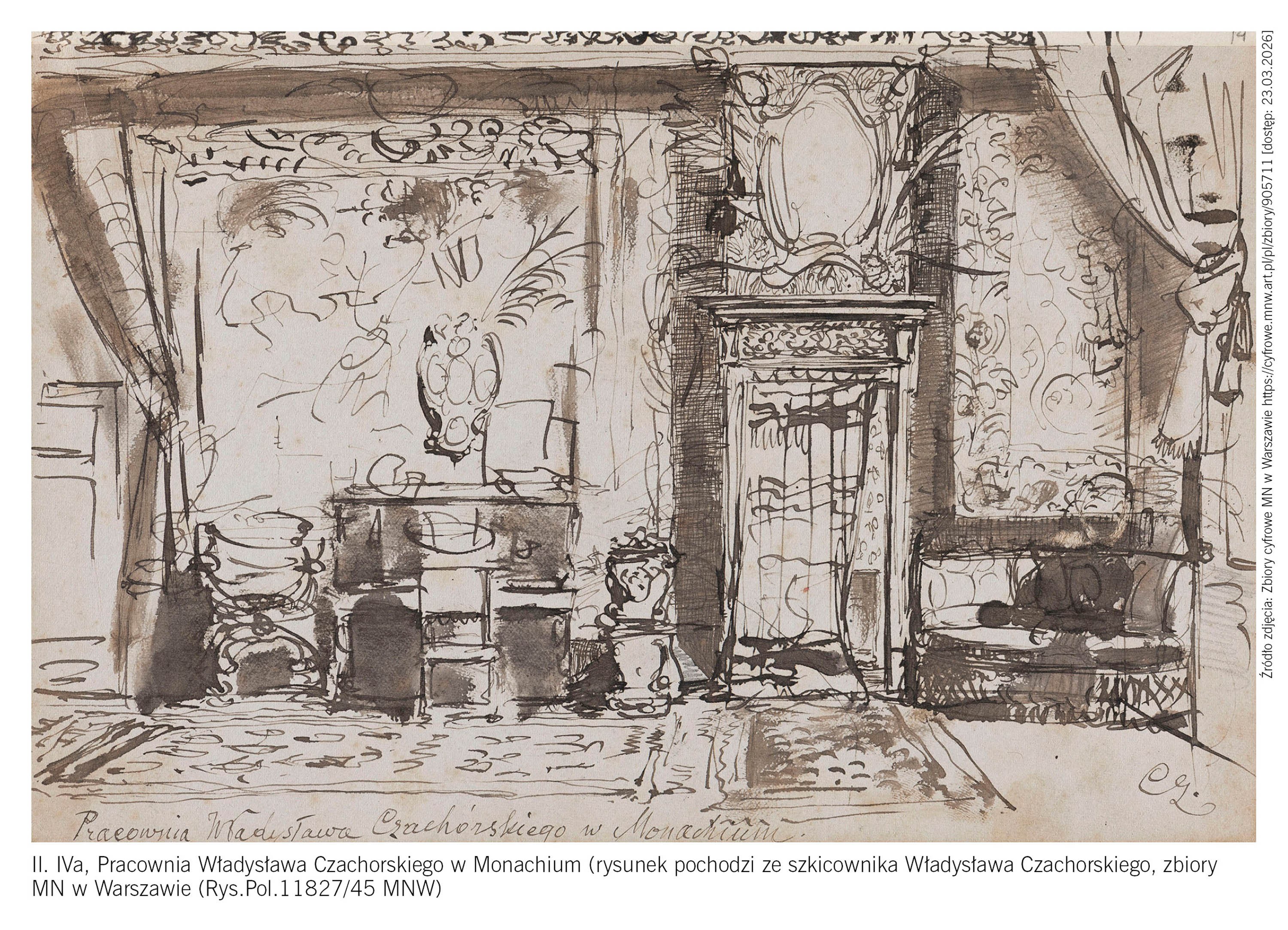
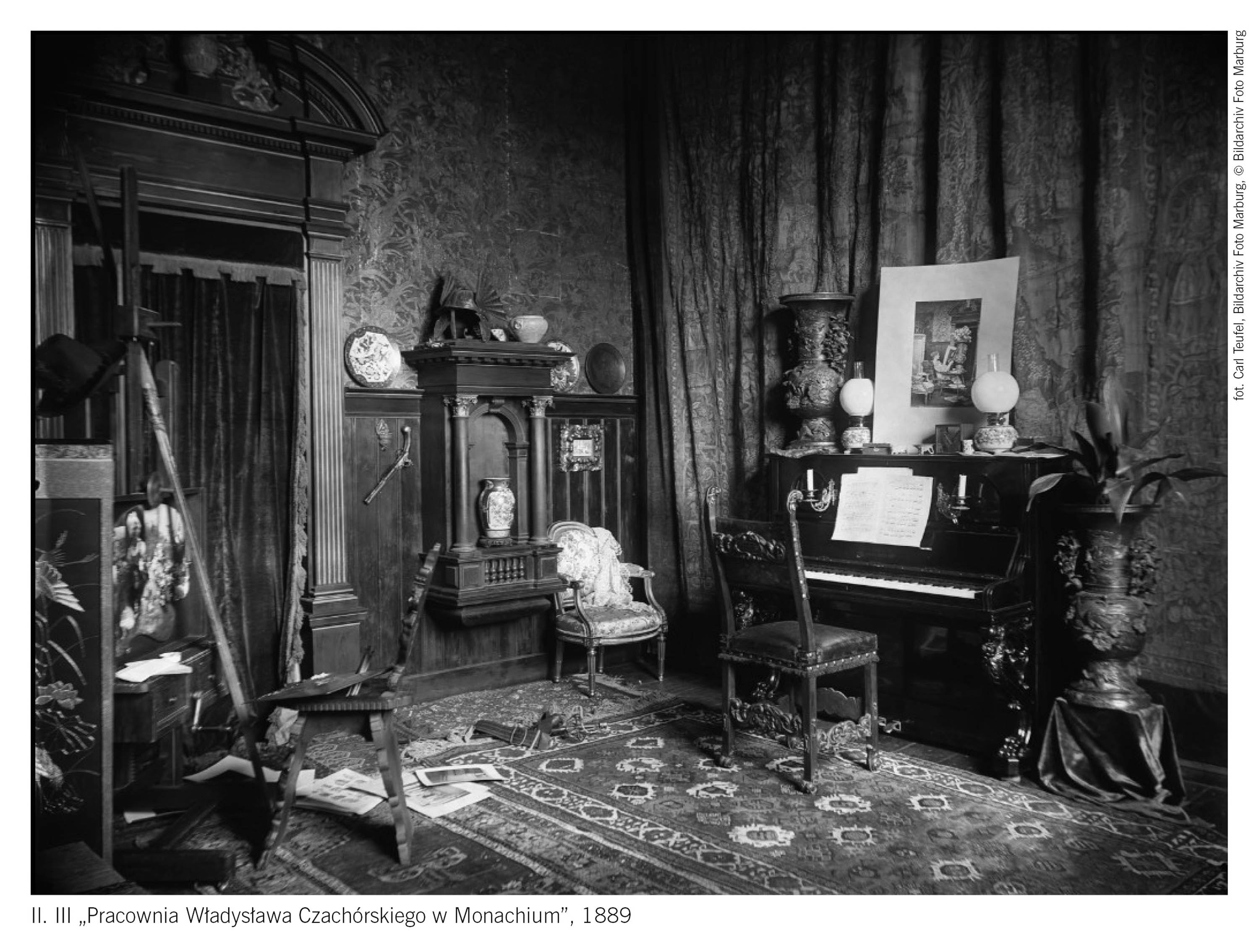
"Czachórski's multistage, lengthy and pedantic way of working required an elaborate workshop: furniture, decorative objects, dresses, fabrics, jewelry and flowers. Czachórski was fond of finding, borrowing and buying them, and even kept a record of the items that found their way into the studio. This one never served as a literal backdrop for his paintings, but individual elements of the decor can be found on specific canvases." Thus, the vase with floral ornament visible in the photograph of the atelier (ill.III) appears in the painting "Lady in a lilac dress with flowers" (ill. VII). Also, the characteristic classicist armchair from the archival photo, reproduced with extreme care, is visible in the painting "Invitation" from 1897 (Il. VI).
Przerwa-Tetmajer also wrote about the painter's studio: "In Władysław Czachórski's atelier I found only one small head on an easel; the rest went into the world. This painter, whose paintings have gained fame for the extraordinary finesse of their execution, has an atelier just like the paintings that come out of it: a more elegant, more exquisite one cannot be imagined. On one wall hangs a magnificent tapestry, on the second wall vis-à-vis a gorgeous, original Persian carpet, shimmering under the light, like leopard skin, on the third wall, opposite the windows, a stylish clock, probably one of the most beautiful old clocks in general. In this studio everything shines, as in front of my window at this moment the sun-drenched sea, it is a tabernacle of artistic exquisiteness." The marketization of Czachórski's art is evidenced not by the large number of works on display in the atelier - as in Wierusz-Kowalski's - but by their absence, resulting from earlier sales. In the eyes of visiting clients, such as traders, the rich and exquisite decor of the atelier acted as a substitute for the world reproduced from nature as much as the idealized world from his paintings." (A.Bagińska, Artist-atelier-public. The studios of Polish painters in Munich. [in:] Munich painters, ed. by B.Skrzydlewska and A.Frejlich, MN Lublin 2026, pp. 30-32).
One of the first paintings of beautiful women in stunning satin gowns is "Do you want a rose? " (ill. V, Lviv Art Gallery collection). In his memoirs, Czachórski wrote: "in the morning I flew to get flowers for the painting. I painted the rose in my hand, I sketched the gowns at the bottom in various ways (...) "almost the whole morning I arranged the gown on the mannequin and painted a piece of it." As Dr. Anna Straszewska writes, "This was the working method used when painting costumes by other painters of the time as well. This was done, among others, by Matejko, who began his work by applying a painting sketch on the basis of the disguised model, concentrating then on the hands and face, and giving only a general outline of the garment. He would then paint the costume upholstered on the mannequin and the surrounding props, and finally return once more to work with the costumed model to refine the details. The satin dress à la van Dyck, made by Czachórski while working on the painting "Do you want a rose? " still served him in his painting work for the next five years, until 1885." (quoted in A. Straszewska, The Role of Historical Costume in the Painting of Władysław Czachórski, [in:] Athens on the Isar. Munich Painting. Studies and Sketches, edited by Eliza Ptaszyńska, Suwałki 2012, pp. 241-268). "Around 1889 Czachórski first depicted a dress that became one of the most distinctive hallmarks of his work and in three almost identical variations appeared in his paintings for the last twenty years of the artist's life. It is this dress that we see in the painting in question, "The Invitation" (il. VI) and in "Lady in a Lilac Gown" (il. VII). "Its cut is similar to the previous white satin coiffure, from which it differs only in color and trim. It was sewn from light pink satin, depending on the version, first in a salmon shade, then in a lilac shade. The skirt slit shows a satin underskirt in a slightly darker color - first beige-pink, then apricot, and finally purple. The elbow-length sleeves have the same cut as before, but Czachórski picked up another detail of 17th-century fashion, which was the elongated slits trimmed with metal lace on their inner side, through which the shirt's delicate sleeves are visible. Metal lace was also trimmed around the edges of the top skirt and the front of the bodice, where it highlights the diagonal seams. However, the triangle thus formed was, contrary to 17th century fashion, filled with a decorative insert made of a different fabric, probably silver brocade with a floral pattern (in the first version these are rather large bouquets). This insert refers to bouffants, already characteristic of Rococo fashion. Also reflecting Rococo tastes is the pink color of the dress, not present in 17th century fashion (...). The fashion of the second half of the 17th century, however, is alluded to by adorning the neckline with a thin, transparent white shawl with a teardrop-shaped pearl or brooch pinned in the center." (Ibid., p. 260).







Laatst bekeken
Log in om de kavellijst in te zien
Favorieten
Log in om de kavellijst in te zien