


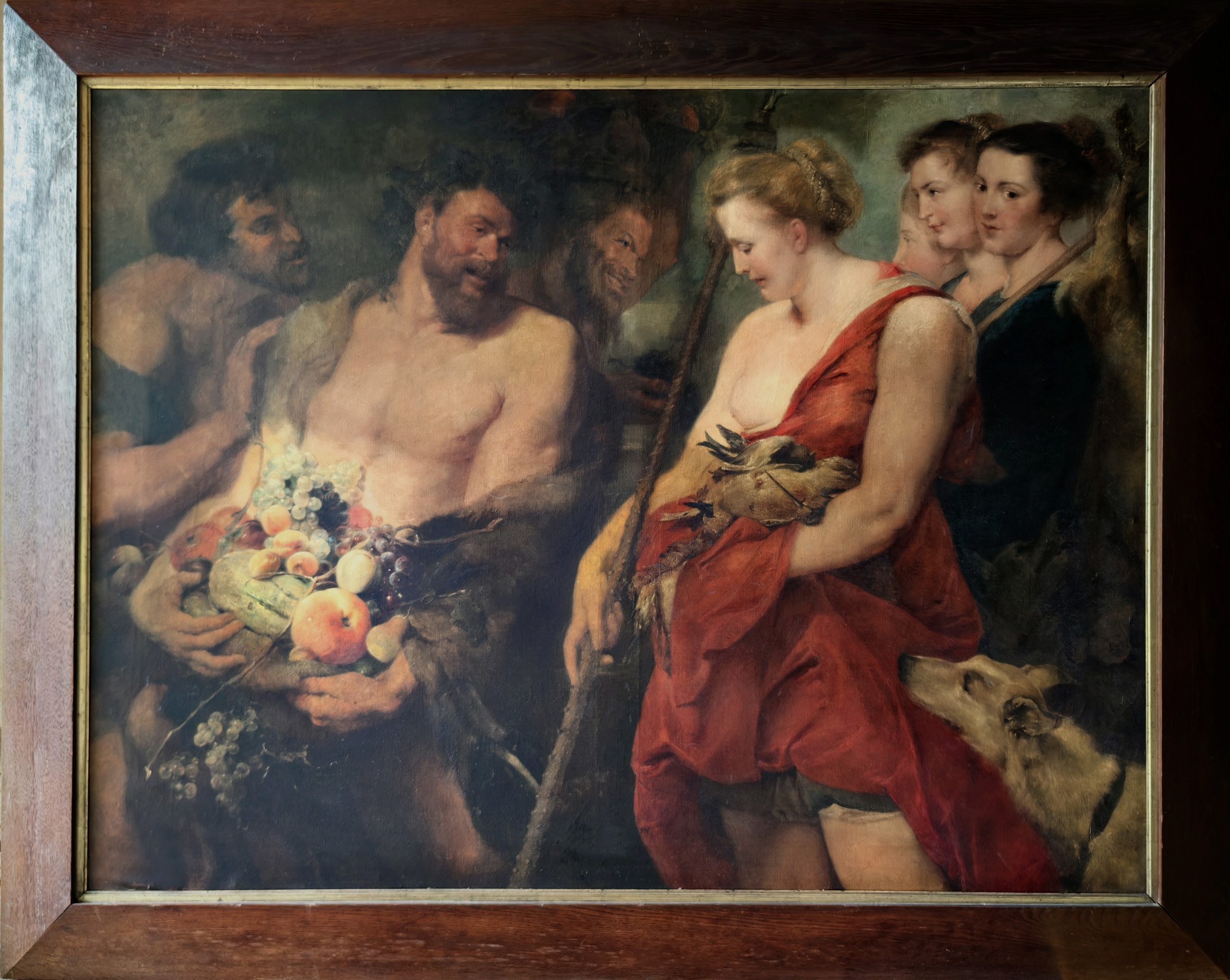

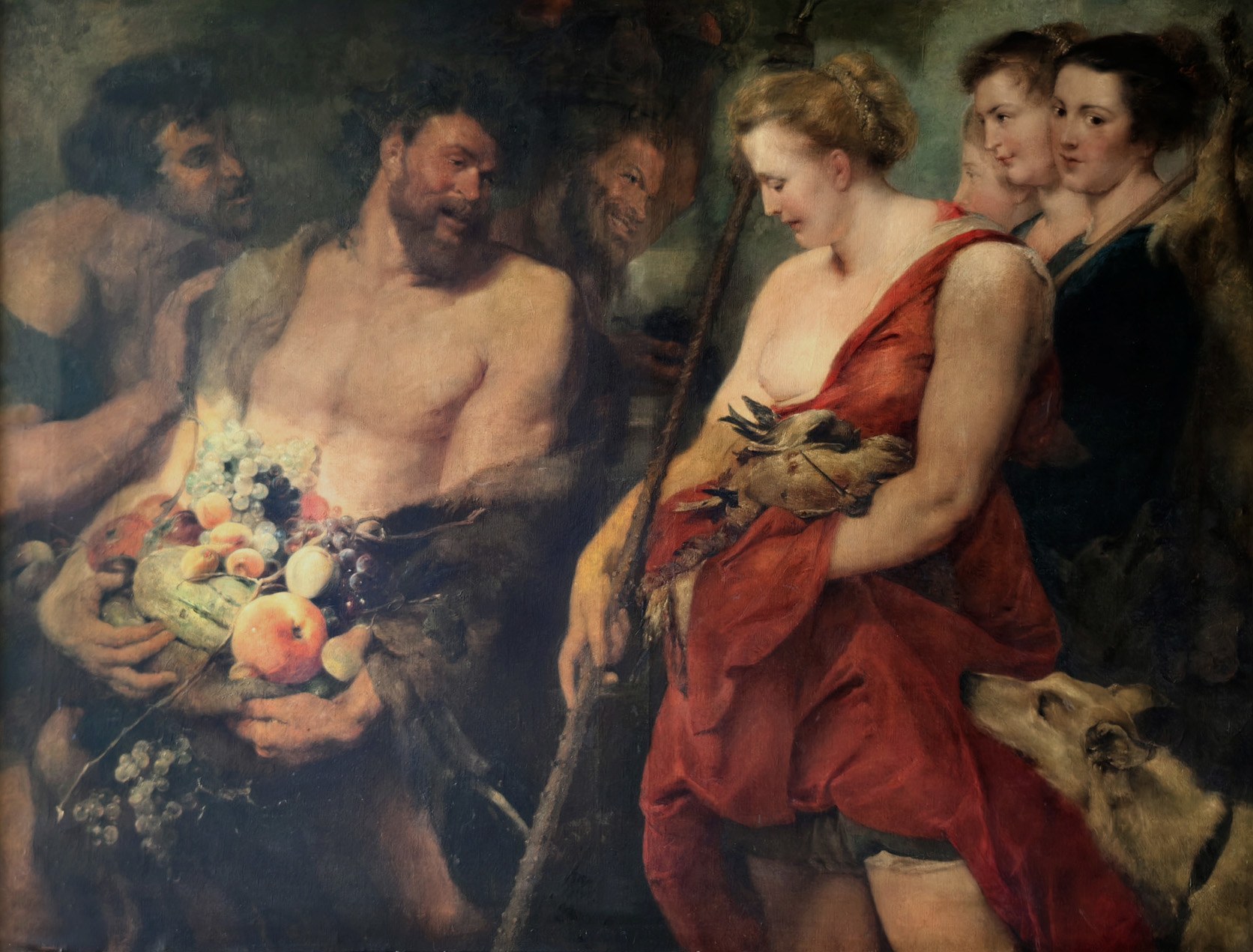
"Diana's return from the hunt" according to Rubens.
A copy of a Dresden painting by Peter Paul Rubens (1577-1640), created around 1615.
The featured painting, is an oil on canvas, from around 1910.
Dimensions: 112 x 147 cm, and with frame: 139 x 175 cm.
On the back of the canvas a stamped note "Copie nach No. 979 der Königl. Gemälde Galerie zu Dresden".
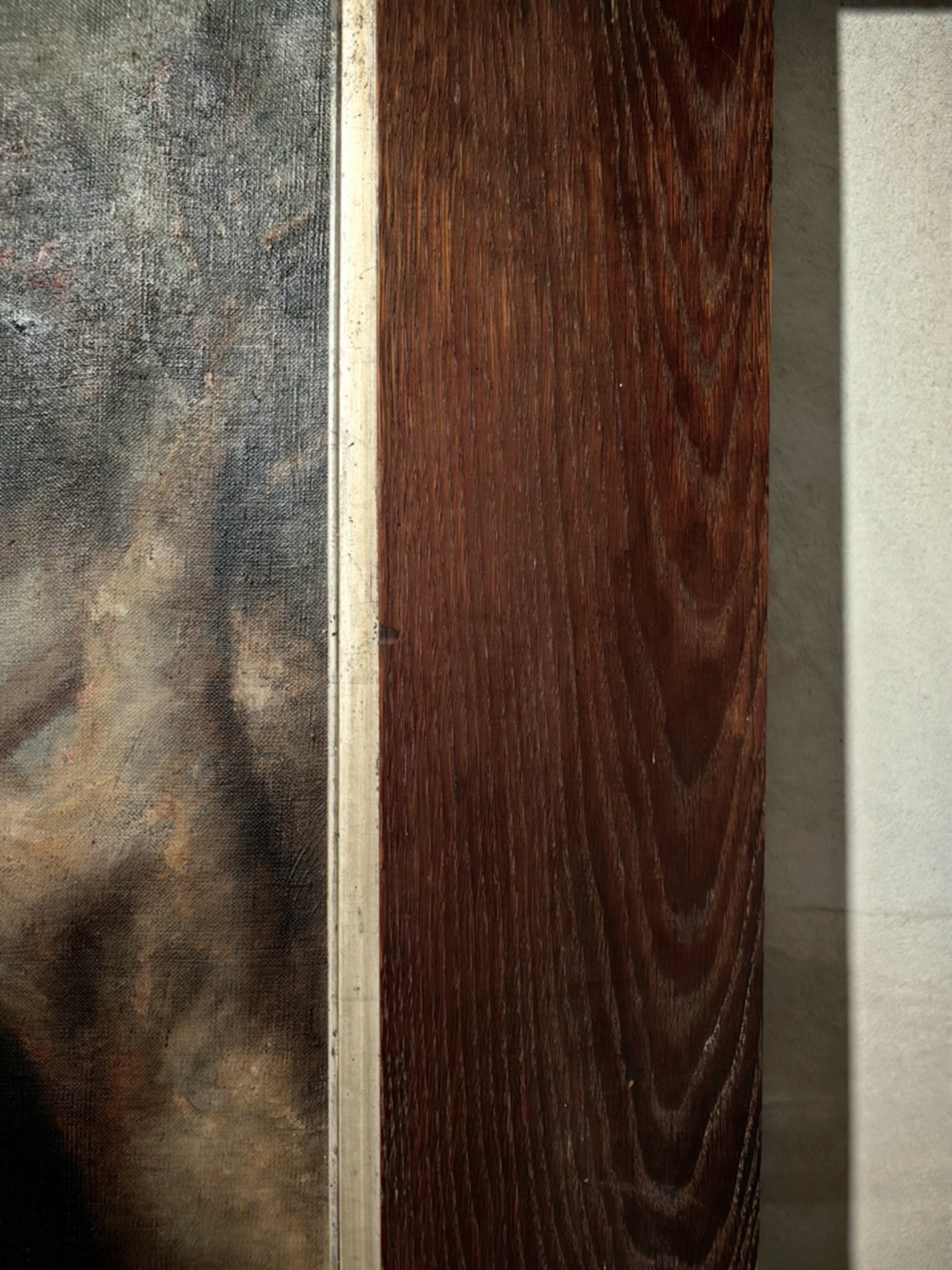
Painting after restoration. Framed in a wide, solid oak frame about 14 cm wide.
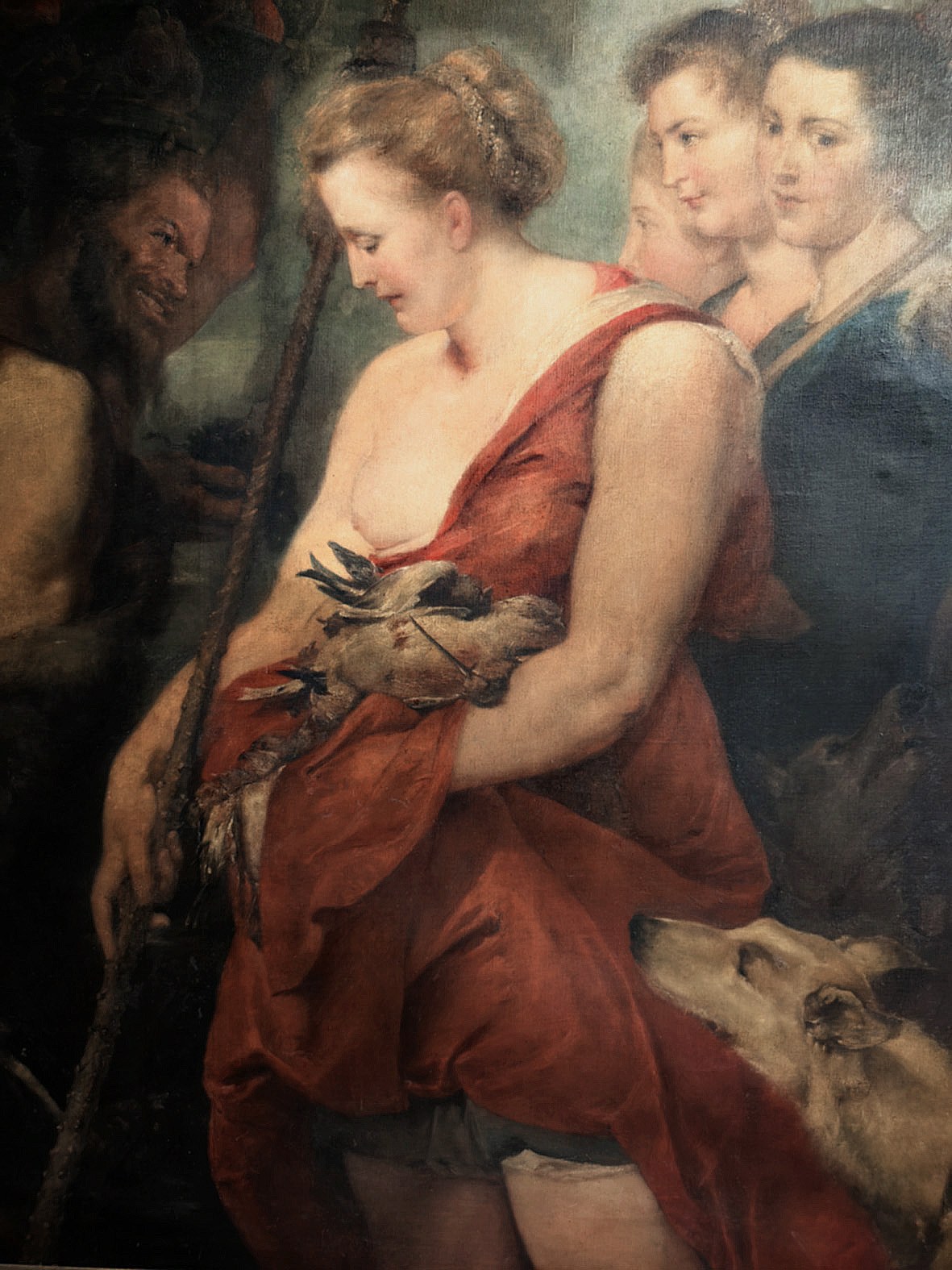
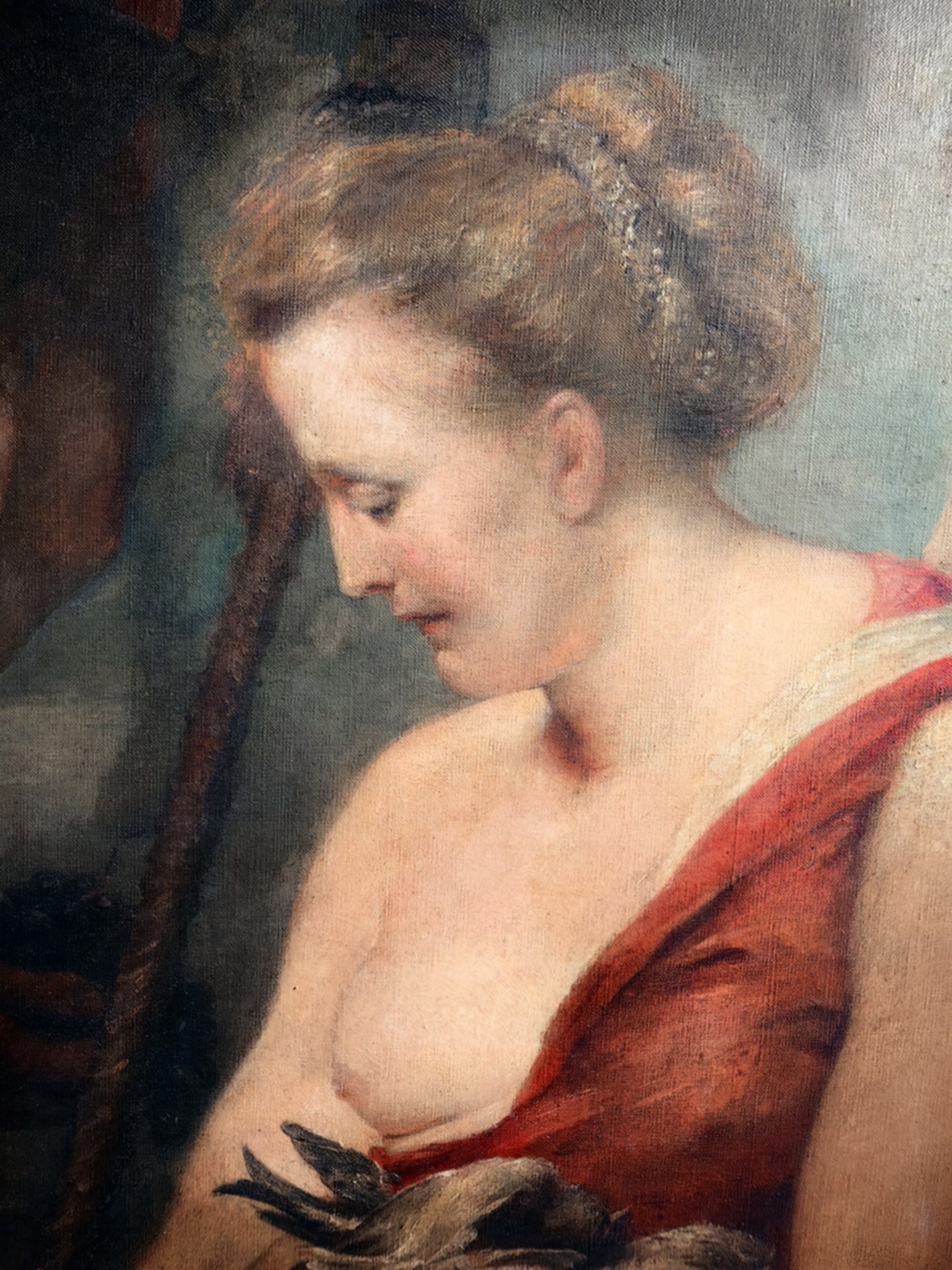
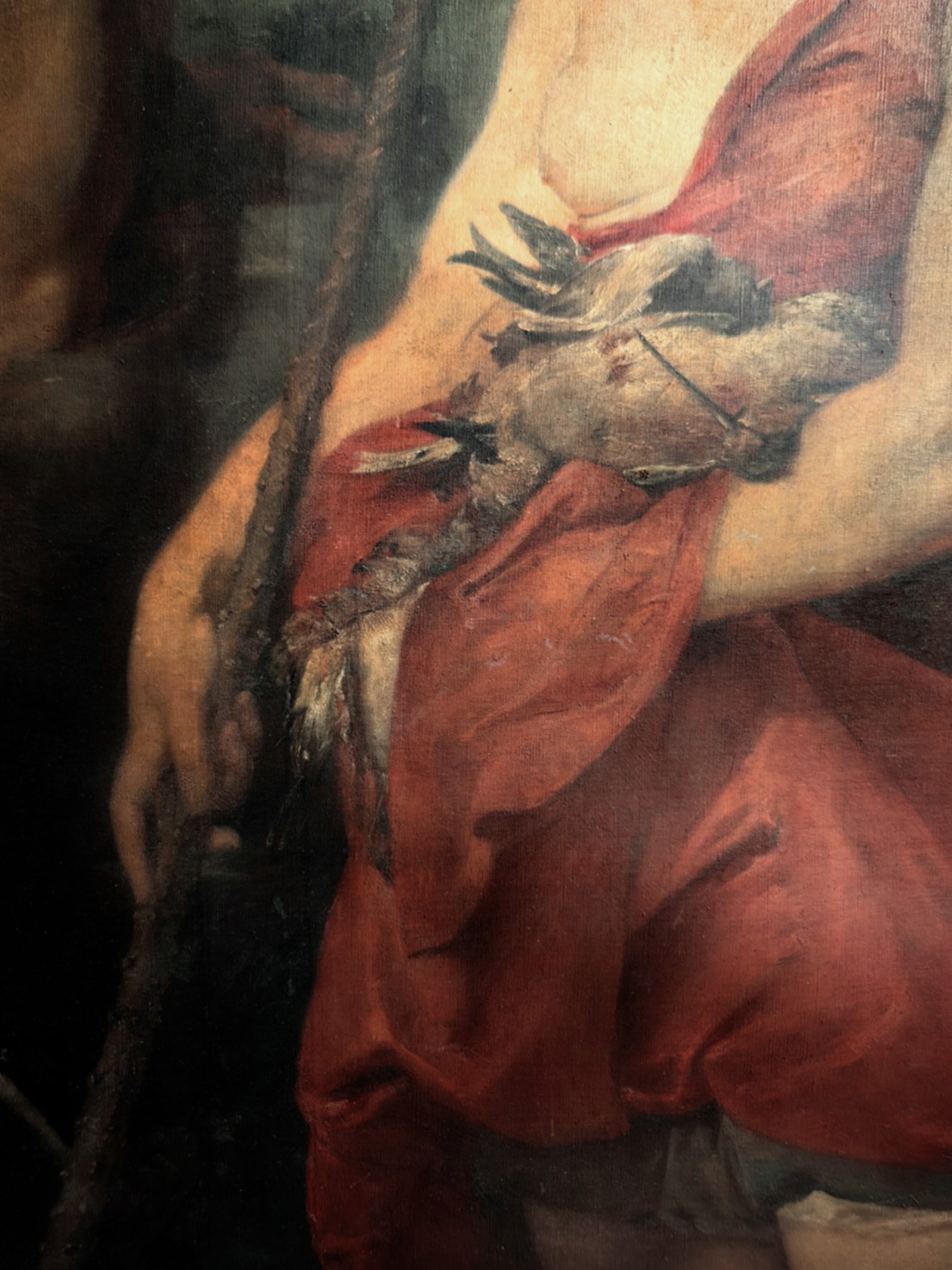
In the painting on display, Rubens combined his skill in depicting mythological figures with a masterful handling of light and movement. Diana, the goddess of the hunt, plays a central role in this scene. She is depicted as a strong yet voluptuous figure, wearing a red drape that reveals her breasts. This kind of depiction of nudity was typical of Rubens, who combined sensuality with strength of character in his female characters, drawing inspiration from classical ancient art. Her austere figure with a spear in her hand symbolically divides two realms: the wild, instinctive behavior of the satyrs on the one hand and the purity and poise of the nymphs on the other. Diana embodies the power of female independence and control over her sexuality, which in Rubens' art took on additional meaning through his fascination with antiquity and mythology.
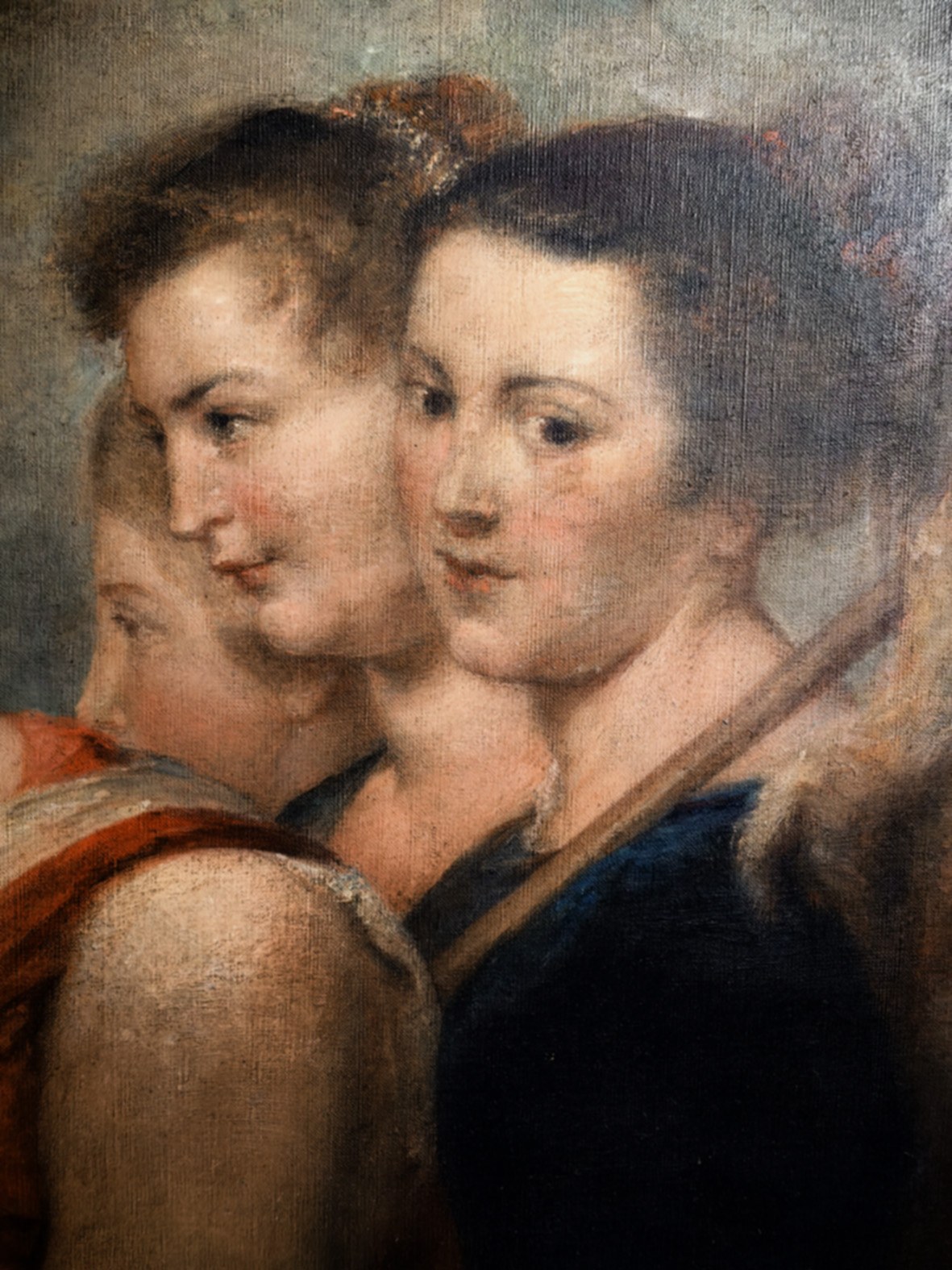
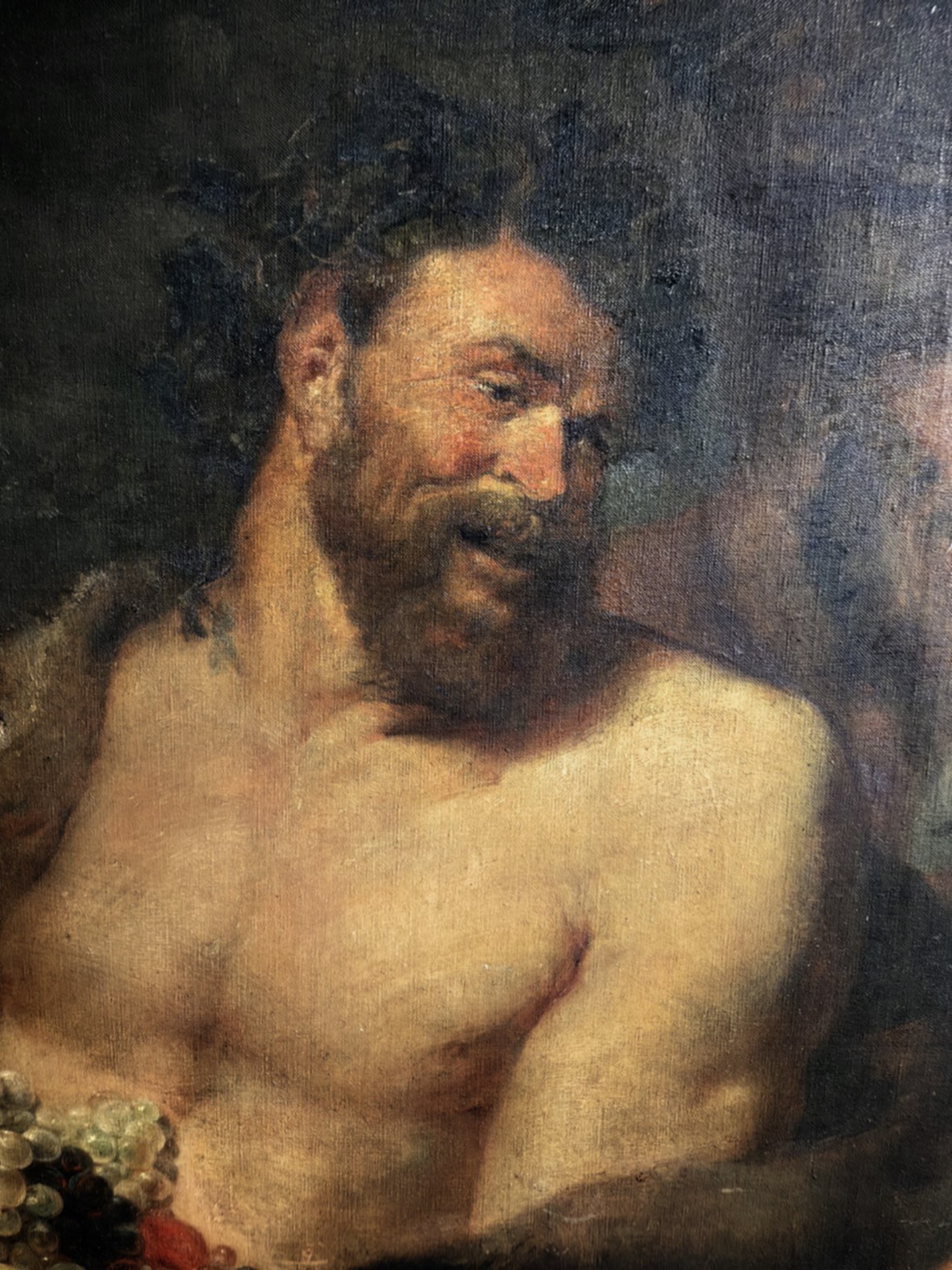
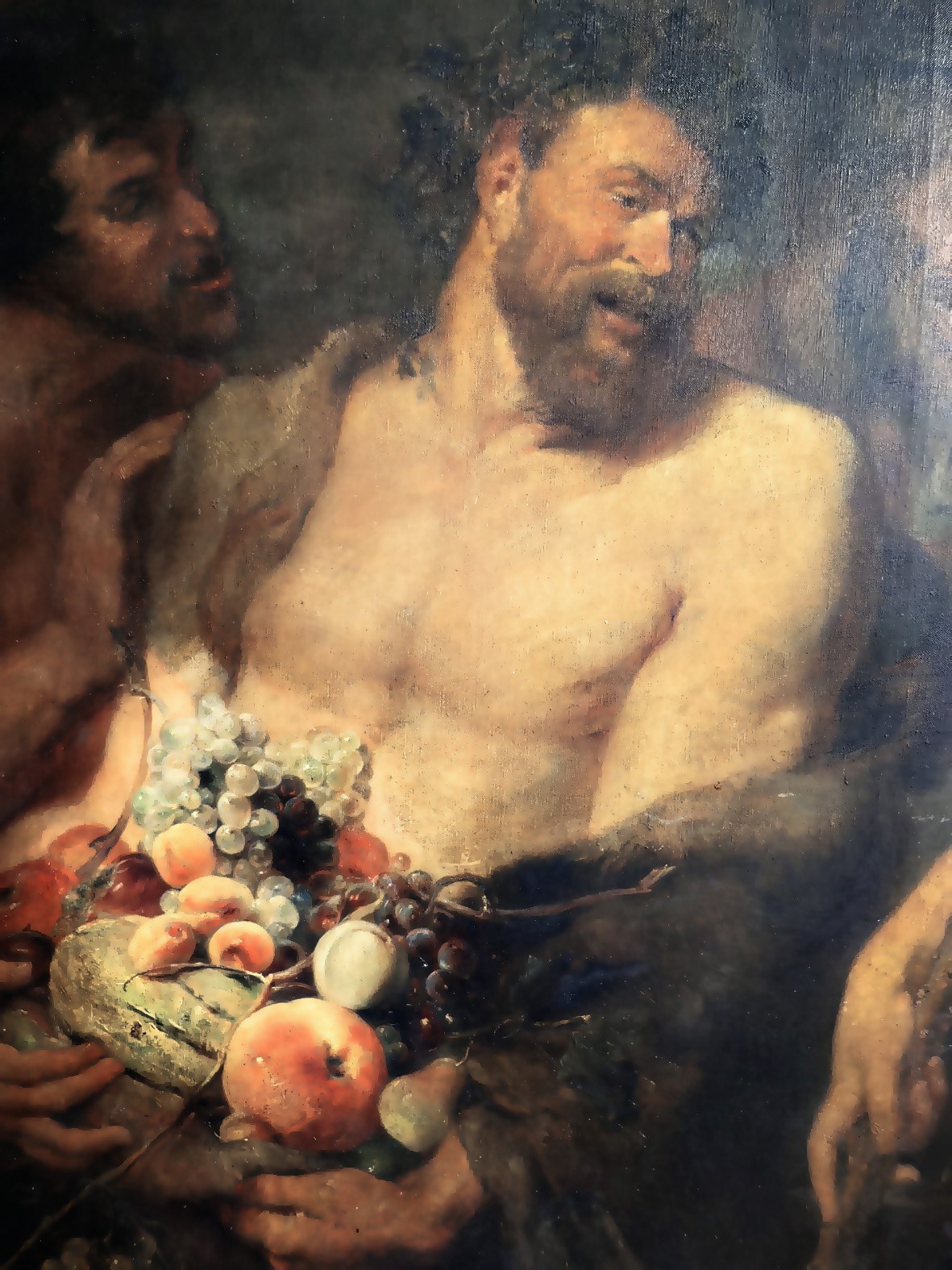
In the background of the composition, satyrs are visible, whose hedonistic and carnal behavior contrasts with Diana's dignity. Rubens deliberately depicted the satyrs as symbols of male desires, which the goddess of the hunt effectively controls. An interesting detail to be found in Rubens' interpretation is that one of the nymphs accompanying Diana is identified as his first wife, Isabella Brant. Her presence in this context not only personalizes the composition, but also reinforces the contrast between the world of animal instincts and the world of female strength and dignity.
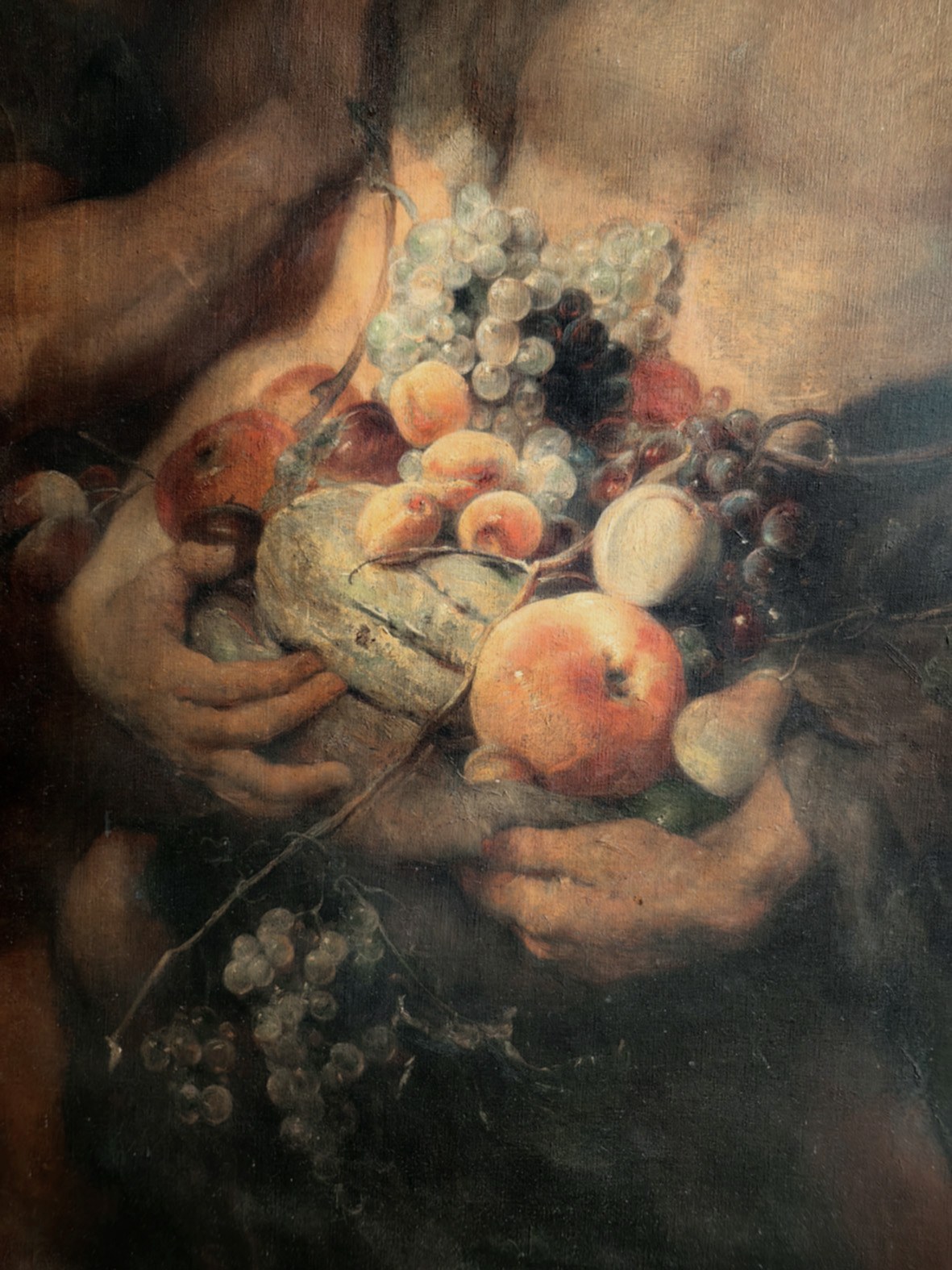
The presence of hunting spoils, such as birds and hares, has a symbolic meaning, indicating Diana's triumph as a hunter, while at the same time emphasizing abundance and fertility, which Rubens linked to the power of nature and the beauty of femininity. The whole scene has an idyllic and celebratory character, expressing the abundance of nature and the sensuality of the body, which was typical of Rubens' style.
The painting is a magnificent example of classical art inspired by mythology, yet seductive in its sensuality and atmosphere.
Its monumental size (139 by 175 cm), as well as the richness of symbolism and the masterful play of light, make it an excellent decoration for an elegant living room or a stylish restaurant, giving the interior a unique classical character.










