


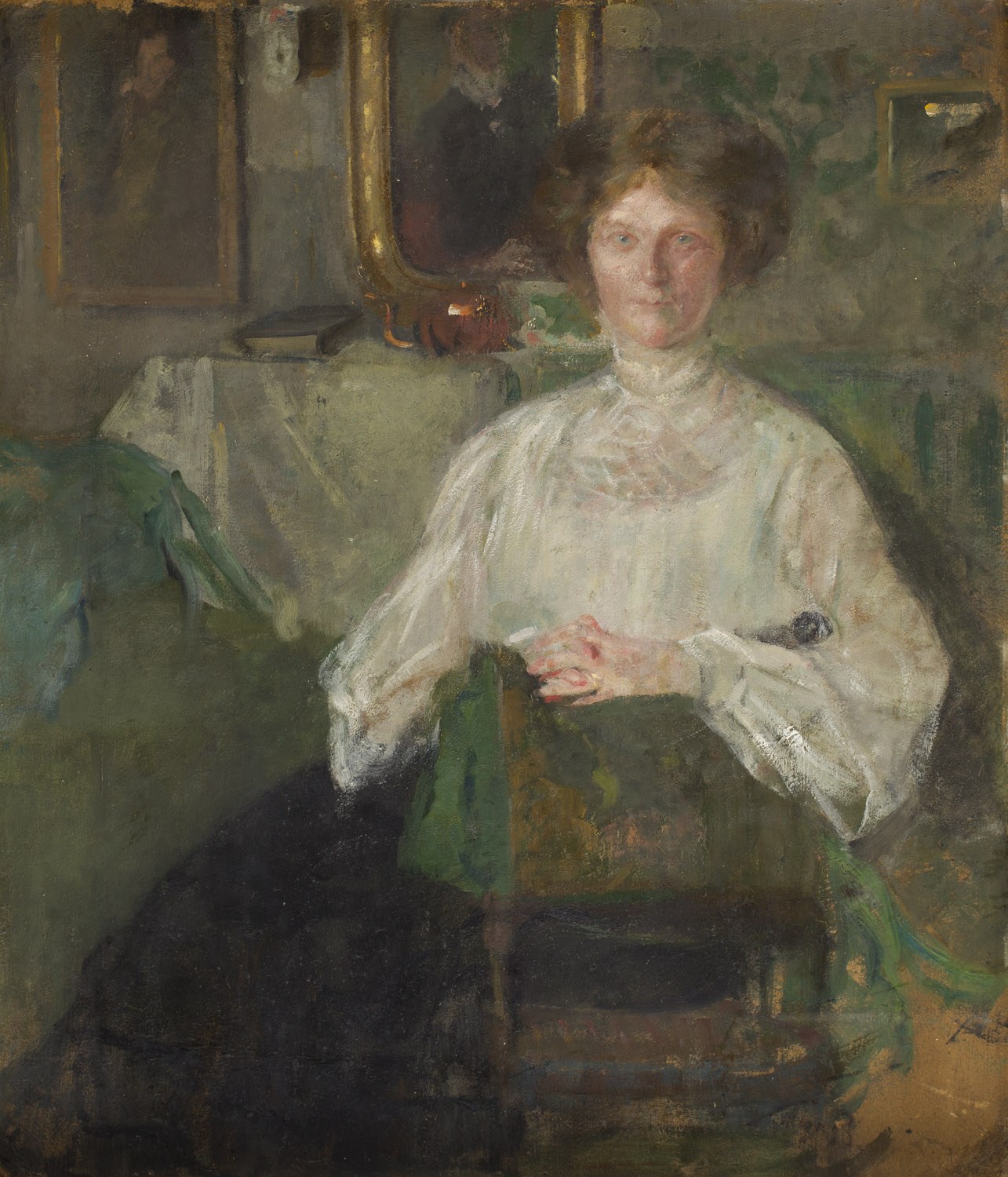
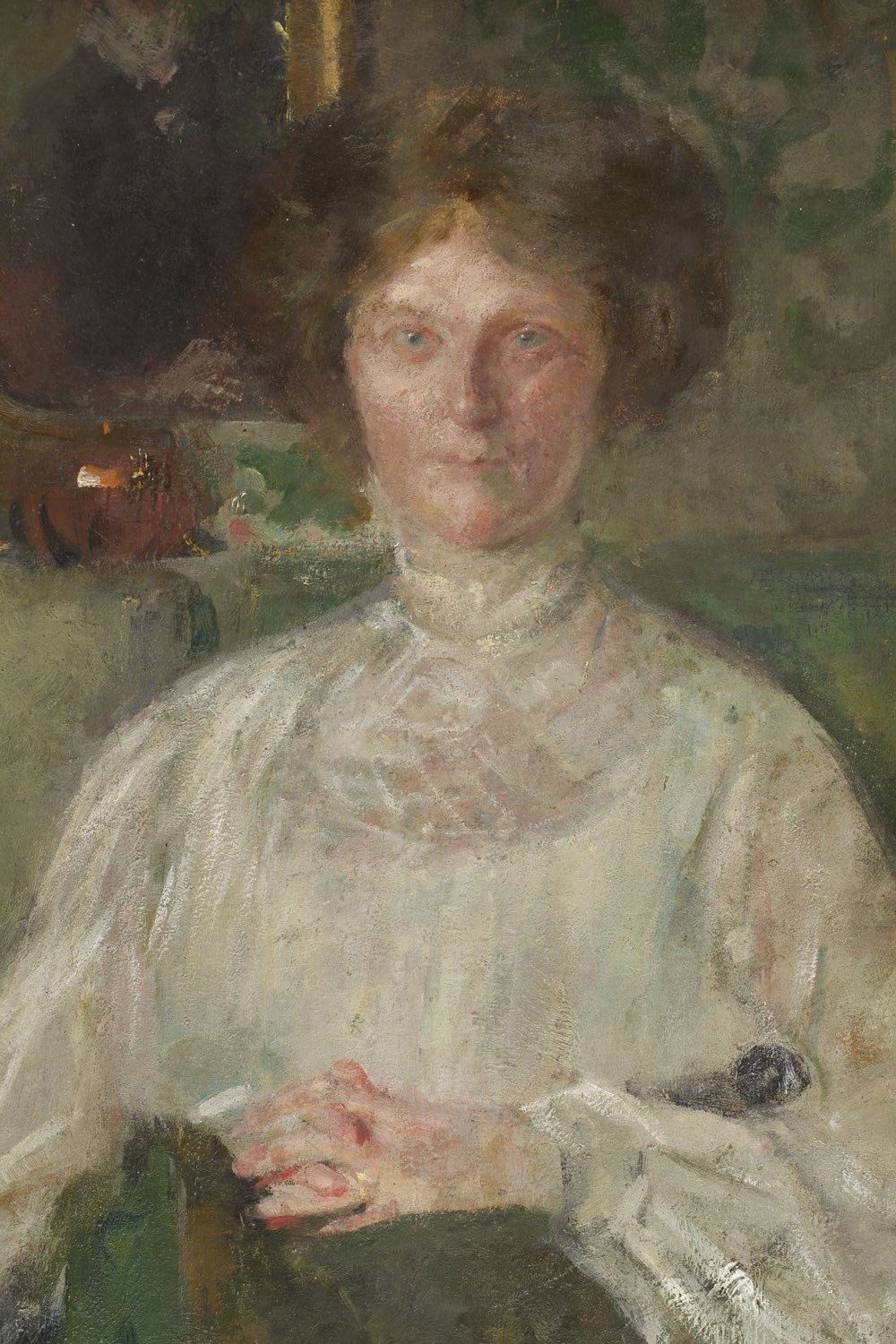
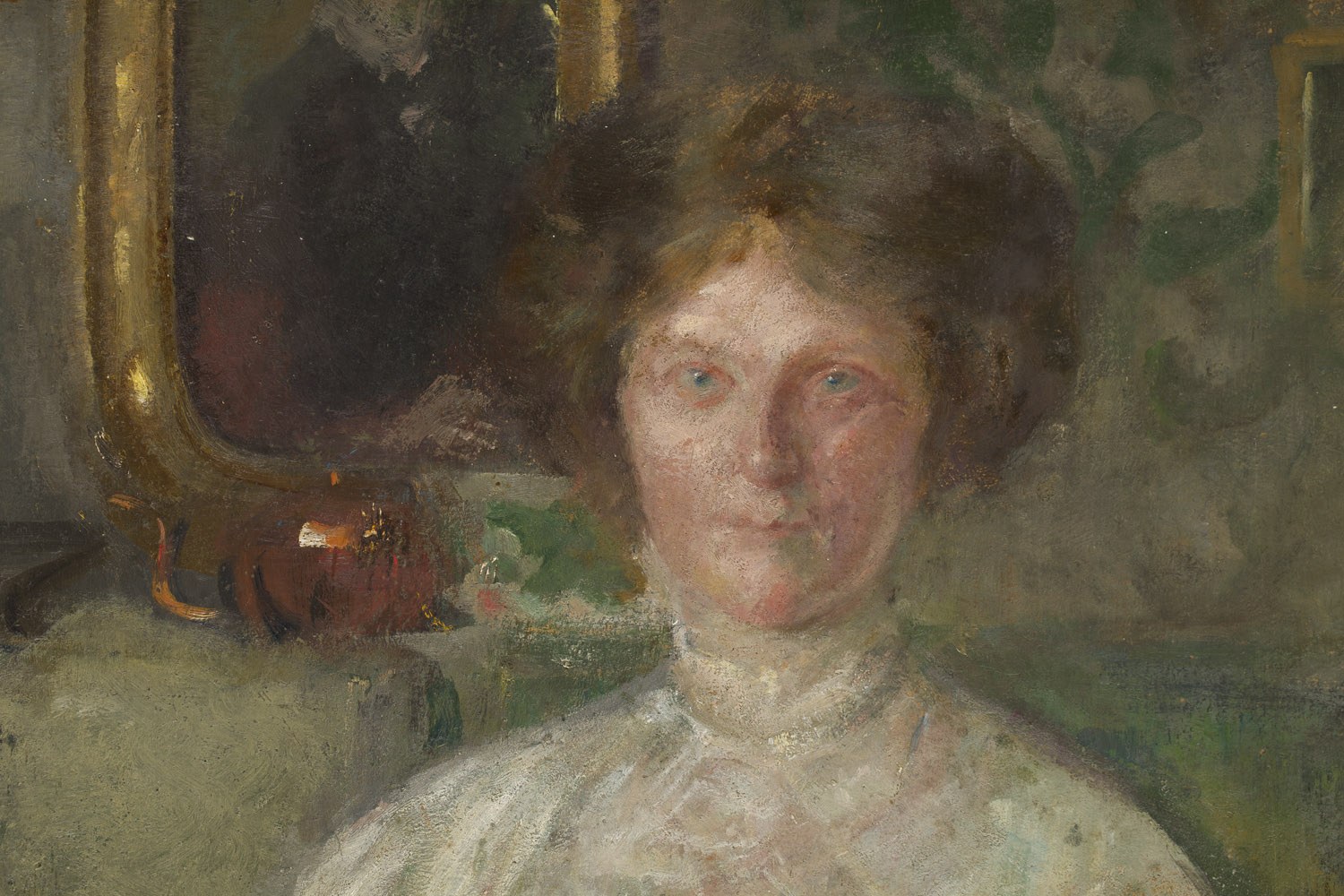
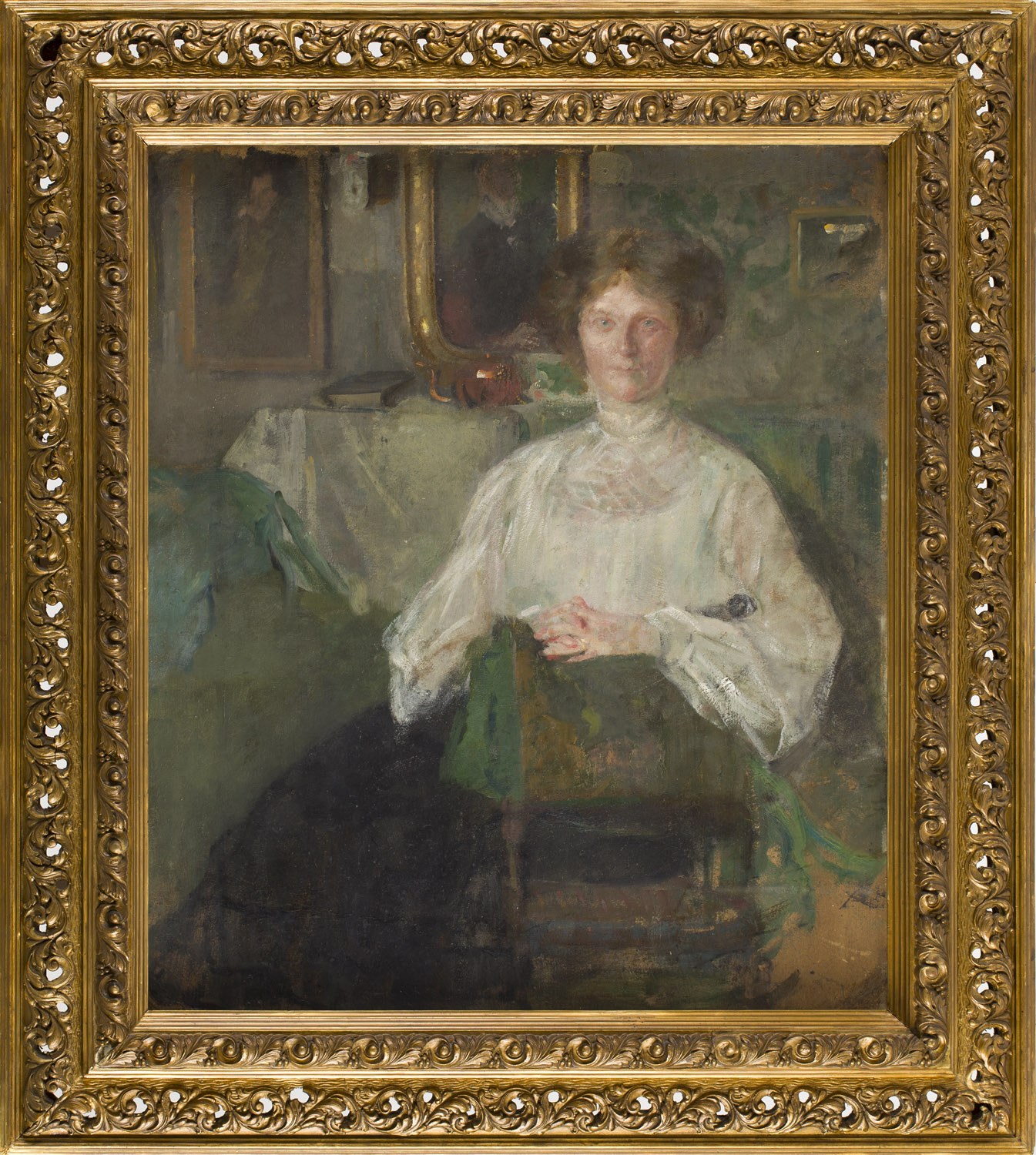
Dimensions: 68.5 x 58.5 cm
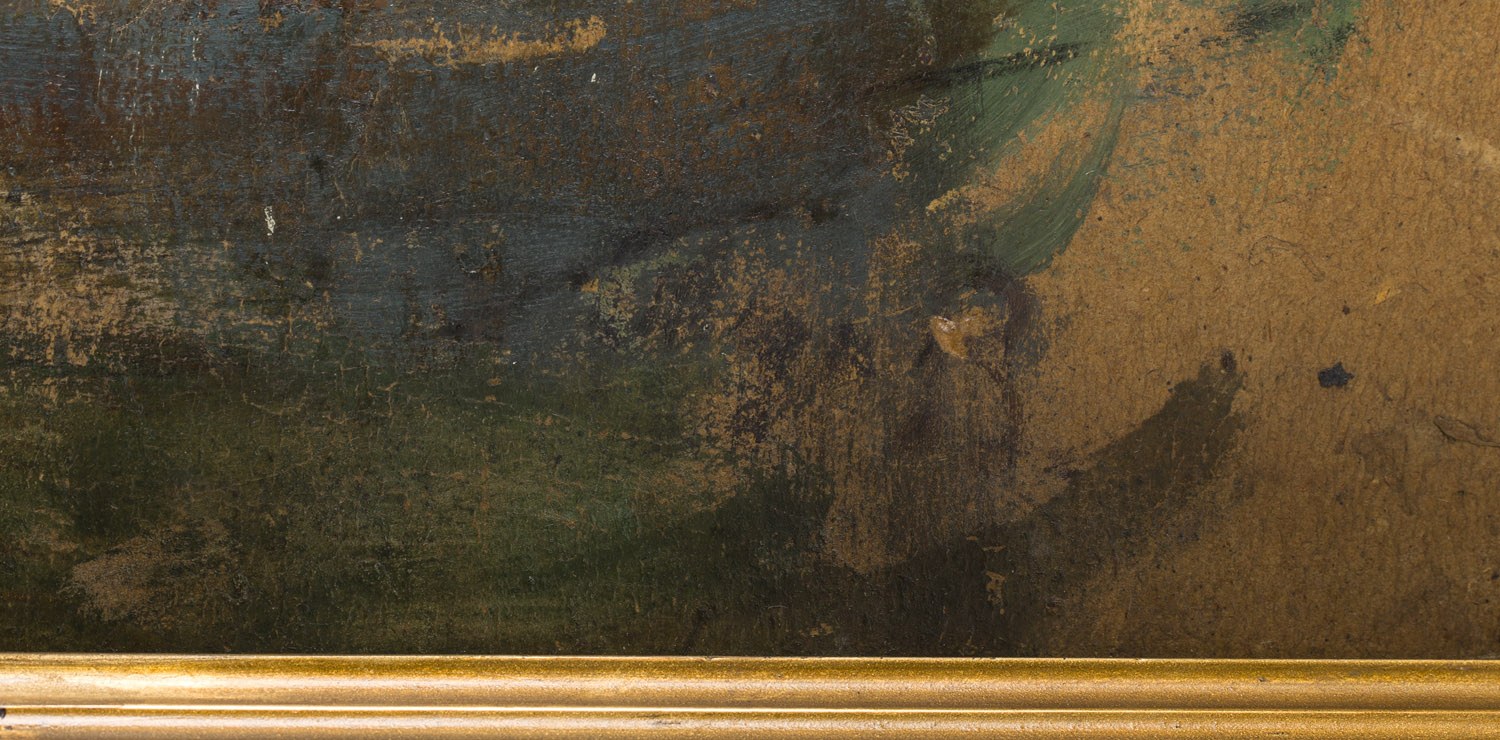
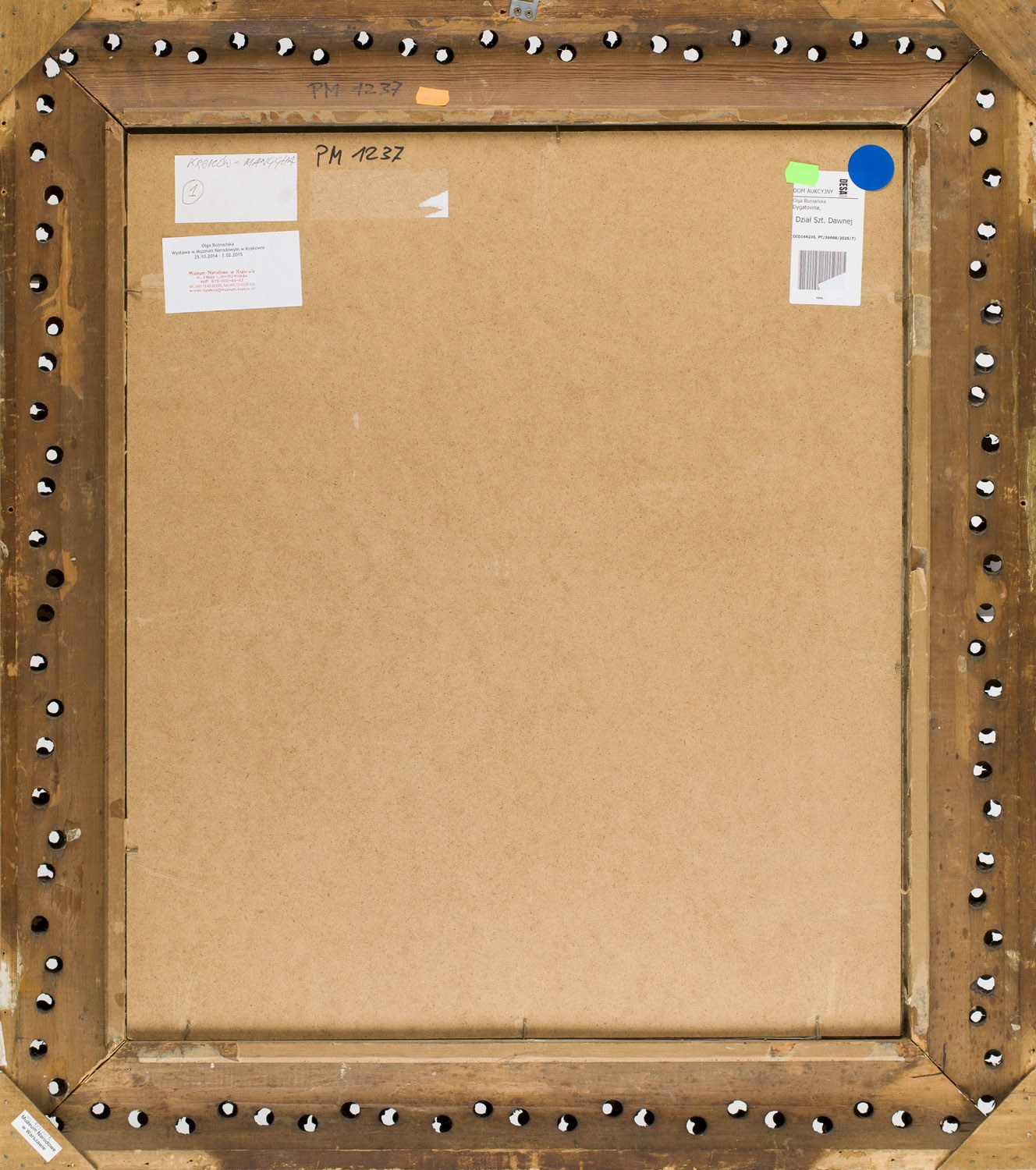
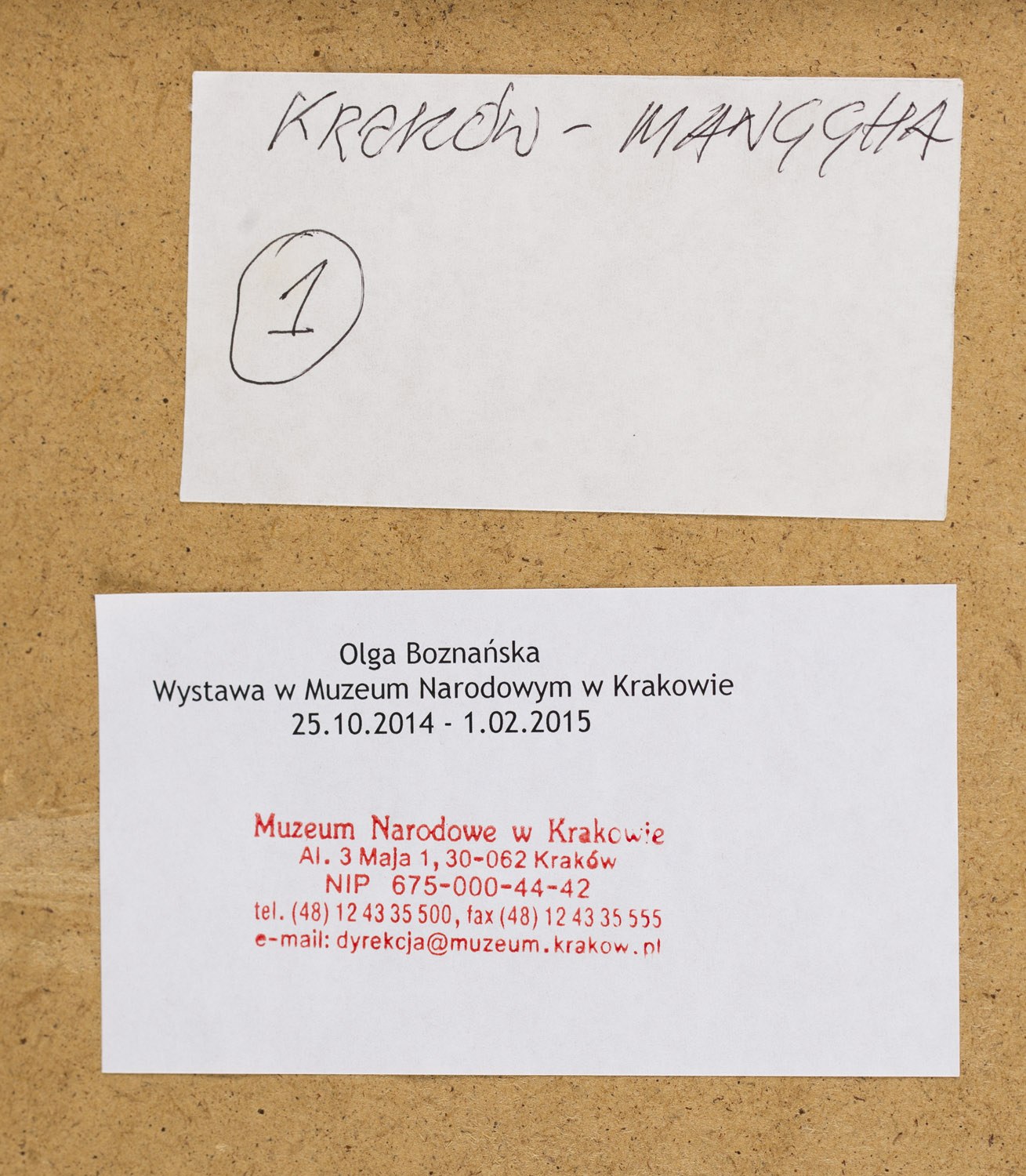
On the reverse: exhibition stickers from the National Museum in Cracow and the National Museum in Warsaw and a paper sticker with a handwritten description: 'Kraków - Manggha 1'
Source
private collection, Poland
Exhibited
Olga Boznańska unknown, Castle of Pomeranian Dukes in Szczecin, Szczecin, October-December 2005.
Olga Boznańska at the Academy, Academy of Fine Arts Painting Gallery, Cracow, April-June 2005.
Olga Boznańska unknown, Zachęta National Gallery of Art, Warsaw, December 2005-January 2006.
Olga Boznańska unknown, Regional Museum in Stalowa Wola, Stalowa Wola, February-March 2006.
Olga Boznańska unknown, Gallery of Contemporary Art in Sopot, Sopot, March-May 2005.
Olga Boznańska unknown, Turleja Gallery in Cracow, Cracow, June-July 2006
Olga Boznańska (1865-1940), National Museum in Cracow, October 25, 2014 - February 1, 2015.
Olga Boznanska (1865-1940), National Museum in Warsaw, February 26-May 2, 2015
Literature
Olga Boznańska at the Academy, exhibition catalog, Academy of Fine Arts in Krakow, Krakow 2005, p. 53 (ill.)
Anna Król, Boznańska unknown, exhibition catalog, Turleja Foundation, 2006, p. 99 (il.)
Olga Boznańska 1865-1940, exhibition catalog, ed. Ewa Bobrowska, Urszula Kozakowska-Zaucha, National Museum in Krakow, Krakow 2014, p. 201 (il.), cat. no. III.36
Olga Boznańska 1865-1940, exhibition catalog, ed. by Renata Higersberger, National Museum in Warsaw, Warsaw 2015, cat. no. 113, p. 199 (ill.)
Biography
One of the most prominent Polish artists of the late 19th and early 20th centuries. Initially, the artist was given drawing lessons by her mother, Eugenia Mondan; in 1883-86, the artist studied under Kazimierz Pochwalski and Józef Siedlecki. She also attended the A. Baraniecki Higher Courses for Women in Cracow, where Hipolit Lipinski and Antoni Piotrowski gave her lessons. In 1886-1889 she studied at the Munich Academy of Fine Arts under Karl Kricheldorf and Wilhelm Dürr. In Munich, she opened her own studio, remaining under the tutelage of Jozef Brandt and Alfred Wierusz-Kowalski. In 1895, replacing Theodor Hummel, she took over the management of the Painting School run by him. In 1898, she settled permanently in Paris. She was a member of the Society of Polish Artists "Sztuka", the Société Nationale des Beaux-Arts and the Polish Literary and Artistic Society in Paris, as well as the International Society of Sculptors, Engravers and Painters in London. Since 1886, when she made her debut at the Cracow Society of Friends of Fine Arts, she presented her works at exhibitions in Poland, Europe and the United States, including Berlin (1892, 1893, 1913.), Munich (1893), Prague, London and Paris (1896), Carnegie Institute in Pittsburgh (1901, 1906, 1907, 1920-28), Vienna (1902, 1908), Amsterdam (1912) and Venice (1910, 1914, 1938). She was honored with numerous awards, including a gold medal at the Munich International Exhibition (1905), the French Legion of Honor (1912), the Grand Prix at the Expo Exhibition in Paris (1939) and the Order of Polonia Restituta (1938). She was primarily a portraitist; the images she created of both celebrities and ordinary models are part of the trend of expressive modernist portraiture. In her paintings, the artist focused on the model's face, conveying the state of his psyche and the mood of the moment. He also painted still lifes and flowers, as well as interiors, especially of his own studios.










