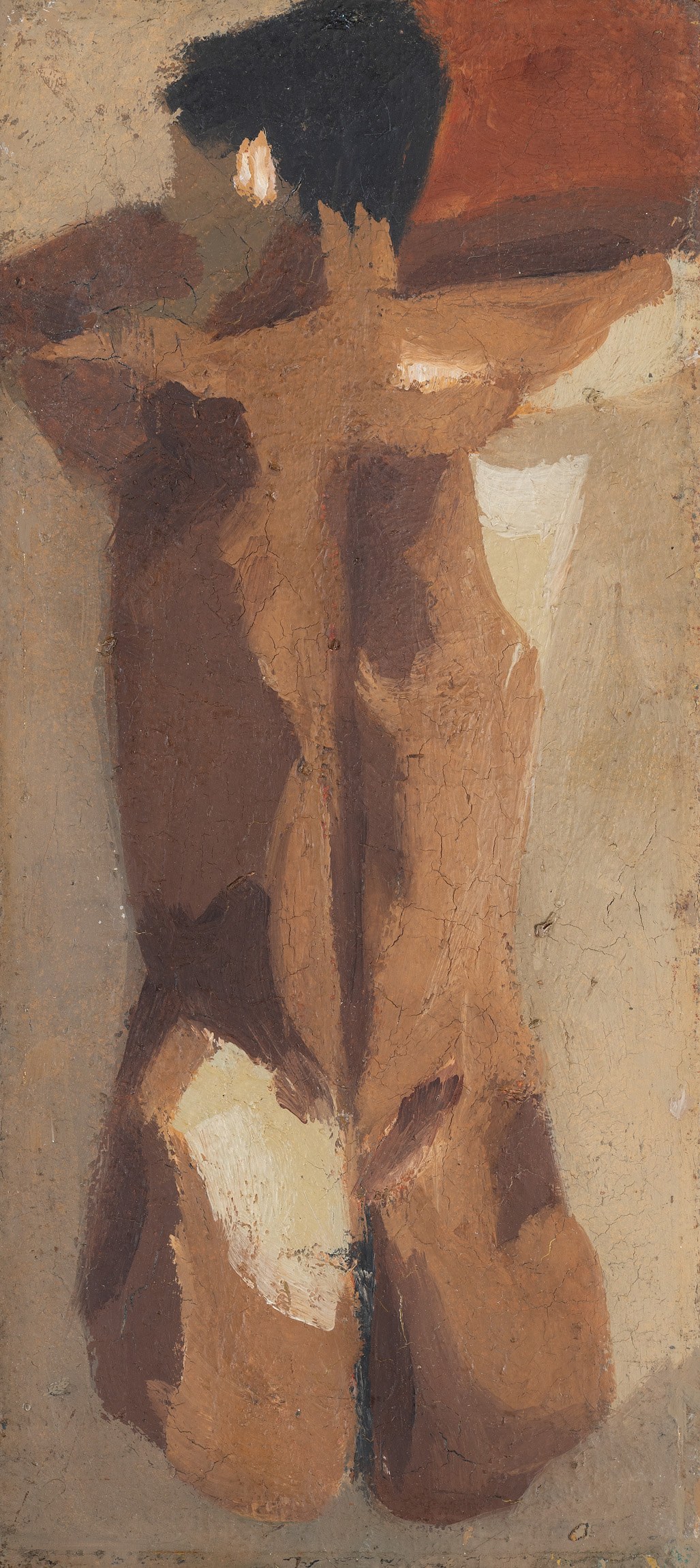
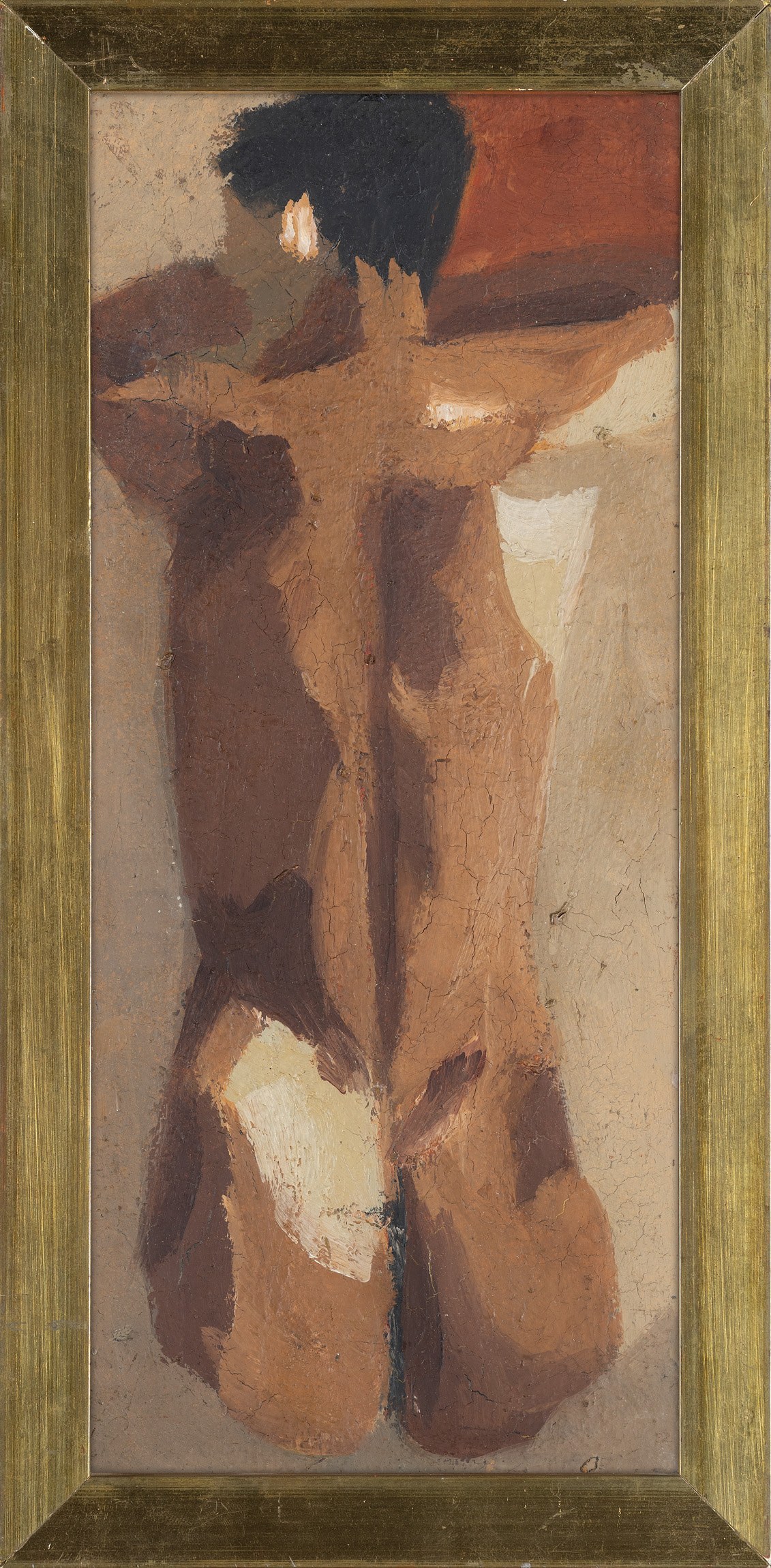
31.10 x 14.00 cm - oil, canvas
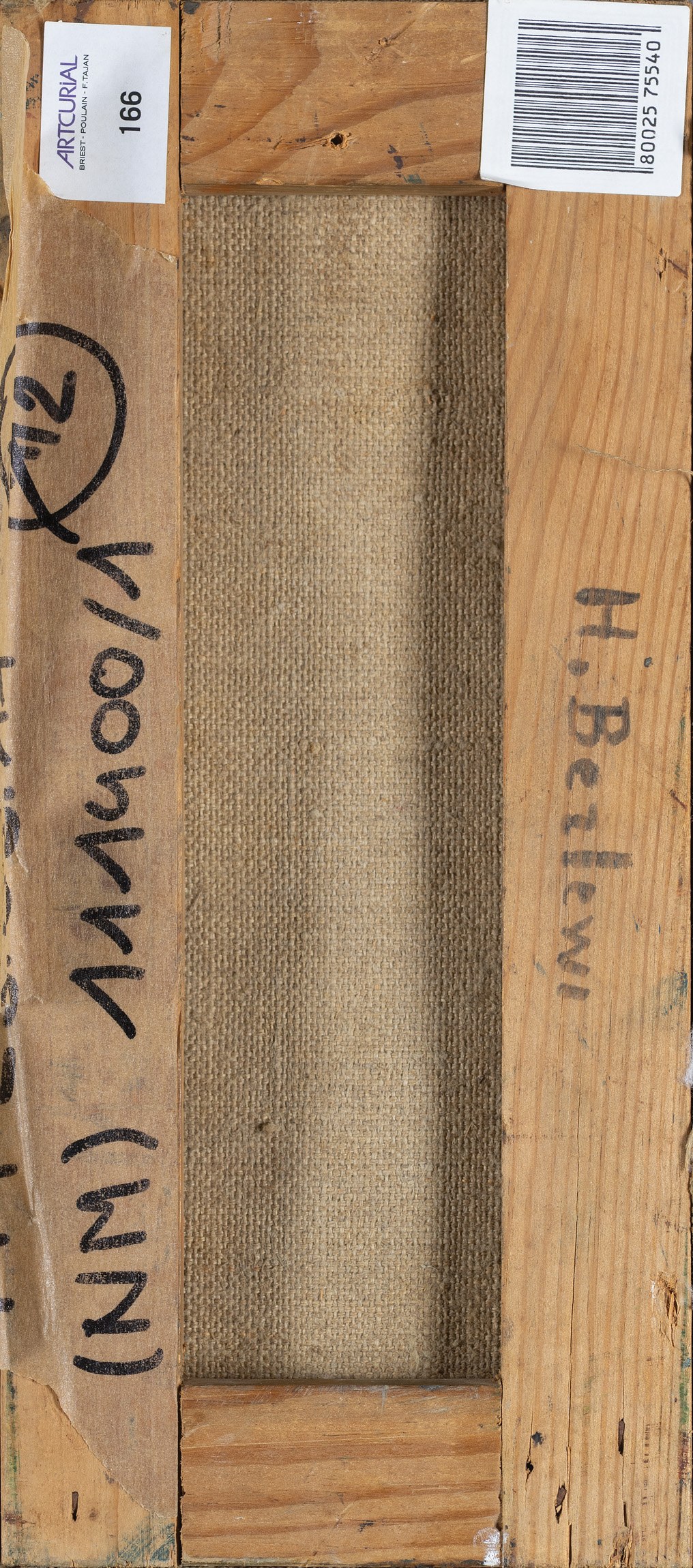
On the reverse, on the l. strip of the loom (in black paint): H. Berlewi
- The Collection of Urszula and Piotr Hofman, edited by Urszula Hofman, Warsaw 2013, p. 67;
- Szymon Mondzain and the École de Paris. Polish avant-garde painting of the second half of the 20th century. Collection of Ursula and Piotr Hofman, Abbotsford Palace - Department of Modern Art of the National Museum in Gdansk 21 II 2015 - 22 IV 2015;
- The Collection of Urszula and Piotr Hofman, edited by Urszula Hofman, Warsaw 2018, p. 67;
- From Boznanska to Fangor. Collection of Urszula and Piotr Hofman, District Museum, Nowy Sącz 20 III 2020 - 31 VIII 2020.
Under items 52 to 68, we present to you carefully selected works by artists from the École de Paris circle, which are part of the collection of Ursula and Piotr Hofman. The family collection is subject to constant development, expansion and reconstruction aimed at seeking new directions. It is the result of an evolving way of perceiving, understanding and learning about art.
Ursula and Piotr Hofman's collection grows out of their fascination with the paintings of Polish-Jewish artists associated with the pre-war creative community in Paris. It was the activities of the Parisian artistic émigré community - centered around Montparnasse and co-creating one of the most important phenomena in art of the first half of the 20th century - that became the foundation of their collection.
The first painting purchased, which gave the impetus and started the adventure and passion of interacting with art, was one of Simon Mondzain's canvases. A painter who combines the geometrizing construction of form with the sensibility of Krakow modernism. His still lifes, landscapes and portraits show a fascination with Cézanne and the tradition of French Post-Impressionism. Mondzain still holds a prominent place in the entire collection of works by artists such as Eugeniusz Eibisch, Rajmund Kanelba, Henryk Epstein, Henryk Hayden, Maurice Blond, Dora Kucembianka, Alexander Blonder, Henryk Berlewi, Zdzislaw Cyankiewicz, Zygmunt Landau, Jean Peské and Joachim Weingart, presented next.
Of interest are two canvases by Dora Kucembianka, an artist who for many years remained in the shadows and rarely appeared on the auction market. Her paintings show inspiration from Post-Impressionism, Colorism and an interest in a synthetic approach to form. She painted primarily portraits, still lifes and landscapes - subjects characteristic of École de Paris artists - focusing on compositional harmony and subtle color relationships. Her paintings are characterized by balanced construction, softness of modeling and moodiness, which gives the representations a lyrical character. Today we have the opportunity to present her work to a wider audience and rediscover the silhouette of this interesting painter.
All the presented canvases from the collection of Ursula and Piotr Hofman, carefully selected from an artistic and historical point of view, become an opportunity to spread knowledge of the artistic milieu that made Paris the world capital of the avant-garde in the early 20th century. They develop a sensitivity to the paintings of the École de Paris, which shaped the modern view of color, form and emotion in art.
Each of the paintings on offer is not only an artistic work, but also a testimony to an extraordinary time and place where diverse cultures, ideas and creative personalities met. Mr. and Mrs. Hofman invite you to co-create this history and join in the mission to keep alive the memory of the unique phenomenon that was École de Paris painting.
Henryk Berlewi (Warsaw, October 30, 1894 - Paris, August 2, 1967) attended classes at the Warsaw School of Fine Arts (1906-09) as a junior high school student. He then studied at the Académie des Beaux-Arts in Antwerp (1909-10), the Ecole des Arts Décoratifs and the Ecole des Beaux-Arts in Paris, before returning to Warsaw in 1913 to study at the Drawing School under Jan Kauzik (1913-15). In 1915-18 he created and exhibited, including at the Zachęta Gallery, portraits and figural compositions. From 1918 dates Berlewi's rapprochement with the circles of Warsaw Futurists and Formists. Deformation and elements of expressionism appear in his works. Influenced by El Lissitzki, who visited Warsaw in 1921, he became interested in the idea of renewing Jewish art, and took up thematic themes related to Jewish culture and daily life. In 1922-23 Berlewi stayed in Berlin, where, under the influence of avant-garde trends and contacts with prominent artists, he radically changed his art and developed the theory of mechanofaktura, which he published in print in 1924 in Warsaw and Berlin (in "Der Sturm"). The artist combined the publication with solo exhibitions in both cities. The Warsaw exhibition took place in the car showroom of Daimler-Benz, which harmonized with the idea of mechanofaktura, which assumed the maximum approximation of art and technology, which was to be achieved, among other things, by building an image from repetitive geometric elements. In 1924-26 Berlewi co-founded the "Blok" group with other Polish artists. In 1926 he returned to object art, but did not break with the Constructivist movement. In 1928 he went to Paris, where he gained a reputation as a portraitist. During World War II, he went into hiding in the south of France, and in 1943-44 collaborated with the resistance movement in Nice. After the war, he continued figurative painting until 1957, when, influenced by new trends in art, as well as a retrospective exhibition of Constructivism at the Denise Renée gallery in which he participated, he returned to abstraction. He referred to the theory and practice of mechanofacture, treating it as a starting point for creating his own version of op-art.







![Henryk Berlewi, Skrzypek [Portret Witolda Contiego]](https://img1.one.bid/img/5796/1577588_1w.webp)