


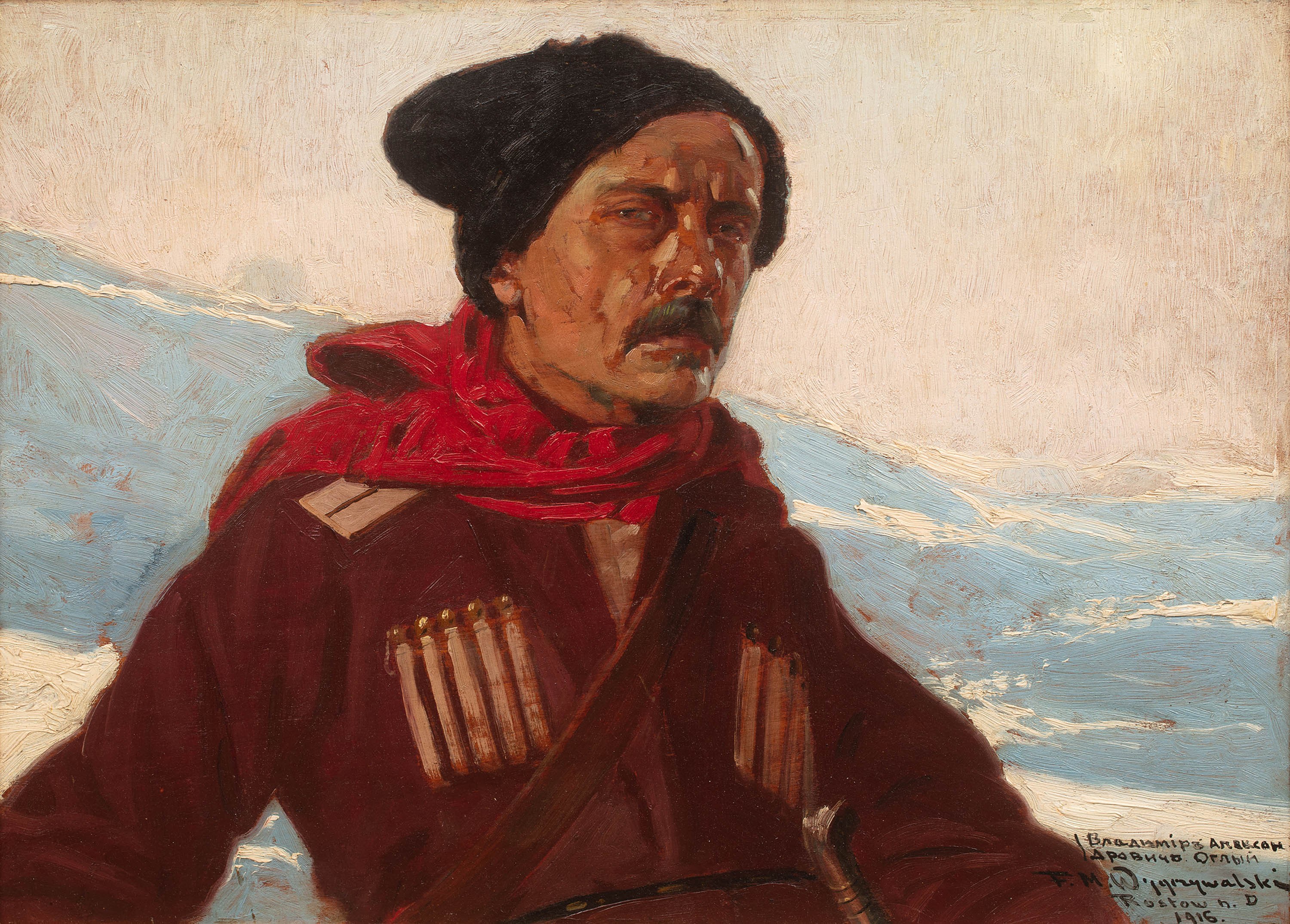
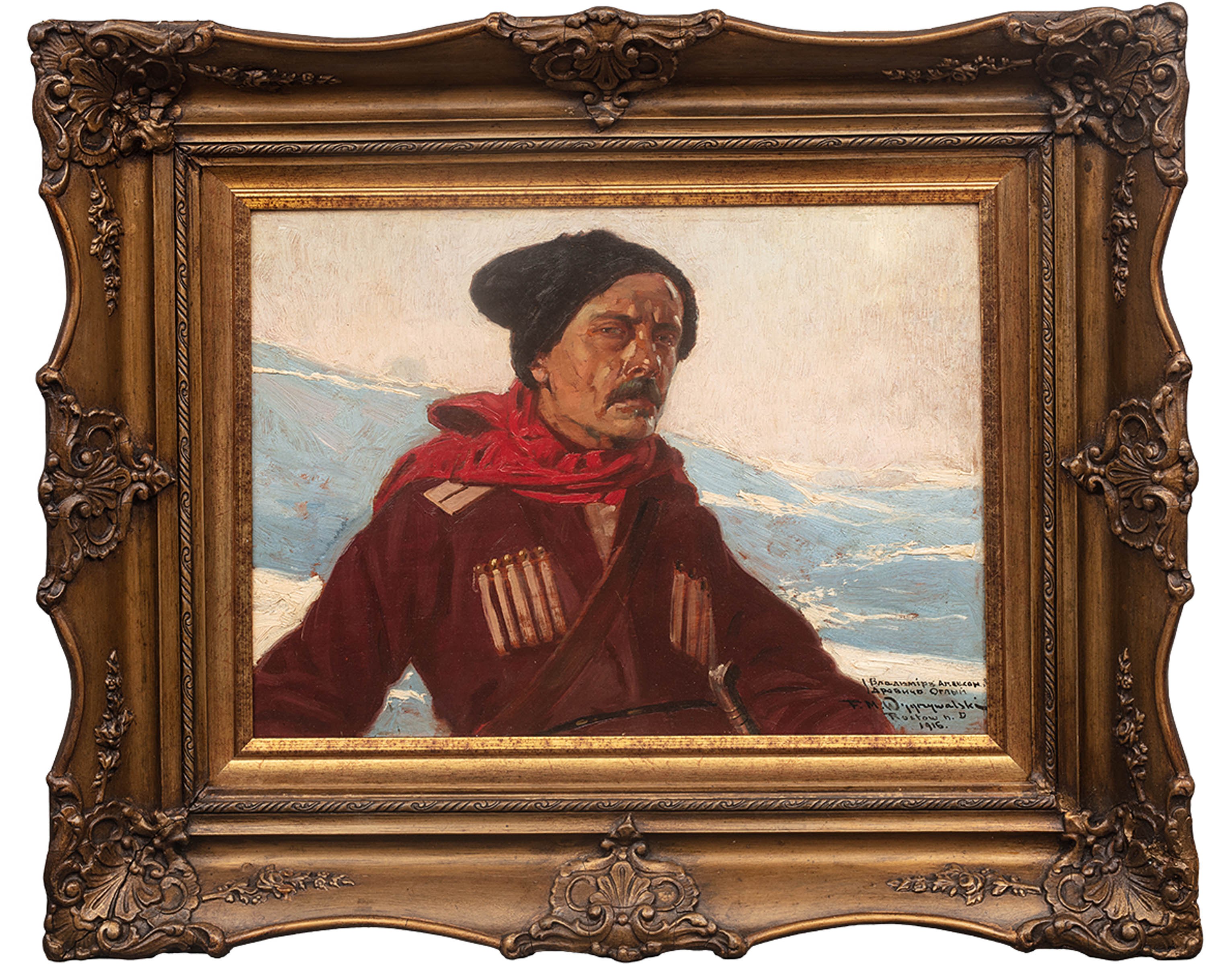
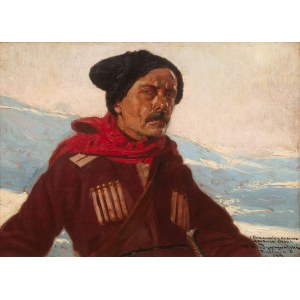
oil, plywood, 32 x 44 cm
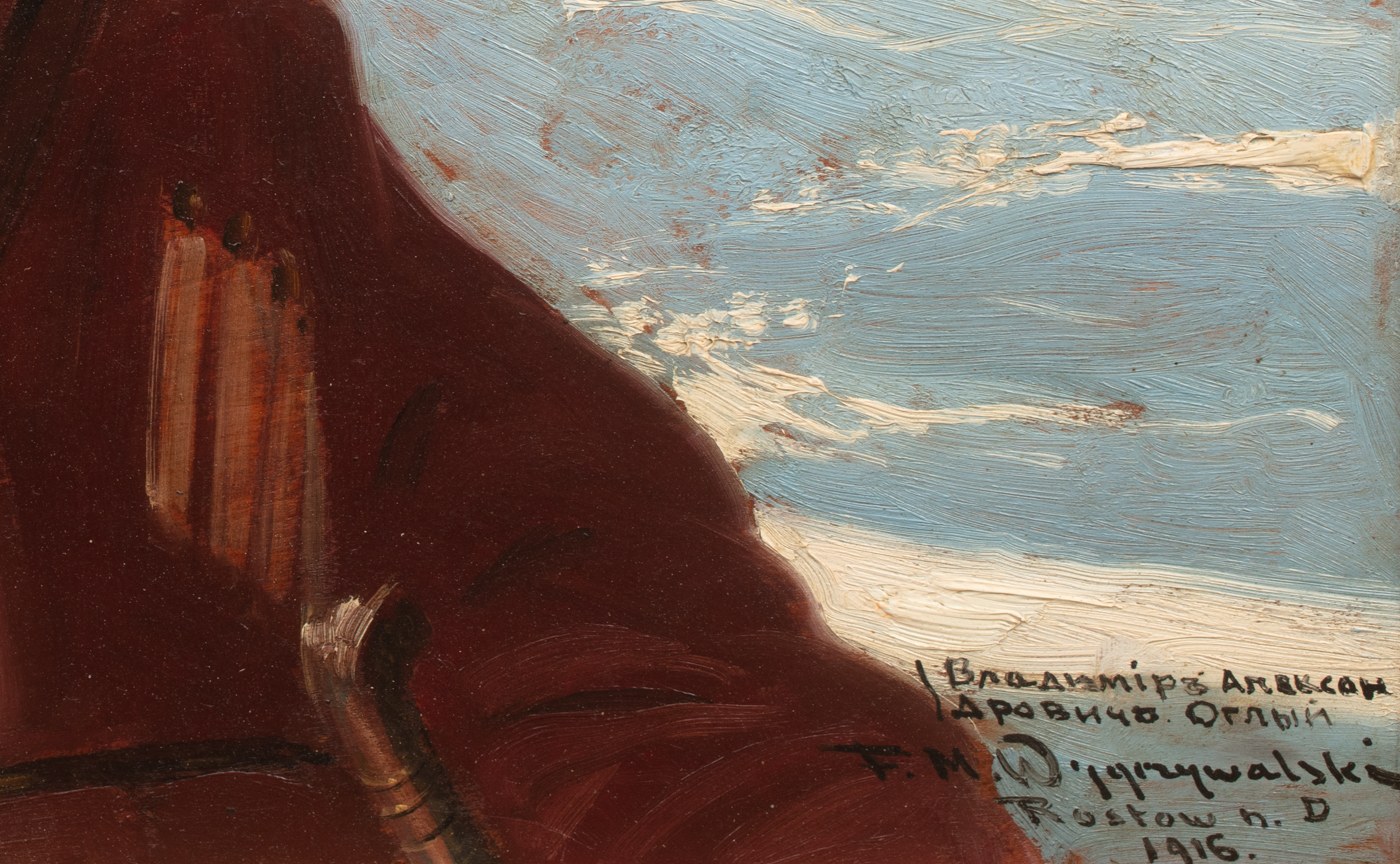
Sign. dated and description. p. d.: (in Cyrillic: Vladimir Aleksan / drovich Oglyy] / F.M. Wygrzywalski / Rostov n. D. /1916."
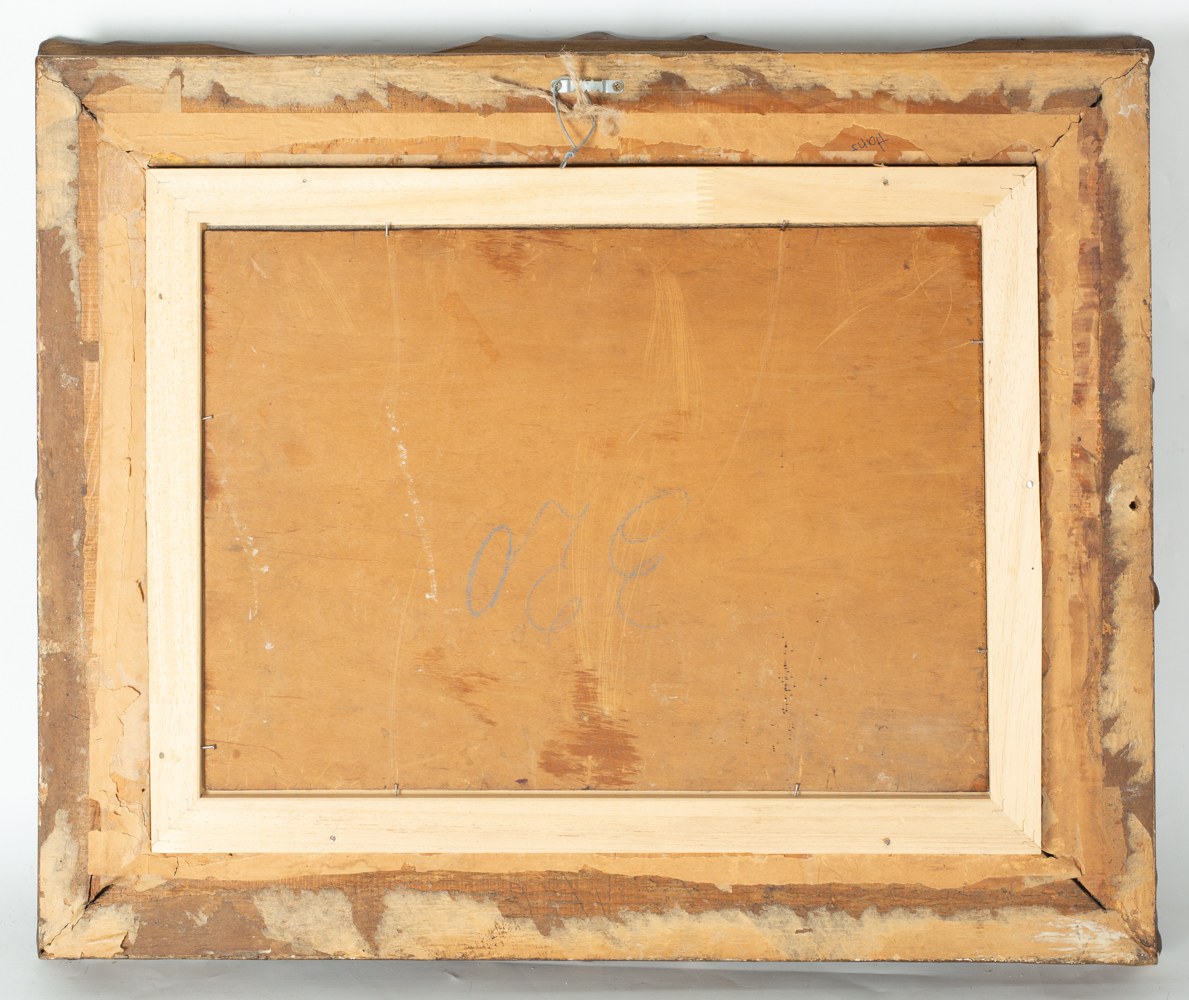
On the reverse in blue crayon inscription: "320"
The featured painting was painted by the artist in 1916 in Rostov-on-Don, where Wygrzywalski stayed during WWI. "The outbreak of World War I found him in Rostov-on-Don, where he taught drawing lessons. As a subject of Austria-Hungary, which was at war with Russia, he was deported and wandered all over the revolution-stricken country. His artistic activity did not completely die down, however. In 1916 he participated in an exhibition in Krakow, the proceeds of which were to be donated to the National Association of the Red Cross. The following year his paintings were exhibited in a private Salon d'Art in Kyiv. He returned to Lviv in 1918." ("By the Warm Sea. Feliks Michal Wygrzywalski," exhibition catalog, Central Maritime Museum, Gdansk 2013, p. 7).
"Feliks Michal Wygrzywalski enjoyed painting self-portraits. One can only speculate what connection to their abundance had to do with his youthful admiration for the works of Jacek Malczewski, which he successfully copied while still a student. Wygrzywalski often alluded to the artist's classical model of portraiture, depicting himself in half pose, with the attributes of his profession - a palette and a brush - and with an inseparable pipe in his teeth. The background for these images is usually the artist's beloved Southern landscapes. [...] There is also a well-known group of Wygrzywalski's self-portraits, in which he depicted himself in the clothes of various nations and professions - his self-portraits in the costume of a Cossack, a Bedouin, and a fisherman are well known (...)" (ibid., p. 8).










Laatst bekeken
Log in om de kavellijst in te zien
Favorieten
Log in om de kavellijst in te zien