8.17g. VG/F.
STORA variety.
SMB 421; SM 356; Stiernstedt 177:40; C&T 70.33b.
Rare.
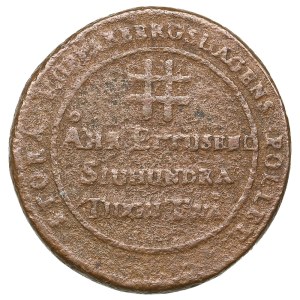
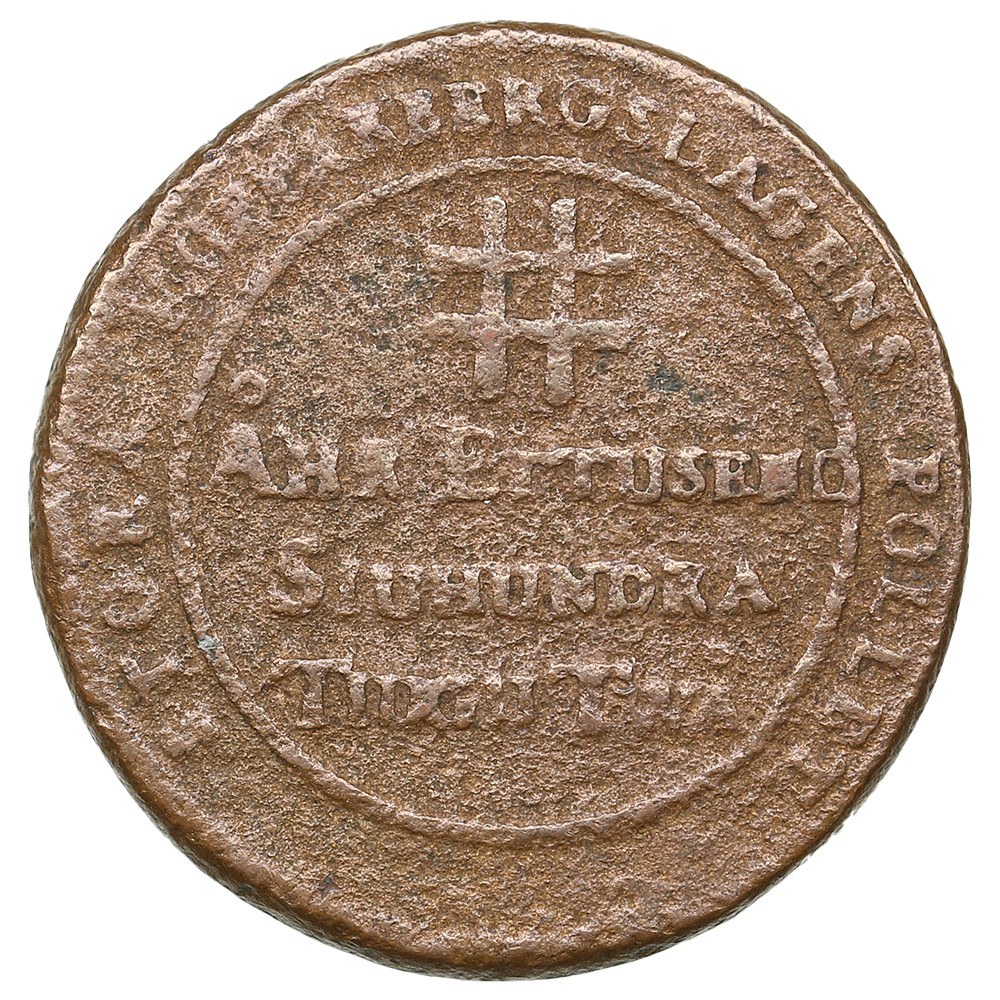
Obv.: The emblem of Stora Kopparbergs Bergslag, consisting of two intersecting double-barred crosses. Below, the date written out in Swedish in four lines: ÅHR / ETTTUSIND / SIUHUNDREDA / TIUGU TWÅ (Year One Thousand Seven Hundred and Twenty-Two).
Legend around: STORA KOPPARBERGSLAGENS POLLET (Token of the Great Copper Mountain Mining Company).
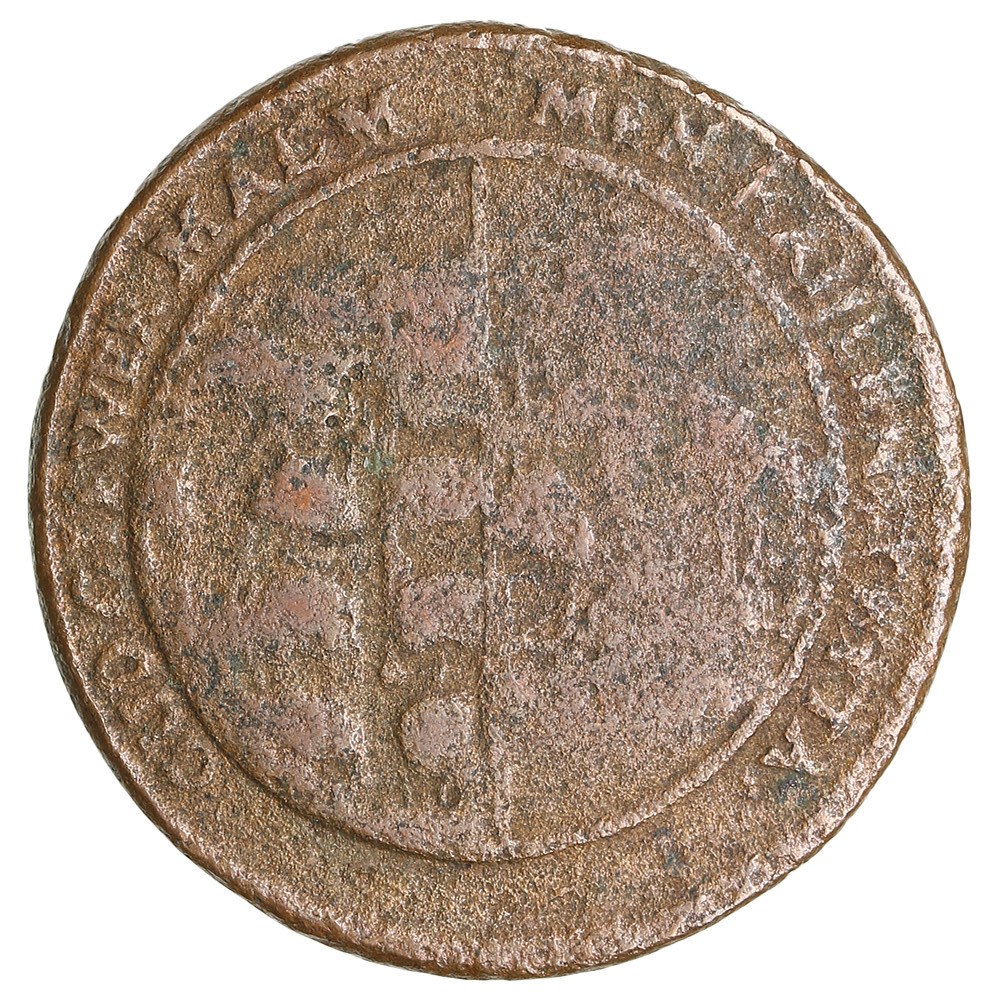
Rev.: A divided composition depicting the mining landscape and industrial installations of Stora Kopparberg, including mine workings, buildings and a waterwheel. A Swedish inscription surrounds the design:
GUD GIFWER MALM MEN KÅHLEN TRYTA
(God Provides Ore, but Charcoal Is Running Out).
Stora Kopparbergs Bergslag, the historic copper-mining enterprise at Falun in Sweden, issued several series of copper tokens in 1719-1723, 1762-1765 and 1790-1791. Originally intended for transactions within the mining enterprise and among the local population, these tokens acquired a much wider circulation and were accepted as money beyond the company's territories. Remarkably, they achieved this monetary status despite weighing only approximately one-quarter as much as the corresponding official copper coins issued by the Riksbank. The 1722 issue, valued at 5 Mark in copper currency, belongs to this unusual category of privately issued Swedish coinage that circulated alongside official money during the reign of Fredrik I.
The inscription GUD GIFWER MALM MEN KÅHLEN TRYTA (God Provides Ore, but Charcoal Is Running Out) reflects one of the principal challenges facing Swedish copper production in the early 18th century. Although the rich deposits of Stora Kopparberg at Falun provided abundant copper ore, smelting operations depended on enormous quantities of charcoal produced from surrounding forests. The continuous demand for fuel placed considerable pressure on woodland resources and required an extensive network of charcoal burners, farmers and transport workers. Shortages of charcoal could restrict copper production despite the availability of ore, making fuel supplies a critical factor in the economic prosperity of Falun and its mining enterprise.