


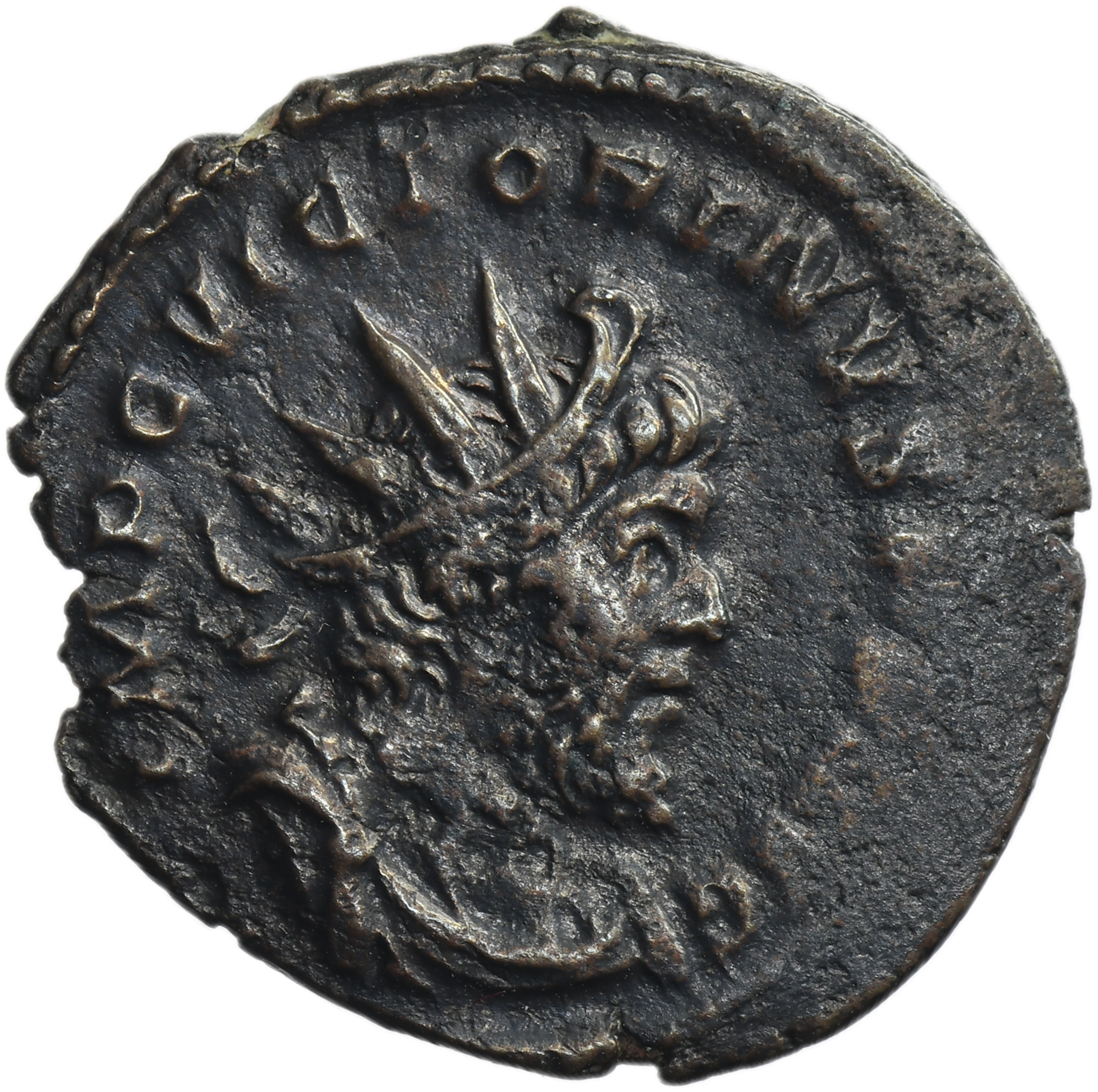


Antoninian of Victorinus (AD 269–271), struck at the mint of Colonia Agrippinensis, belongs to the coinage of the Gallic Empire issued after the death of Postumus and the brief reign of Marius. The issues of Victorinus form one of the key bodies of evidence for the functioning of this separatist polity; metallurgical analyses confirm that part of his coinage retained a comparatively higher silver content than contemporary antoniniani of emperors such as Claudius II Gothicus and Quintillus.
The obverse presents a radiate, draped and cuirassed bust facing right, with the legend IMP C VICTORINVS P F AVG, expressing his full titulature as Pius Felix Augustus.
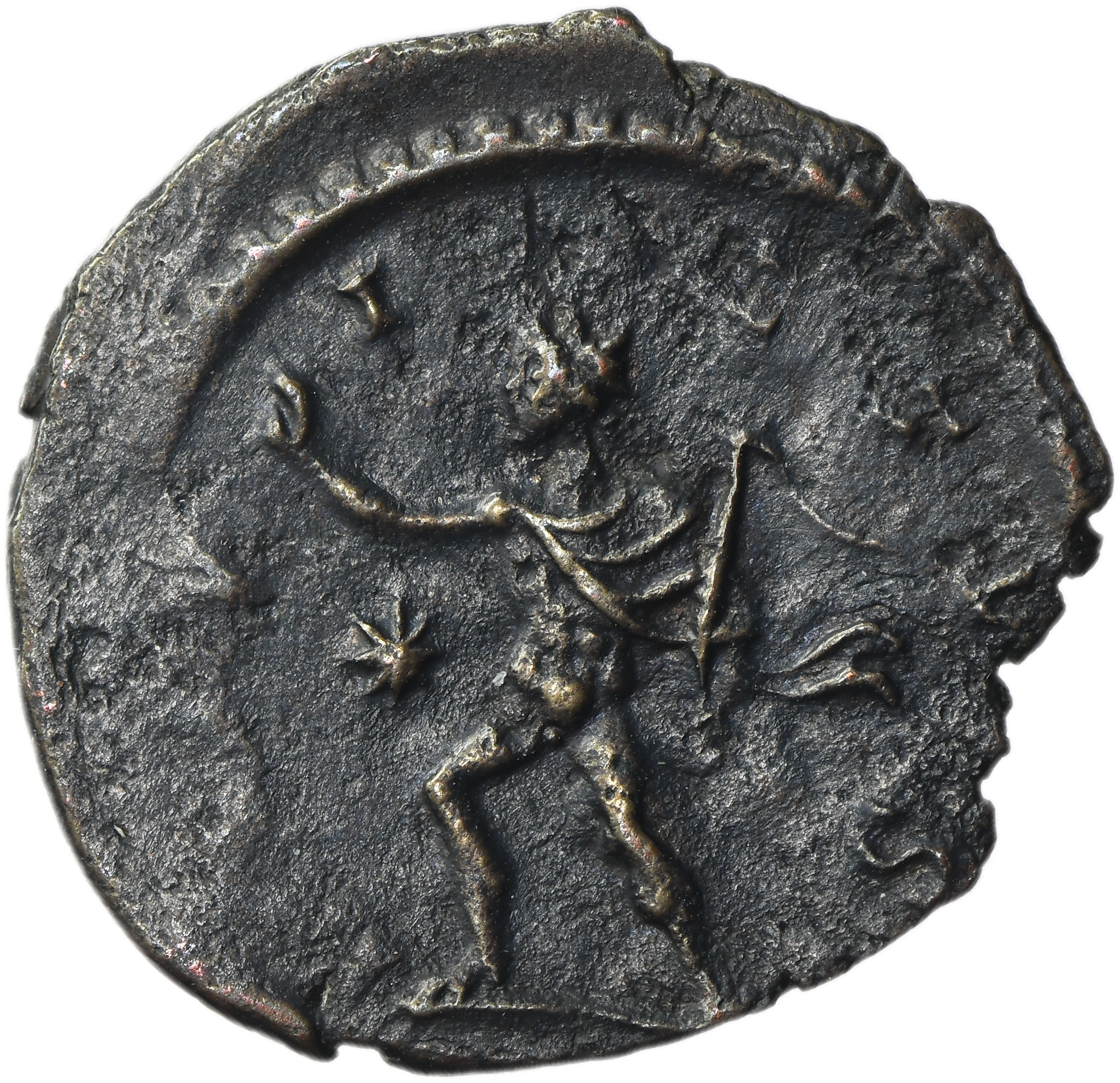
The reverse depicts Sol advancing left, raising his right hand and holding a whip, with the legend INVICTVS, and a star in the left field. Sol Invictus (“the Unconquered”) was a significant ideological motif of the 3rd century, symbolizing eternity, renewal, and divine protection over the ruler. The raised hand is commonly interpreted as a gesture of manifestation or salutation, while the whip relates to solar imagery associated with movement and dominion over time.
The legend INVICTVS emphasizes invincibility in both divine and military terms, forming part of a propagandistic message presenting the emperor as supported by higher powers. The Sol type appears less frequently in the coinage of the Gallic Empire than traditional personifications, which enhances the distinctiveness and collector interest of this issue.
Roman Imperial
Victorinus (269-271), Antoninianus 269-271, Cologne mint
Obverse: radiate, draped and cuirassed bust right
IMP C VICTORINVS P F AVG
Reverse: Sol walking to left, raising hand and holding whip, star in left field
INVICTVS
Diameter 21 mm weight 2.80 g











