


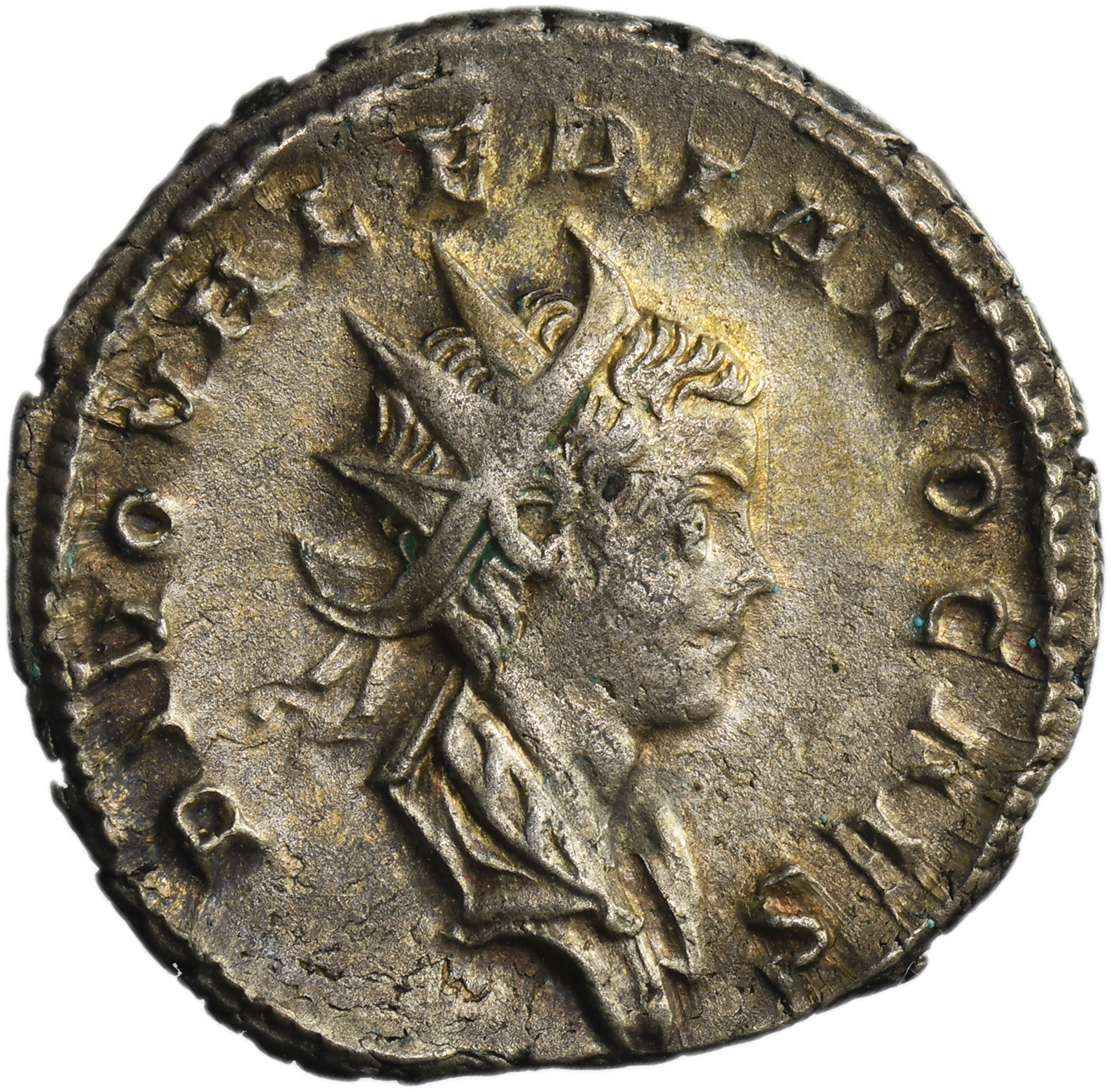
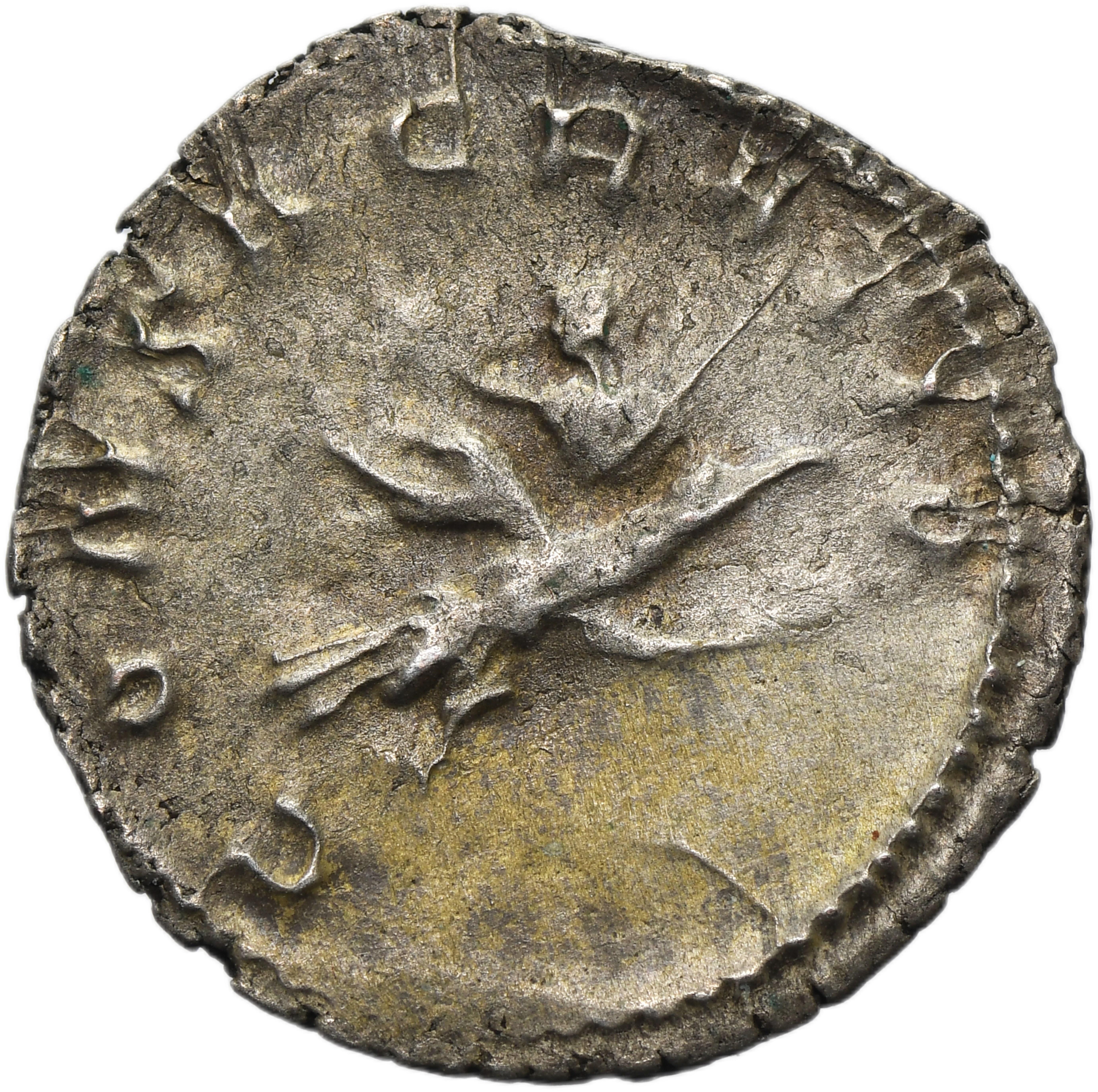


Posthumous antoninianus of Valerian II (d. AD 258), struck at the mint of Lugdunum in AD 258–259, belongs to the consecratio issues produced after the death of members of the imperial house and intended to formalize their elevation to divine status. Coins of this type are among the most important iconographic sources for the study of apotheosis in the Roman Empire.
The obverse displays a radiate bust facing right, with the legend DIVO VALERIANO CAES, identifying the deceased as the “divine Valerian,” son of Gallienus. The use of the title divus reflects the official act of deification and forms part of established dynastic policy.
The reverse shows an Eagle (aquila) carrying the figure of the Caesar upward toward the heavens, accompanied by the legend CONSACRATIO. The eagle as a vehicle of the soul is well attested in both literary sources and Roman visual culture, symbolizing the process of apotheosis the transition from the human to the divine sphere. This imagery belongs to a long-established and consistently employed repertoire of consecration coinage.
The legend CONSACRATIO explicitly denotes the act of deification and serves as an official confirmation of the deceased’s admission into the divine realm. Such issues were closely connected with imperial funerary rites and dynastic propaganda, emphasizing continuity of rule and its sacred dimension.
Roman Imperial
Valerian II (253-255, son of Galien), Antoninianus 258-259, Lugdunum mint
Obverse: radiate and draped bust right
DIVO VALERIANO CAES
Reverse: Valerian II, holding sceptre, astride eagle flying right
CONSACRATIO
Diameter 22 mm, weight 3.04 g











