


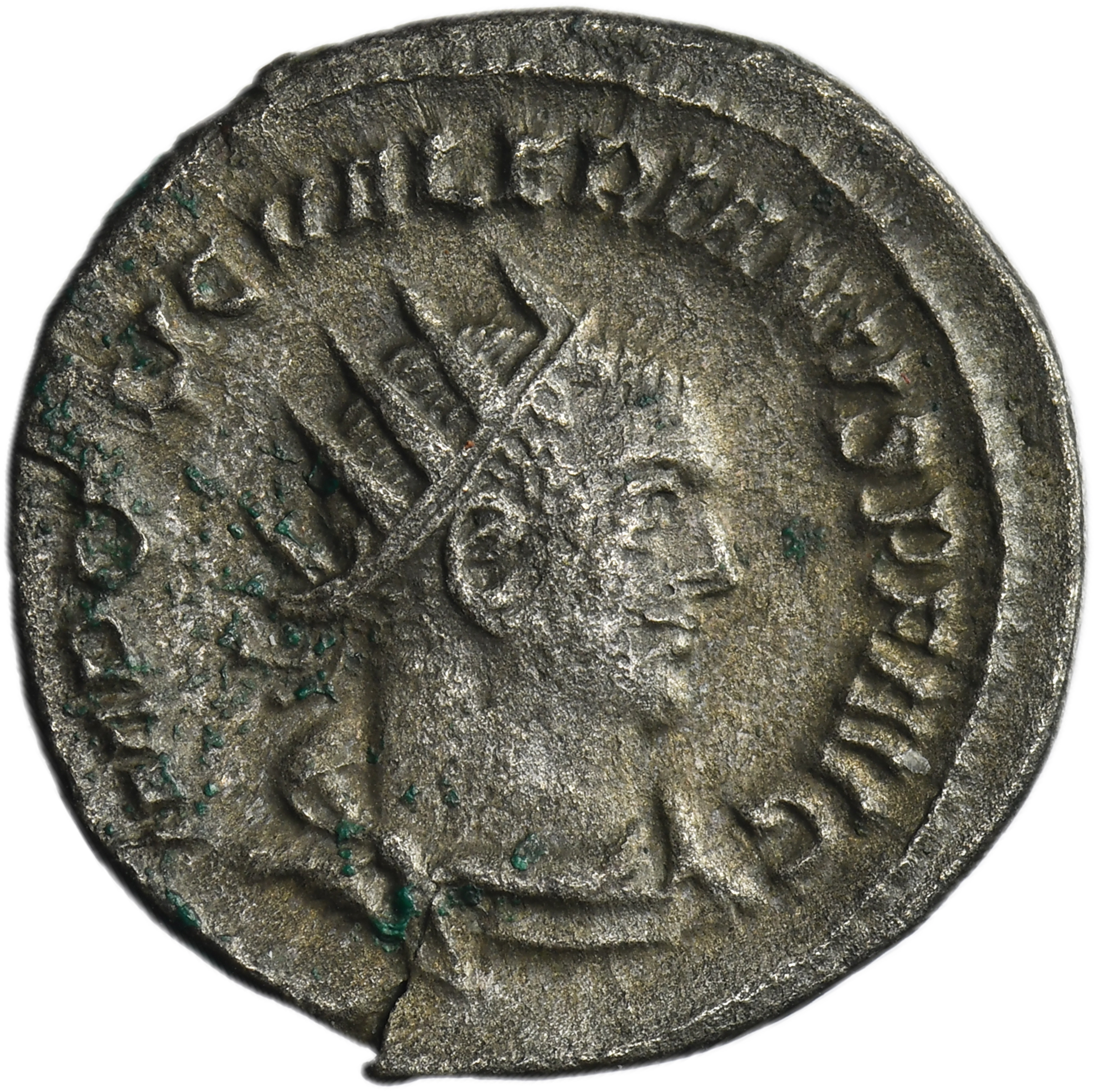
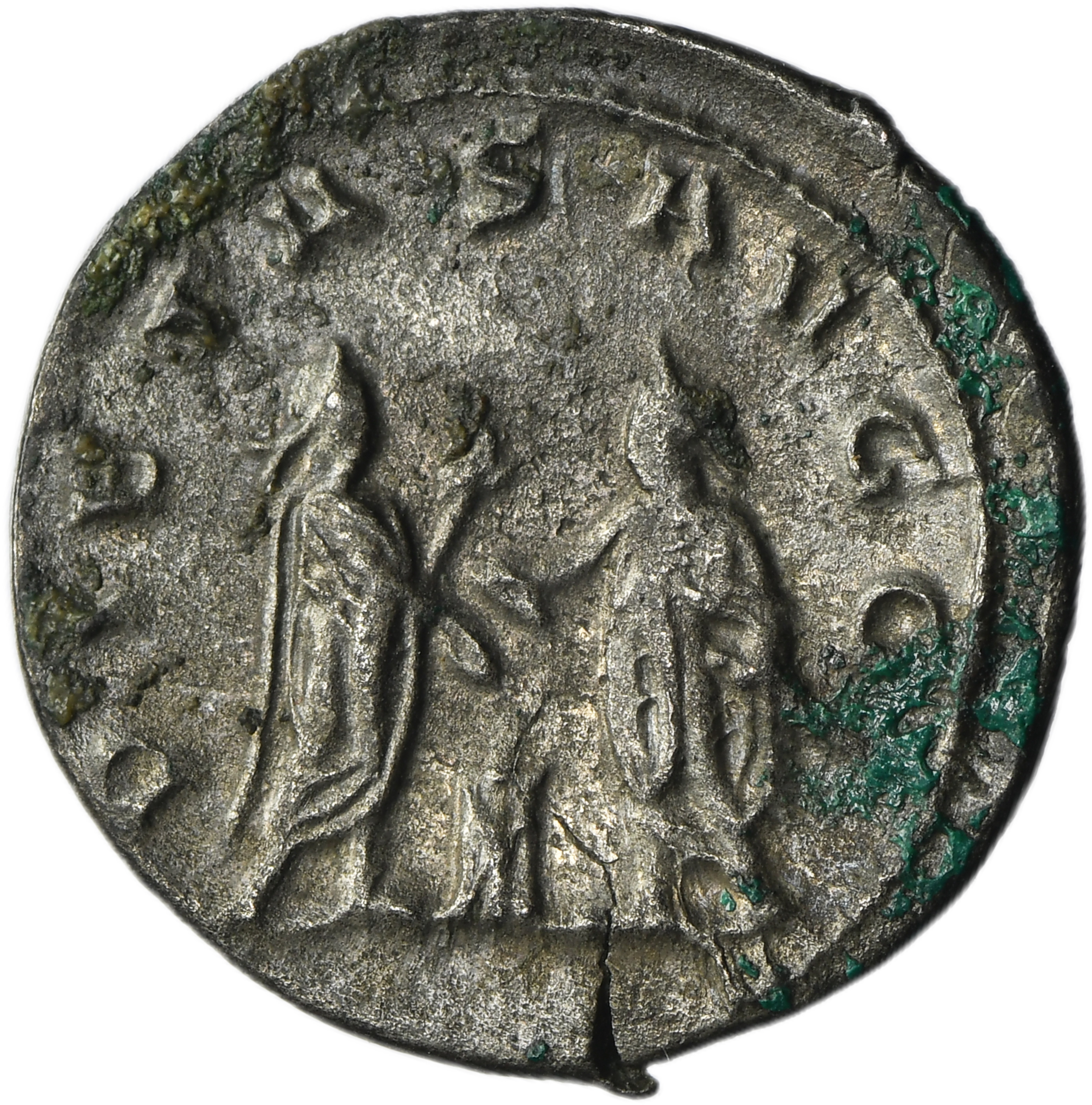


Antoninian of Valerian I, struck at Antioch between AD 255–256, belongs to issues produced during his joint reign with his son Gallienus, when imperial authority was effectively divided between the eastern and western parts of the empire. The mint of Antioch played a central role in supplying currency to the eastern provinces while simultaneously conveying messages of dynastic unity.
The obverse presents a radiate, draped and cuirassed bust of the emperor facing right, with the legend IMP C P LIC VALERIANVS P F AVG, giving his full titulature as Pius Felix Augustus. The radiate crown denotes the antoninianus denomination, which remained the principal silver coin of the period.
The reverse depicts Valerian and Gallienus standing before an altar, performing a sacrifice, accompanied by the legend PIETAS AVGG. This type belongs to a clearly defined iconographic group in which pietas signifies devotion and duty toward the gods and the state. The joint sacrificial act serves as a direct visual statement of shared rule and the religious foundation of imperial authority.
The plural form AVGG explicitly refers to both Augusti and is characteristic of coinage issued during periods of co-rule. The motif is well attested in the numismatic record and reflects a broader ideological program emphasizing concord, legitimacy, and adherence to traditional religious practices during a time of political and military instability.
Roman Imperial
Valerian I (253-260), Antoninianus 255-256, Antioch mint
Obverse: radiate and draped bust right
IMP C P LIC VALERIANVS AVG
Reverse: Valerian and Gallienus, standing face to face, sacrificing at altar between them
PIETAS AVGG
Diameter 23 mm, weight 3.44 g











