


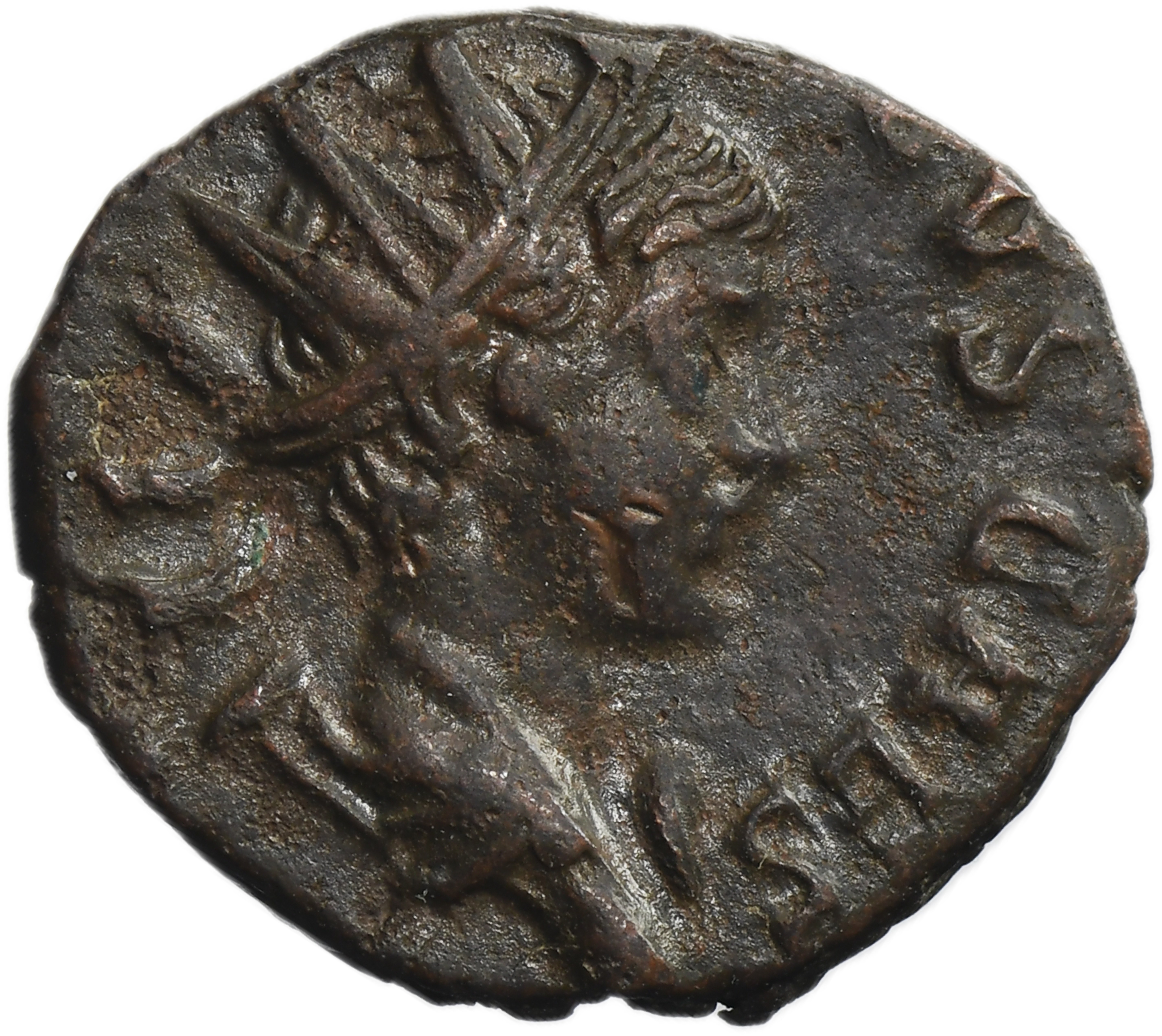
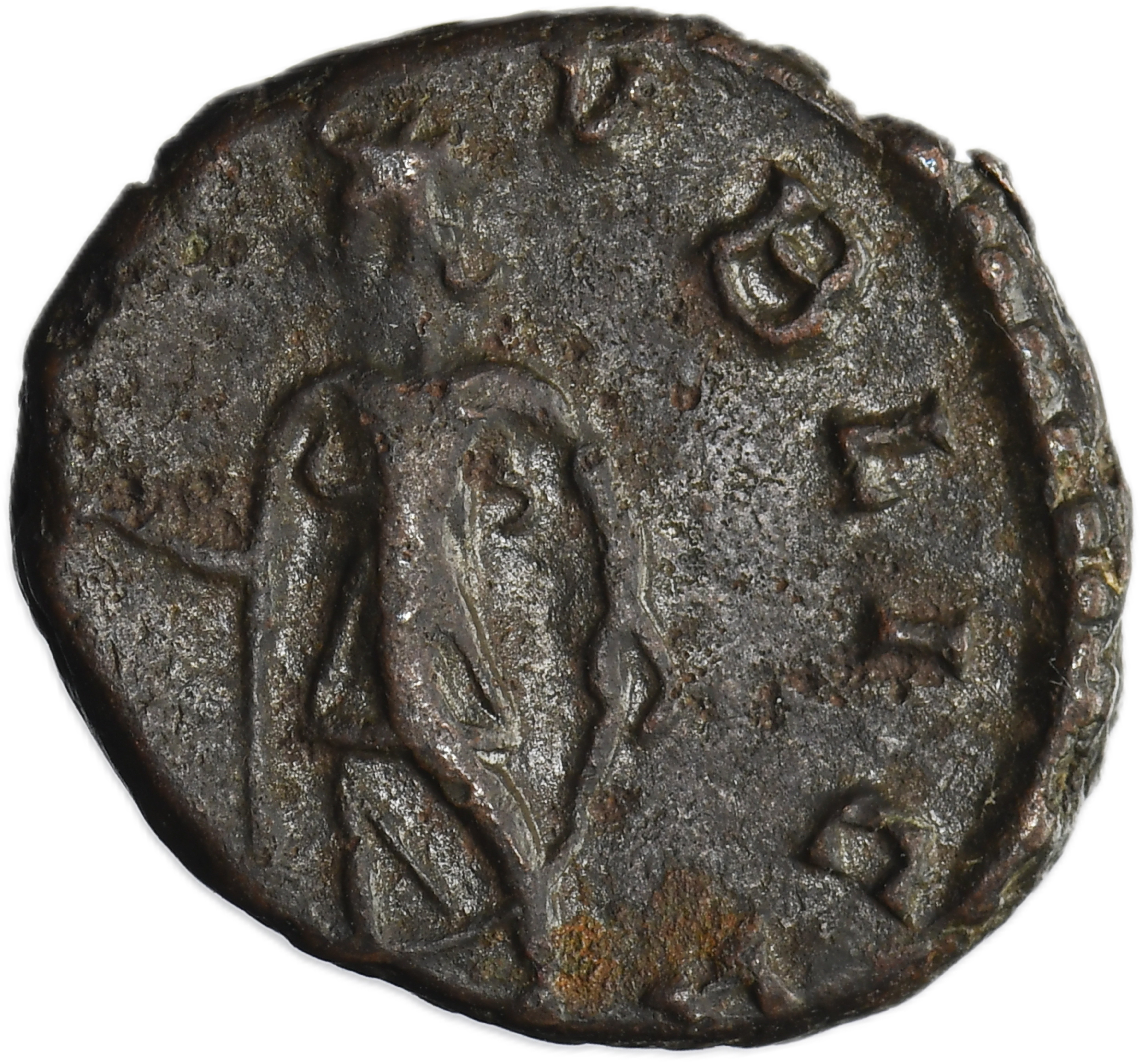


Rare antoninianus of Tetricus II (AD 273–274), struck at the mint of Trier between AD 272–273, belongs to the coinage of the final phase of the Gallic Empire, issued during his joint rule with his father, Tetricus I. The issues of this period constitute important evidence of efforts to preserve dynastic continuity amid the escalating political and military crisis in the western provinces.
The obverse presents a radiate bust of the young Caesar facing right, with the legend C PIV ESV TETRICVS CAES, identifying him as the designated heir.
The reverse depicts Spes advancing left, holding a flower and lifting her garment, with the legend SPES PVBLICA. Spes, as the personification of hope, was among the most frequently employed motifs in the coinage of imperial heirs, serving as a clear ideological statement presenting the Caesar as the guarantor of the empire’s future.
The legend SPES PVBLICA (“public hope”) is well attested in both Roman and Gallic coinage as a formula associated with the heir to the throne, symbolizing continuity of power and political stability. In the case of Tetricus II, it carries particular weight in the context of the final stage of the Gallic Empire, which was ultimately reintegrated into the Roman state under Aurelian.
Roman Imperial
Tetricus II (273–274), Antoninianus 272-273, Treveri mint
Obverse: radiate and draped bust right
C PIV ESV TETRICVS CAES
Reverse: Spes walking to left, holding flower and raising robe
SPES PVBLICA
Diameter 17 mm, weight 2.61 g











