


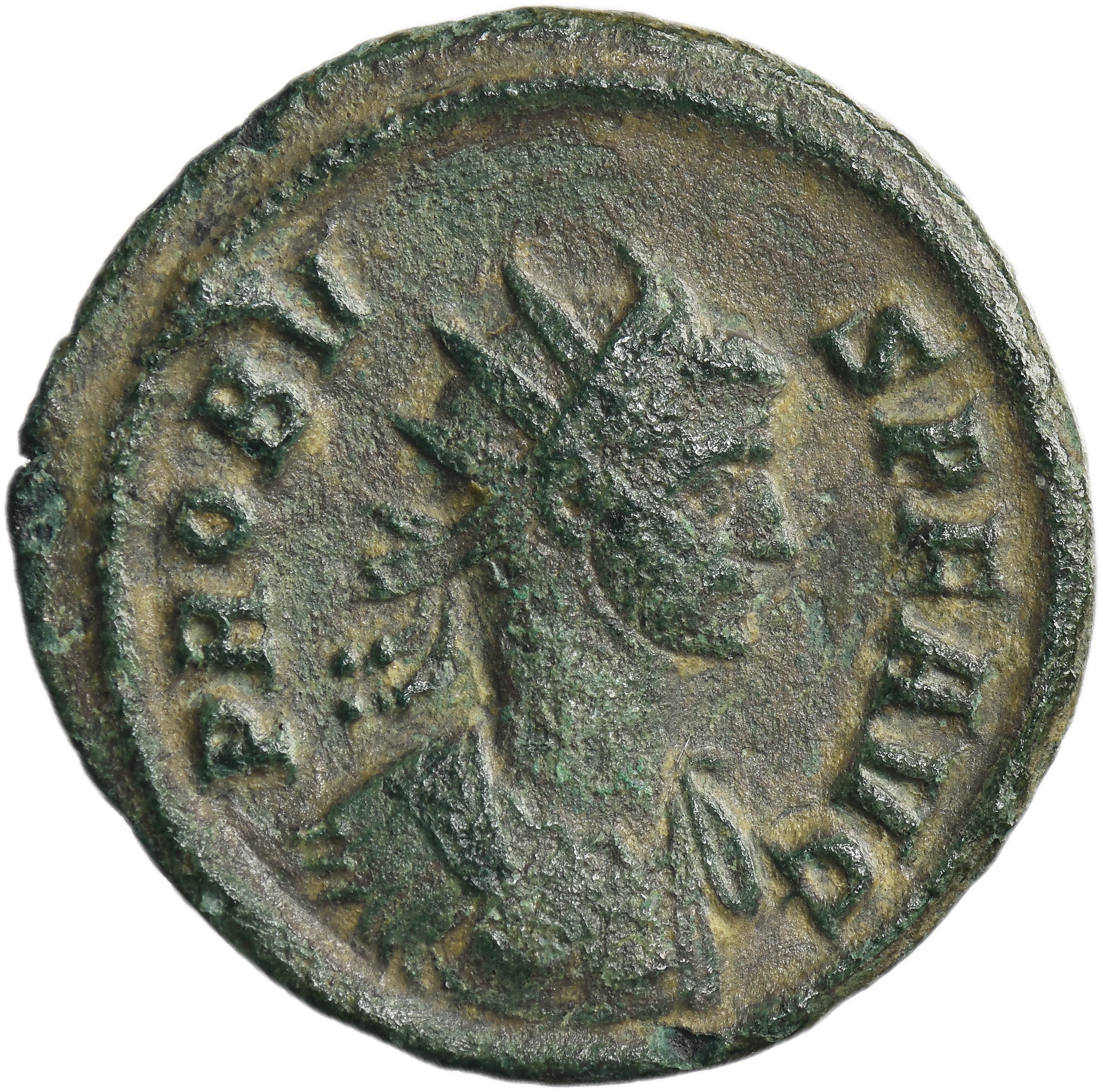
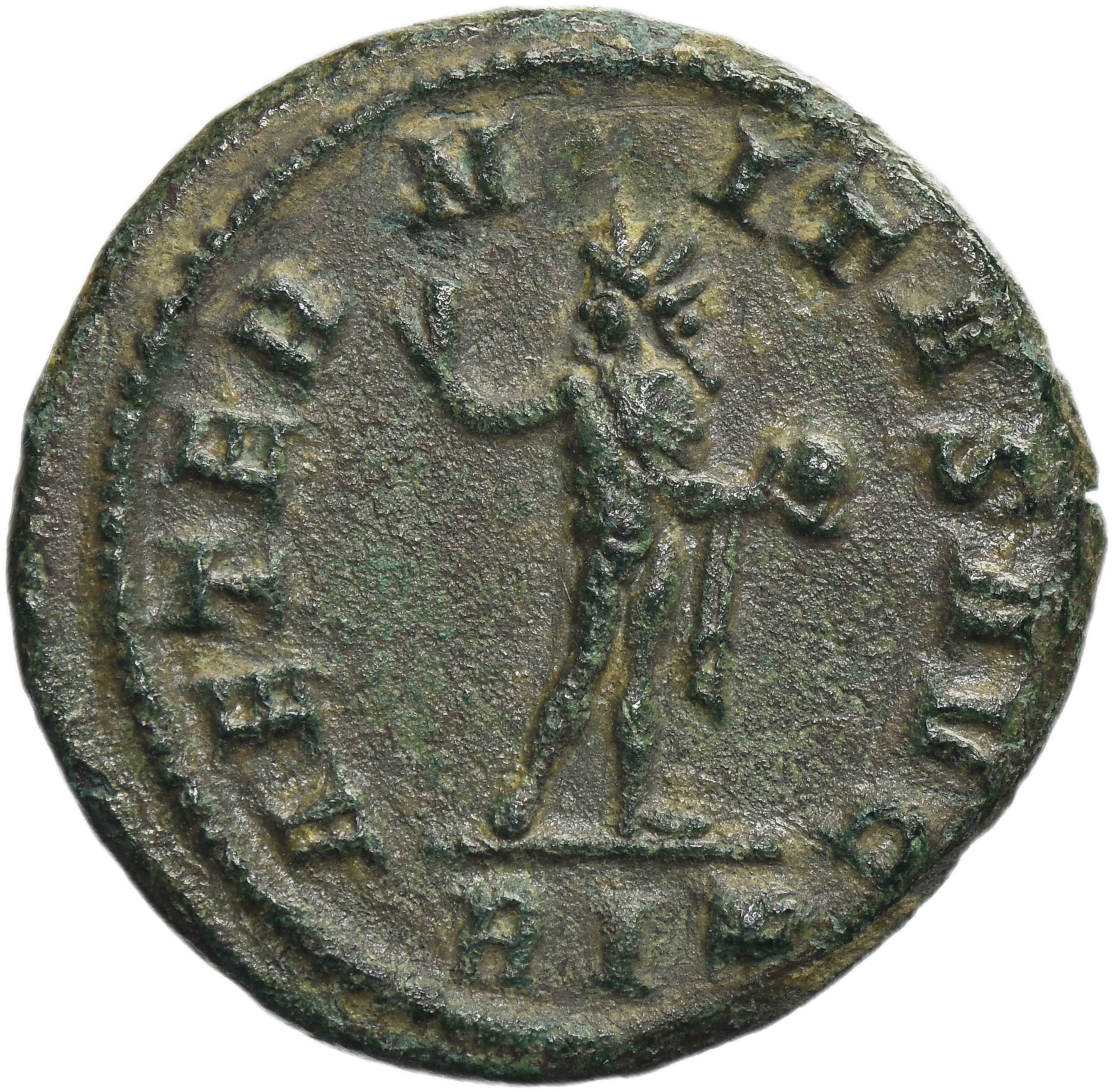


This coin belongs to the famous coded AEQVITI series struck at the mint of Rome under Probus (AD 276–282). In this example, the exergue mark RIZ contains the letter “I”, which represents the seventh letter of the seven-letter code AEQVITI, corresponding to the seventh officina (designated by the Greek letter Ζ). This system was discovered and first published by Alexander Missong in the article “Gleichartig systemisirte Münzreihen unter Kaiser Probus” in Numismatische Zeitschrift (1873).
During the reign of Probus, the Roman mint operated seven officinae, each striking coins bearing a different letter of the AEQVITI code in the exergue. When all seven issues are assembled, they spell out AEQVITI. The letter “R” denotes the mint of Rome, the middle letter corresponds to the code, and the final Greek letter indicates the officina number. Known combinations include: RAA; REB; RQΓ; RVΔ; RIE; RTζ; RIZ.
The obverse features a right-facing bust of the emperor wearing a radiate crown and cuirass, with the legend PROBVS P F AVG, giving his titulature as Pius Felix Augustus.
The reverse depicts Sol standing left, raising his right hand and holding a globe, with the legend AETERNITAS AVG and the exergue mark RIZ. Sol, as the solar deity, symbolizes eternity, renewal, and divine protection over imperial authority.
The legend AETERNITAS AVG (“the eternity of the Augustus”) reflects the ideological message of Probus’ reign, emphasizing the enduring and perpetual nature of imperial rule. The AEQVITI series, to which this coin belongs, is considered one of the most fascinating and challenging to complete among Roman coin issues, with the Roman mint series being significantly rarer than the corresponding coded issues from Ticinum.
Roman Imperial
Probus (276–282), Antoninianus 276-282, Rome mint
Obverse: radiate and cuirassed bust right
PROBVS P F AVG
Reverse: Sol standing left, holding globe and raising hand, RIZ in exergue
AETERNITAS AVG
Diameter 21 mm, weight 4.18 g











