


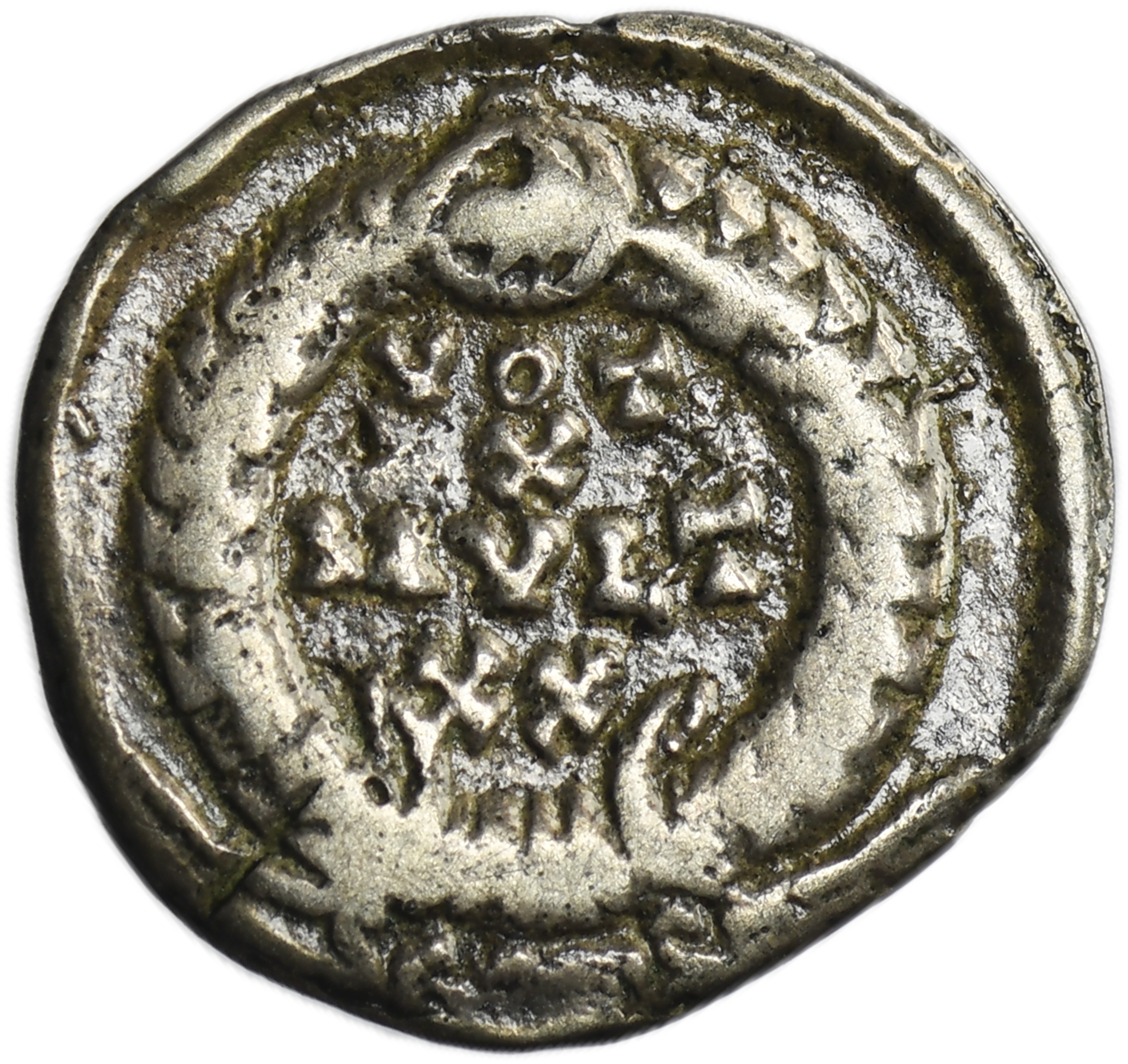


Relatively rare siliqua of Julian II the Apostate (AD 360–363), struck at the mint of Arles, then known as Constantina named in honor of Constantine I the Great. Issues from this mint represent important evidence of late Roman coinage in Gaul.
Julian II, called “the Apostate” in Christian sources, was a ruler who despite being raised as a Christian returned to paganism and attempted its restoration within the empire. His coinage reflects a transitional period marked by religious tensions in the Late Roman world.
The obverse features a right-facing bust of the emperor wearing a pearl diadem, draped and cuirassed, with the legend D N FL CL IVLIANVS P F AVG, giving his full titulature as Dominus Noster Flavius Claudius Iulianus Pius Felix Augustus.
The reverse shows a laurel wreath enclosing the inscription VOT X MVLT XX, with the exergue mark PCONST. This inscription refers to imperial vows (vota) for the prosperity of the reign: ten-year vows (vota decennalia) and wishes for future anniversaries (multa vicennalia).
Siliquae were the principal silver denomination of the 4th century, significantly rarer than bronze issues. During this period, their weight was gradually reduced while maintaining relatively high silver purity, making them an important indicator of economic changes in the Late Roman Empire.
Roman Imperial
Julian II the Apostate (360-363), Siliqua 360-363, Arles mint
Obverse: pearl diademed, draped and cuirassed bust right
D N FL CL IVLIANVS P F AVG
Reverse: wreath with inscription VOT X MVLT XX, PCONST in exergue
Diameter 17 mm, weight 1.9 g











