


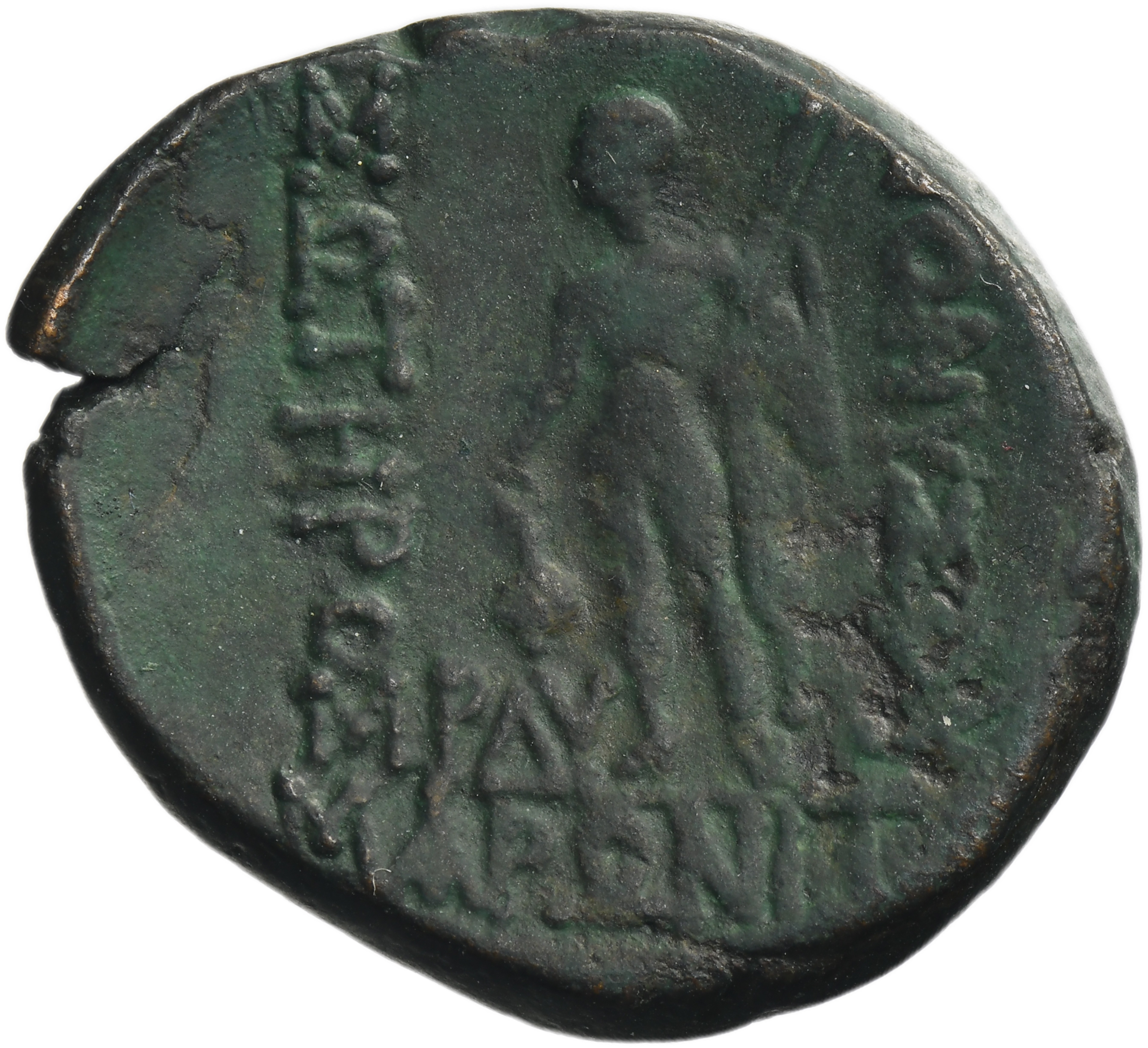


Bronze coin from Maroneia in Thrace, struck after 146 BC, belonging to issues produced under Roman dominance but deeply rooted in local Hellenistic traditions. The coinage of Maroneia is distinguished by a strong Dionysian character, reflecting the importance of his cult in the region.
The obverse features a right-facing head of the young Dionysus wearing an ivy wreath. Ivy, sacred to Dionysus, symbolizes renewal, life, and associations with wine and nature.
The reverse depicts a nude Dionysus standing left, holding a bunch of grapes and two spears, with the legend ΔIONYΣIOY ΣΩTHΡOΣ MAΡΩNITΩN and the monogram ΡΔY in the field. The grapes emphasize his connection to viticulture and wine production, for which Maroneia was renowned in antiquity.
The epithet ΣΩΤΗΡ (“Savior”) highlights the protective and beneficent aspect of the deity, worshipped as a patron of the city and its inhabitants. The combination of Dionysian attributes with martial spears forms an interesting iconographic element, linking religious symbolism with ideas of strength and protection.
Greece
Thrace, Maroneia, AE after 146 BC
Obverse: head of young Dionysos right, wreathed with ivy
Reverse: Dionysos, naked, standing left, holding bunch of grapes and two spears, monogram ΡΔY in left field
ΔIONYΣIOY ΣΩTHΡOΣ MAΡΩNITΩN
Diameter 28 mm, weight 14.0 g











