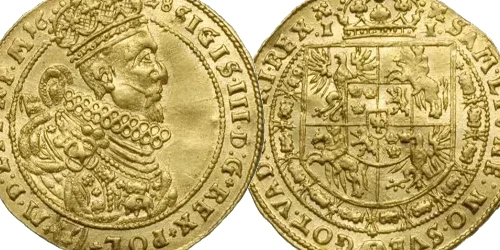
Silver. A rare year of issue. An attractive piece. Perfectly preserved details and mint luster.
The term “vicariate coins” derives from the privilege of the Saxon electors, who, following the emperor’s death, served as vicars—that is, they assumed authority in the Holy Roman Empire until a new emperor was elected. Vicarial coins differed stylistically from standard circulation coins. This one was struck when the King of Poland, August III of Saxony, the Elector of Saxony, served as vicar following the death of Emperor Charles VI.
The vicar held judicial authority, had the right to collect revenues, grant fiefs, and accept oaths of allegiance on behalf of the Holy Roman Empire. However, all decisions he made required the approval of the newly elected emperor. The office of vicar was traditionally associated with two palatines: the Elector of Saxony, who held this office in Saxony, Westphalia, Hanover, and northern Germany; and the Palatine of the Rhine, who exercised his authority in Franconia, Swabia, the Rhineland, and the southern parts of the empire.