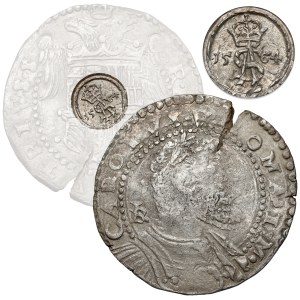
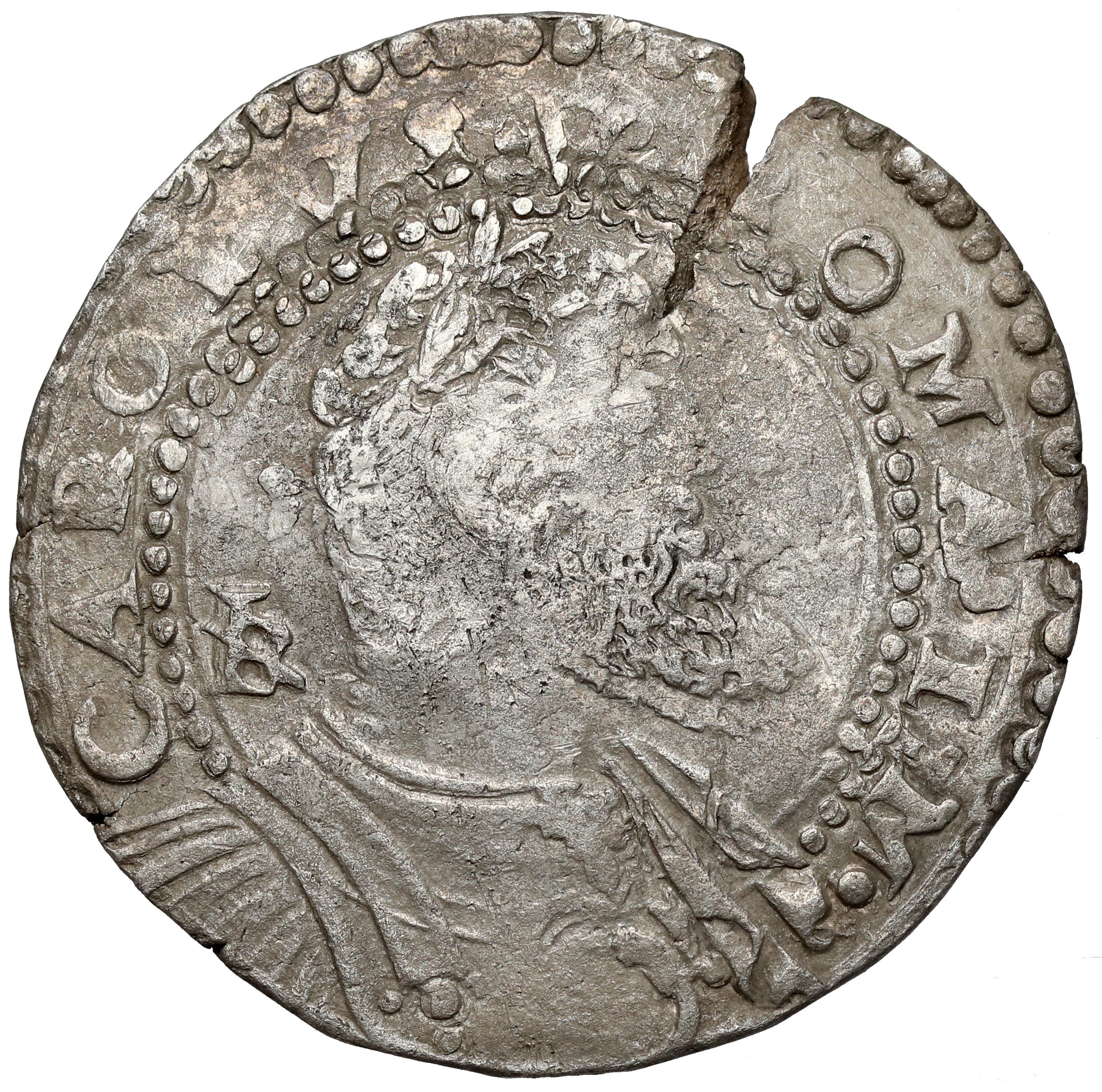
A very rare coin from the reign of Sigismund II.
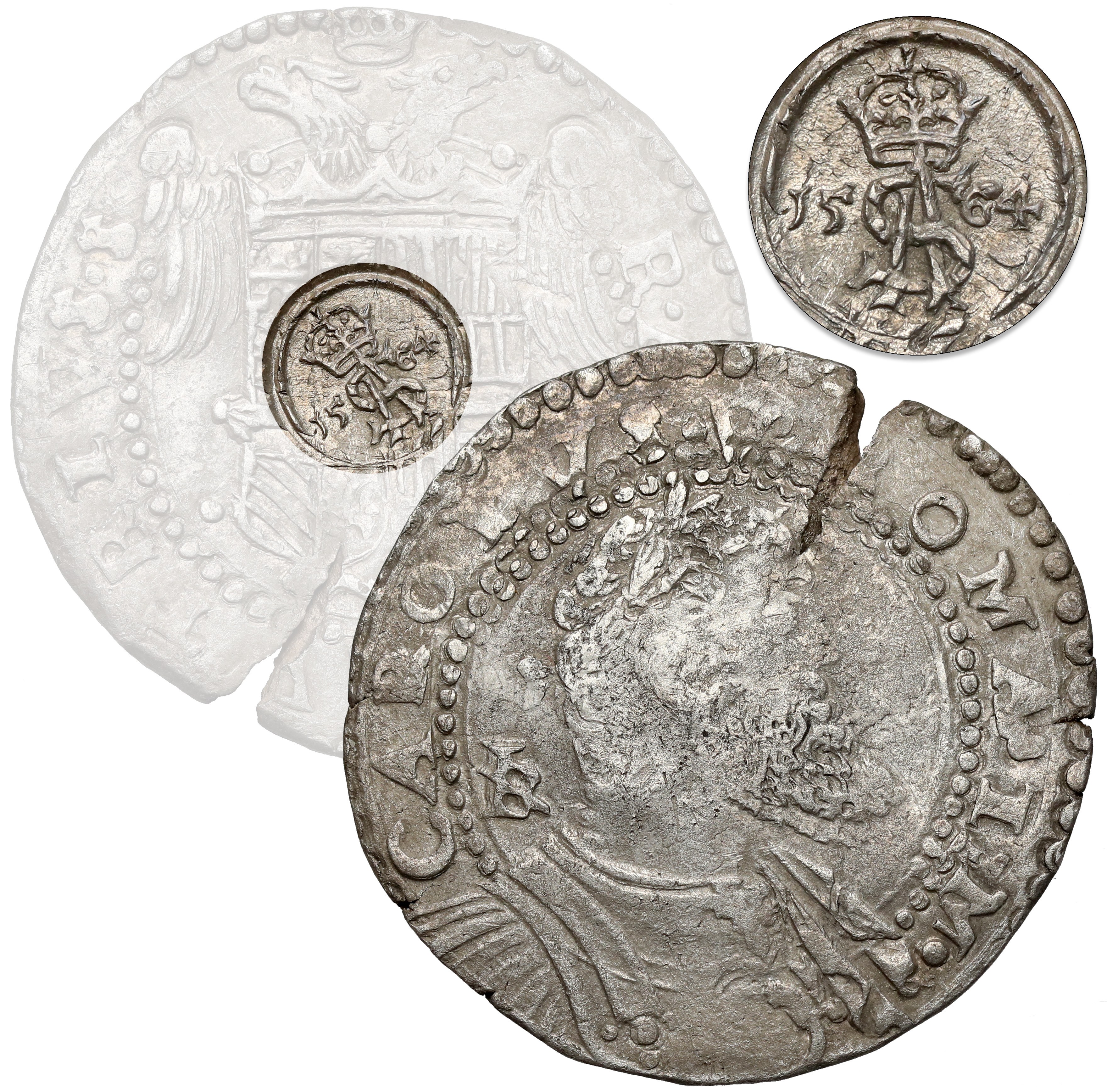
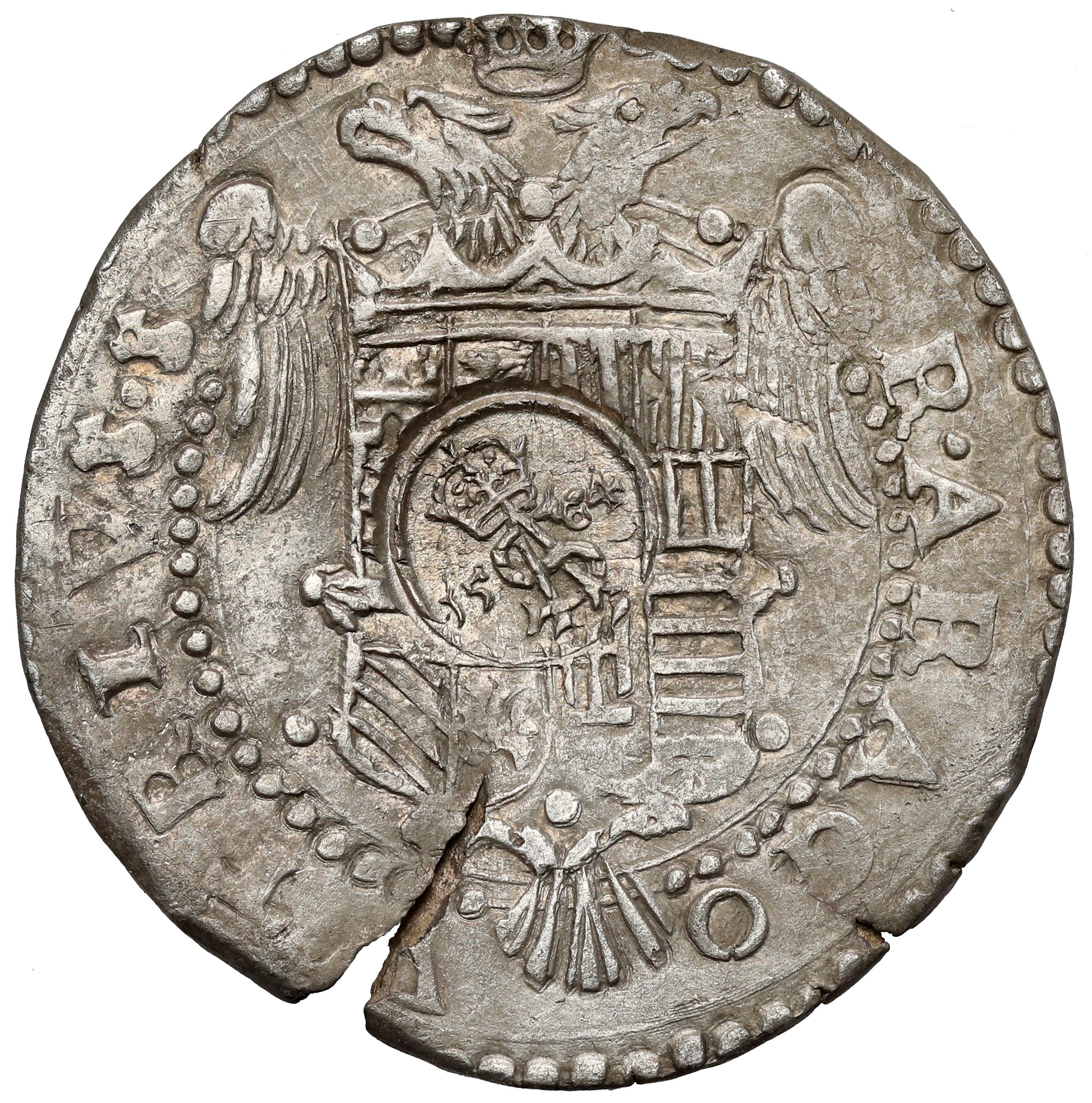
A countersigned half-thaler from the “Neapolitan sums”—a coin whose history is linked to the war with Moscow over Livonia.
A rarer variant of these half-thalers—counter-stamped on a coin of Charles V, rather than Philip II.
When Queen Bona Sforza left Poland in 1556, she took considerable treasures with her to Italy, which she lent there to the Viceroy of Naples, the Duke of Alba. The loan was said to amount to as much as 430,000 ducats (bearing 10% interest); however, due to Bona’s sudden death in 1557 and doubts regarding her will, its repayment was called into question. It was only after many years of correspondence and diplomatic negotiations that Sigismund Augustus managed to recover part of the loan. These were the famous “Neapolitan sums.”
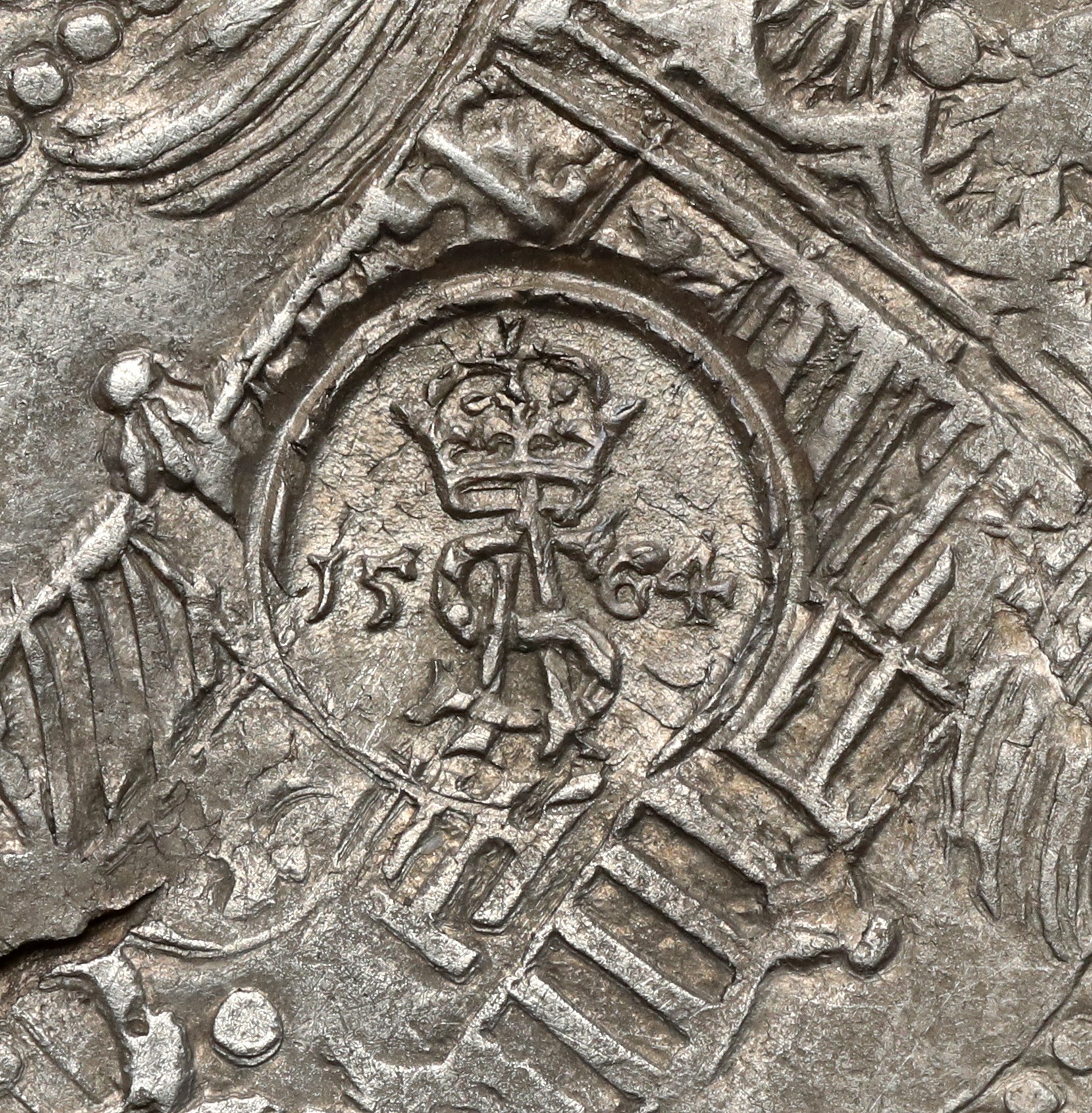
They were paid out in Spanish and Neapolitan thalers and half-thalers, which, after being transported to the country, were to be melted down and struck into domestic coins. These plans, however, were quickly thwarted by wartime needs. It was decided instead to simply stamp them with a royal countermark (a crowned monogram “SA” with the date on either side), to which a fixed exchange rate was assigned: 30 Polish groszy per half-thaler and 60 per thaler. A very large sum by the standards of the time.”
As Tadeusz Kałkowski recalls: "...in a decree issued at the same time, he assured that after the war ended, he would redeem them at the same exchange rate. This apparently happened, because those countersigned thalers are today among the greatest numismatic rarities..."
Silver, diameter 34 mm, weight 14.78 g.