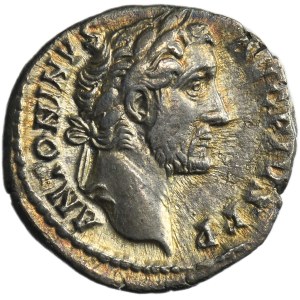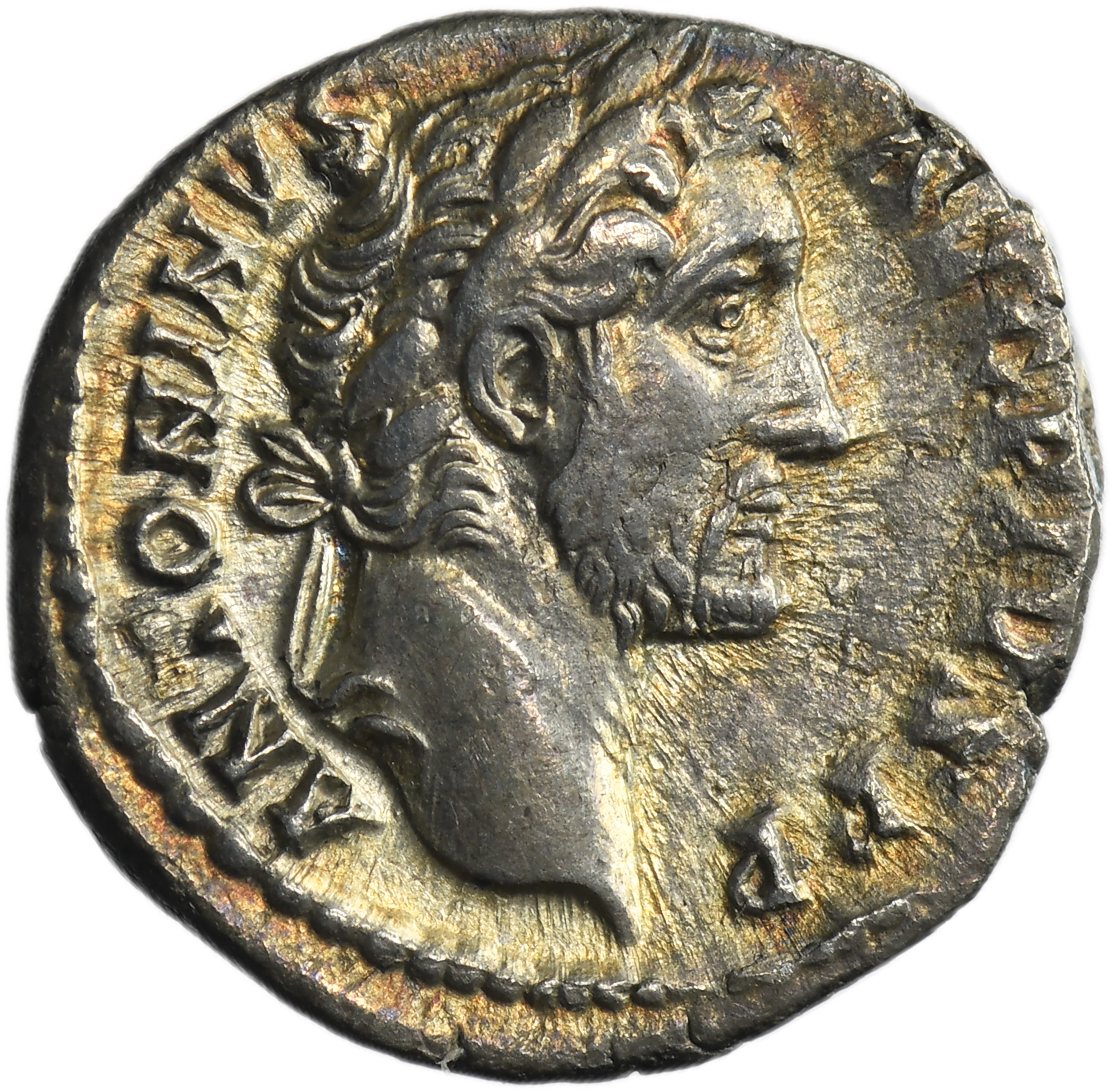
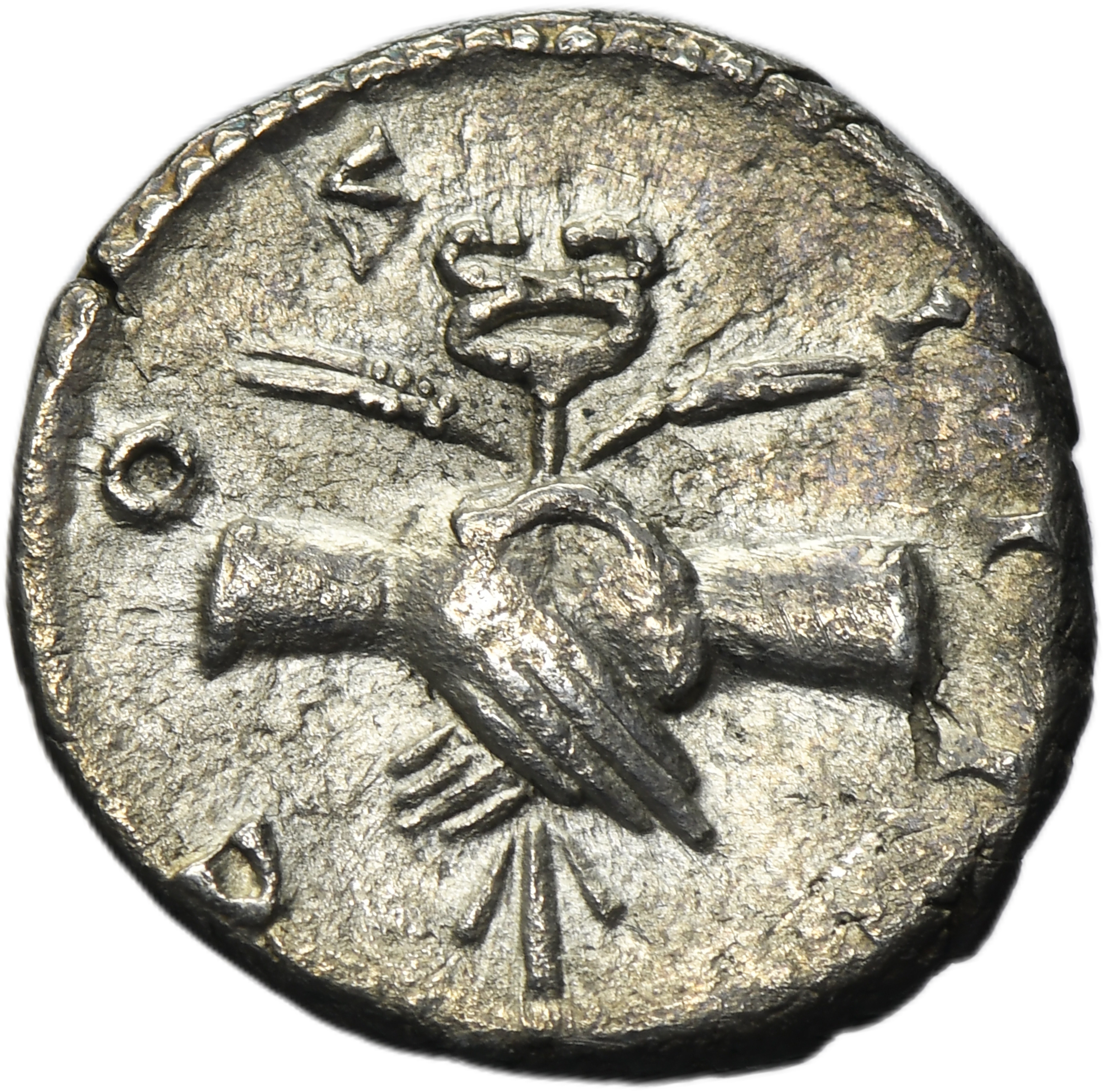


Silver denarius of Antoninus Pius (AD 138–161), struck at the Rome mint in AD 146, belongs to a group of issues with a clearly ideological character, produced during the stable and peaceful phase of his reign.
The obverse shows a laureate head of the emperor facing right with the legend ANTONINVS AVG PIVS P P, reflecting his official titulature, including the title Pater Patriae.
The reverse depicts two clasped hands (dextrarum iunctio), above which appears a winged caduceus, with the legend COS III. The motif of joined hands is one of the most explicit symbols of concord (concordia), loyalty, and unity, both in a political and dynastic sense. The presence of the caduceus, attribute of Mercury, is associated in Roman iconography with harmony, peace, and balance.
This type is closely connected with the events of AD 145–146, in particular the marriage of Marcus Aurelius and Faustina the Younger, daughter of Antoninus Pius, which formed a key element of Antonine dynastic policy. The depiction of the clasped hands is interpreted in numismatic scholarship as a reference to this union, emphasizing the unity of the ruling house and the continuity of imperial power.
Roman Imperial
Antoninus Pius (138-161), Denarius 146, Rome mint
Obverse: laureate head of Antoninus Pius right
ANTONINVS AVG PIVS PP
Reverse: hands clasped, holding caduceus and corn ears
COS III
Diameter 18 mm, weight 3.24 g