



Dimensions: 109 x 74.5 x 15 cm
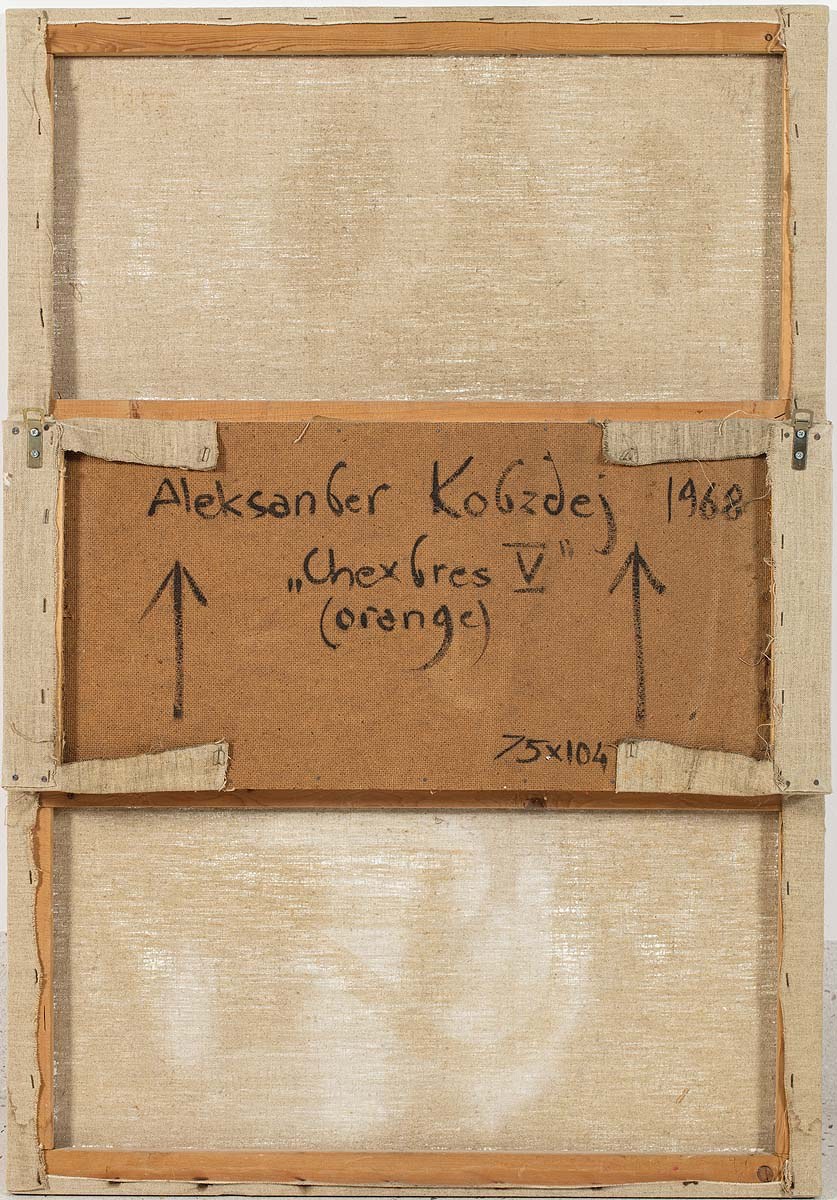
Signature: signed p.m.: Kobzdej / 68; inscribed l.m.: le Rocher; on the reverse, signed and inscribed: Aleksander Kobzdej 1968 / "Chexbres V" / (orange) / 75 x 104 and mounting indications
Provenance
Ahrenberg family collection
Theodor "Teto" Ahrenberg (1912-1989) was a Swedish entrepreneur and visionary, and above all one of the most prominent art collectors of the 20th century. His passion, born in the post-war enthusiasm of the 1940s, evolved over time into a monumental undertaking, resulting in one of the most important and daring private panoramas of contemporary art in Europe. Over the course of four decades, Ahrenberg amassed more than six thousand works that documented not only the rapid changes in aesthetics, but also the vibrant, intimate fabric of his artistic relationships.
Ahrenberg's collection was a rare marriage of the already established masters with the most radical representatives of the emerging modern era. His holdings included works by pillars of modernism such as Henri Matisse, Pablo Picasso, Georges Braque, Le Corbusier and Marc Chagall. But what defined the unique nature of his patronage was his boundless openness to artists who were unruly and seeking new forms of expression. Ahrenberg became a protector and friend of such pioneers as Lucio Fontana, Jean Tinguely, Niki de Saint Phalle, Arman and Robert Rauschenberg. Significantly, his circle of interest also included Polish artists Tadeusz Kantor, Marian Bogusz, Aleksander Kobzdej, Pinchas Burstein (Maryan), Henryk Stażewski and Jan Lebenstein. The selection testifies to his incredible collecting intuition and rare ability to spot outstanding phenomena outside the Western mainstream.
The year 1962 became a painful caesura in Ahrenberg's biography. As a result of a contentious tax dispute with the Swedish state, much of his first collection - which included priceless pre-war works - was confiscated and dispersed at auction. This traumatic experience prompted the collector to move with his family to the picturesque village of Chexbres on Lake Geneva. It was there, at the Atelier Le Rocher estate, that a new chapter of his business was born, in which the house became a studio and the studio became a home. Ahrenberg invited artists for long residencies, allowing them total creative freedom and funding their most daring projects. Ahrenberg's second collection thus became an intimate record of encounters and shared lives with the greatest personalities of the era, mapping the freshest and most current trends in art. Today, his name remains a symbol of patronage based on boundless trust, a testament to the belief that the role of a collector goes far beyond mere possession of objects - it is to actively and passionately contribute to the history of art.
After returning from Vietnam in 1954, Aleksander Kobzdej already knew that he had to find a new shape for painting. He wanted to free himself from the shackles of representational art, feeling that he was increasingly drawn to the very form of the painting - the roughness of the texture and the visual and haptic effects provided by the use of different kinds of materials. His art evolved in stages, "metamorphosed" and depicted successive struggles with matter. Inspired by informel, he created his first abstract compositions in the late 1950s and early 1960s. At the time, he experimented with new techniques, such as collage. He focused on applying successive thick layers of paint and creating a variety of textures - this was the last step before Kobzdej's art went into space.
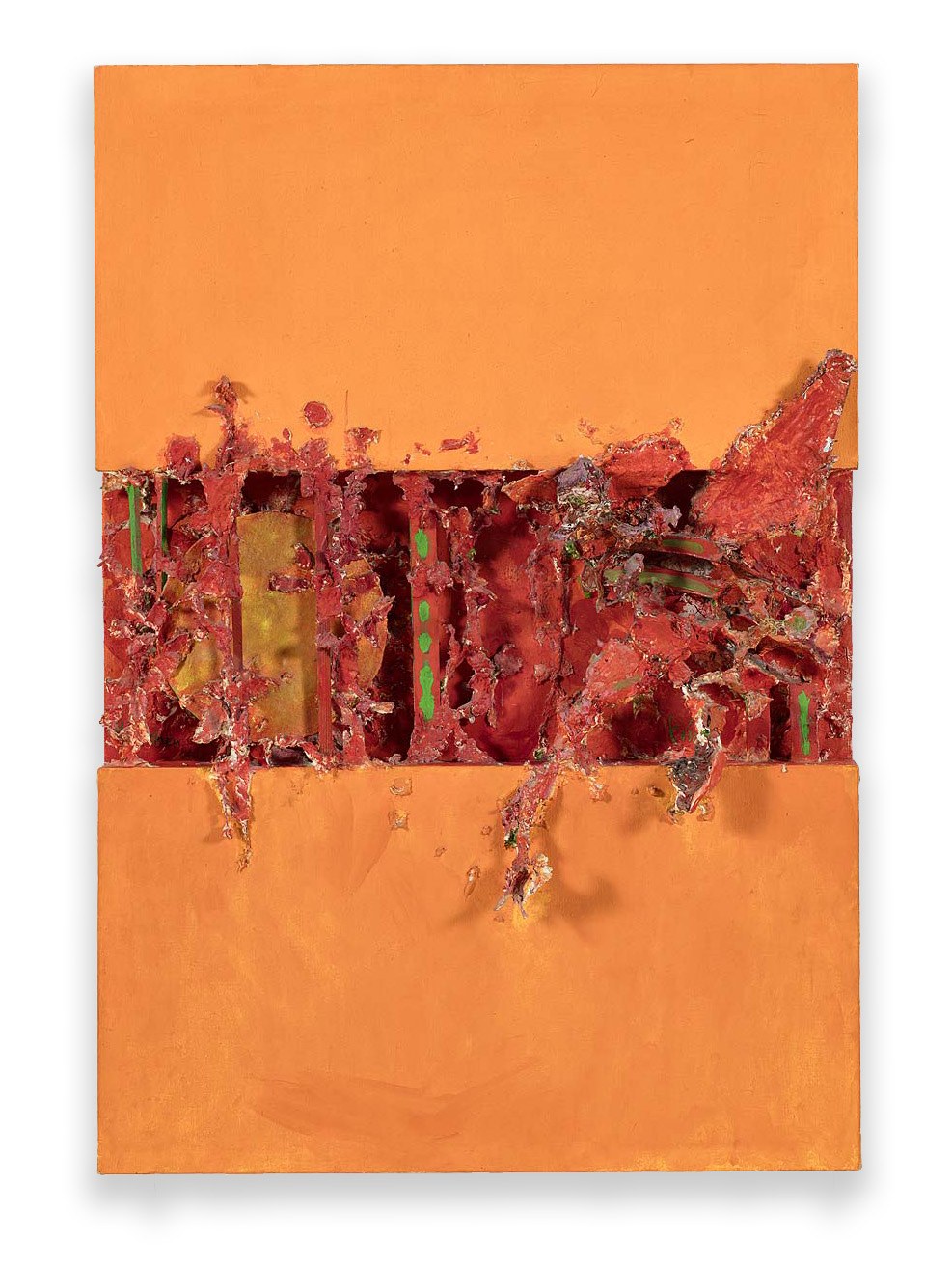
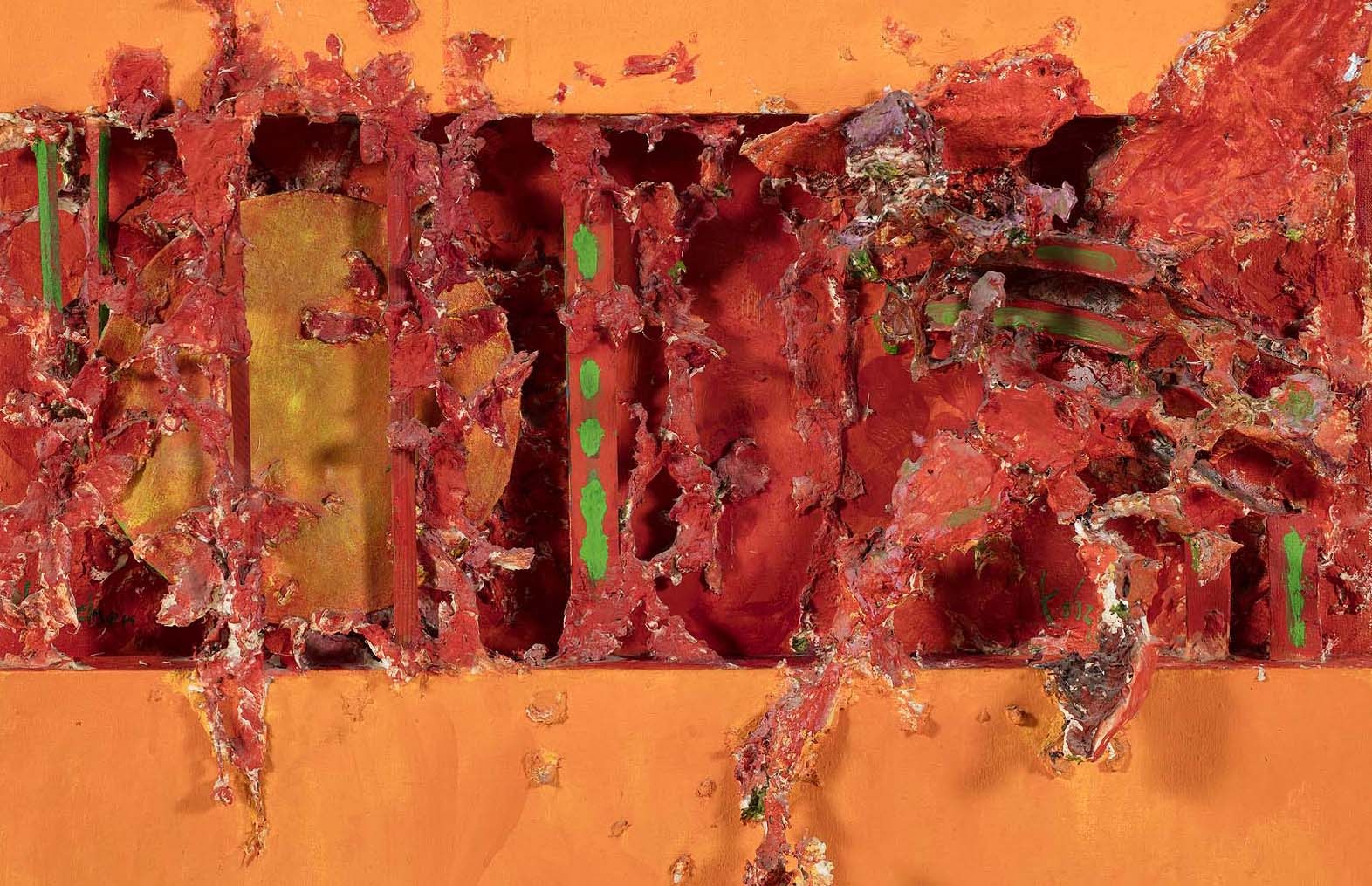
In the mid-1960s, questioning traditional thinking about the plane of the canvas, the artist demolished it and introduced an indentation - a gap - which he then filled with intricate relief. This is how the series "Slits" was created, to which the presented work belongs. The fissures are flat, rectangular paintings painted in a bright, solid color, interrupted by a three-dimensional recess. Spilling out of it are all sorts of lush spatial forms, sometimes unidentified, sometimes resembling organic forms - plants, animals or flowers. The chaotic, corporeal contents of the interstices act on the viewer with a wealth of shapes, colors and textures. It pulses with vital energy, going out into space, and its individual elements are brought out by the play of light and shadow.










