


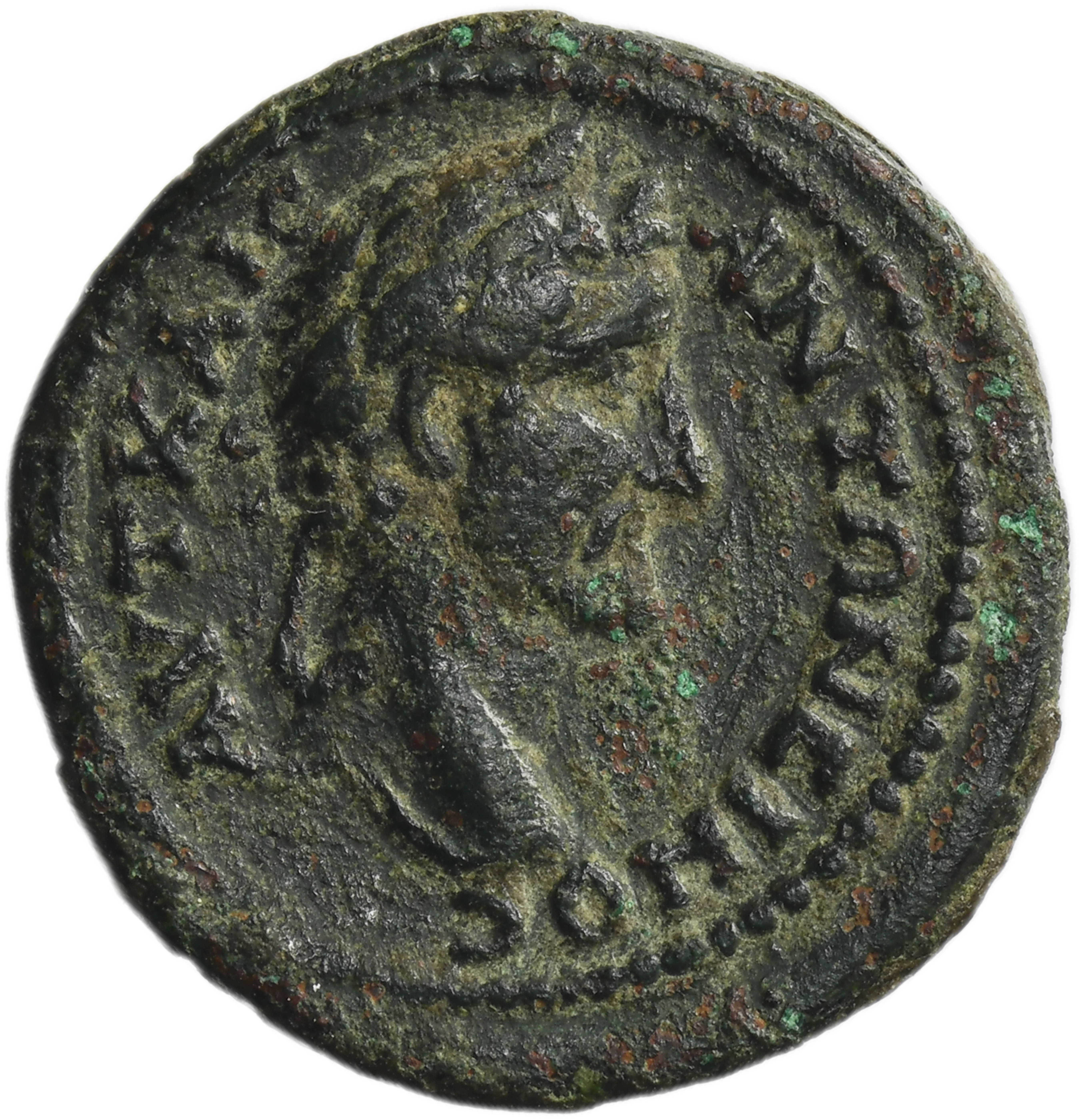
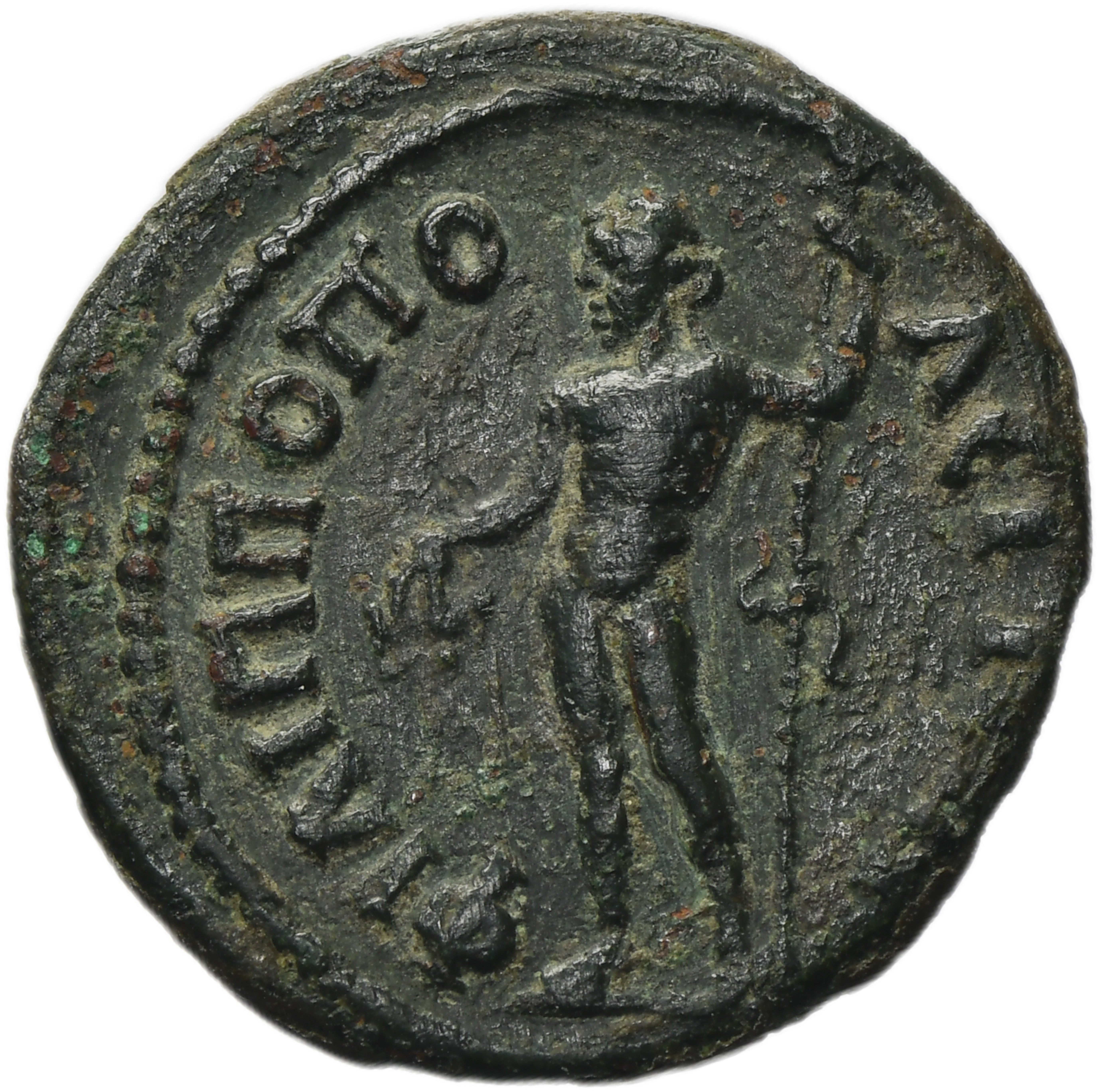


Provincial bronze issue of Antoninus Pius (AD 138–161) struck at Philippopolis in Thrace, belonging to the local civic coinage produced within the monetary framework of the Roman Empire in the second century AD. Philippopolis (modern Plovdiv), one of the principal cities of Roman Thrace, functioned as an important administrative and commercial center of the region, as confirmed by epigraphic evidence and archaeological material.
The obverse shows the laureate head of the emperor facing right with the Greek legend ΑΥΤ ΚΑΙϹ ΑΝΤΩΝΕΙΝΟϹ, identifying the ruler as Imperator Caesar Antoninus. Portraits of the emperor on provincial coinage generally followed the official iconographic models established in imperial mint production, while the legends were rendered in Greek, reflecting the linguistic traditions of the eastern provinces.
The reverse depicts Dionysos standing left, holding a kantharos and a thyrsus, with the legend ΦΙΛΙΠΠΟΠΟΛΕΙΤΩΝ, referring to the civic community of the people of Philippopolis as the issuing authority. The image of Dionysos is among the most characteristic motifs in the coinage of Thracian cities, where the cult of the god was widely attested and deeply rooted in local religious traditions. In numismatic iconography Dionysos is typically shown with a kantharos, a drinking vessel associated with wine, and a thyrsus, the ivy-wreathed staff that served as one of his principal attributes.
Roman Provincial
Thrace, Philippopolis, Antoninus Pius (138-161), AE
Obverse: laureate head right
ΑΥΤ ΚΑΙϹ ΑΝΤΩΝΕΙΝΟϹ
Reverse: Dionysus standing left, holding kantharos and thyrsus
ΦΙΛΙΠΠΟΠΟΛΕΙΤΩΝ
Diameter 20 mm, weight 4.14 g











