


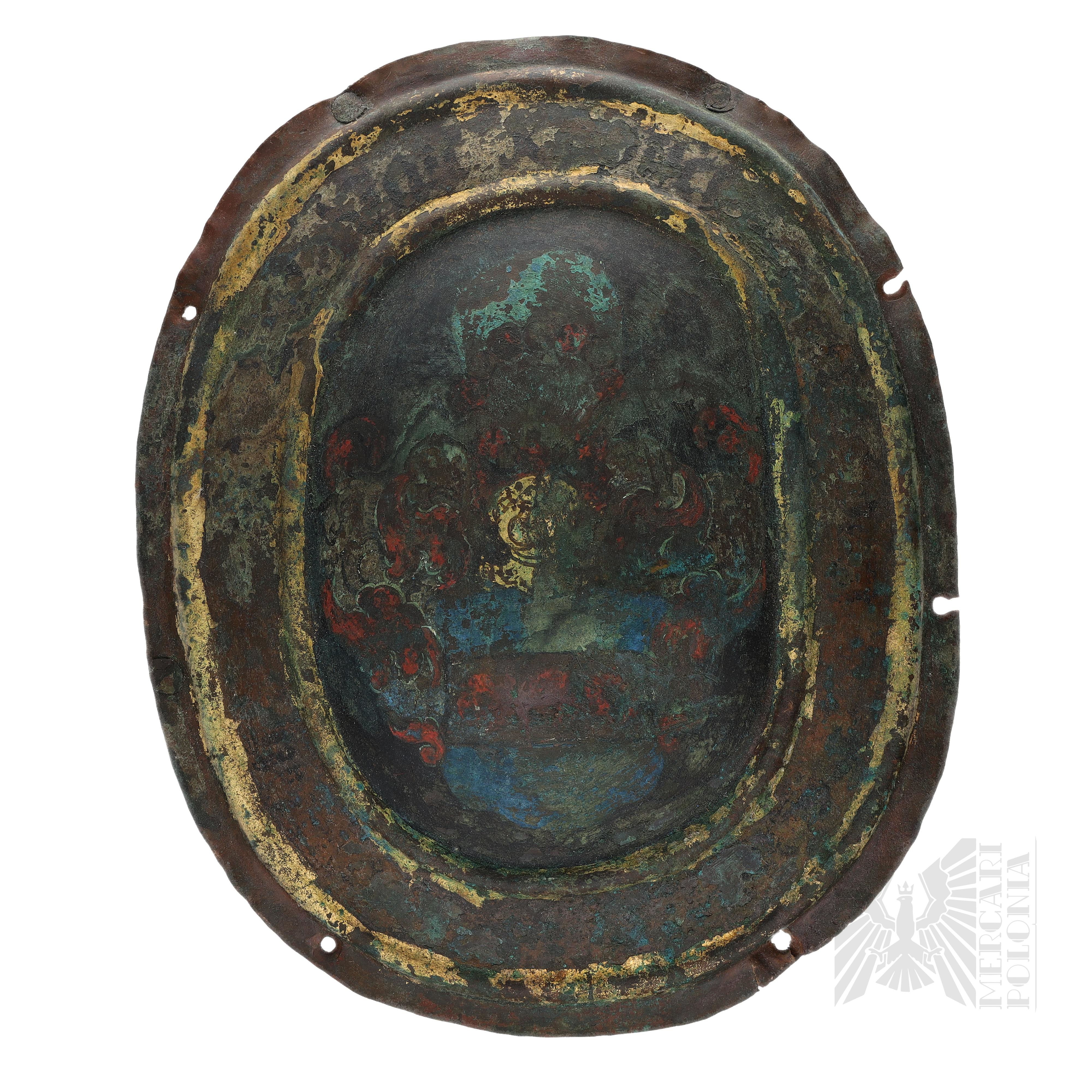
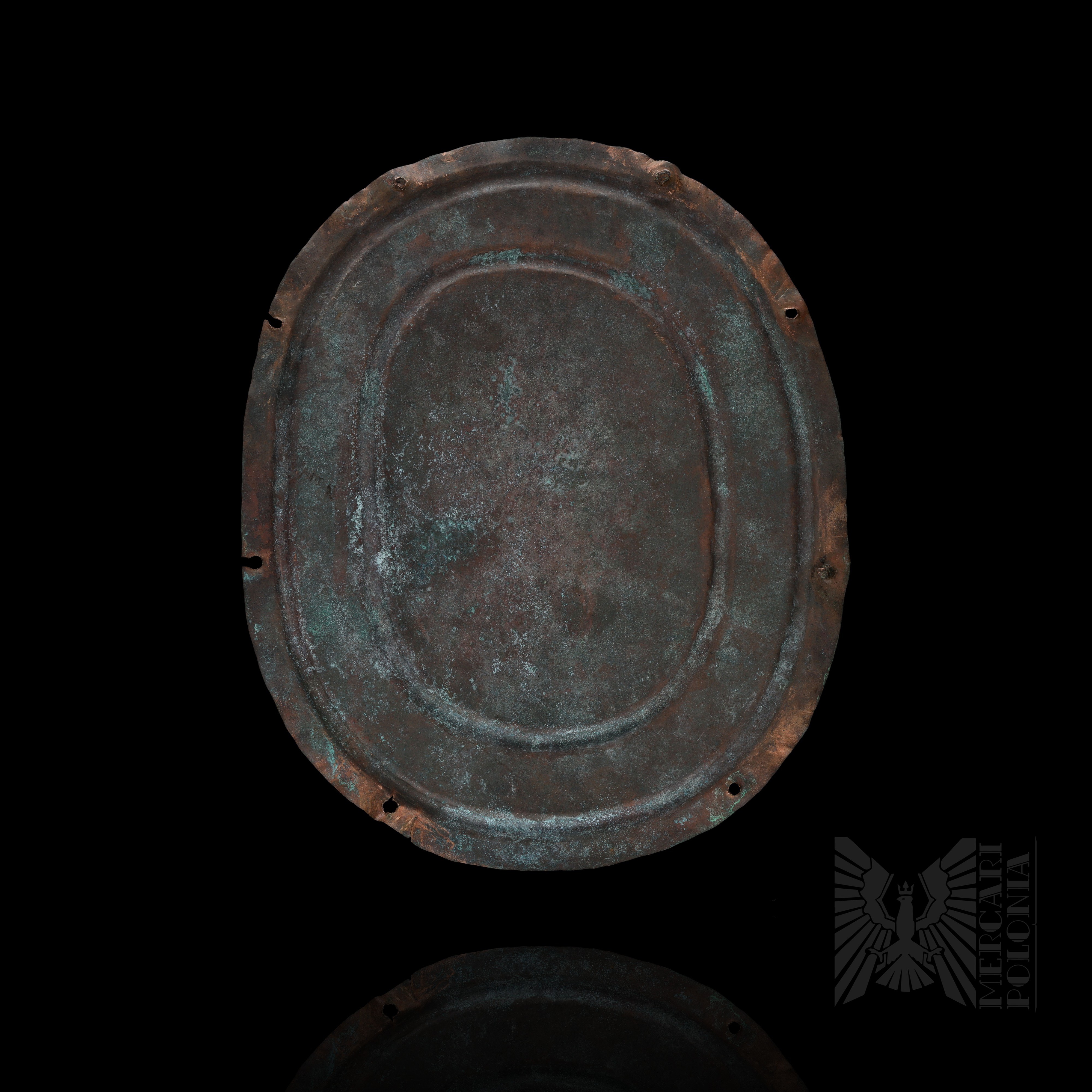
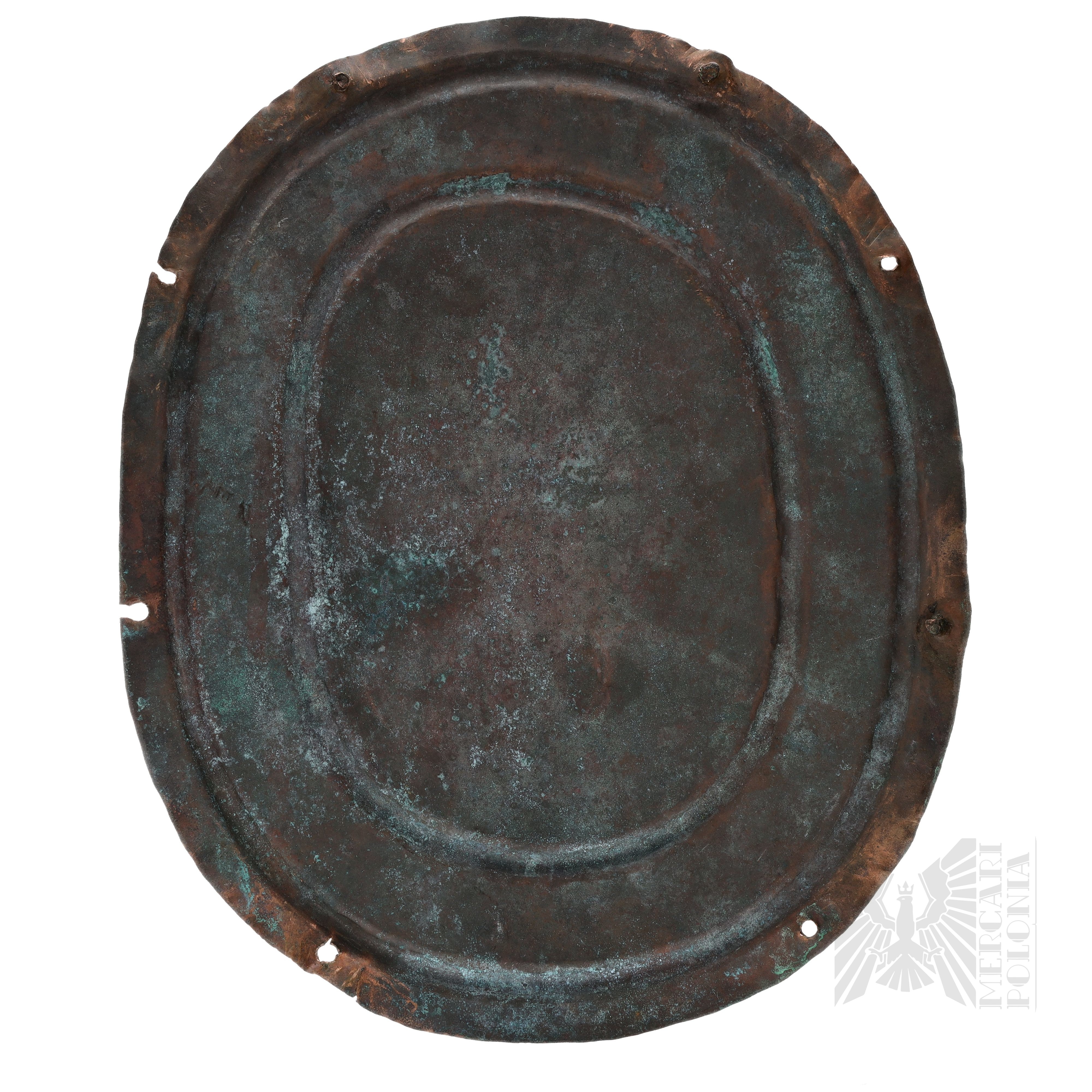
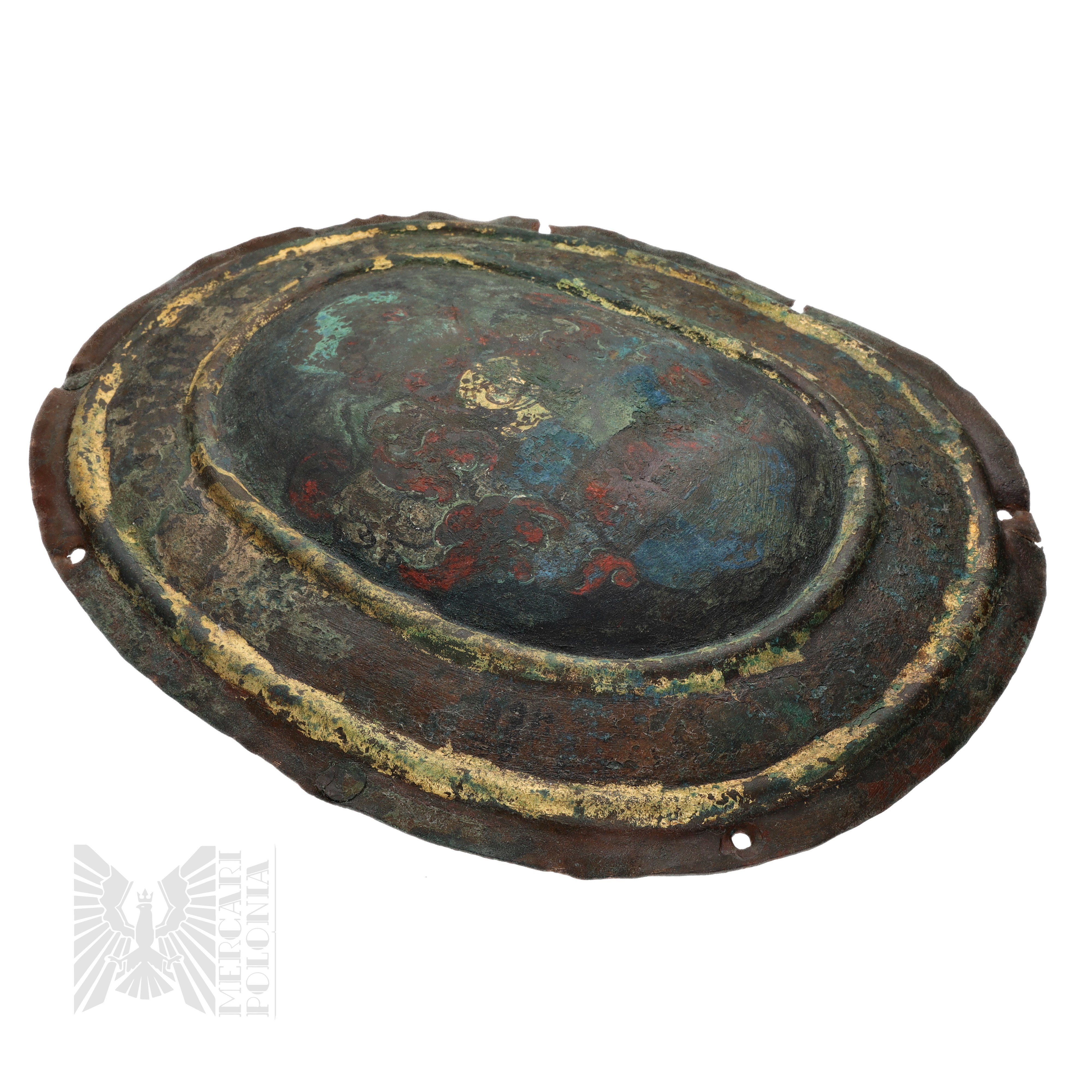
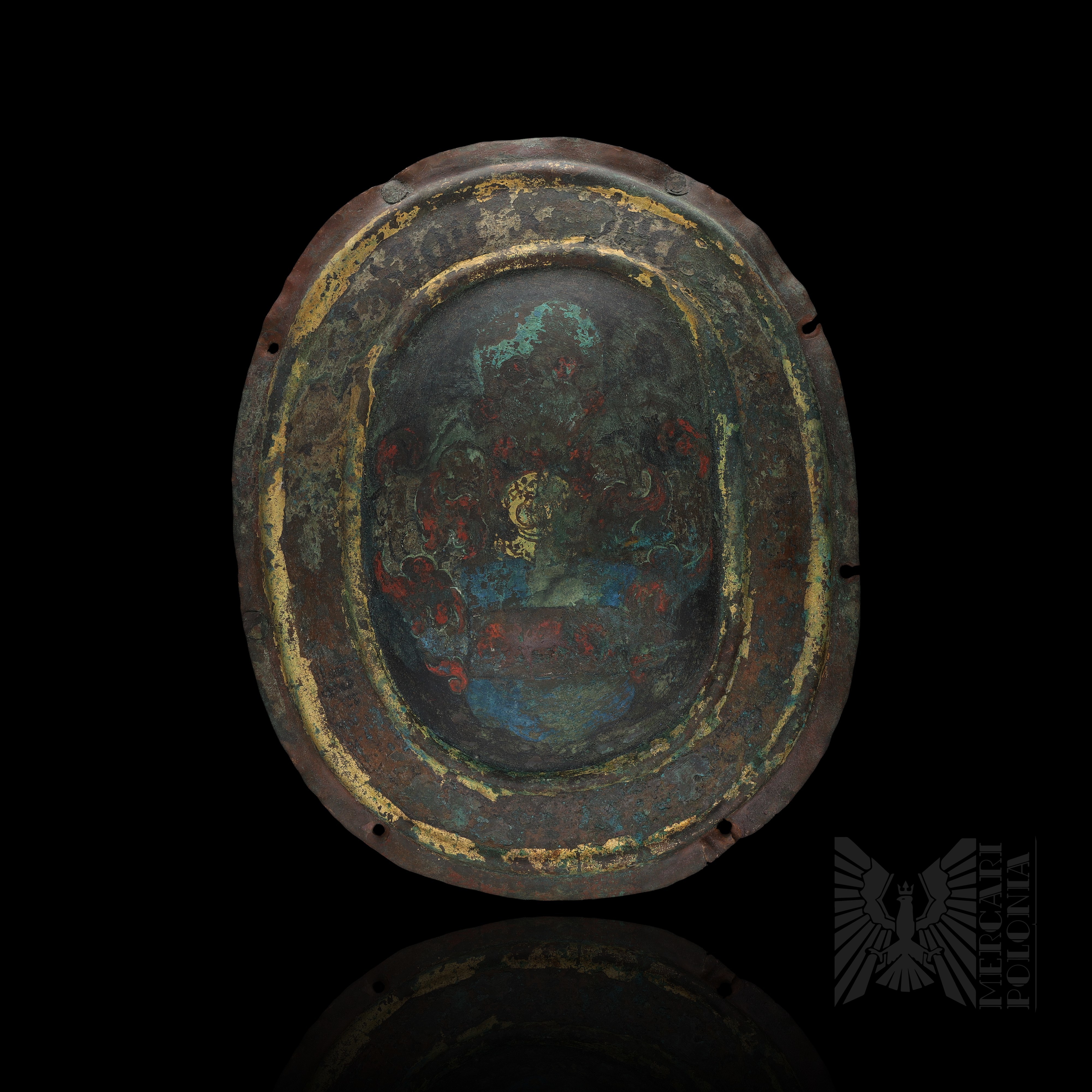
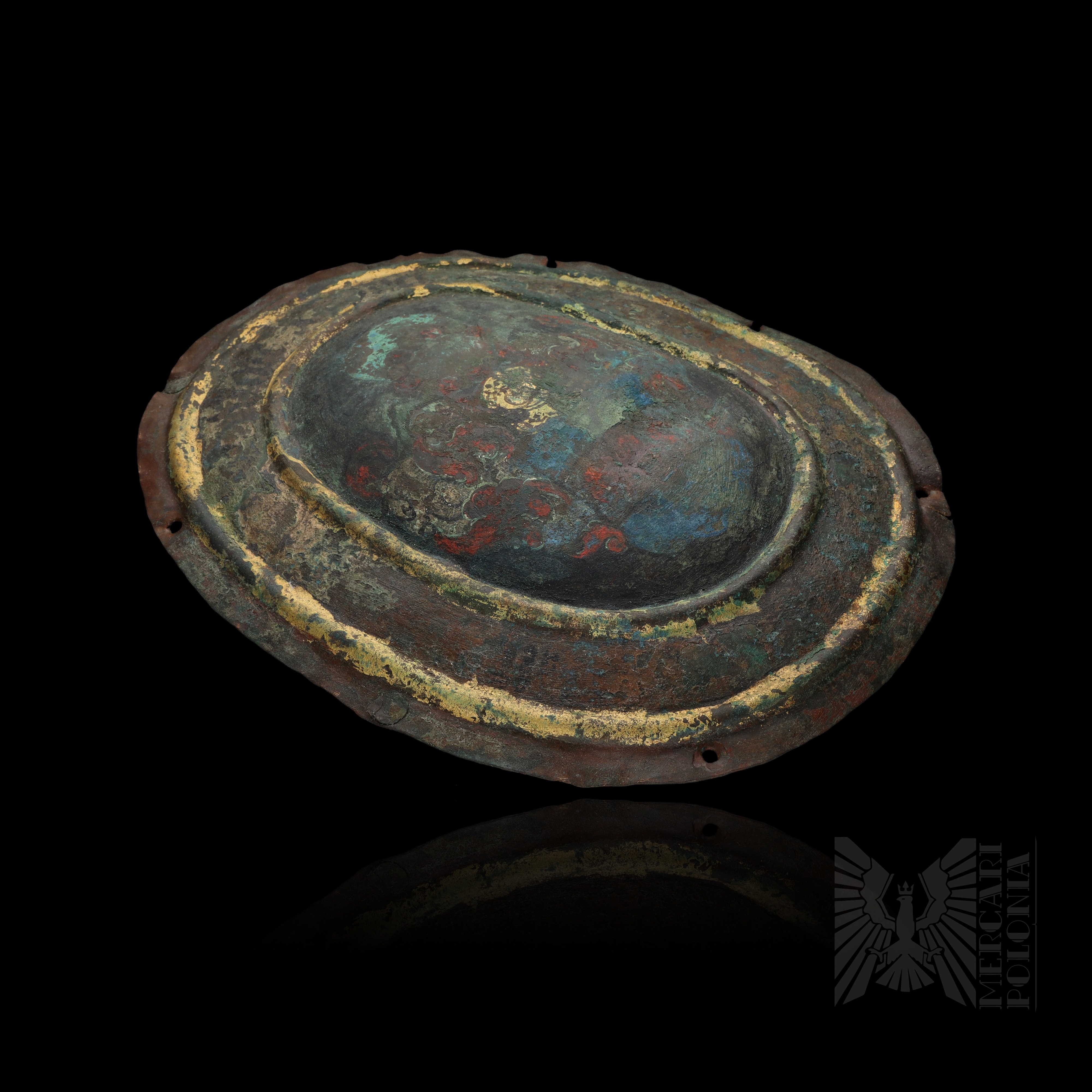
Coffin shield - a metal heraldic element associated with noble funeral customs. The shield of oval form, made of thin sheet metal, with a clearly distinguished double border. The border has mounting holes arranged symmetrically, originally used to attach it to a coffin or catafalque structure. In the central part a Renaissance shield of arms is visible - a blue field with a red stripe, now heavily obliterated. Above the shield, a fragment of a tournament helmet (bar) is preserved, with a gilded surface, with labrys in red. The crest jewel is completely obliterated (ostrich feathers?). Around the shield runs a double ottoman with an illegible inscription, almost completely lost.
Sheet metal (copper), polychrome, traces of gilding.
Condition of preservation as in the photos.
Dimensions: 27.5 x 23 cm
Coffin shields were an important part of the funeral ceremonies of the Polish nobility from the 16th to 18th centuries. Placed on coffins or within the catafalque, they served a representative and symbolic function.
The piece on display, despite significant losses and traces of time, retains clear stylistic features of the Renaissance and early Baroque periods, visible in the form of the shield, the type of helmet and the heraldic arrangement. The degree of preservation does not allow clear identification.
Objects of this type, usually made to order and used once during a funeral ceremony, are today among the rare relics of the funerary culture of the former Republic. Their value is due not only to their artistic qualities, but also to their documentary function - they are a testimony to the customs of the nobility.










Laatst bekeken
Log in om de kavellijst in te zien
Favorieten
Log in om de kavellijst in te zien