Jerzy DUDA-GRACZ (1941 Częstochowa - 2004 Łagów)
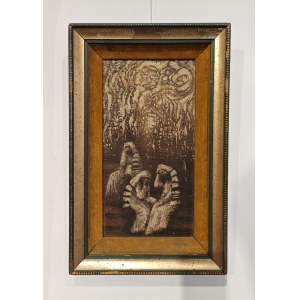
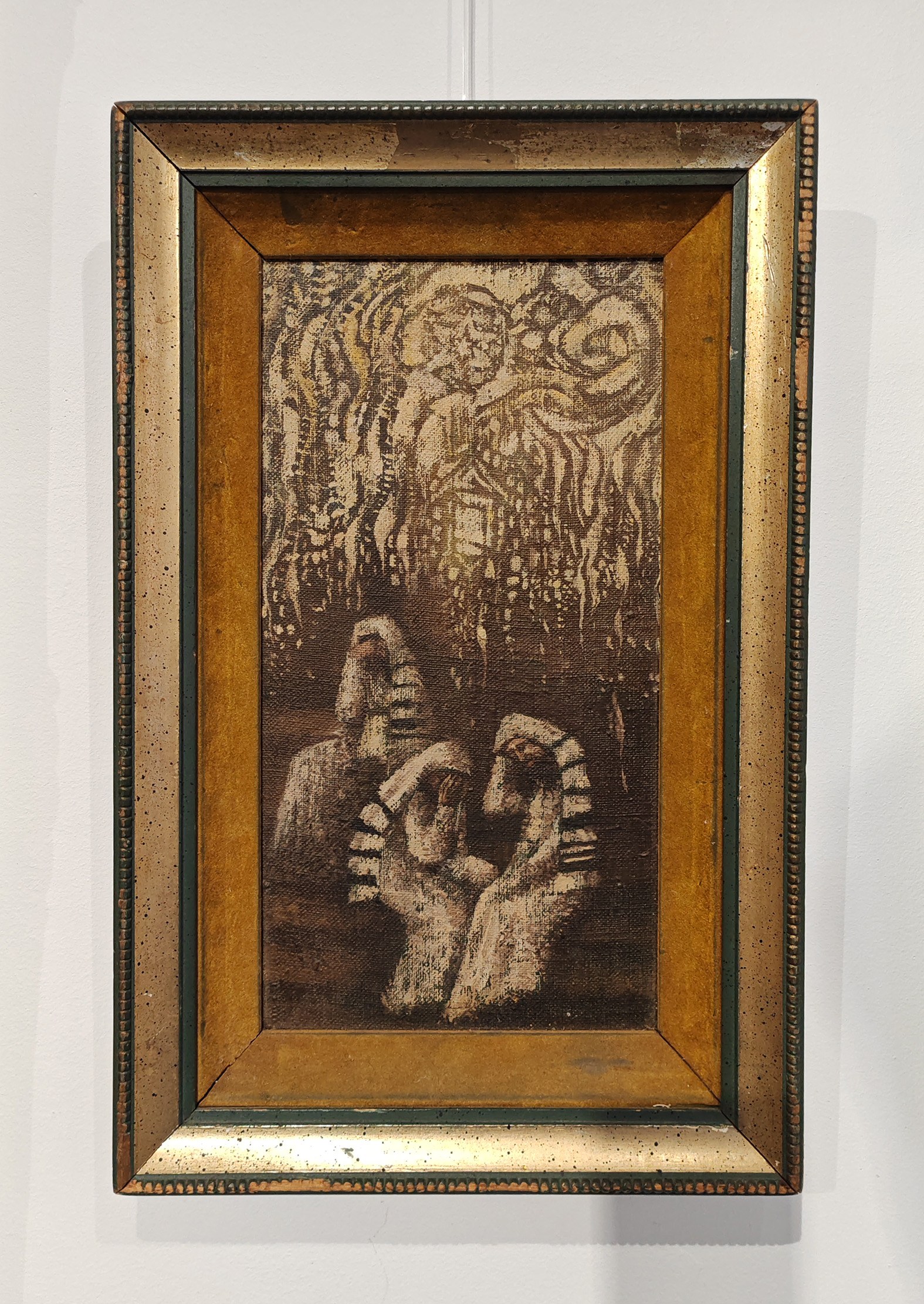
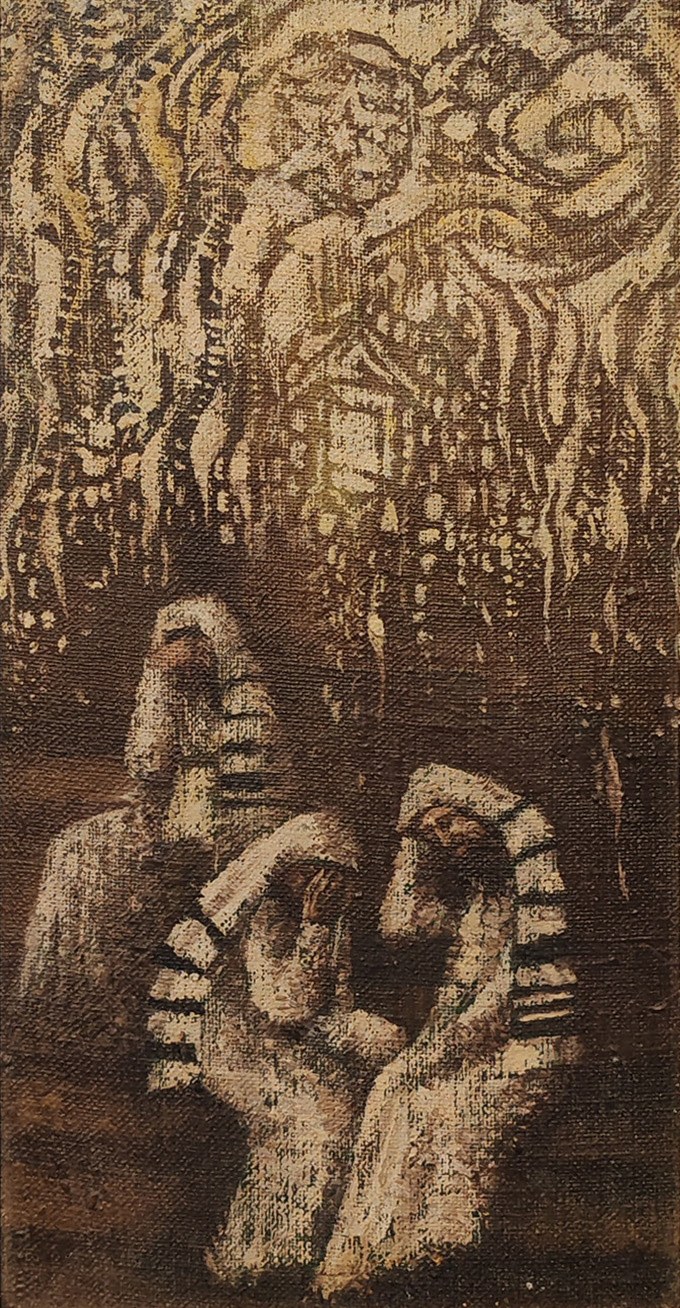
"Yom Kippur", 1966
Oil, canvas pasted on wooden backing, 41 × 21 cm + binding
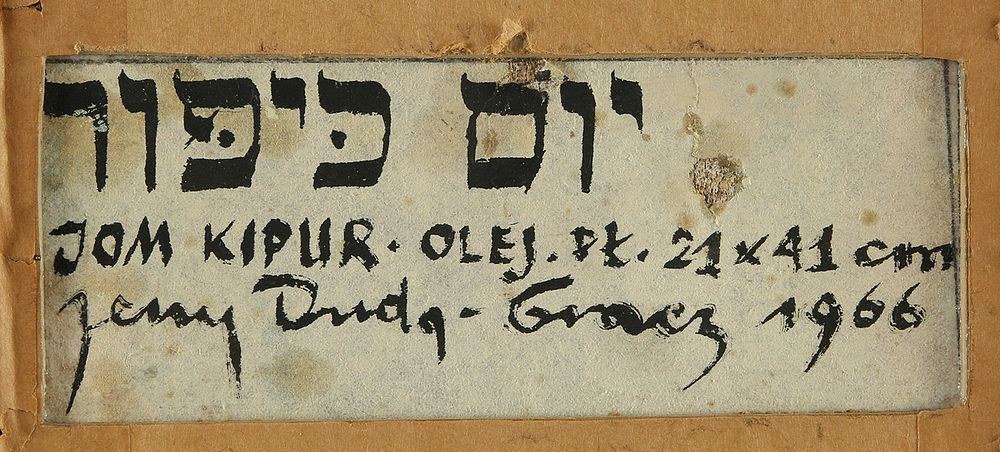
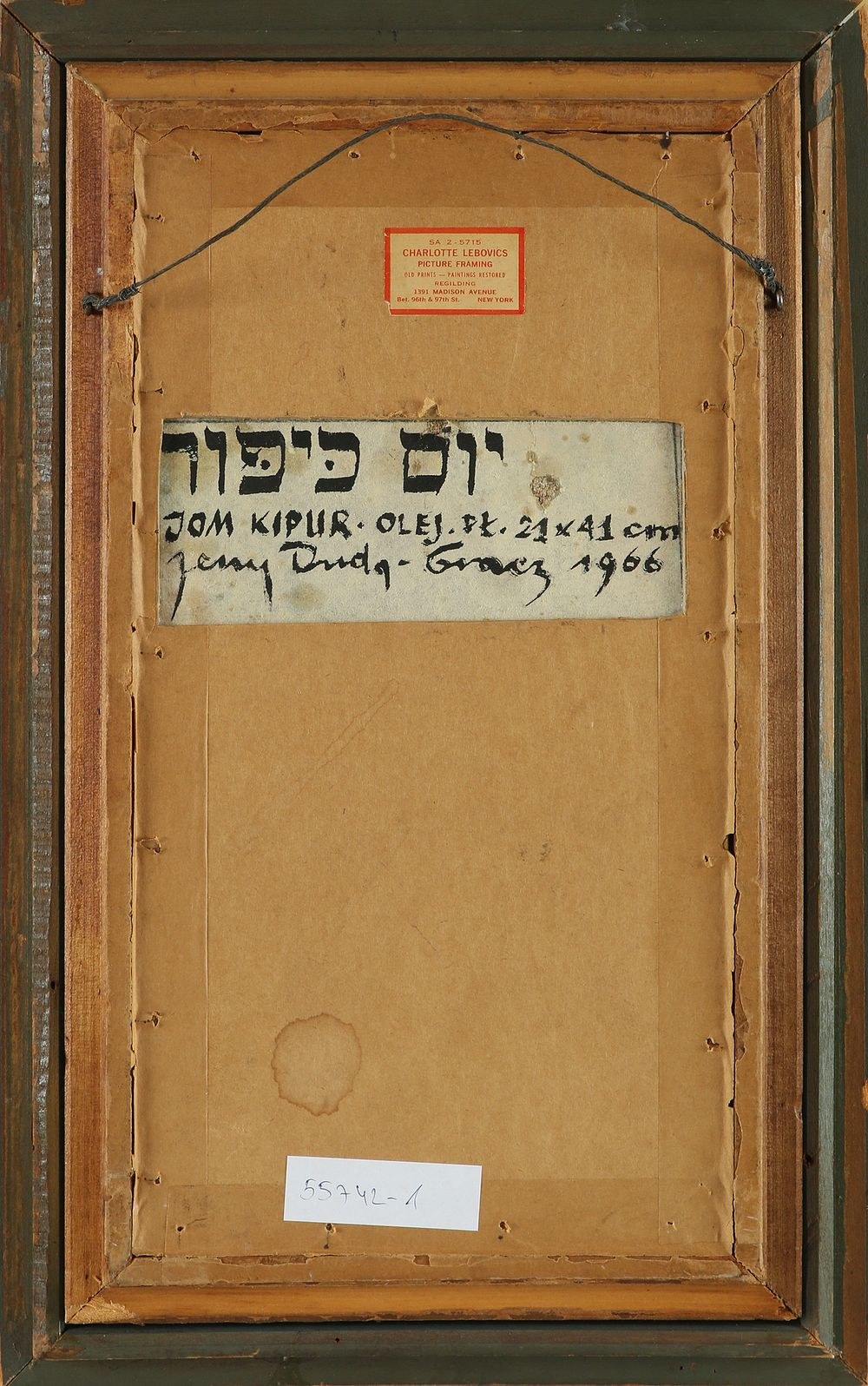
Signed and dated on the back; on the back also author's description with title ("YOM KIPUR... 21×41 cm... 1966") and inscription in Hebrew.
Preserved label of the framing studio (New York, Madison Avenue).
The title "Yom Kippur" (Day of Atonement) directs the interpretation toward themes of the sacred, the examination of conscience and collective memory. This is an early work - from the mid-1960s - showing the artist's interest in the human condition and the "theater" of border experiences, before his visual language matured into the later, widely recognized satire and deformation in realistic costume. Duda-Gracz remains one of the most important commentators on Polish postwar reality; in parallel, he also took up religious and morality themes in larger series (including productions on sacred themes).
Jerzy Duda-Gracz (1941, Częstochowa - 2004, Łagów) - Polish painter, draftsman, graphic artist and stage designer, one of the most important and recognizable personalities of Polish art in the second half of the 20th century. He graduated from the Graphics Department of the Cracow branch of the Academy of Fine Arts in Katowice (graduated in 1968). He became famous for his uncompromising morality play observation of society: he created figuration with a strong satirical charge, often consciously deforming characters and situations to bring out the truth about human weaknesses, customs and mechanisms of collective imagination.
An important, less frequently emphasized thread of his early work was Jewish themes. It was present from the very beginning: in the 1960s, while he was still a student at an art high school, he taught drawing classes to the Jewish community in Czestochowa, later also in Katowice, and as his diploma thesis he prepared a series of graphics called "Judaika." In the following decades, the artist developed his own painterly language in numerous cycles, combining workshop realism with grotesque, symbolism and ethical reflection; in parallel, he also undertook sacred themes, culminating in monumental realizations, including "Golgotha of Jasna Gora" (2001).


![Jerzy DUDA-GRACZ (1941-2004), Bez tytułu [Błazen i klaun, autoportret utajony]](https://img1.one.bid/img/10574/3329975_1w.webp?1791388744)
![Jerzy DUDA-GRACZ (1941-2004), Bez tytułu [Staropolska para]](https://img1.one.bid/img/10574/3329976_1w.webp?1791453887)