


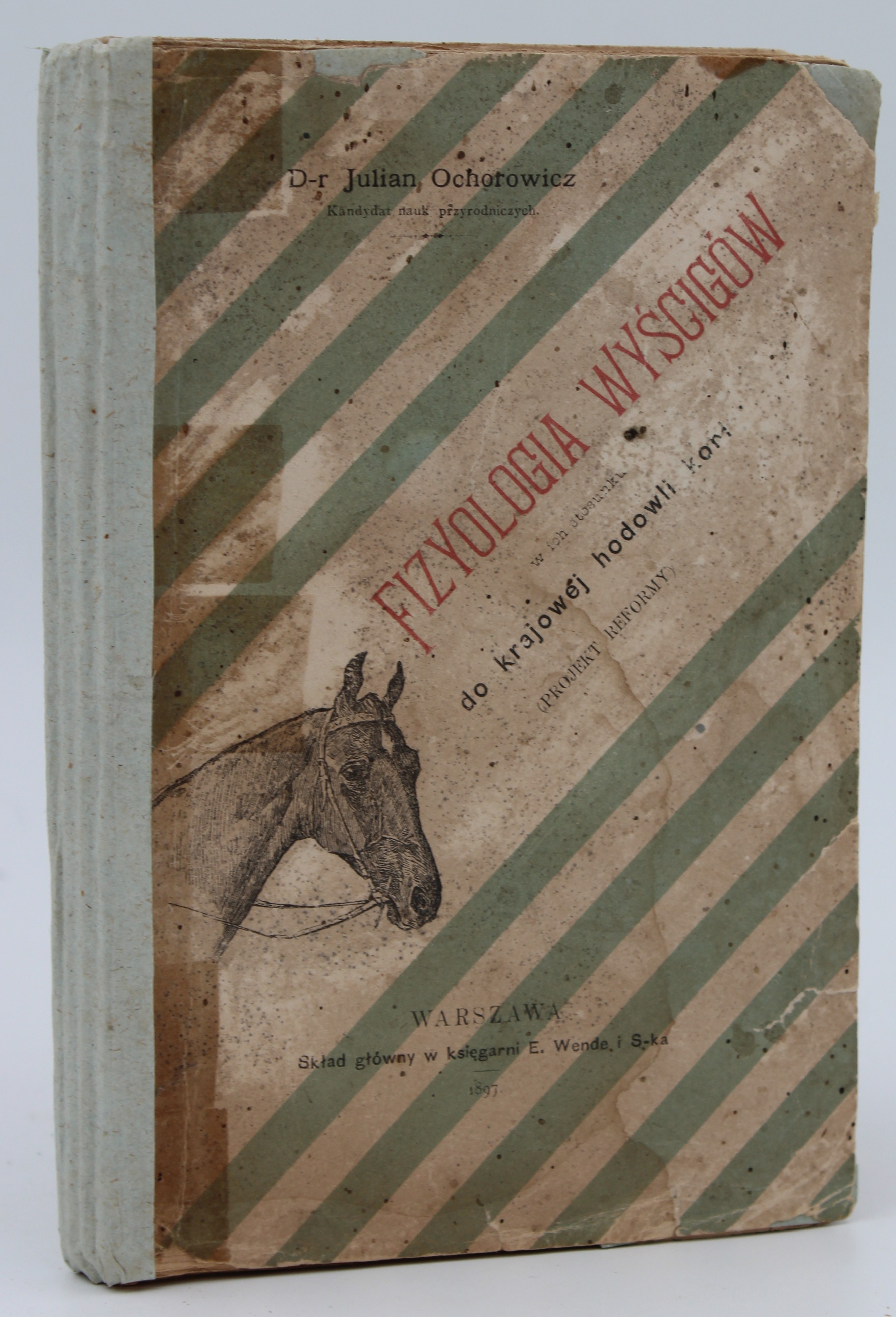
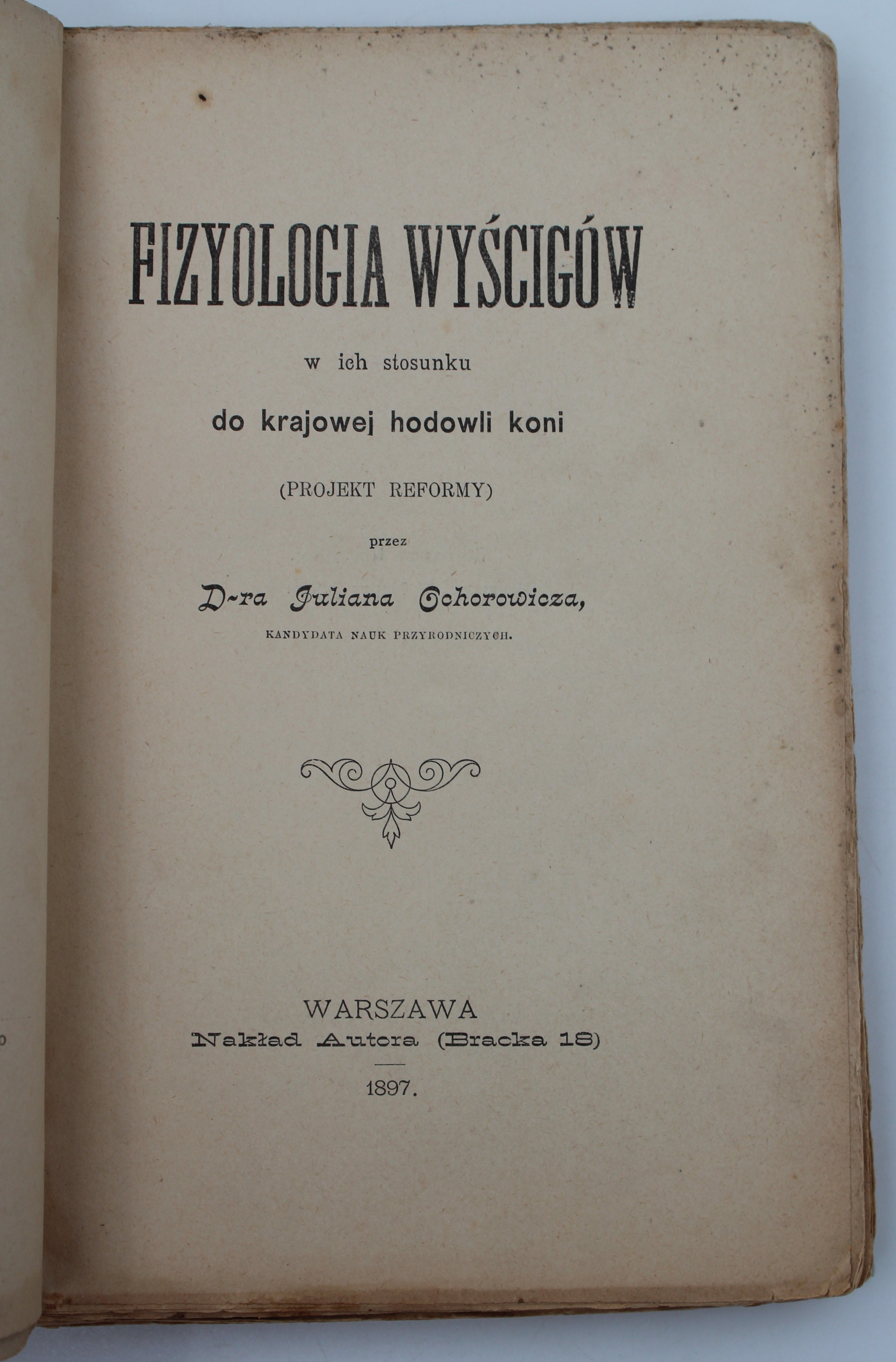
A work by Julian Ochorowicz, published in Warsaw in 1897 at the author’s own expense. Although Julian Ochorowicz is remembered today primarily as a psychologist, philosopher, pioneer of parapsychology, and brilliant inventor, this book—numbering over 320 pages—represents his unique contribution to the literature on horse racing, economics, and social issues.
Ochorowicz wrote this treatise from the perspective of an independent observer who was neither a breeder nor a member of any sports clubs. In it, he criticized the agrarian and economic policies of the Kingdom of Poland at the time, pointing out that decision-making errors in this area were causing the national economy losses amounting to millions of rubles annually.
The author opposed treating horse racing as a closed, artificial ecosystem. In his view, the primary goal of the sport of horse racing should be to select and train excellent breeding stock that would tangibly improve the quality and endurance of native horse breeds (including workhorses and farm horses).
Ochorowicz was highly critical of the presence of betting pools at racetracks. He drew attention to its pernicious, demoralizing influence on the less affluent segments of society, who succumb to the illusion of easy profit. It is from this line of thinking that his well-known maxim on gambling originates: “There is no method that allows you to win a lot; there is only one that allows you to lose a little.”
As a scientist studying the human psyche and physiology, Ochorowicz applied his research passion to horses. He analyzed the traits that racing should develop in animals: not only raw speed, but also volitional and psychological traits, such as ambition, courage, agility, and physical endurance.
This book serves as fascinating evidence of the versatility of the positivist era, demonstrating how a scientific and analytical approach was applied to such practical and entertaining aspects of life as nineteenth-century horse racing.
256 pages, original paperback binding.









