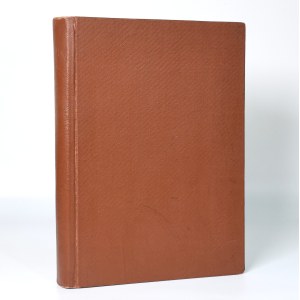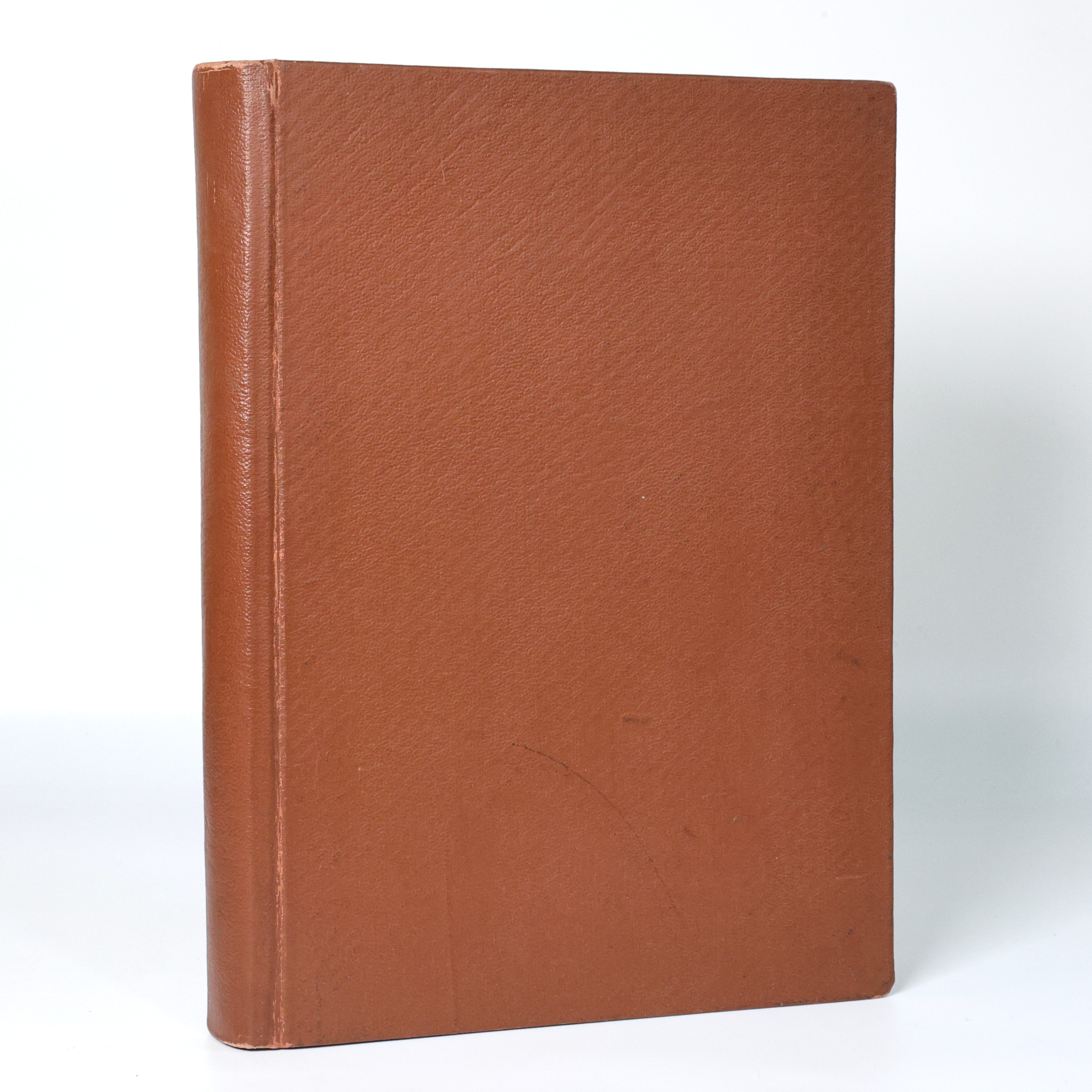
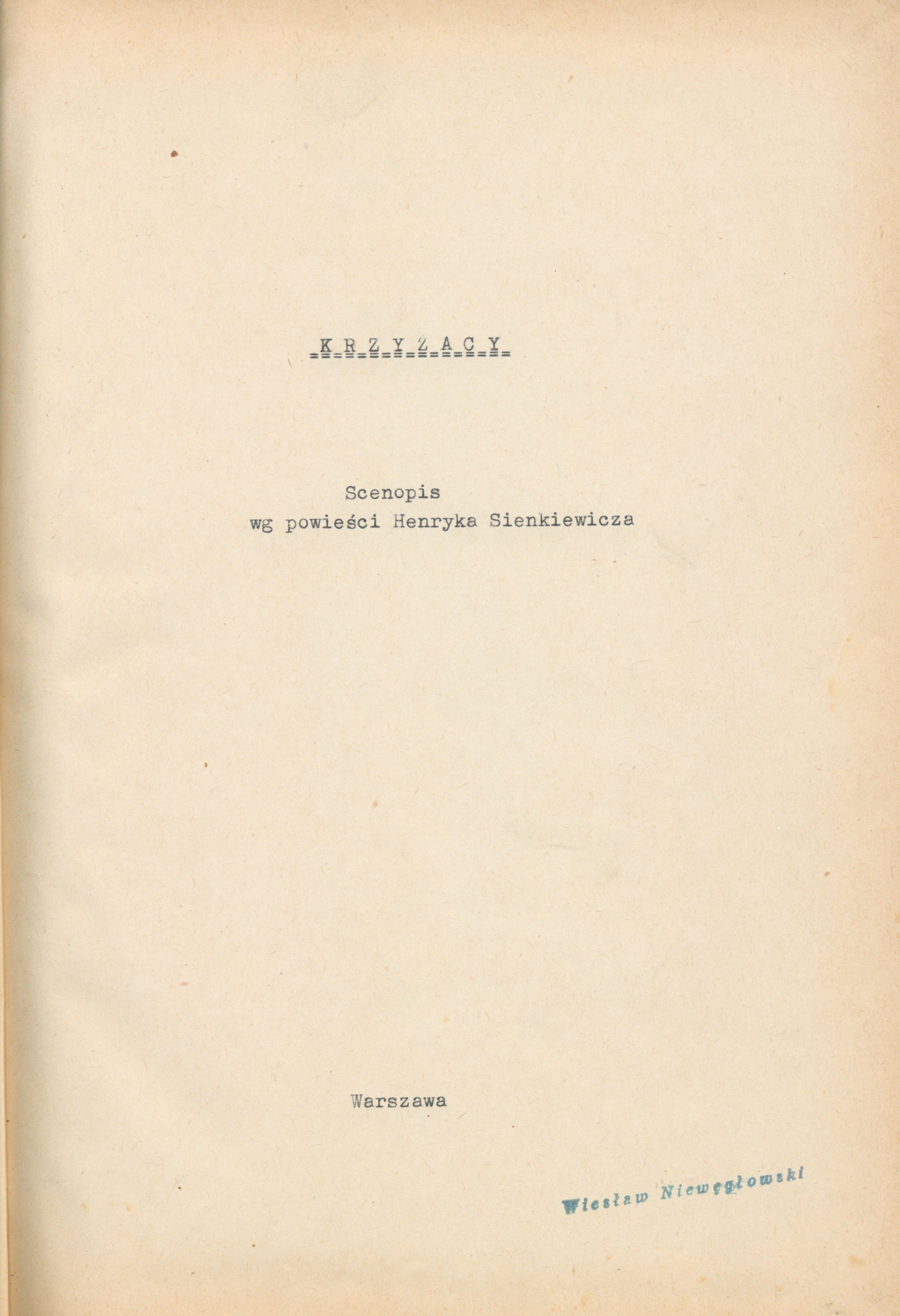
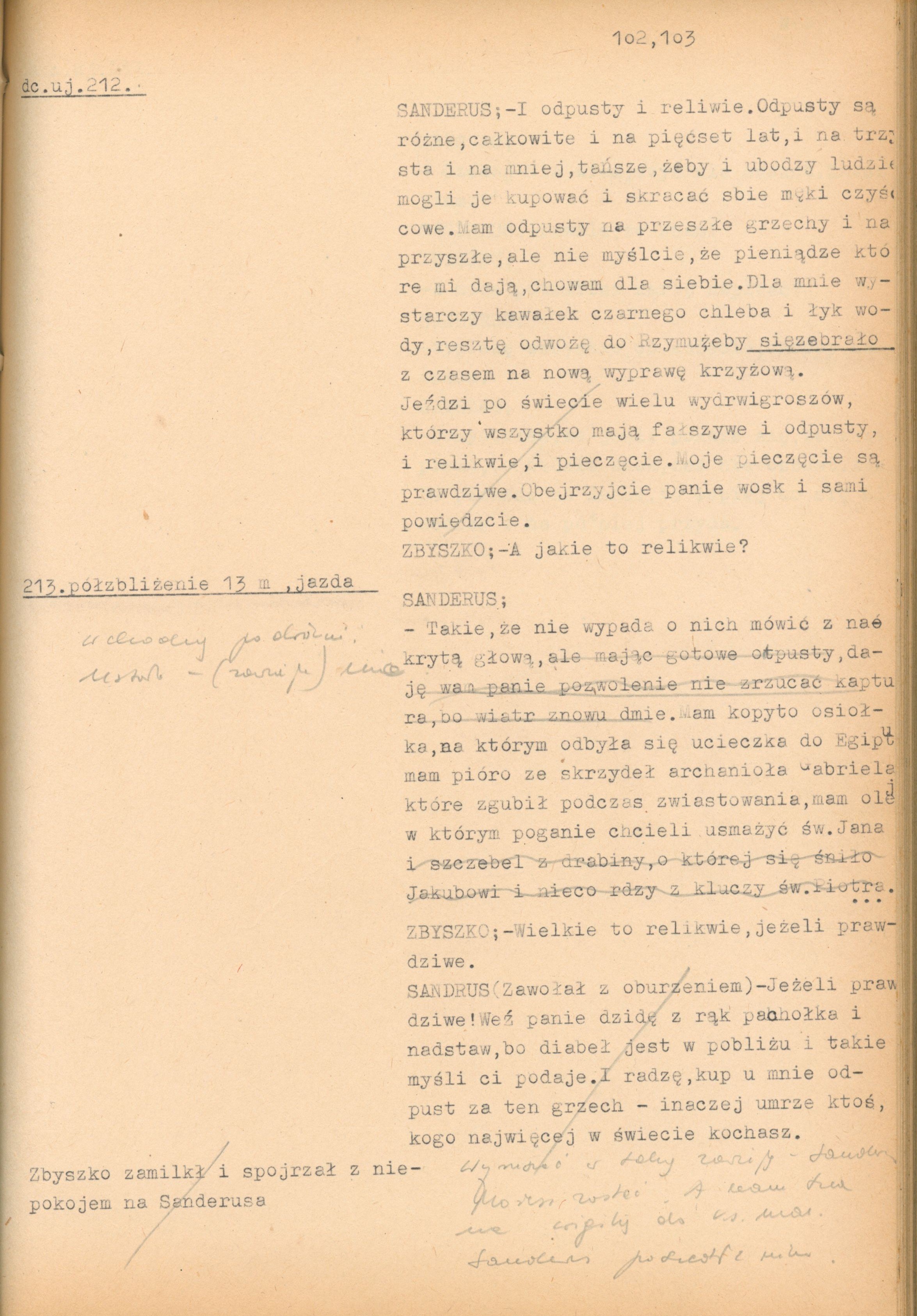
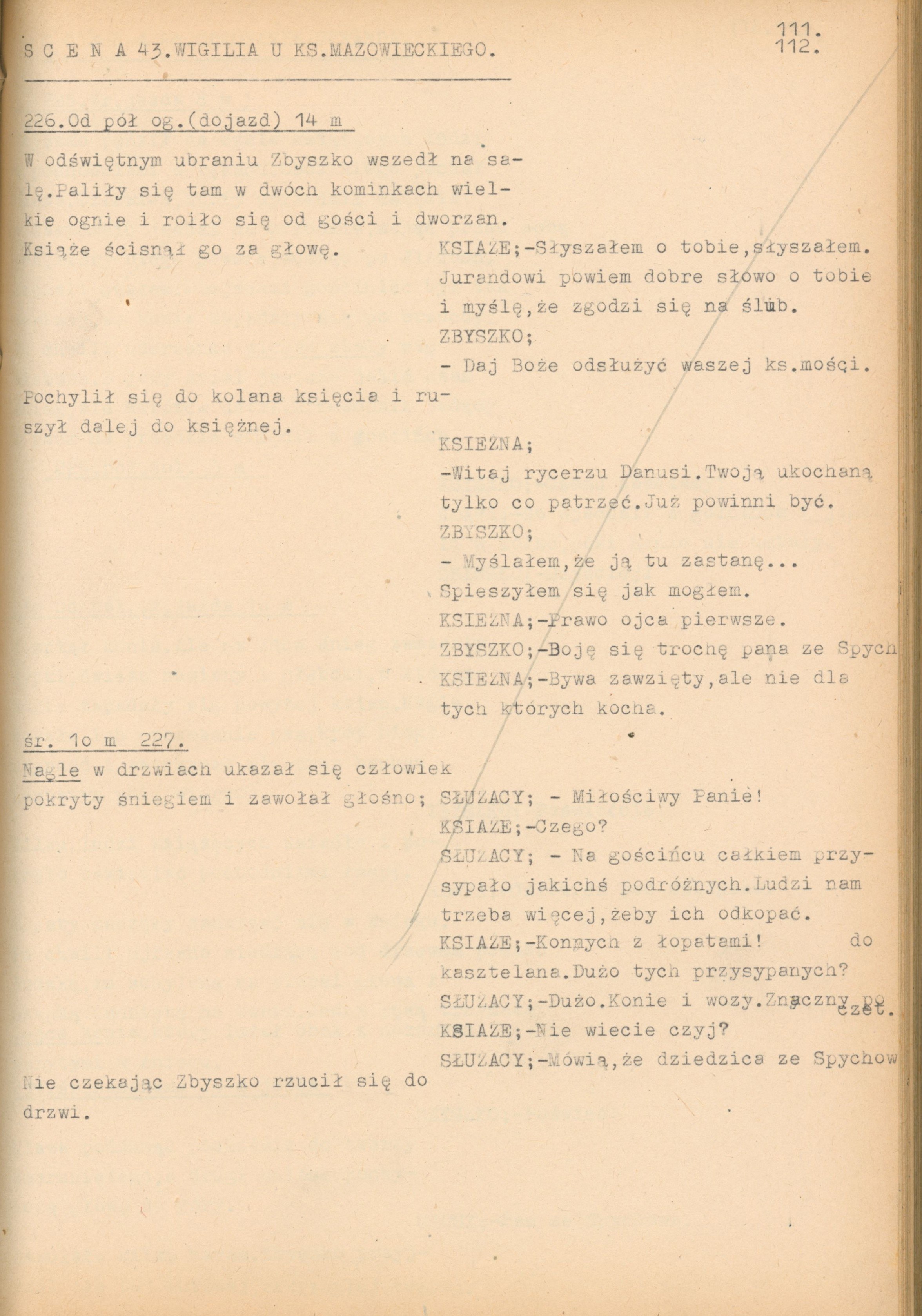
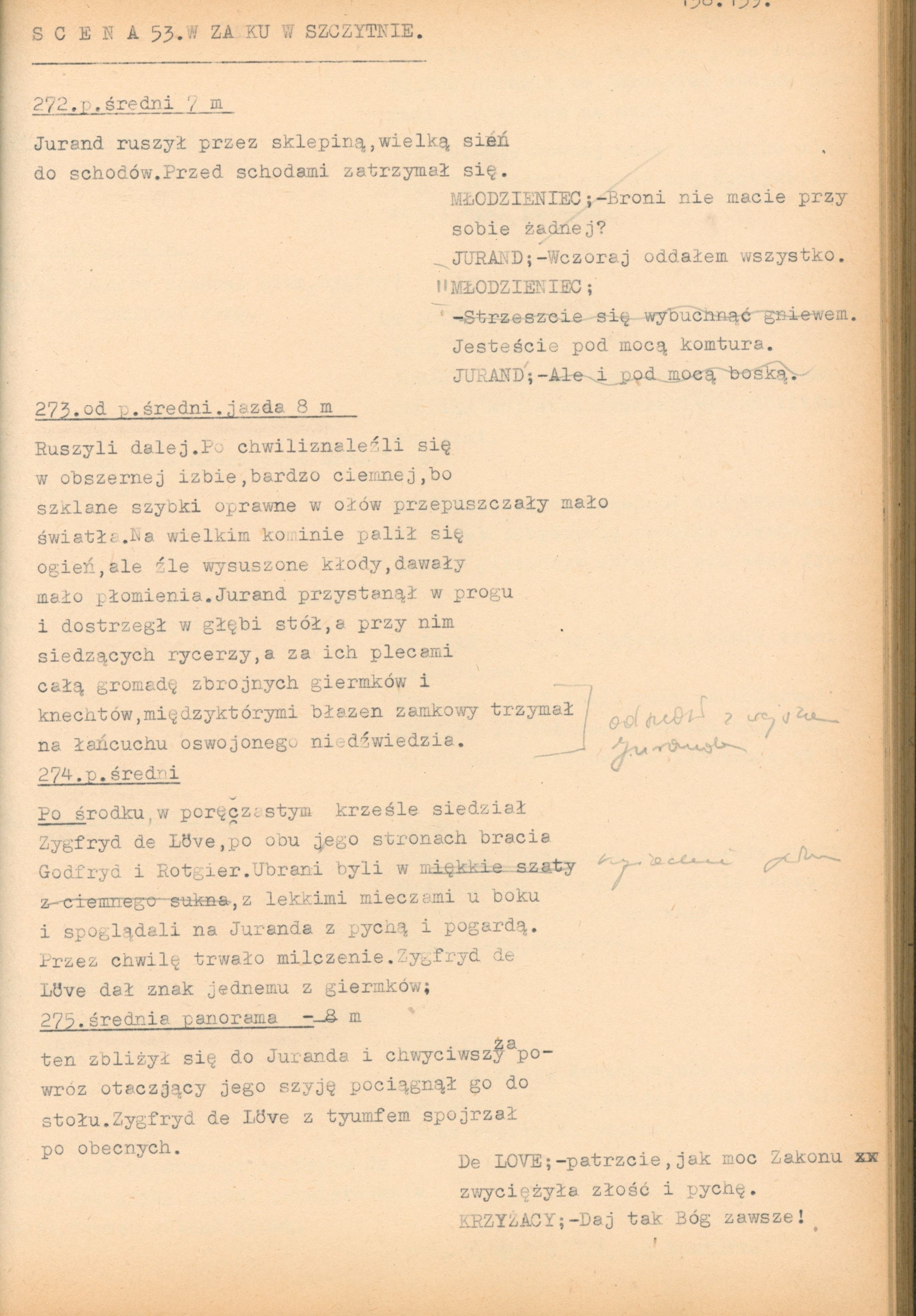
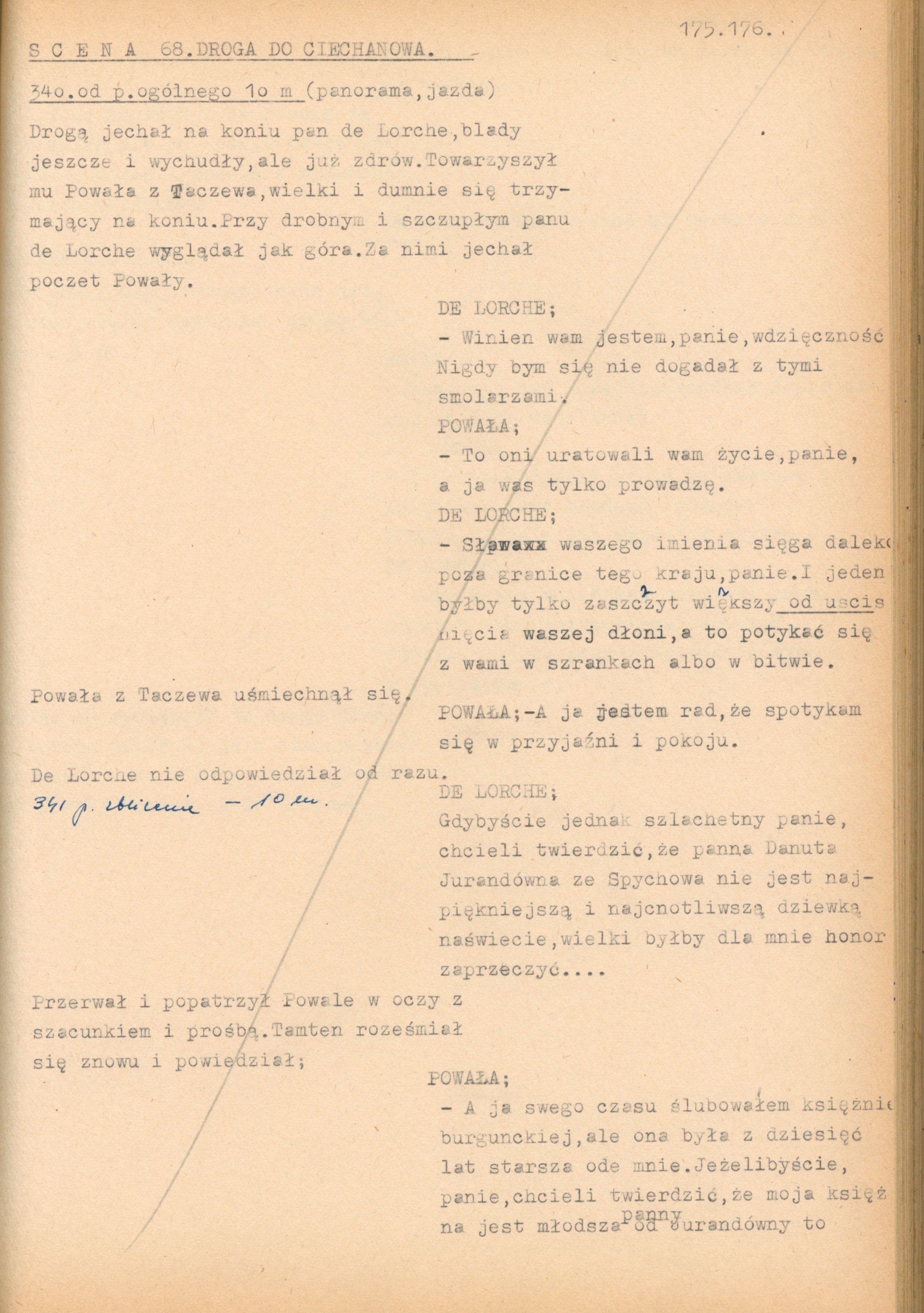
Krzyżacy. Screenplay based on the novel by Henryk Sienkiewicz/ Warsaw/ hardback binding/ 230 typewritten pages printed on one side/ numerous notes in pencil, less often in pen/ very good, collectible condition. Unique!
Original screenplay to Krzyżacy (The Teutonic K nights) directed by Aleksander Ford - one of the biggest and most important superproductions in the history of Polish cinematography. The 1960 film, based on the novel by Henryk Sienkiewicz, occupies a special place in the history of Polish cinema: as a historical spectacle of great staging panache, with a monumental sequence of the Battle of Grunwald, it has permanently shaped the ideas of several generations of viewers about the world of the Te utonic Knights and the Polish-Teutonic conflict itself.
The piece on display, however, has value far beyond its mere association with the famous film. It is a working piece, containing numerous pencil deletions of scenes, corrections and dialogue changes, thus documenting the process of arriving at the final screen version. We are not dealing here with a pure script text, but with work material on which traces of dramaturgical and production decisions have been preserved. These are what make this screenplay particularly interesting: they show how the layout of scenes, the tone of individual episodes and the manner in which the climactic sequences of the film were changed.
The most interesting interferences concern the final part of the Battle of Grunwald, i.e. one of the most important parts of the entire show. Among other things, the script included a dissected scene of the sudden threat to Ladislaus Jagiello. The king, returning to his post, finds himself and his retinue dangerously close to the grand master's banner. The guards try to shield the monarch, but Jagiello advances to the front row. One of the Teutonic knights notices the royal armor, breaks away from his own banner and launches an attack. A direct clash ensues: the king clips his horse with spurs, takes up the fight and knocks the attacker from his saddle. When a detachment seeking to avenge the fallen man breaks away from the monastic flags, the grand master stops it and directs the knights back into the main thrust of the battle. This scene, however, was penciled out in Pieces and ultimately did not make it into the film, making it a particularly interesting trace of an abandoned dramatic concept. It is not a trivial episode, but a fragment that relates to the very center of the final clash and to the way the royal bravery is portrayed.
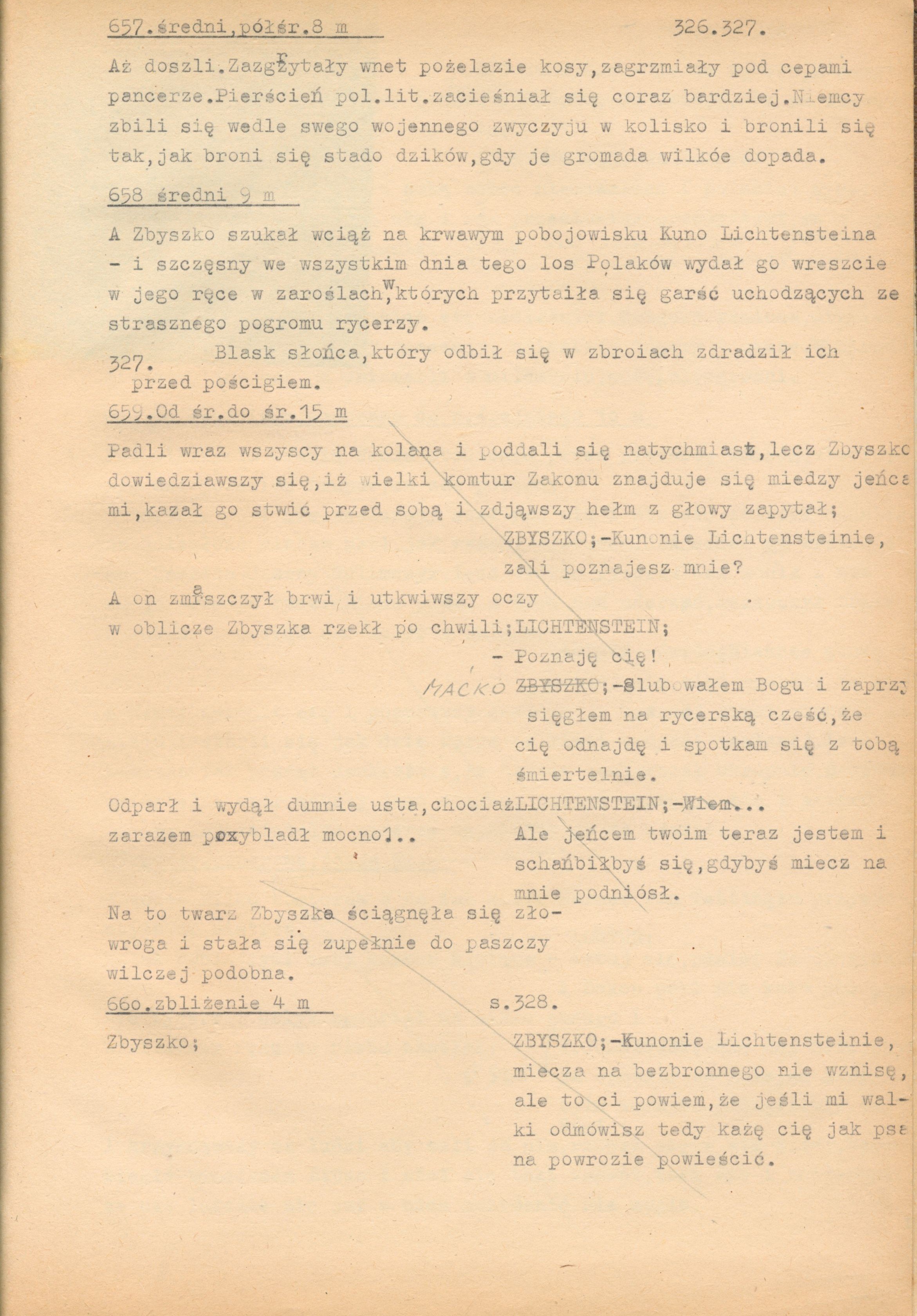
Equally interesting is the difference between the screenplay and the film in the case of Zbyszek's duel with Kuno von Lichtenstein. In the version recorded in the screenplay, Zbyszko finds the Grand Commandery on the battlefield, among the fleeing Teutonic knights. Kuno is captured with the others and, as a captive, initially invokes the knightly law in an attempt to avoid immediate combat. Only when confronted with Zbyszek's old oath and confronted with disgrace does he agree to a duel, in which he is quickly defeated and knocked to the ground. In the finished film, however, the episode is clearly transformed: Kuno is not a captive, he does not evade the clash and does not seek protection from chivalrous custom. On the contrary - he faces the fight with full aggression, throwing a memorable "Stand up, dog." The duel itself has been heavily expanded on screen, lasts a long time and gains the weight of one of the most important scenes of the finale; while it ends with Kun's death in the quagmire. The juxtaposition of the two versions shows very clearly how the filmmakers enhanced the drama and spectacularity of the climax, moving away from the earlier, more compact screenplay solution.
Yet another example of changes is the scene of Ulrich von Jungingen's final battle and death. In the scene-setting, after successive clashes and in the face of the tightening ring of the Polish-Lithuanian army, the komturs try to persuade the grand master to flee and save himself and the order. Jungingen, however, rejects this possibility, not wanting to leave the field where his knights fell, after which he again throws himself into the fray and dies in the continuation of the battle. This episode is not present in the film in this form. In the finished version, Ulrich's death was resolved differently and shifted in relation to Zbyszek's duel with Kuno: the grand master dies earlier, smashed by Polish infantry. Here, too, the scene-setting reveals the original dramatic variant, which was eventually abandoned in favor of a different rhythm of the finale and differently distributed accents.
It is these kinds of differences that determine the uniqueness of the piece on display. It is not just a souvenir of a famous film, nor a mere transcript of the script, but a rare production material, allowing a glimpse into the very process of shaping one of the most important Polish historical shows. The preserved deletions, corrections and dialogue changes show how the final screen shape emerged from the original draft.
A valuable document of the work on the film and an important object for collectors of Polish cinema, film memorabilia and production materials related to the history of domestic cinematography.