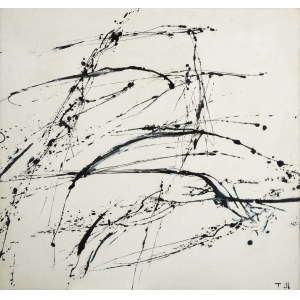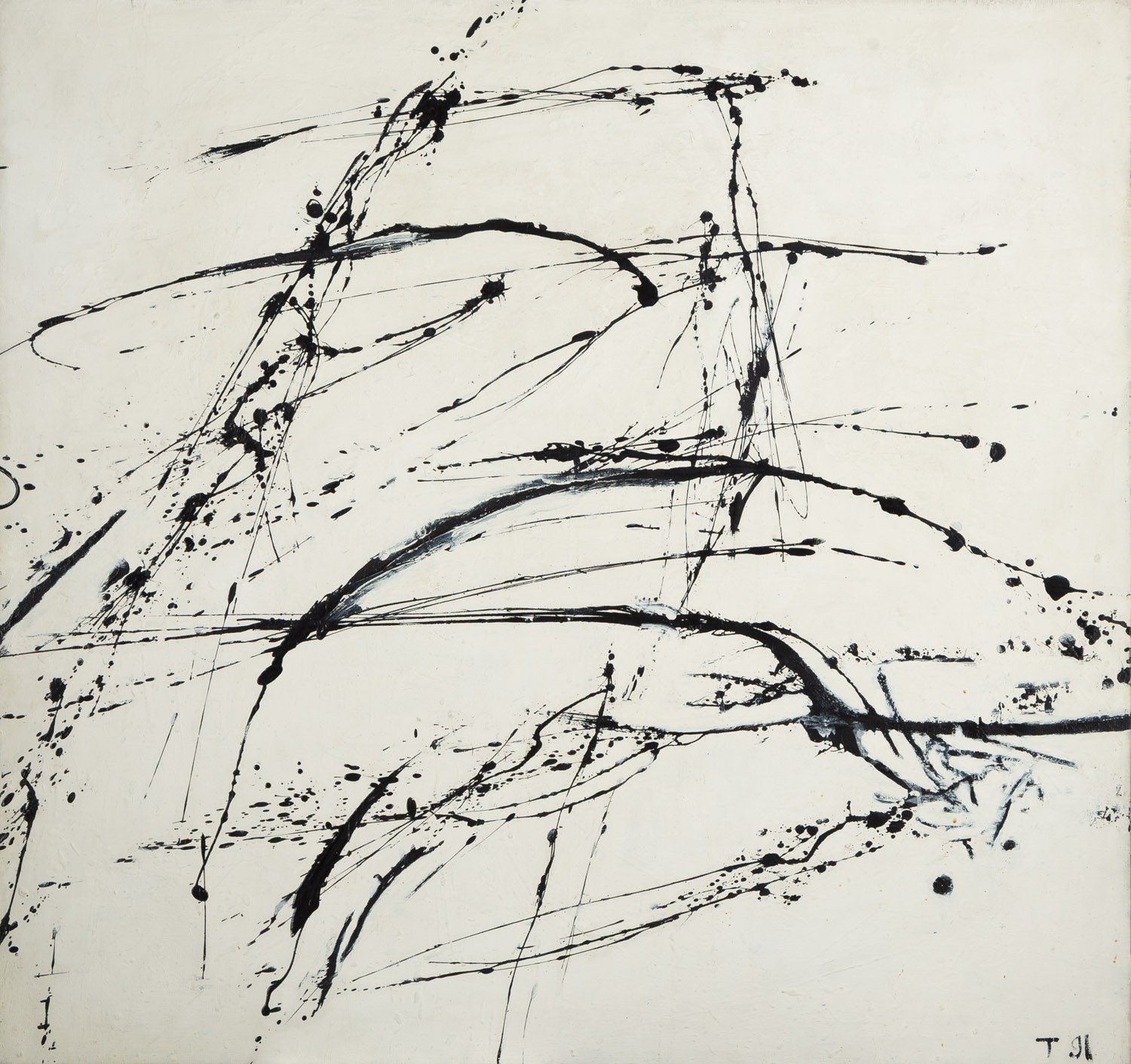
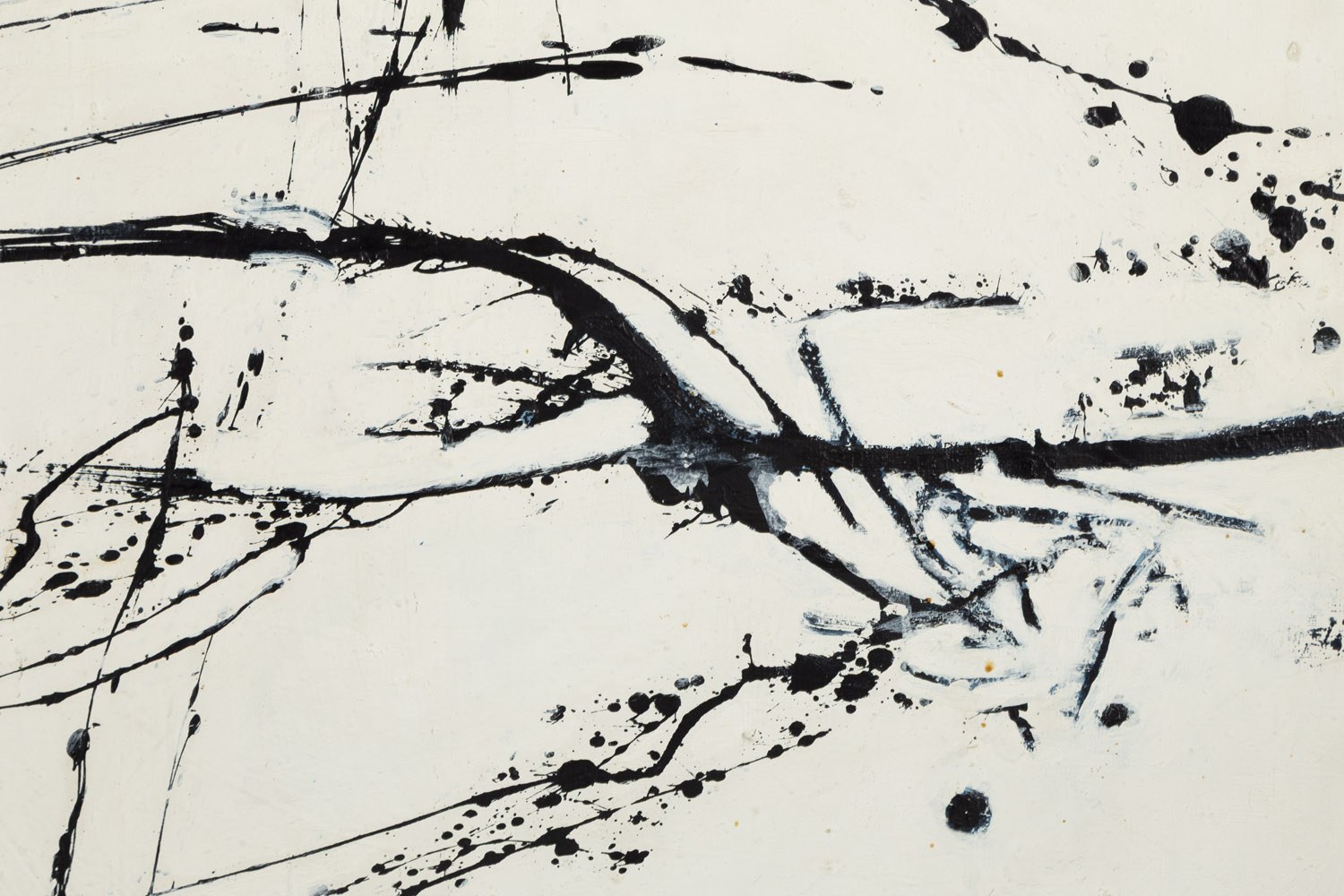
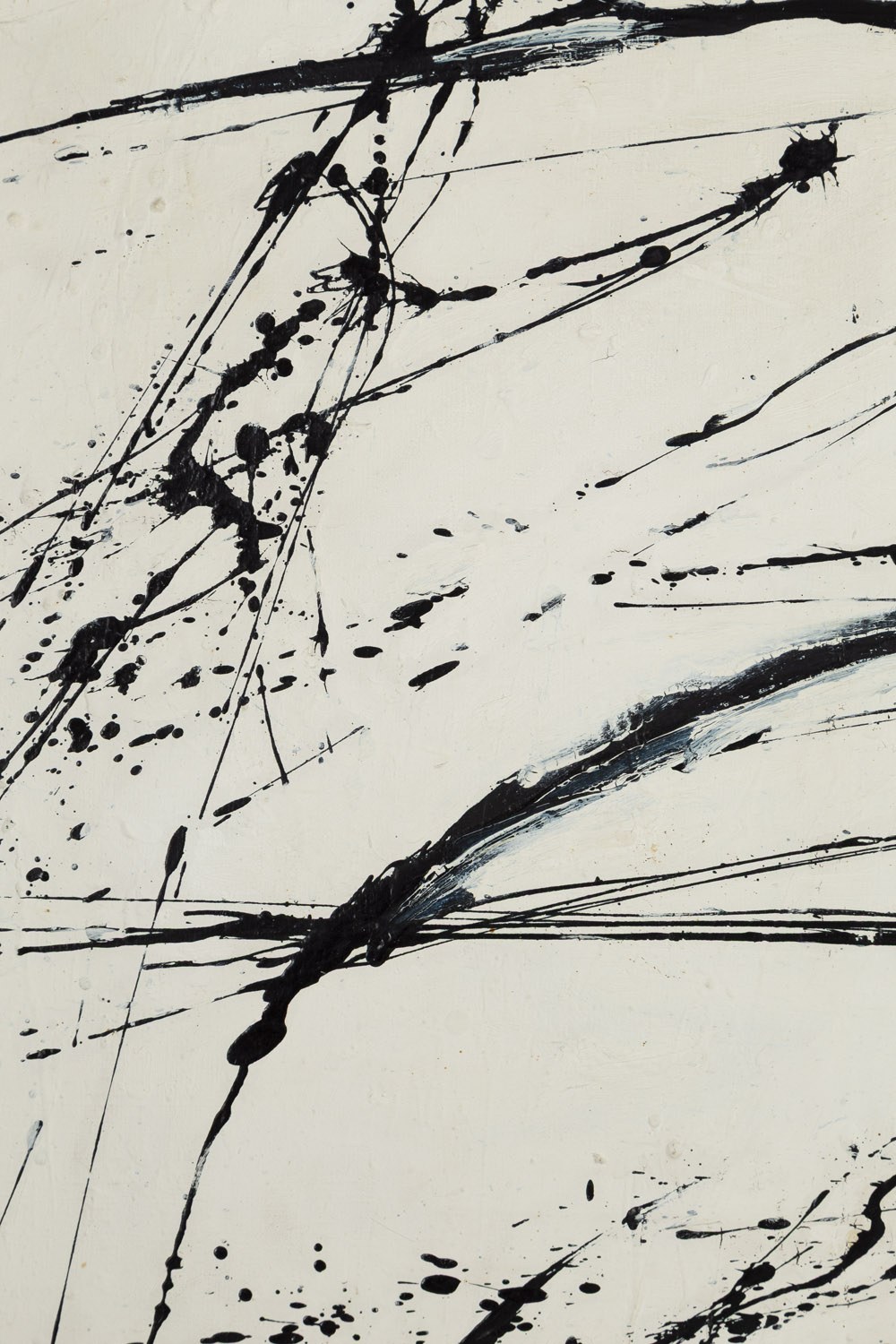
Dimensions: 95 x 100 cm
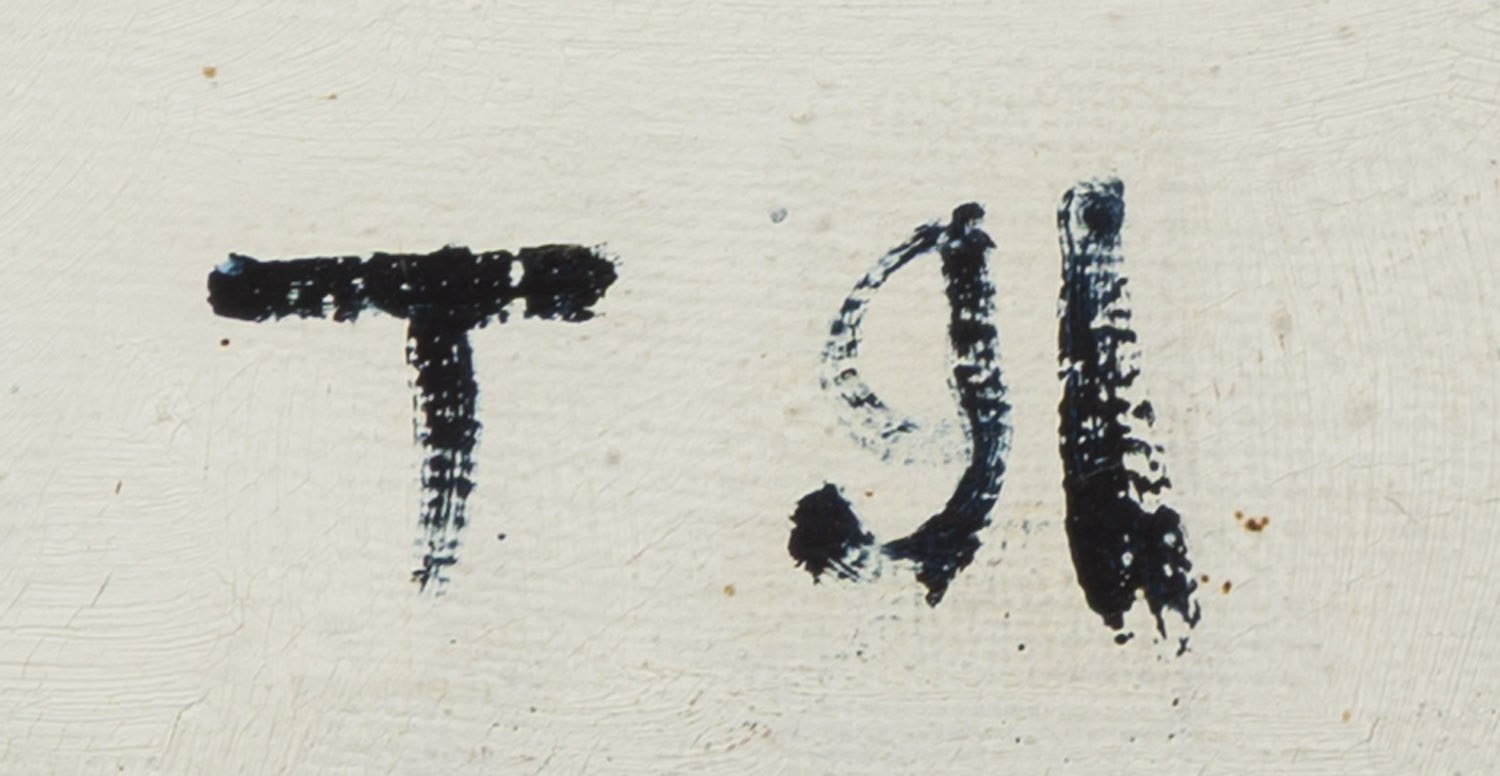
signed and dated p.d.: 'T 91'
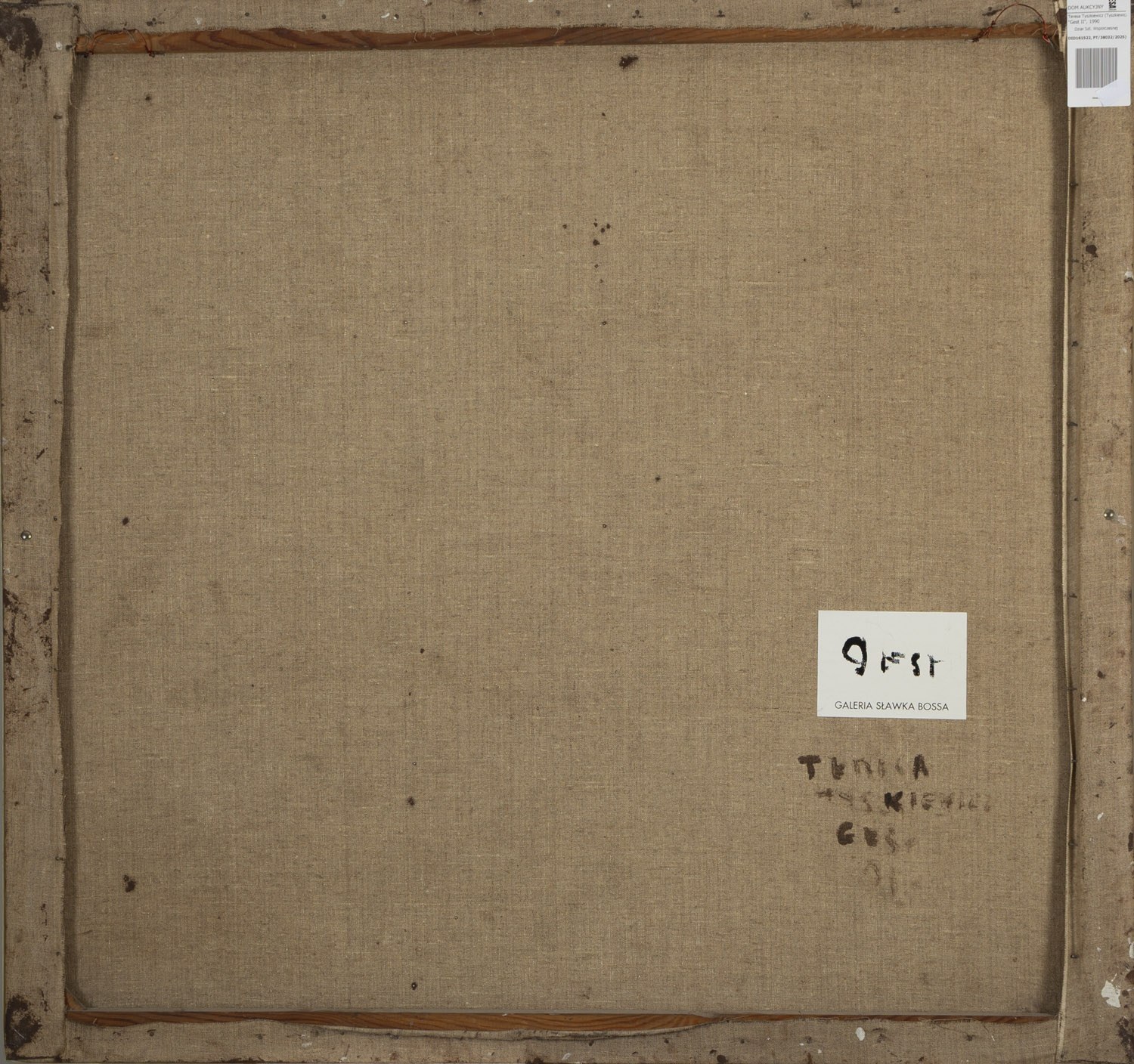
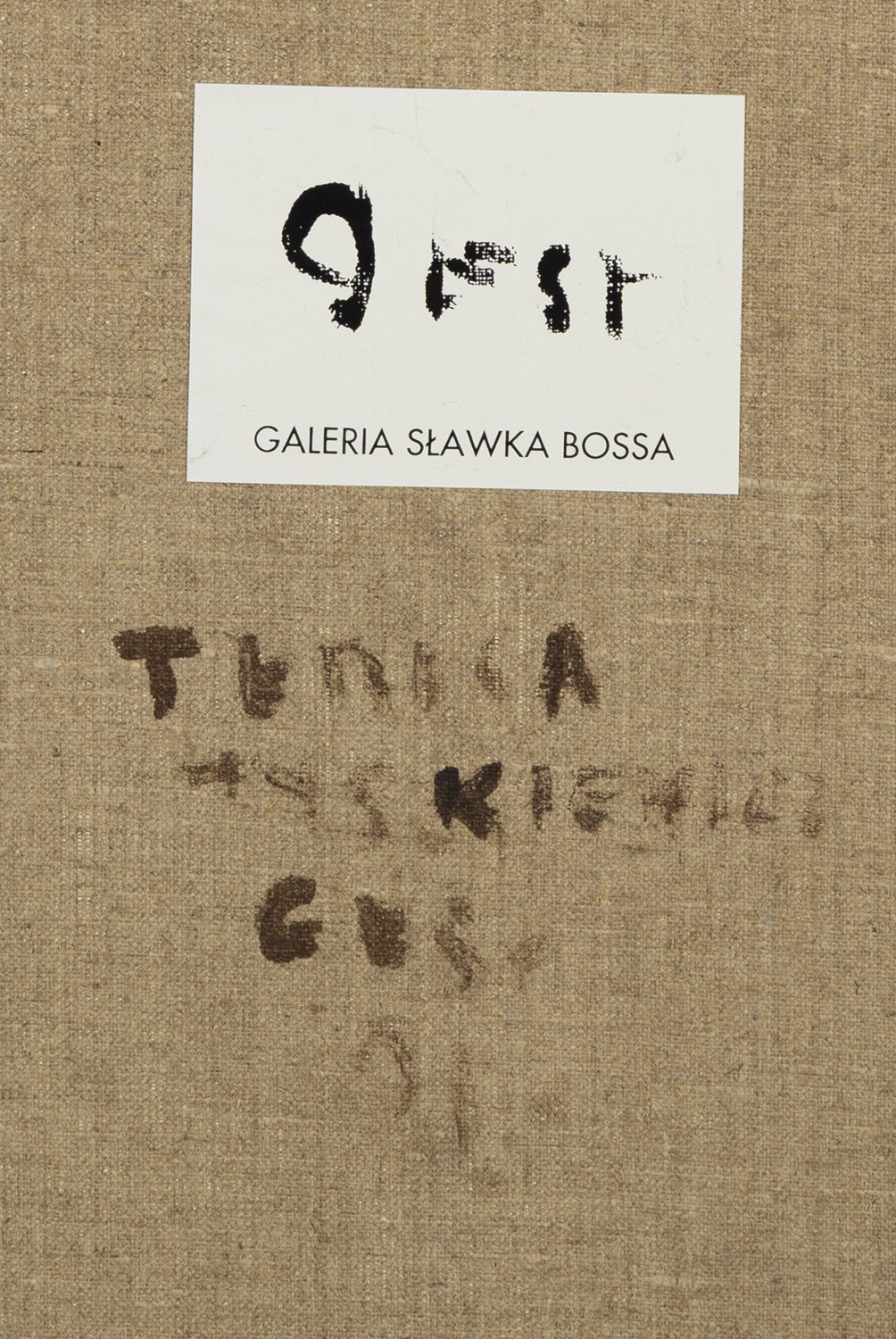
signed, dated and described on the reverse: 'TERESA |TYSZKIEWICZOWA | GESTURE 91'
on the reverse a paper sticker "Slawek Boss Gallery".
Origin
Slawomir Boss Gallery
private collection, Poland
Exhibited
"Tyszkiewicz. Gesture," Slawek Boss Gallery, Lodz, June 1992.
Literature
Tyszkiewicz. Gesture, exhibition catalog, Slawek Bossa Gallery, Lodz, 1992, cat. no. 6, nlb. (il.)
Biography
Teresa Tyszkiewicz was a painter and graphic artist for more than thirty years working at the State Academy of Fine Arts in Lodz. Along with Władysław Strzemiński and Stefan Wegner, she was the one who had the greatest influence on the substantive shape of the school and its teaching profile. In the 1920s she studied at the Warsaw Academy of Fine Arts under Tadeusz Pruszkowski. In the early 1930s she moved to the family estate of her husband Stanislaw Tyszkiewicz, which was located in Lelechówek near Lviv. She immediately became actively involved in the development of the Lviv visual arts community - in 1938 she was elected to the Board of Directors of the Professional Union of Polish Artists in Lviv. In 1936, the artist also held her first exhibition there, which was extremely well received by critics. During the war she lived in Warsaw - in 1945 she completed her interrupted studies, finding herself, alongside Wojciech Fangor, among the first post-war graduates of the university. Soon after, she moved to Lodz, where she co-founded the Piąte Koło group. Among its members were Stanisław Fijałkowski and Jerzy Nowosielski, with whom she was friends for many years. Her creative explorations, as well as the inspiration the artist drew from the world of sciences - biology, chemistry and physics - led her to informel. She produced her most interesting and expressive works in the 1950s, and her interest in the formal aspect of writing led her to produce what is perhaps her best-known series, "Blind Roads," which she began in 1969.