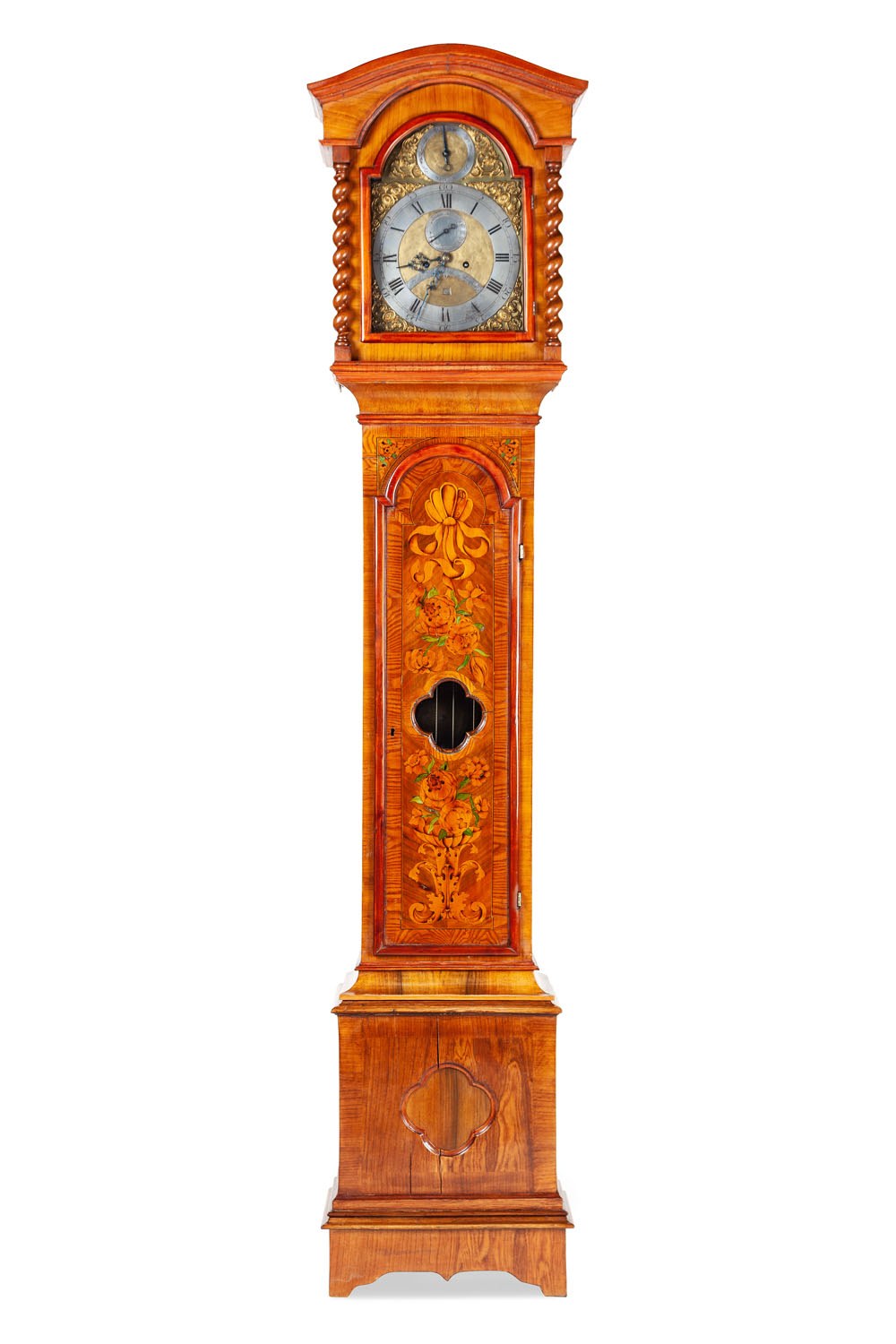
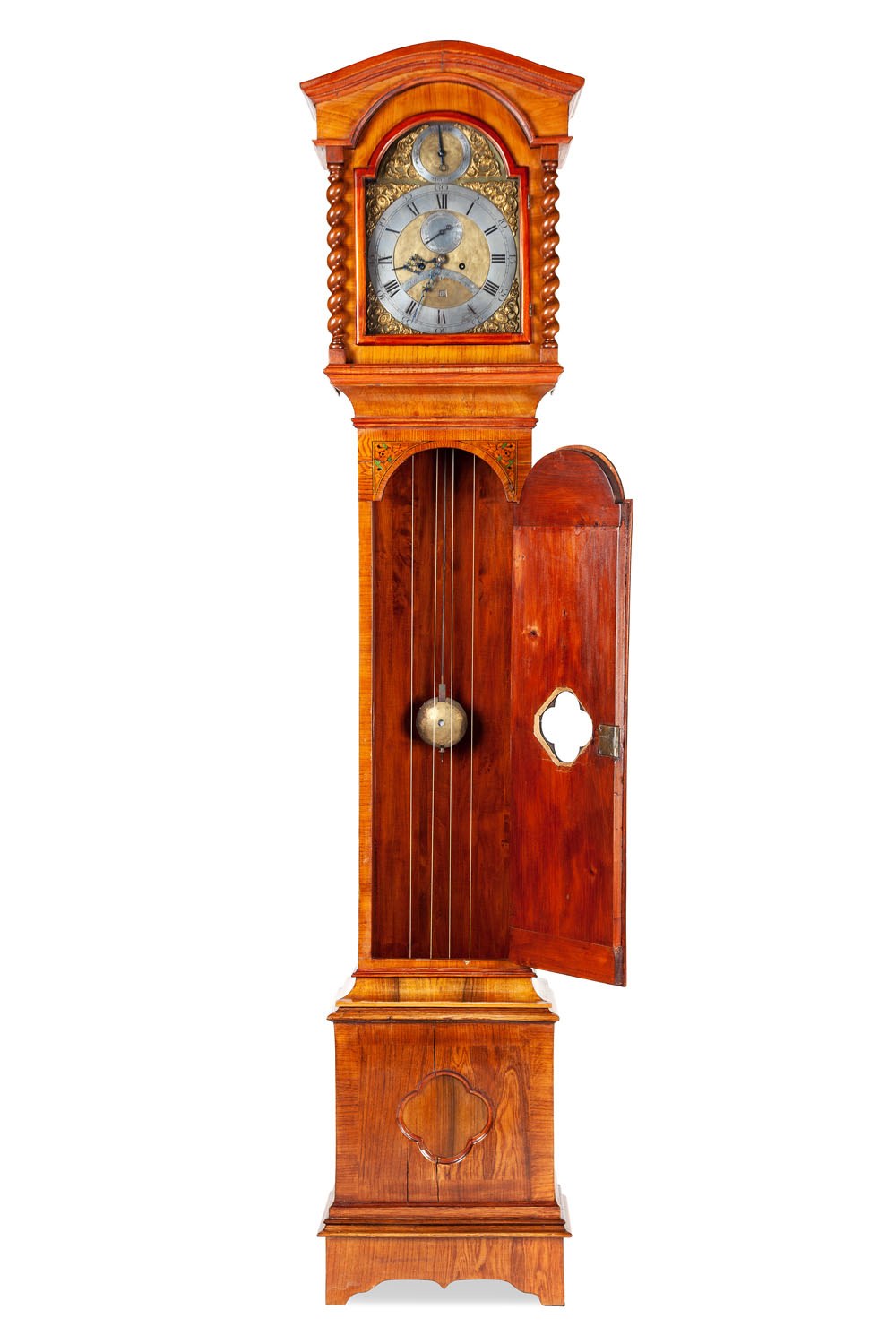
Dimensions: 246 x 50 x 28 cm
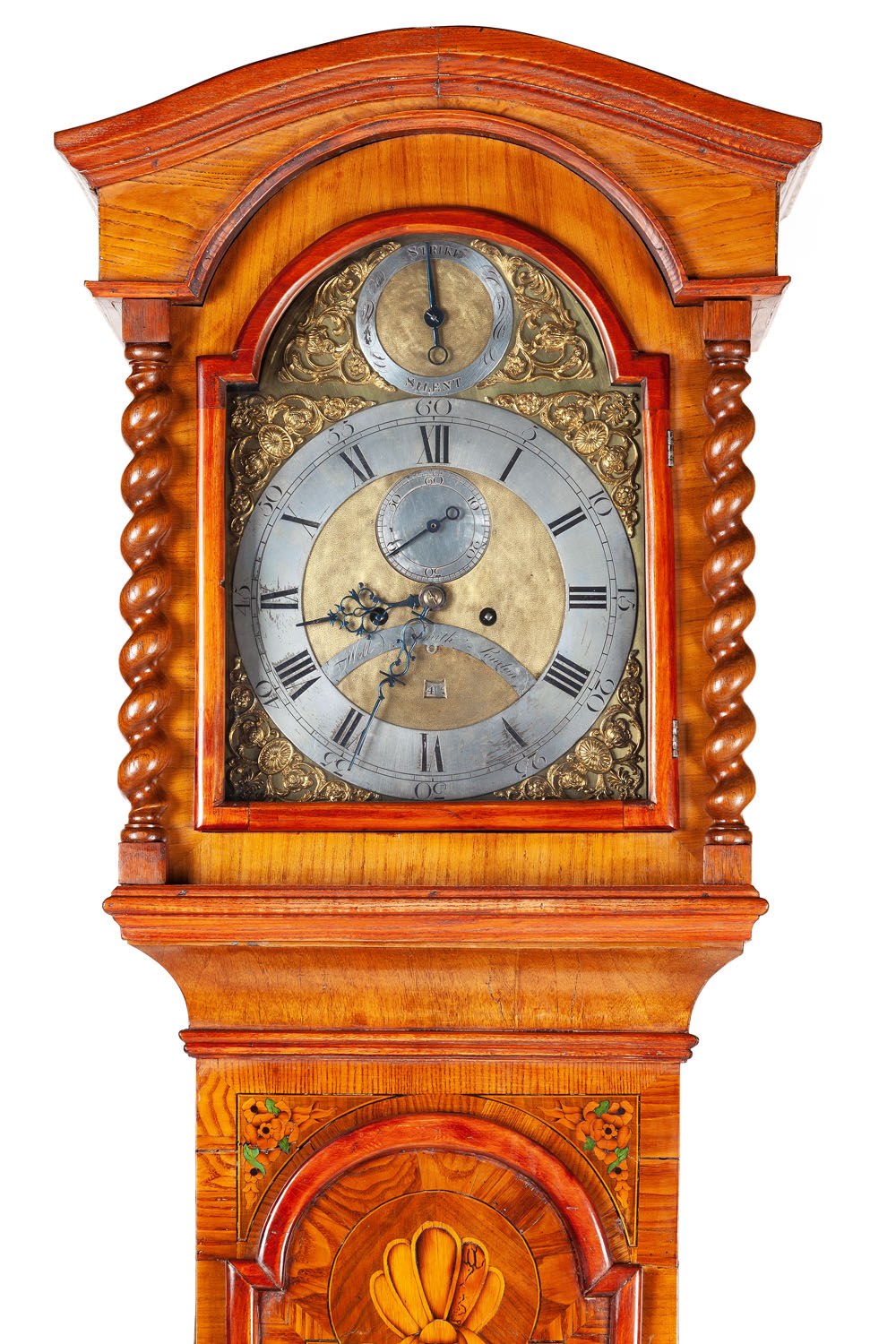
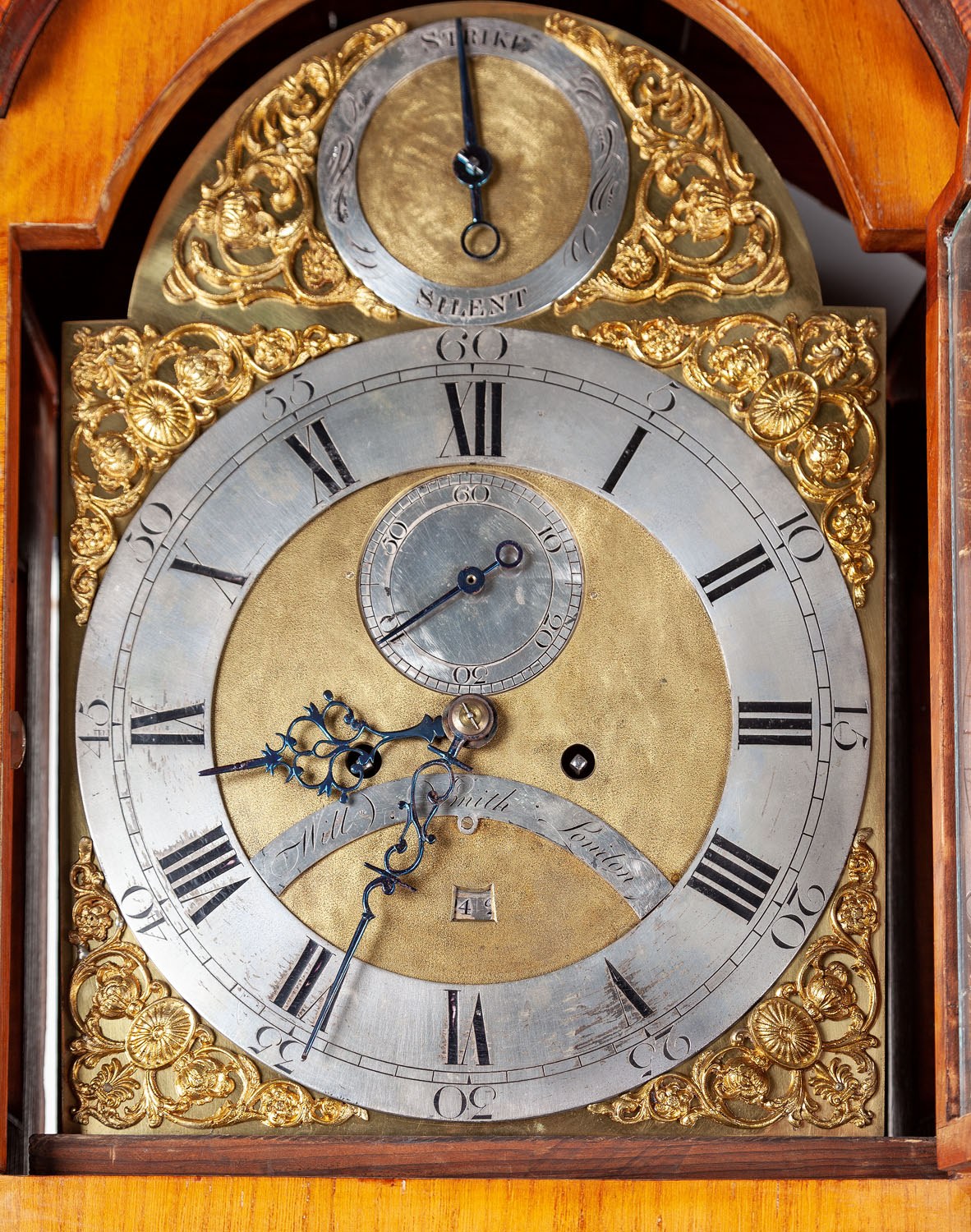
Signed on the dial: 'Will Smith London'
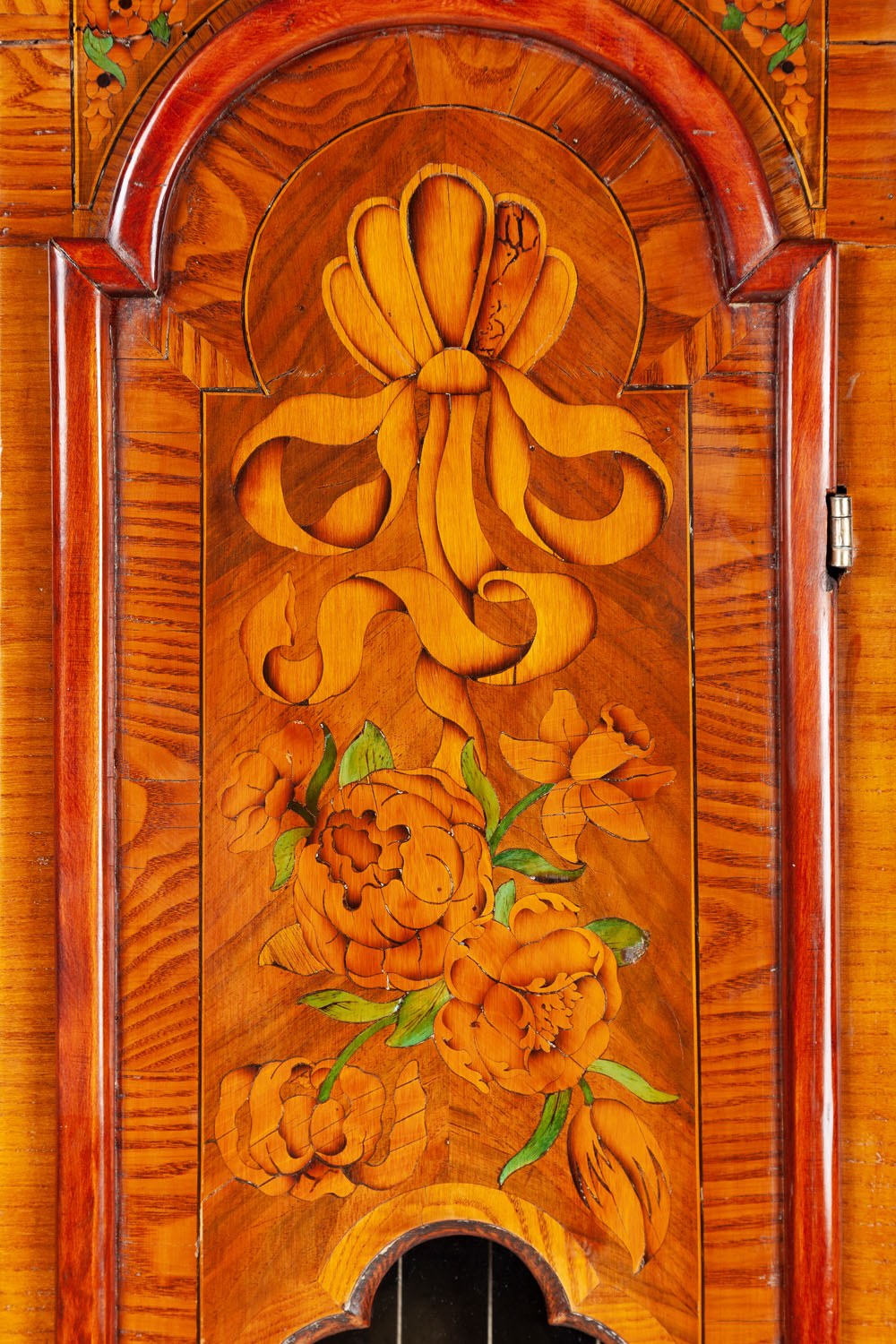
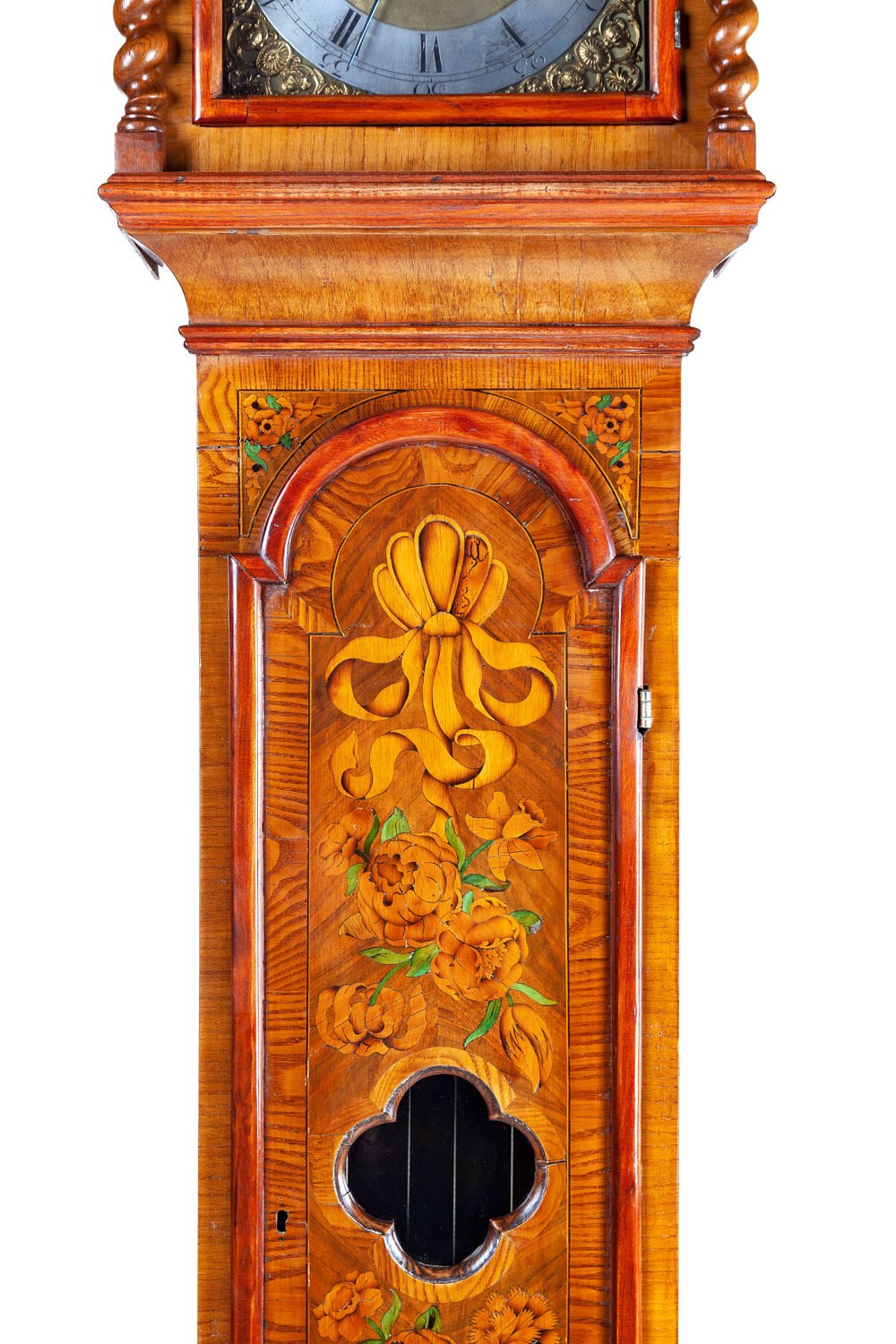
cabinet: late 20th century using elements from older objects (base; veneer of the shaft from the 3rd quarter of the 18th century) with replacement of a significant part of the structural elements; head freely reconstructed circa 2000.
mechanism: 4th quarter of the 18th century (more precisely, after 1780), Great Britain (?)
cabinet construction: pine, birch, ash; veneer - ash; marquetry: boxwood, inlay - green stained bone
mechanism: steel, brass, mutton gut,
Clock mechanism with weight-string drive with an eight-day gauge capacity, equipped with a hooked pivot with a massive anchor clocked by a long pendulum with a single steel rod and lens (solid lead with a brass front face, steel back). Skeleton plates of brass, in the shape of a standing rectangle, connected by pillars - in the middle with rings of a half-shaft profile with faults; pillars tapering towards the ends; front plate with a rectangular cutout at the bottom in the middle, connected by five profiled pillars. Drive drums with guide groove, brass ratchet springs, fixed with screws. Tendons properly replaced (gut), solid brass blocks, cast iron weights corroded. Shift wheel and intermediate wheel solid.
The clock strikes only the hours. Comb strike section (simplified variety, without strike star) with repeater and one bell. Brass alloy bell of rare cylindrical shape (non-original?). The beating switch lever is steel, cooperating with a brass spring on the back plate. The working parts of the mechanism are made with great care and maintained in good condition.
Two benches mounted one on top of the other non-original, bolted to the lower pillars.
The clock face is brass, square closed with a semicircular gable, with applied rings - a digital and a beat switch, with an applied seconds hand on the inside and a trapezoidal, glyptic date window. In the corners, classicizing cast brass and gilded appliqués (secondary gilding present) with paterae surmounted by palmettos, framed by floral thread with lily of the valley flowers and half-volutes. At the top, appliqués with vicia with lily of the valley flowers belonging to this set.
The center field inside the ring is matted, with a second hand, tension holes and an arched plaque with signature. At the top, a pointer beat switch. Silver-plated numeral ring, hour numerals in Roman; minute, second and date numerals in Arabic, along with graduations, signature and engravings on the ring of the beating switch (markings "STRIKE" and "SILENT" and tangled "guilloche"), and escutcheons around the switch axis and signature engraved and infused with black wax paste (?).
Steel openwork hands - hour hand wide, symmetrical, with a forked shaft, composed of two circles and a heart, and channelheads; with offshoots, minute hand with a barrel-separated escutcheon and a straight arrowhead, beat switch hand straight with a sharp arrowhead, with a counterweight with a radial circle.
Signature placket in the lower part of the center field, in the form of an arc, silvered.
Digital date ring set in two rollers at the bottom and a guide at the top. The feet of the dial are cylindrical. Pendulum with changes. Pendulum rod with traces of corrosion, corrosive tarnish on cast iron weights.
The dial face is maintained in the convention of the so-called London Style - with decoration limited to corners and a matted center without decoration. However, the weaker class of workmanship and lack of chiseled application do not indicate a London product. It is interesting because of its rather rare set of already classicist appliqués (if original, which can be ascertained only after disassembly) with volutes, paterae and palmettoes, depending on the patterns propagated by Robert Adam (1728-1792). Such a solution is rare in Polish collections, in public collections it is presented by the clock of Wm. Jourdaine from the collection of the MNW, on permanent exhibition in Zelazowa Wola.
The freshly oxidized blue hands are different from the English ones and betray continental workmanship.
Offered at auction is a standard mechanism of good workmanship, however, it differs from most mechanisms with this signature by the lack of rectangular cutouts at the bottom of the plates. The late dating of the mechanism also betrays the form of the pillars, wider at the ring in the middle, found in the early 19th century.
The mechanism is not a set with the cabinet.
Condition
Cracks and splintering of the veneer.
Dilapidated and cracked panels of the base.
No possibility to assess the technical condition.