


Size: 14 x 9 cm
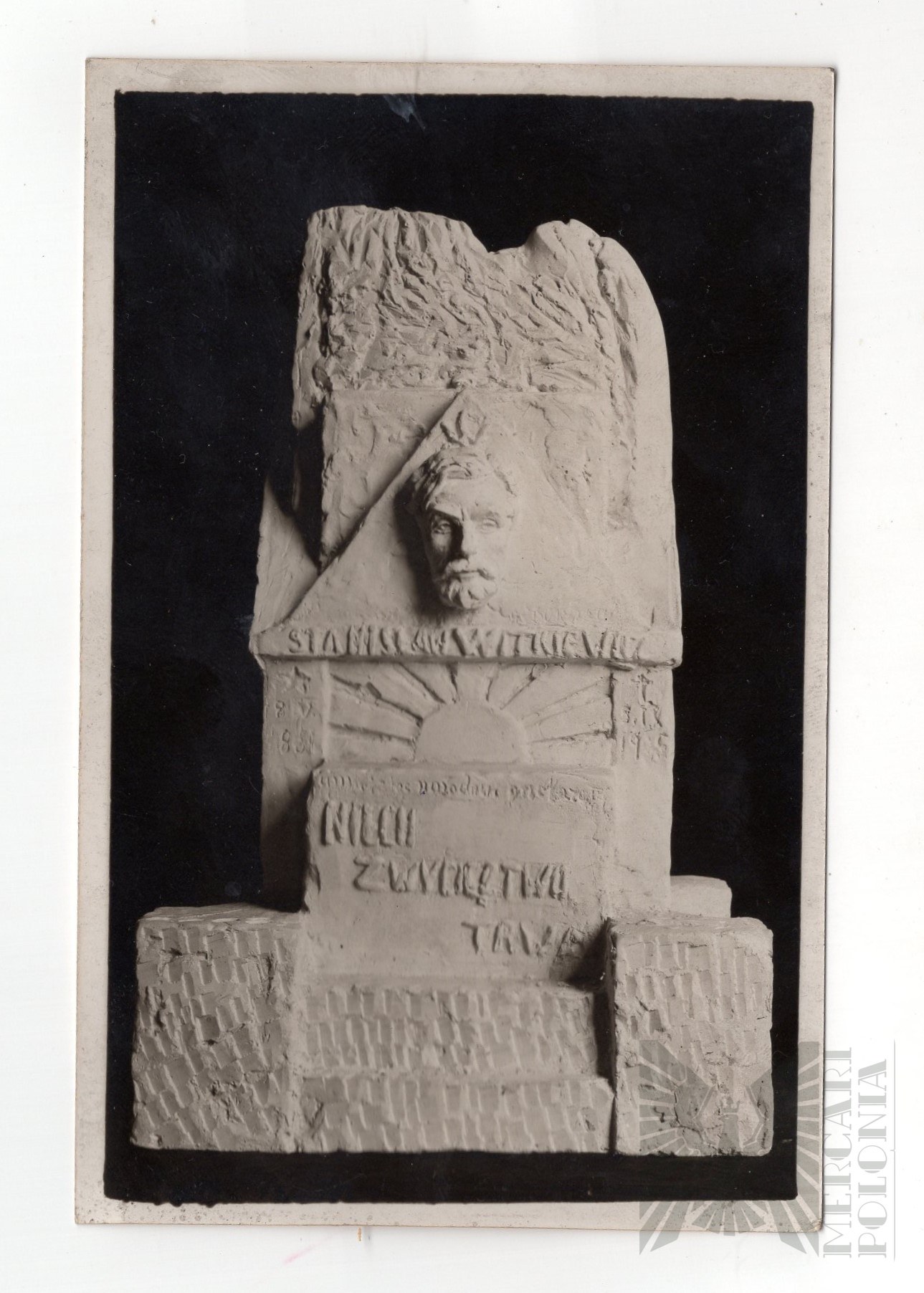
Photo of an unrealized monument to Stanislaw Witkiewicz (1851-1915) from the interwar period designed by an unknown artist.
The design is distinguished by its austere, sculptural form and strong reference to the Zakopane style, which Witkiewicz created and promoted. The monument combines monumentality and organic references to the mountainous landscape, characteristic of Tatra architecture and folk art.
The most prominent element is the bust of Stanislaw Witkiewicz, incorporated into a triangular structure resembling a mountain peak. Behind it is a bas-relief rock, which emphasizes the artist's inseparable connection with the Tatra Mountains. The inscriptions, including the slogan "Let the animals last," may refer to the respect for nature that Witkiewicz valued and which was an essential element of his work. Decorative elements, such as the radiant sun motif and textured surfaces reminiscent of the wooden ornamentation of highland cottages, strongly allude to Zakopane ornamentation.
The monument is a strong symbolic commemoration of the creator of the Zakopane style, combining primitivist austerity with local highland craftsmanship. The use of organic, irregular forms emphasizes Witkiewicz's spiritual and artistic closeness to the Tatra Mountains, and the whole is characterized by expressive, almost monumental simplicity, paying homage to his heritage.
-
Stanislaw Witkiewicz (May 21, 1851 in Poszawsz - September 5, 1915 in Lovran) - Polish painter, architect, writer, art theorist and critic, considered the creator of the Zakopane style, which became the national style in Polish wooden architecture. He studied painting at the Academy of Fine Arts in St. Petersburg and in Munich.
As an artist he became famous for his landscapes and genre scenes inspired by the Tatra Mountains and highland culture. His architectural activity focused on adapting traditional Podhale forms to modern needs - an example is the famous "Koliba" villa in Zakopane. Witkiewicz was also an active publicist, promoting the idea of revival of national art.
He died in 1915 in Lovran (today's Croatia), where he was treated for tuberculosis; his ashes are buried in the Pęksowy Brzyzek cemetery in Zakopane. Father of Stanislaw Ignacy Witkiewicz (Witkacy).
Condition as in photos.










Laatst bekeken
Log in om de kavellijst in te zien
Favorieten
Log in om de kavellijst in te zien