


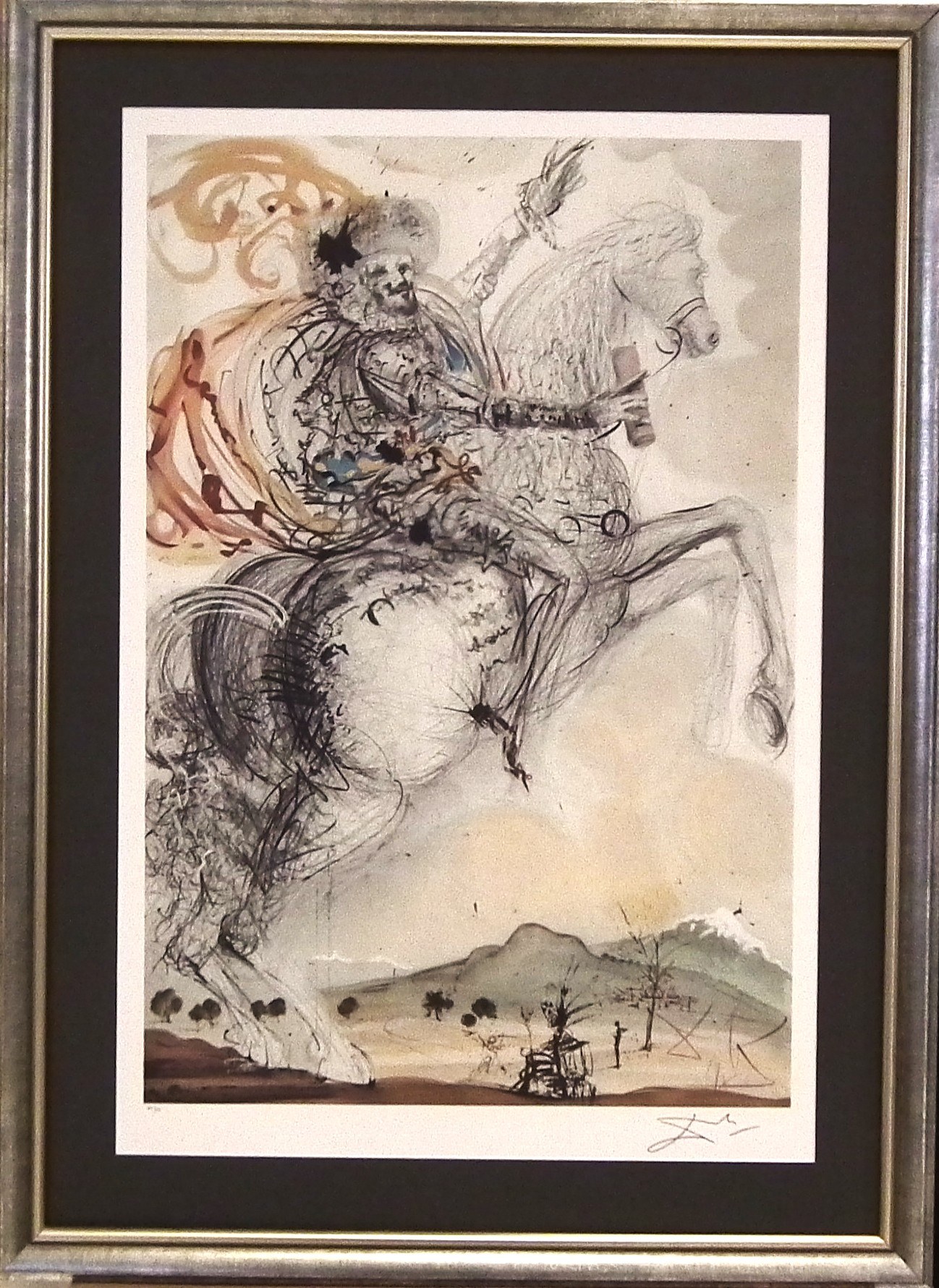
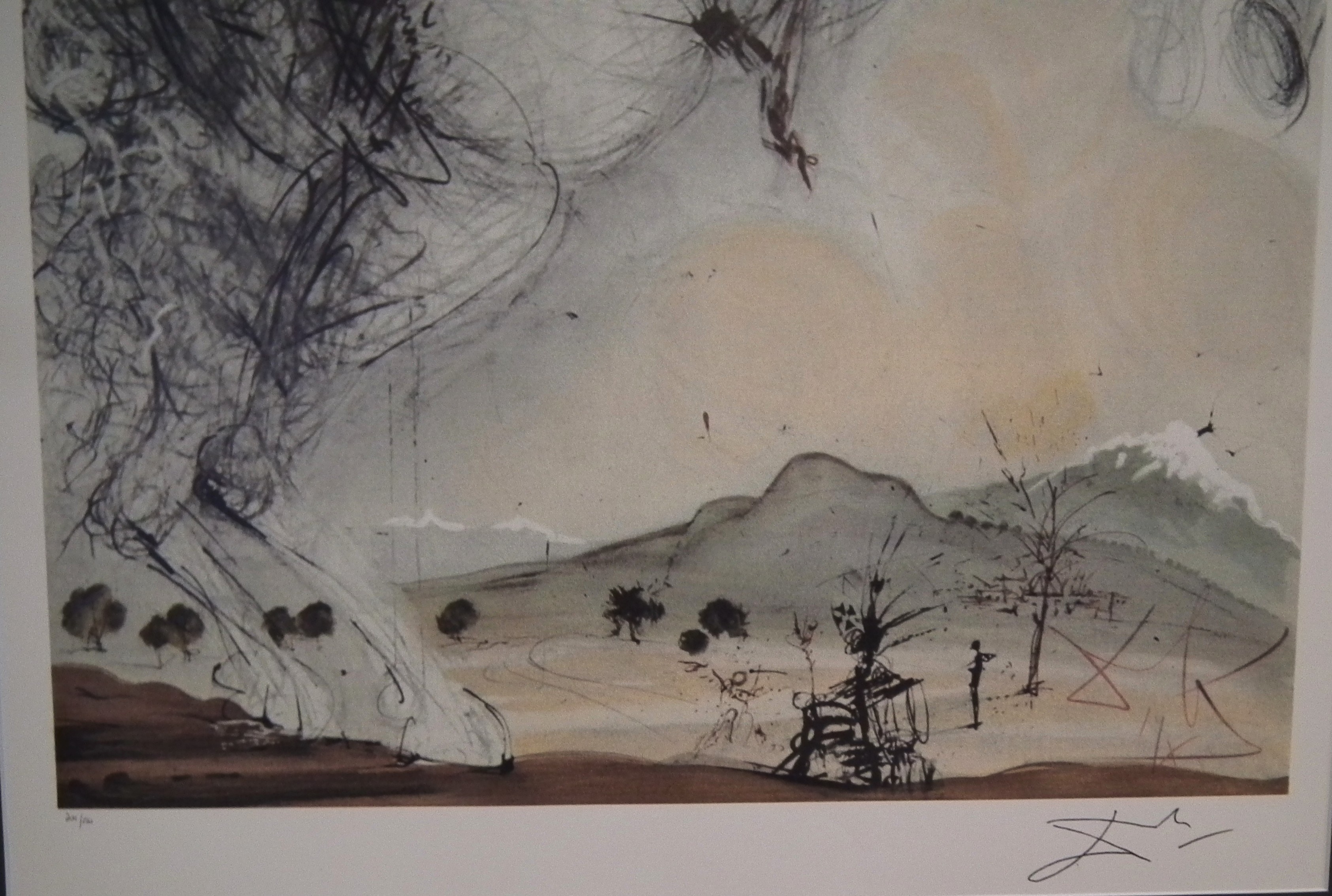
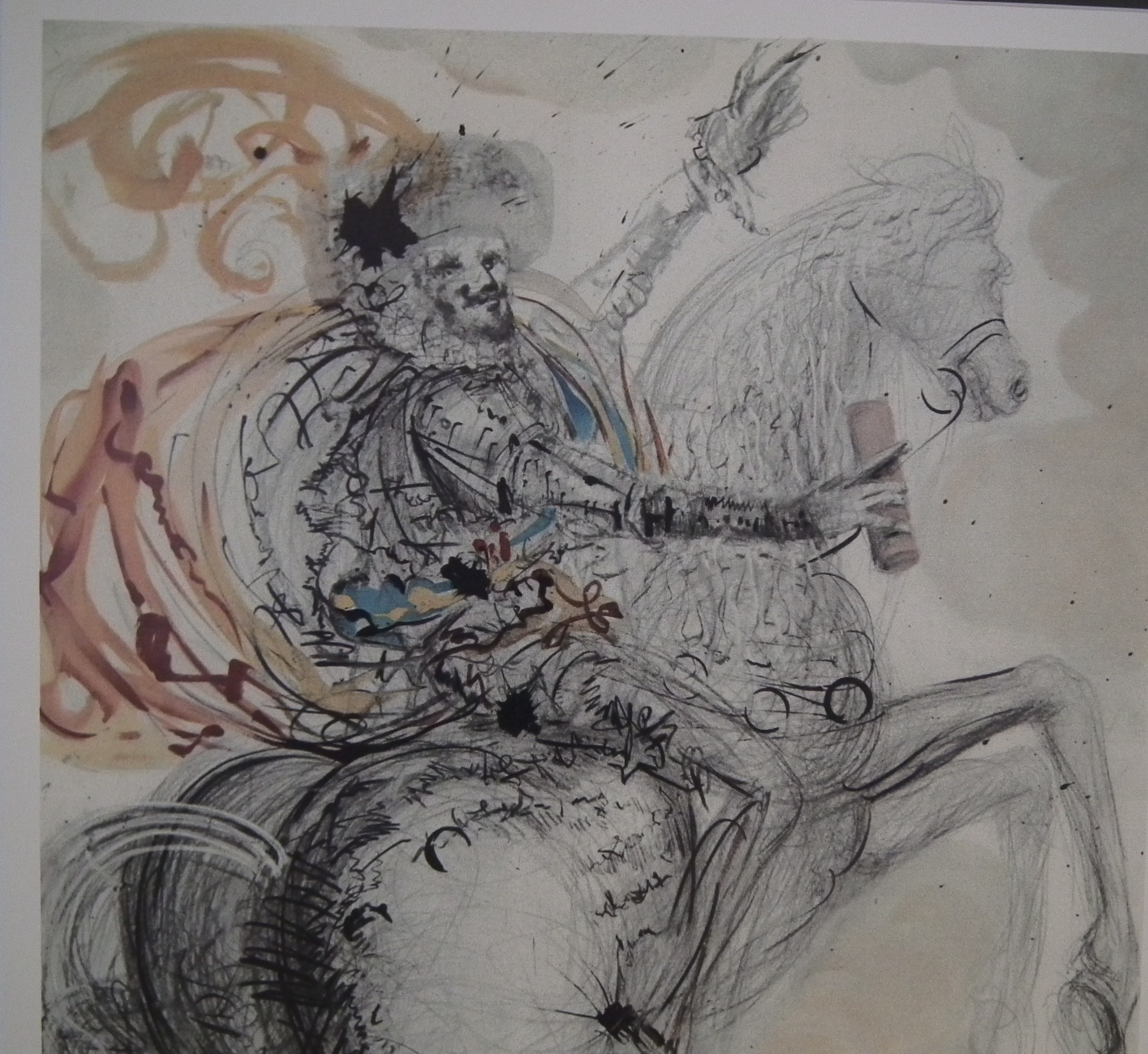
Lithograph, paper 78 x 54 in light passe - partout; signed facsimile of the author's signature p.d.; numbered in pencil 204/500 (edition of 500 copies); on the reverse, typographical information about the edition and signature. Publisher -Max Inter Ltd.
Fascinated by the paintings of Diego Velazquez, Dali often painted his own surrealist compositions based on Velazquez's paintings, opposing Velazquez's academic realism. In this case, the famous portrait on horseback of the Duke of Olivares. In his customary fashion, Dali introduced several surprising elements into his version of the portrait, including a roll of paper instead of a mace, a prominent cauliflower, which he often used to symbolize mathematical principles such as the golden division and the Fibonacci sequence. Salvador Dalí stated that "everything ends in the cauliflower" during a lecture in 1955, referring to the "logarithmic curve," which he found fascinating. He also once stuffed a Rolls-Royce with cauliflowers. Dali's fascination with cauliflowers stemmed from the fractal structure of the cauliflower, in which Dali found mathematical relationships.
In the background, Dali placed the highest peak in mainland Spain - Mulhacen in the Sierra Nevada range located in Andalusia - to emphasize that Olivares is located in Andalusia.
Many galleries around the world and in Poland misinterpret the figure on horseback as Don Quixote or El Cid.










