


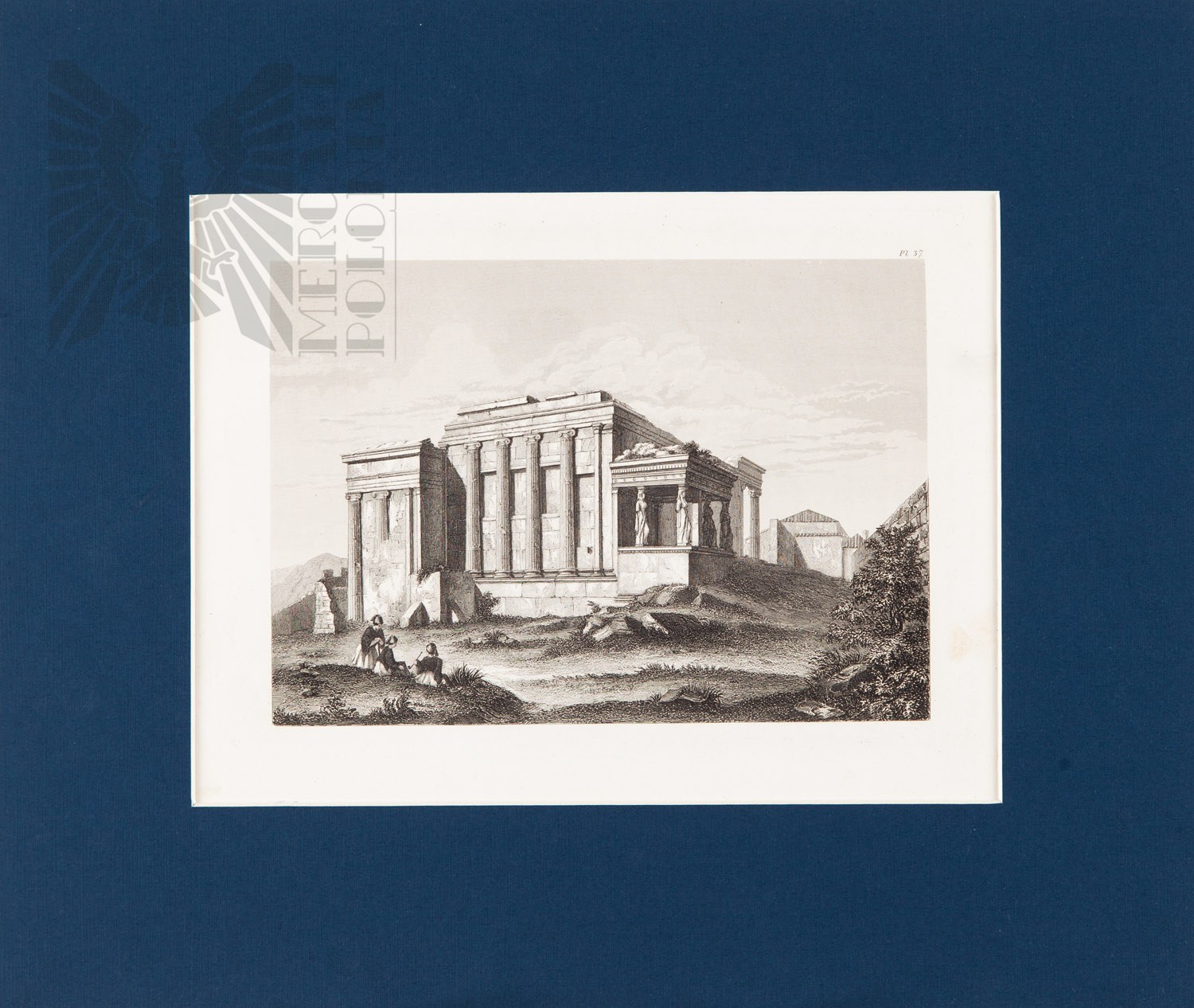
The copperplate is from a portfolio published in 1856 containing architectural monuments from various parts of the world.
Cecilia Metella's Tomb - the monumental tomb of the daughter of Quintus Cecilius Metellus Cretanus and wife of Marcus Licinius Crassus (son of the triumvir Marcus Crassus), located on the via Appia near Rome. Erected at the end of the 1st century BC, the structure is shaped like a cylinder, 11 meters high and 29.6 meters in diameter, founded on a square base. The structure was made of concrete, while the exterior was clad with travertine slabs. Most of the slabs from the base of the structure have been stolen over the centuries. Originally, the structure was topped with a conical roof, which does not exist today. The tomb is decorated with a frieze of festoons and bucranions - ornaments in the form of bull heads (hence the popular name Capo di bove). On the side of the road a marble slab with a commemorative inscription is placed on the wall. Inside the building is a circular burial chamber, accessed by a long corridor with two niches on the sides. In the Middle Ages, the building served as a fortress, with the blanks visible today added to the top at the time. It currently houses a museum.











Laatst bekeken
Log in om de kavellijst in te zien
Favorieten
Log in om de kavellijst in te zien