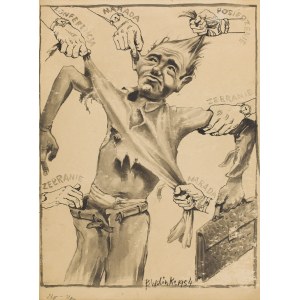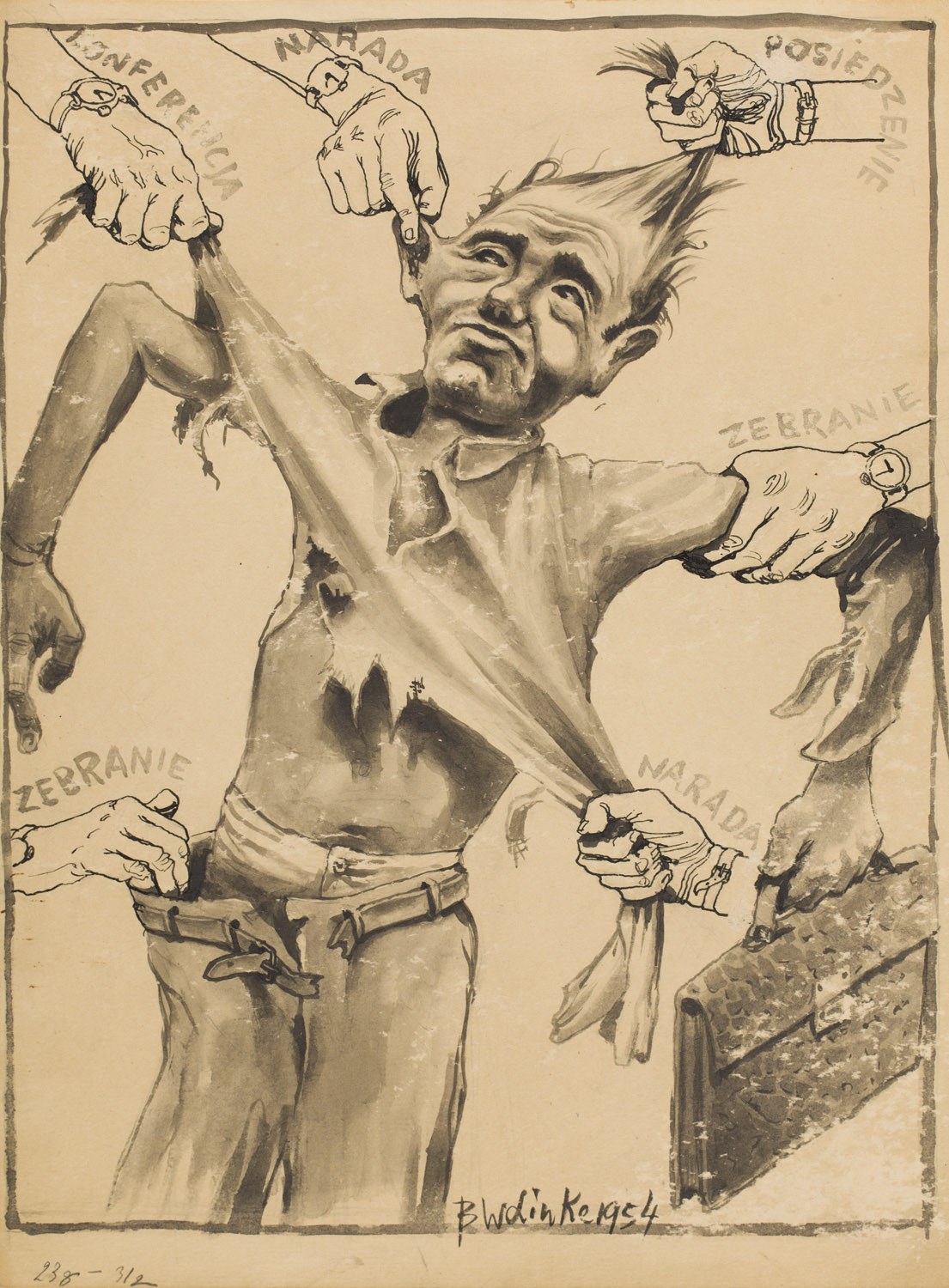
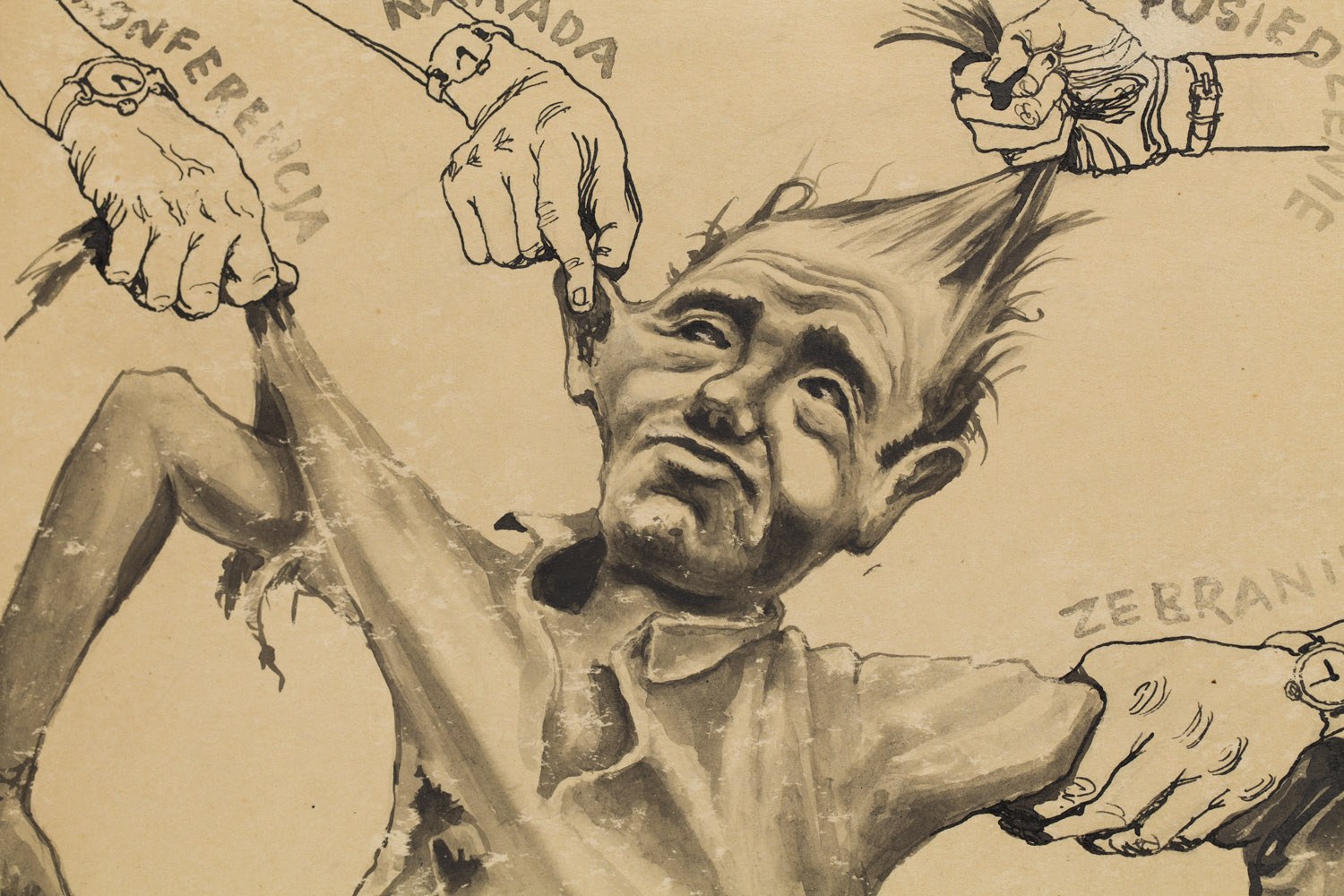
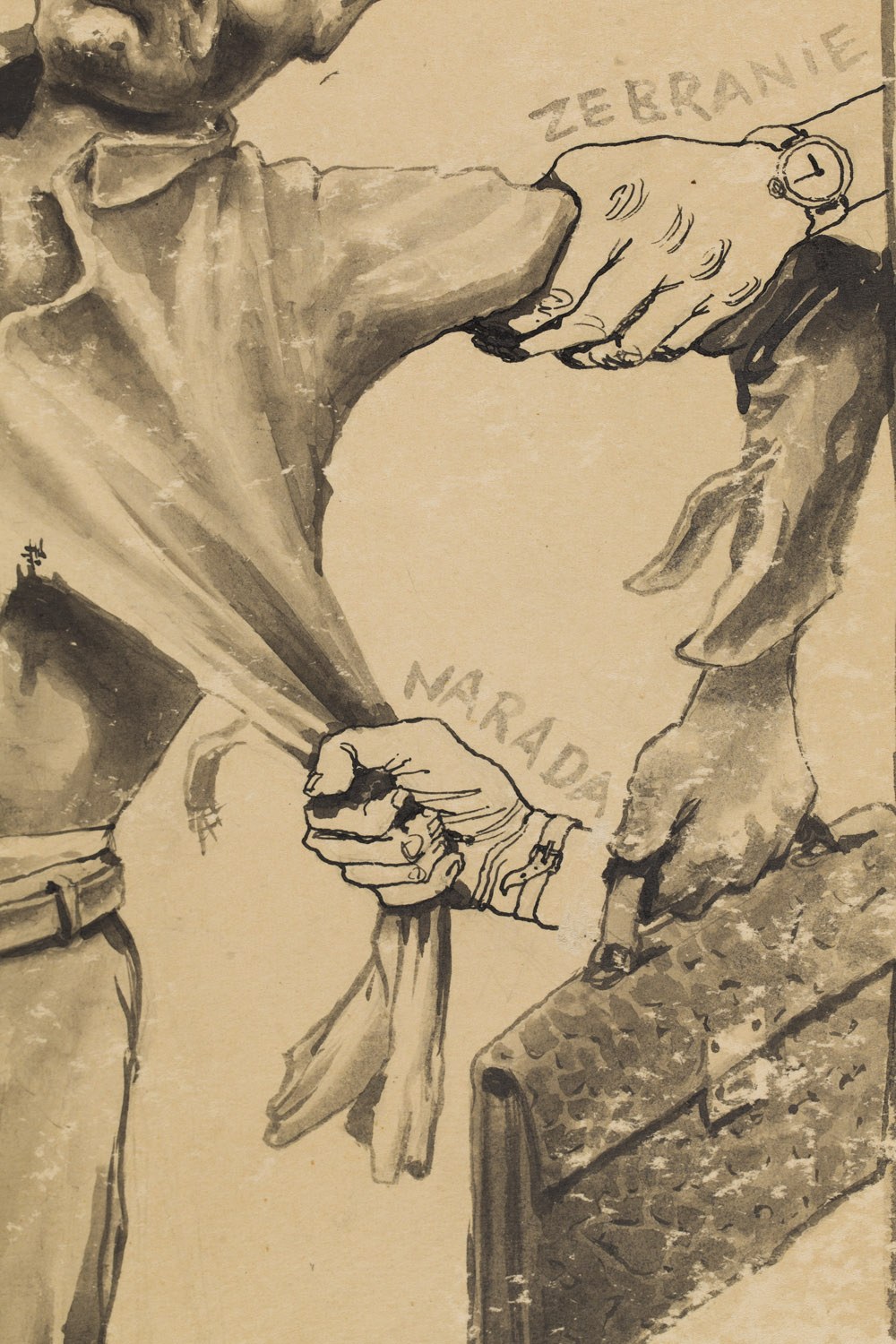
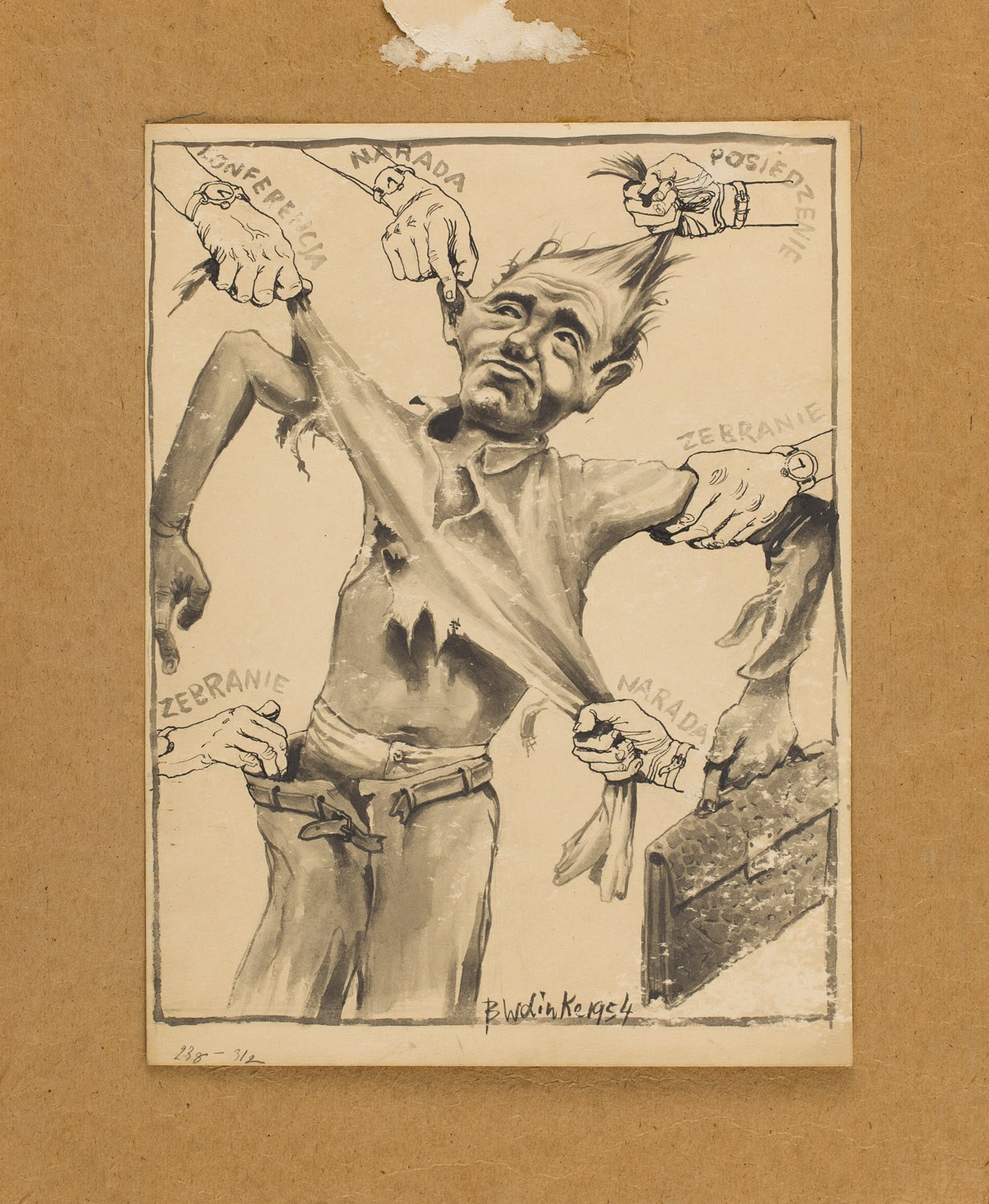
Dimensions: 42.6 x 34.5 cm (clear frame)
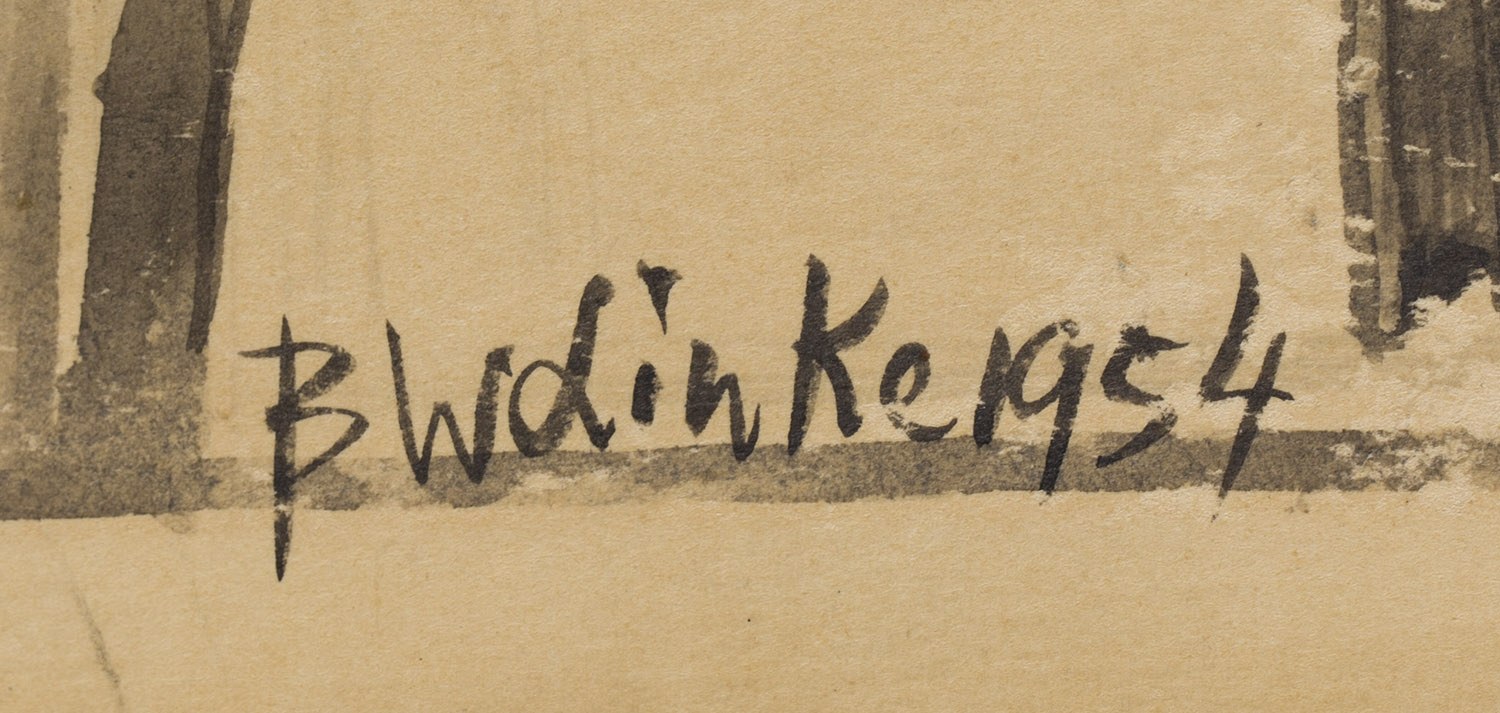
signed and dated p.d.: 'BWLinke 1954'
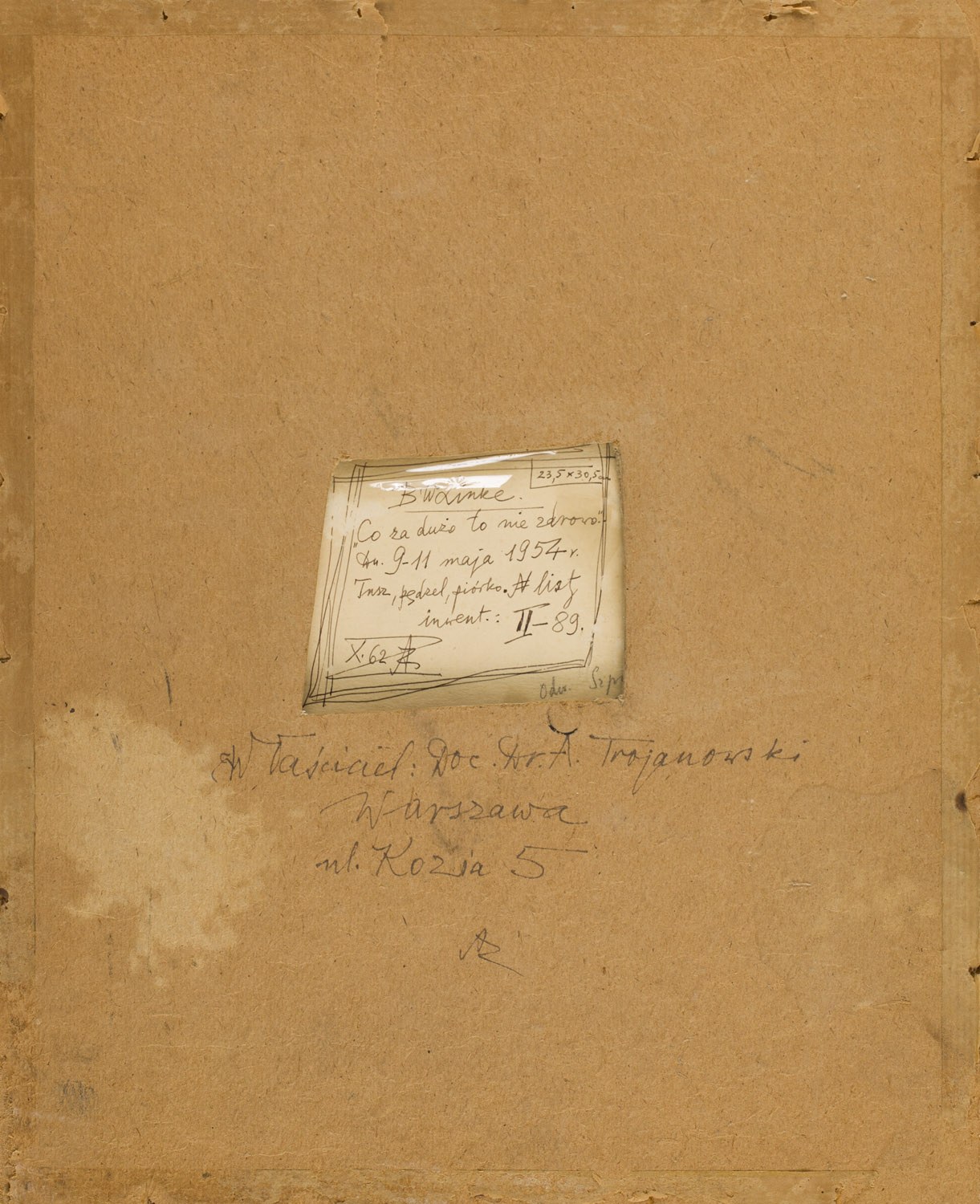
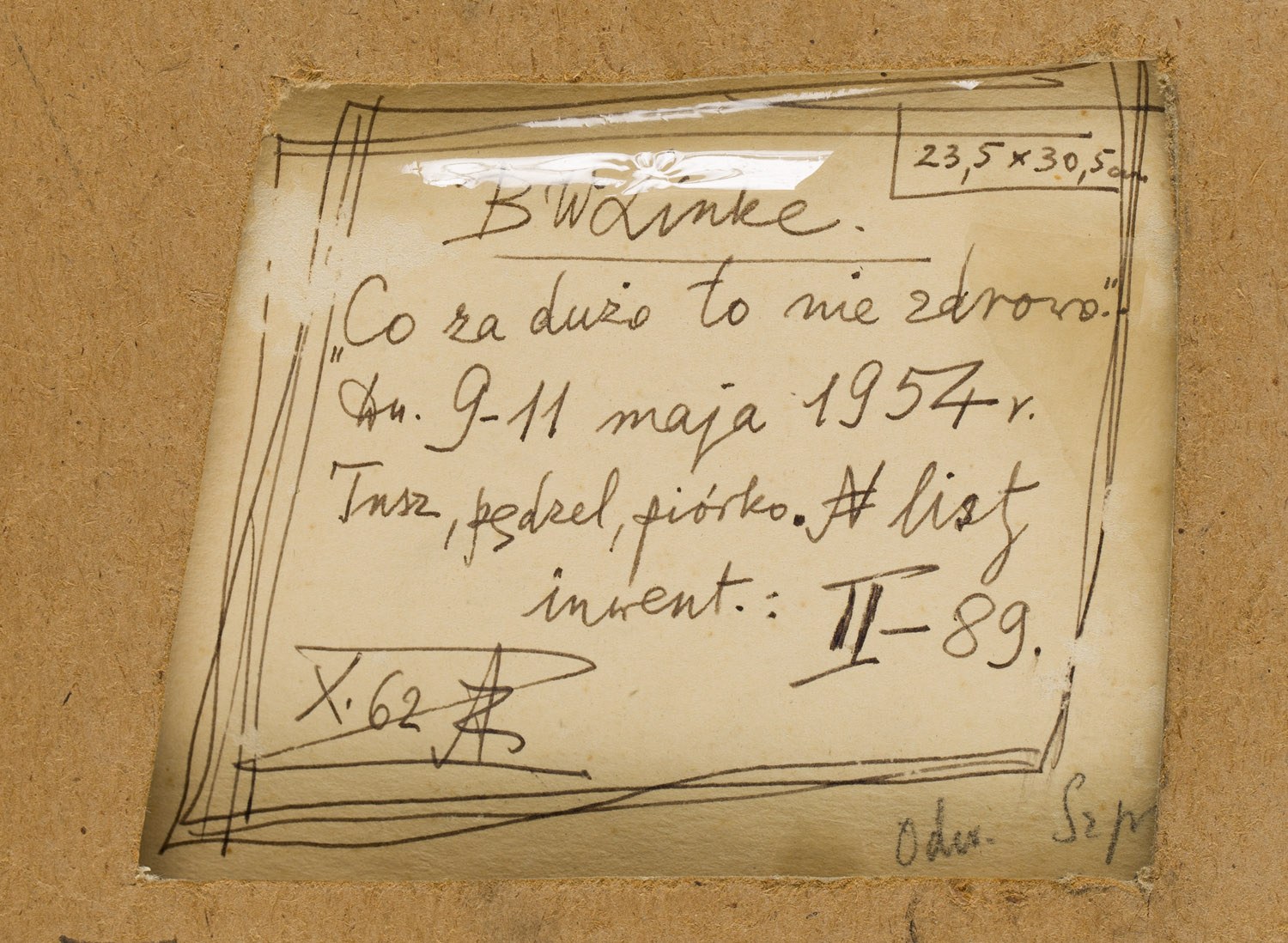
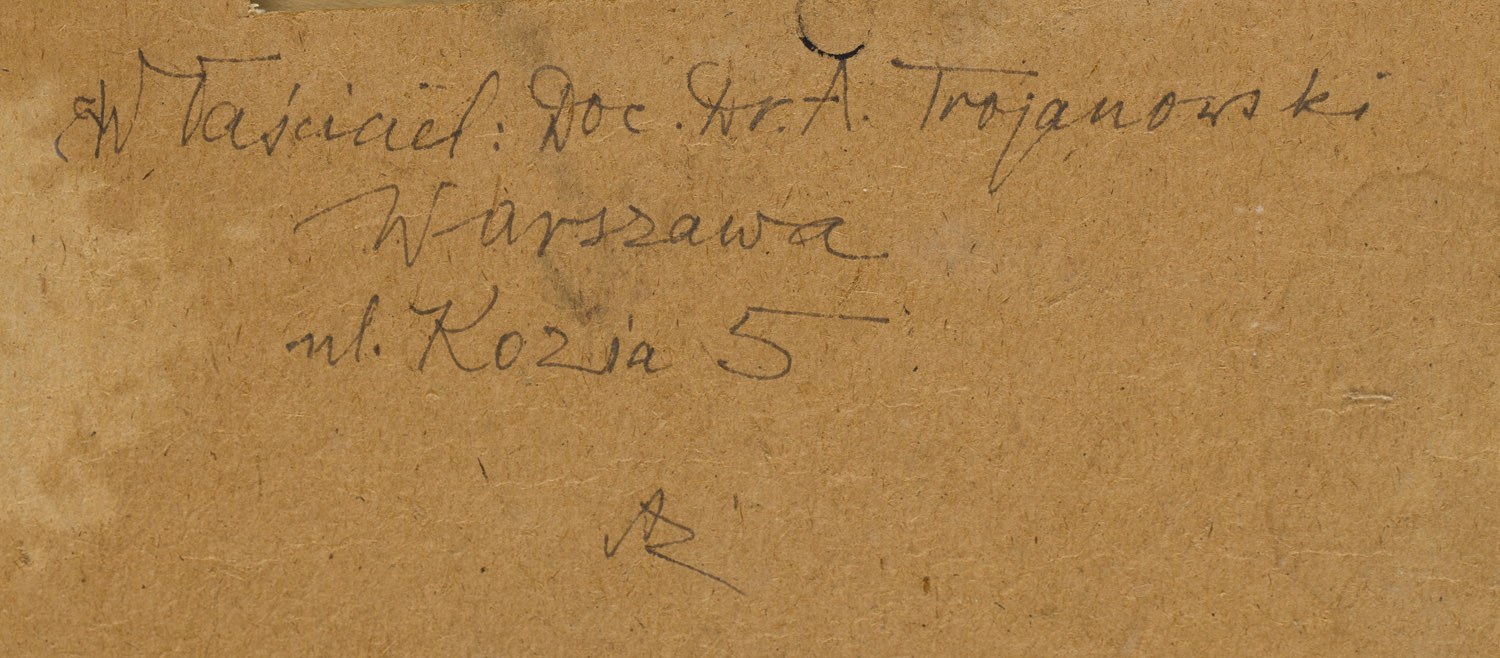
on the reverse an author's note with a description of the work
Literature
Bronislaw Wojciech Linke 1906 - 1962 Catalog, Warsaw 1963, edited by Irena Jakimowicz, cat. no. 388, p. 107
Biography
Estonian-born painter, draftsman of Polish descent known for his consistently practiced committed art. The formation of his artistic attitude was influenced by the turbulent times in which he lived. As a 12-year-old, he witnessed horrific events in his native Dorpat - the February Revolution, the German offensive and the struggle for independence. His paintings are primarily frightening, anti-aesthetic visions with social and political themes, usually with moralistic overtones. In 1919, he and Linke's family were repatriated to Poland. For the next few years they lived in Kalisz, where they struggled with financial problems, which forced the then very young Linke to take a job at a local factory. Beginning in 1922, he studied drawing for a year at the State School of Art Industry in Bydgoszcz. From 1924 to 1926 he supplemented his education at the School of Artistic Industry in Cracow, and then until 1931 at the Warsaw School of Fine Arts, in the studios of Tadeusz Pruszkowski and Mieczyslaw Kotarbinski. Linke belonged to the Free Painters' Lodge, a group that had existed since 1932 and was influenced by Pruszkowski. In addition to painting, he became famous for his satirical graphics and drawings of a political and moralizing nature for magazines such as Szpilki, Dziennik Ludowy, Tygodnik Robotnika, Polityka and Trybuna Ludu. He worked closely with the Warsaw group "Czapka Frygijska," whose artists, depicting on their canvases the misery of workers, strikes and hard labor, agitated for communism. In 1939 the artist married Anna Maria Zajdenmann, with whom they left Warsaw after the outbreak of war, fearing Nazi persecution. At that time they left for Lviv, and then to the East in the Soviet Union. Shortly after the war, the couple moved into an apartment in Warsaw's Żoliborz district, and from 1954 settled in the Old Town. The post-war period, spent among the ruins of Warsaw, was the most prolific time in Bronislaw Linke's work, during which his most famous series were created. Based on his own experiences and observations, the artist created a frightening vision of a deadened city and an existential portrait of its citizens. The pessimism of his works did not match the desired vision of reality by the propaganda of the time. Today, his works, full of the difficult emotions of the post-war years, draw attention and move.