


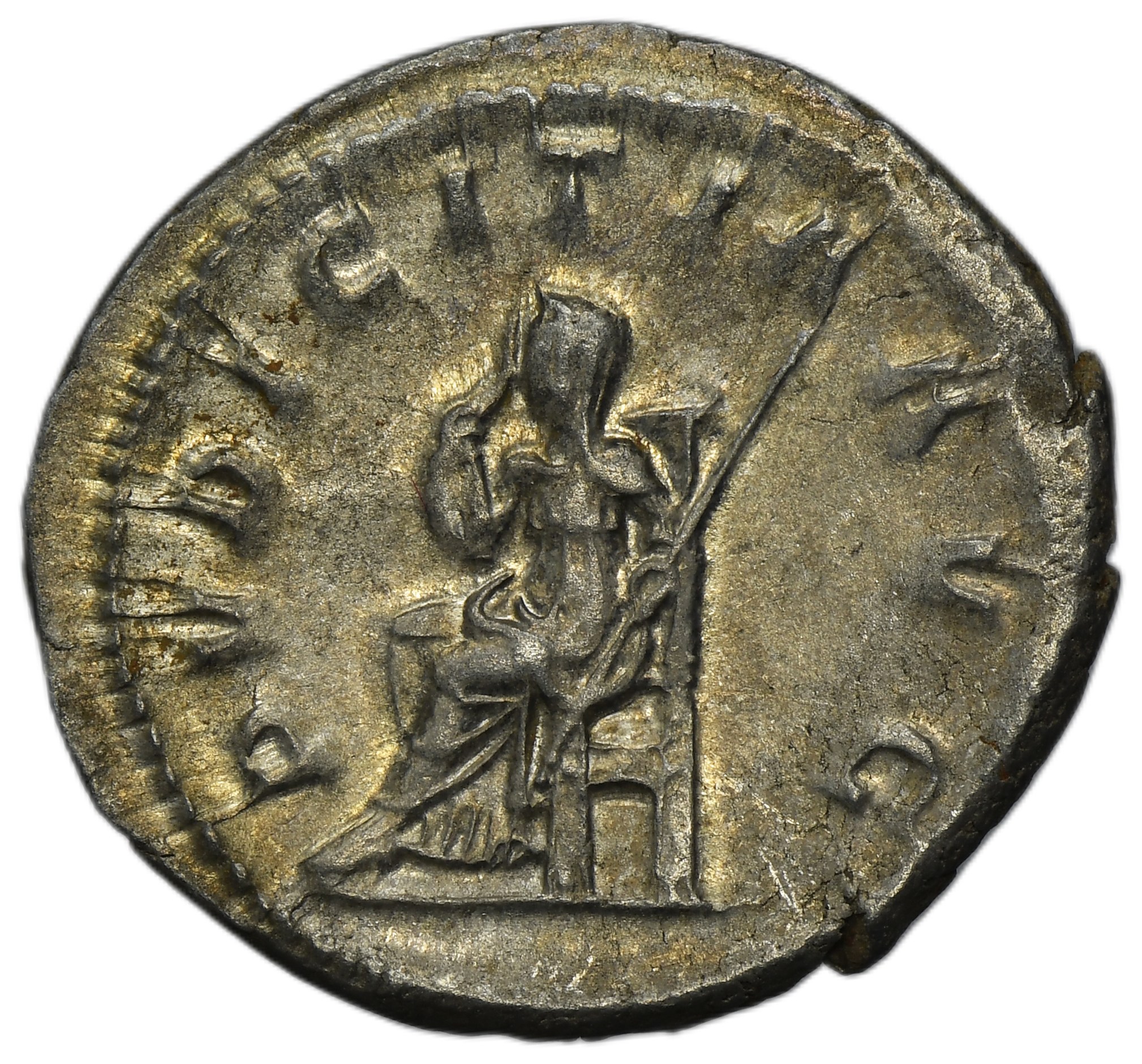


Antoninian of Otacilia Severa (AD 244–249), struck at the Rome mint between AD 244–246, belongs to the earliest phase of issues under Philip I the Arab, in which particular emphasis was placed on presenting the empress as the embodiment of traditional moral virtues associated with the ruling dynasty.
The obverse shows a bust of the empress set on a crescent, facing right, with the legend MARCIA OTACIL SEVERA AVG, giving her full name and title as Augusta. The crescent motif, characteristic of imperial female portraiture in the 3rd century, is associated with lunar symbolism and the concept of divine protection and elevated status.
The reverse depicts Pudicitia seated left, holding a sceptre, with the legend PVDICITIA AVG. Pudicitia, as the personification of modesty and moral virtue, formed a central element of imperial propaganda, especially in relation to empresses, emphasizing ideals of dignity, restraint, and fidelity.
The inclusion of this type within the coinage of Otacilia Severa reflects a broader ideological program in which the empress functioned as a moral exemplar and a legitimizing figure, reinforcing the authority of the imperial house through adherence to traditional Roman values.
Roman Imperial
Otacilia Severa (247-249), Antoninianus 244-246, Rome mint
Obverse: bust of Otacilia Severa on crescent right
MARCIA OTACIL SEVERA AVG
Reverse: Pudicitia seated left, holding holding sceptre
PVDICITIA AVG
Diameter 24 mm, weight 4.47 g











