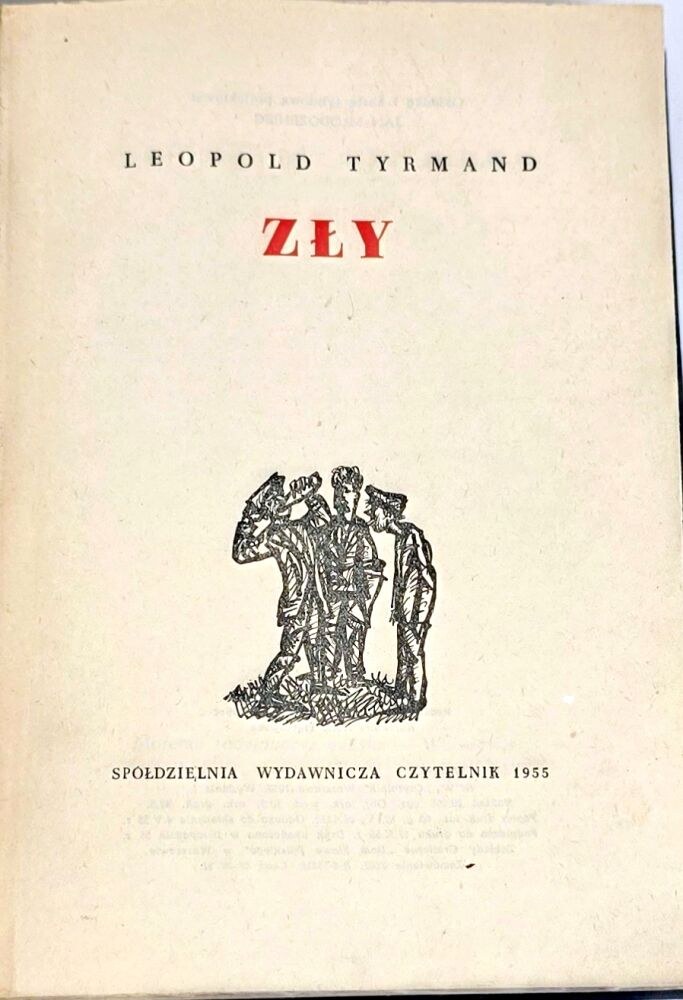
Leopold TYRMAND
BAD
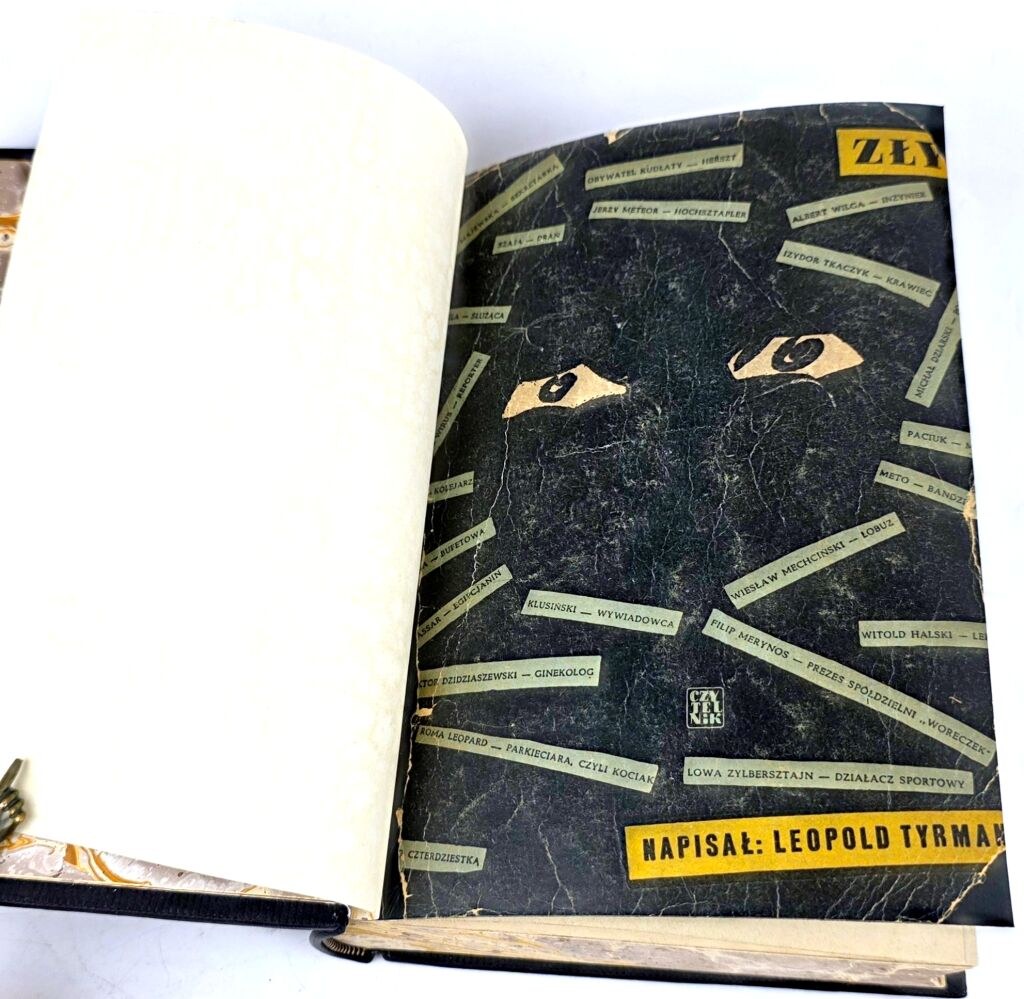
The cover and title page were designed by Jan Młodożeniec.
Warsaw 1955, Nasza Księgarnia, p. 679, size 15x21 cm
1st ed.
One of the most famous novels of postwar Polish literature and, at the same time, Tyrmand’s most recognizable work. “The Evil One” is a sensational, multi-layered novel set against the backdrop of Warsaw’s reconstruction in the first half of the 1950s, combining elements of a crime novel, a police procedural, a romance, and a social fresco.
The eponymous “Zły”—a mysterious avenger who metes out justice to Warsaw hooligans—quickly becomes a legend of the city. The author paints a vivid panorama of the capital: from ruins and construction sites, through train stations and milk bars, to elegant venues and underworld circles. Dynamic action, numerous plot twists, and vivid characters made the book immensely popular upon its publication.
The novel is not only a suspenseful thriller but also a social portrait of the era—with its tensions, dreams, and everyday life in the reality of People’s Poland. To this day, *Zły* is considered a cult Warsaw novel and one of the most important literary testimonies of that era.
The first edition from 1955 is among the most sought-after collector’s items in postwar Polish literature.
Leopold Tyrmand (1920–1985) —writer, journalist, jazz promoter, and one of the most distinctive figures in Polish literary life during the postwar years. He studied architecture in Paris and, during World War II, spent time in Vilnius, among other places. After the war, he settled in Warsaw, where he worked as a journalist and columnist.
He became famous as the author of the novel *Zły* (1955), which brought him immense popularity, and *Dziennik 1954*—a record of intellectual life under Stalinism. He was also a pioneer and promoter of the jazz movement in Poland.
In 1965, he emigrated from Poland; he eventually settled in the United States, where he continued his work as a journalist and writer. To this day, he remains a symbol of artistic independence and nonconformity in 20th-century Polish culture.
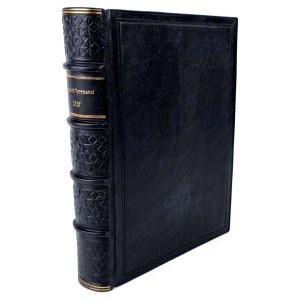
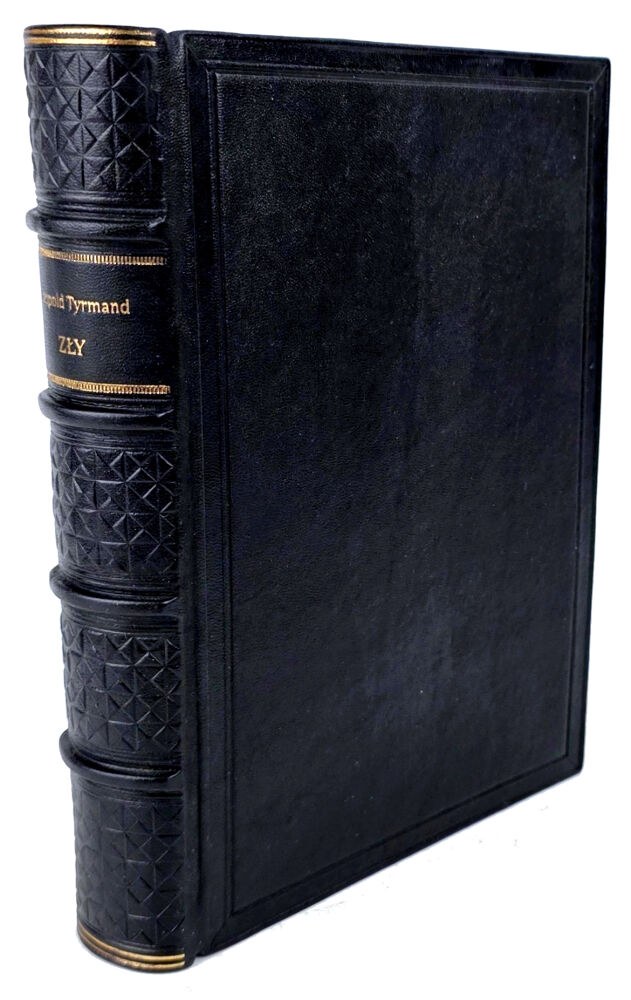
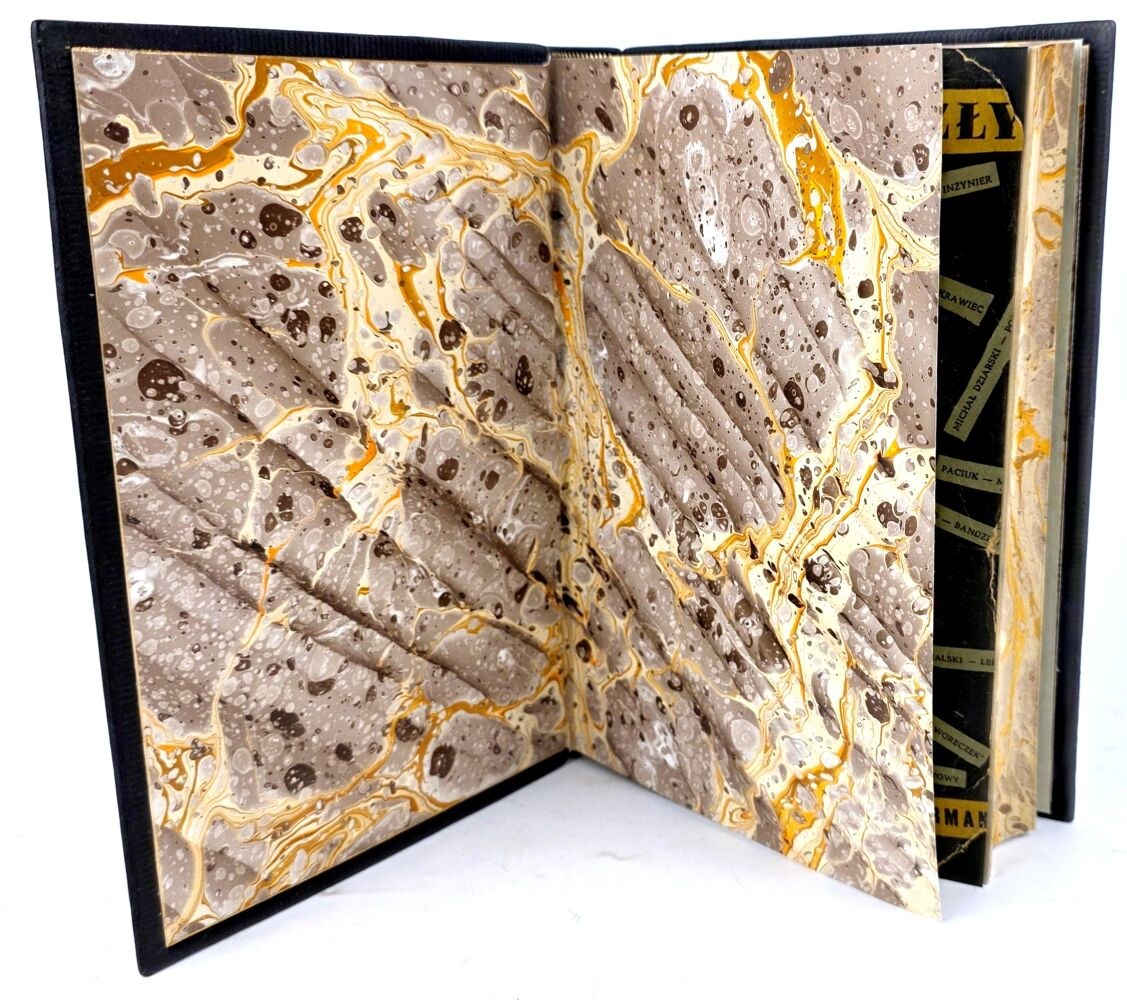
HARDCOVER, FULL CONTEMPORARY LEATHER. THE SPINE FEATURES RAISED STITCHING, DEEP EMBOSSING, AND GILDED INSCRIPTIONS. COVERS EDGED IN GOLD AND FEATURING A BLIND-EMBOSSED BORDER. INTERIORS FINISHED WITH AN INTRICATE BLIND-EMBOSSED PATTERN. ENDGARS OF MARBLED PAPER. MARBLED PAGE EDGES.
THE FRONT BROCHURE COVER IS PRESERVED.
Condition: Very Good-/ creases on the paperback cover. A NICE PIECE