Władysław Alojzy JAHL (1886–1953)
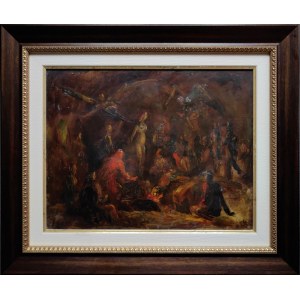
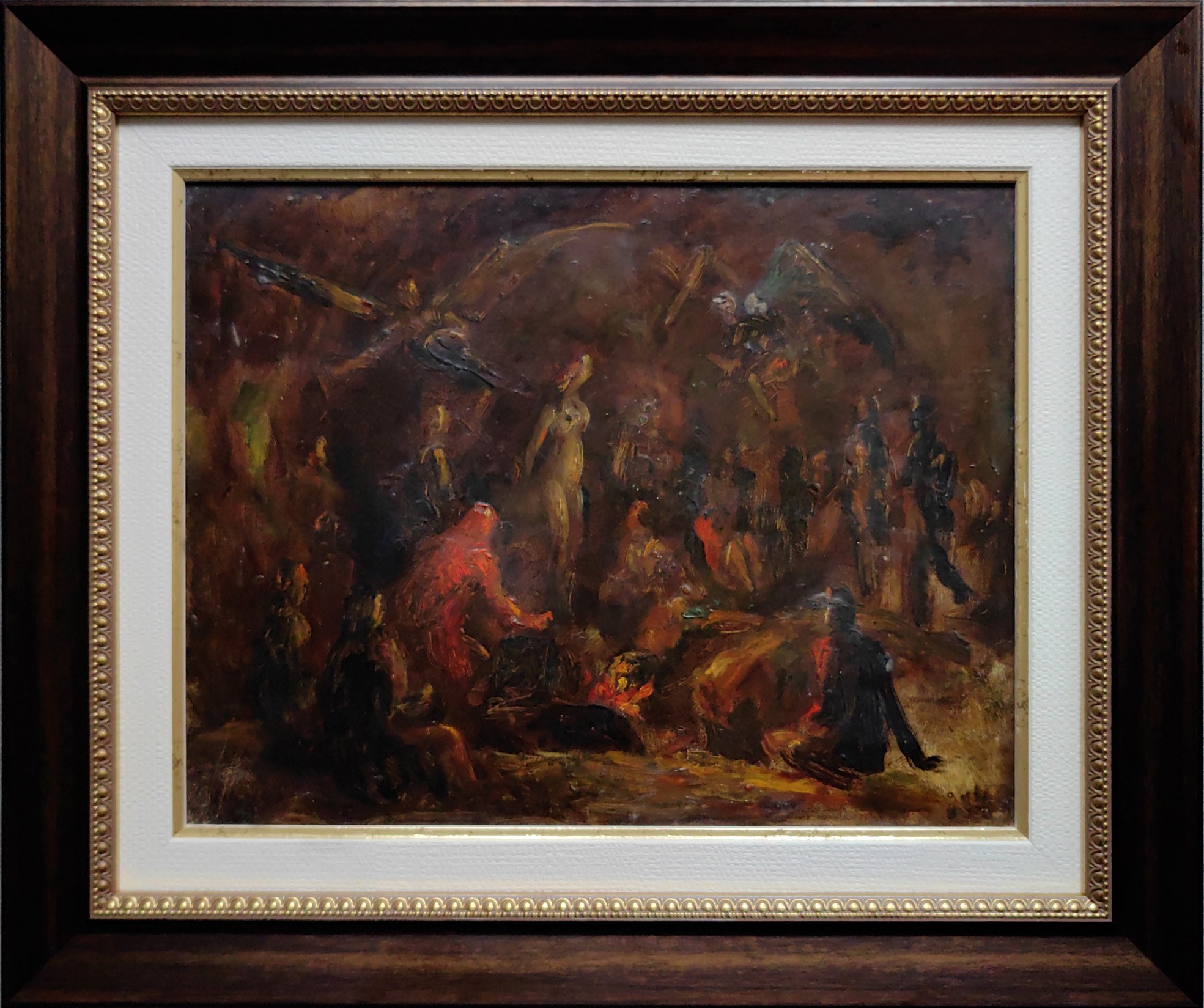
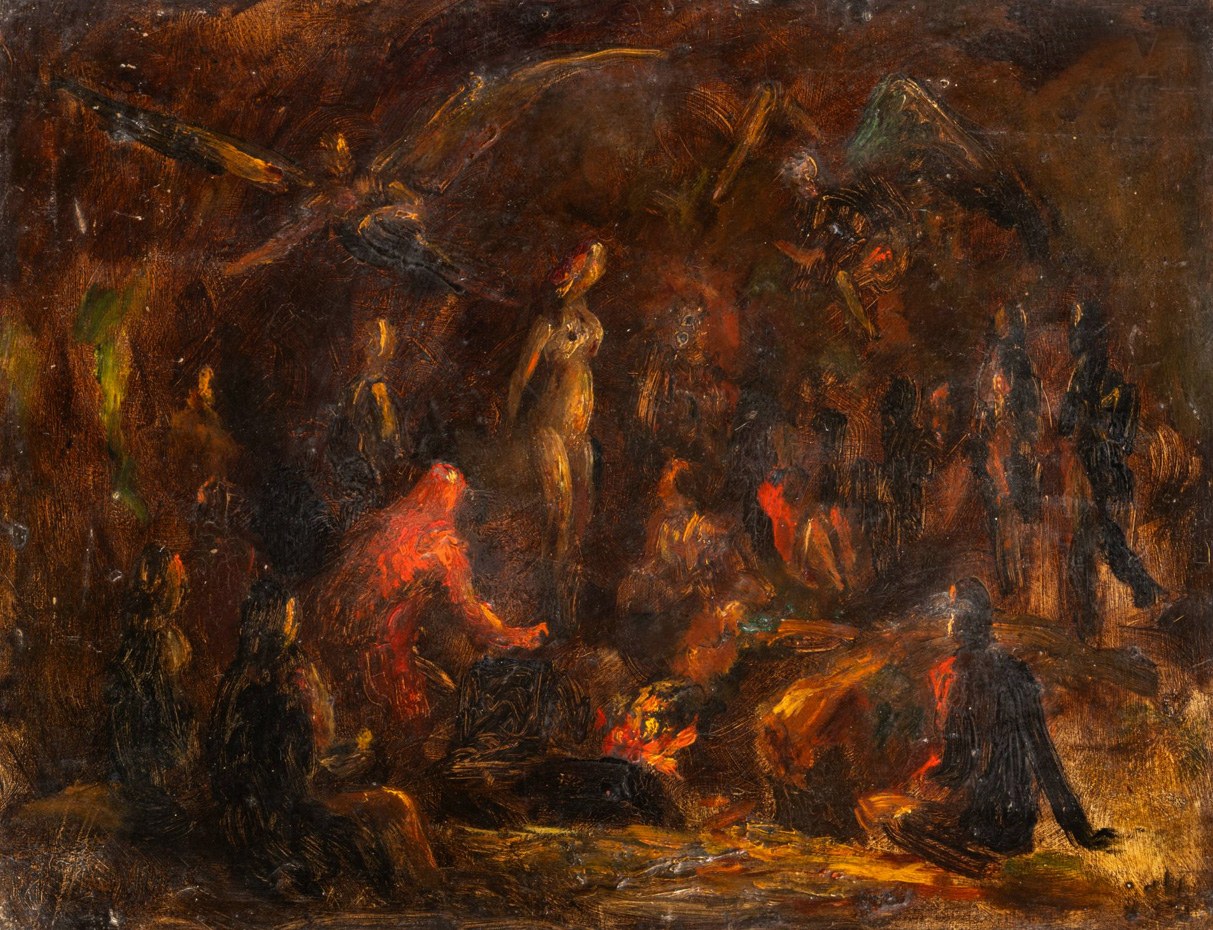
“Sabbath Scene,” 1945
Medium: oil on cardboard
Dimensions: 26 × 34 cm (image only), 40 × 48 cm (with frame)
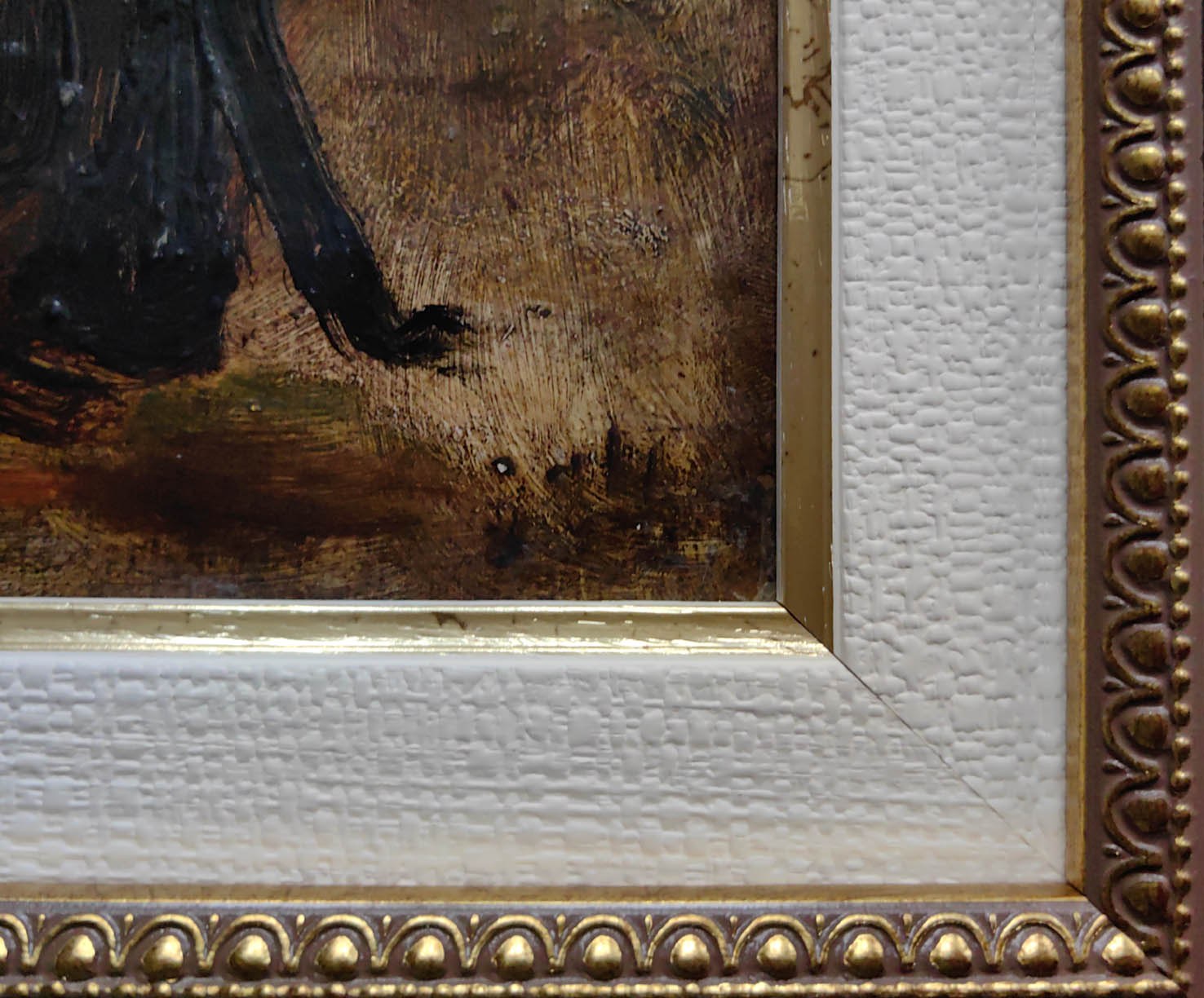
Signature: signed in the lower right corner: Jahl
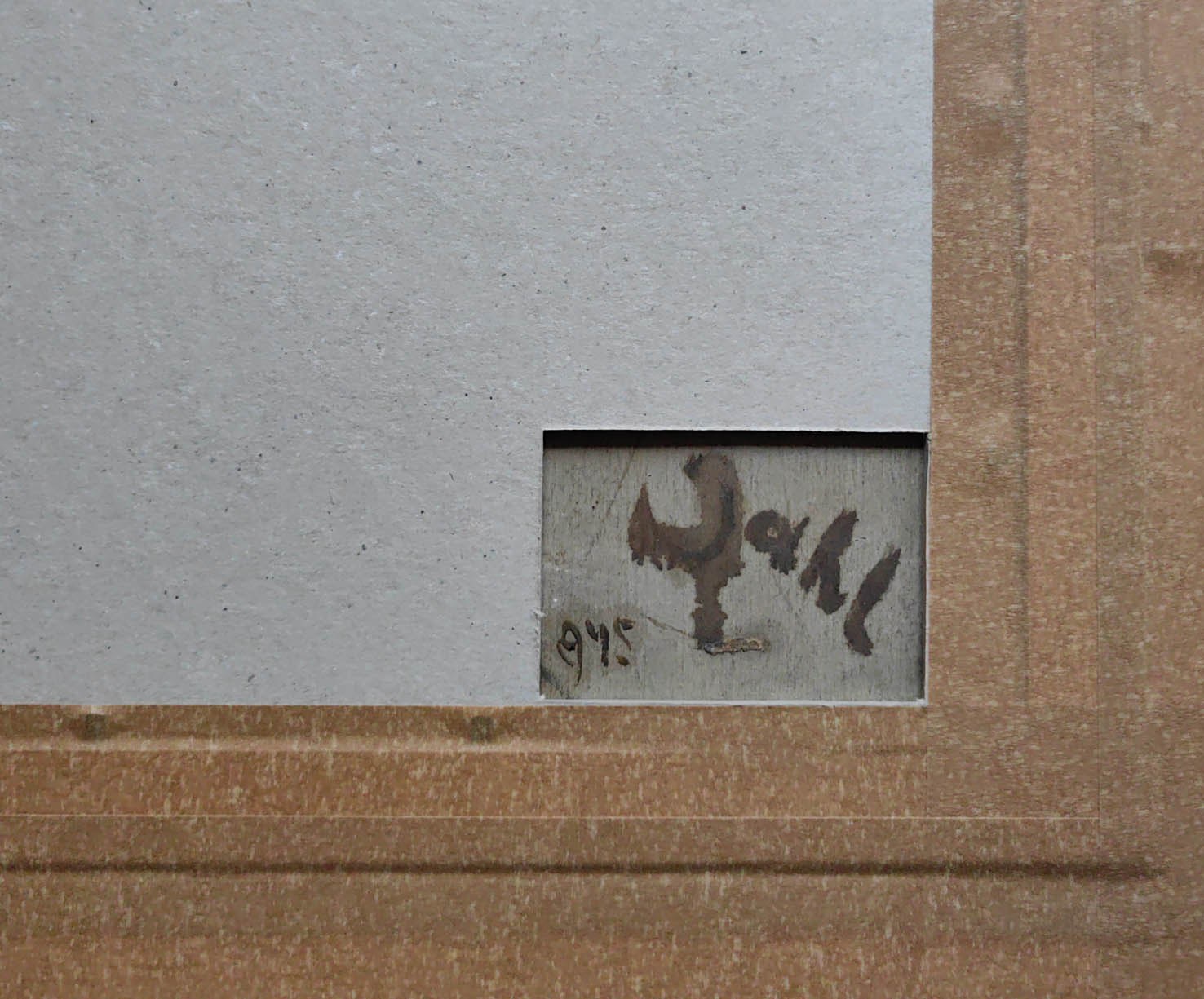
On the reverse: countersigned and dated: Jahl 1945
Condition: good (minor scuffs visible, cracks in areas of impasto)
Władysław Jahl’s dark and expressive “Sabbath Scene” is a unique example of his fascination with the fantastical, fairy-tale, and occult worlds, a theme present in his mature work. The painting depicts a mysterious gathering of figures—with a female figure at the center, a blazing bonfire, winged creatures, and shadows resembling ghosts or participants in a ritual.
The color palette is limited to warm browns, oranges, and reds, which heightens the scene’s eerie and trance-like atmosphere. Traces of expressionist brushstrokes and technical freedom bring this composition closer to symbolic and visionary painting.
The painting was created in 1945, toward the end of the artist’s life, after he had settled in Paris—it stands as a testament to Jahl’s personal, spiritual exploration and vivid artistic imagination.
Władysław Adam Alojzy Jahl (1886–1953)—a Polish painter, printmaker, and set designer associated with the École de Paris.
He studied law at the University of Lviv and art history at the Jagiellonian University. From 1912 to 1914, he studied in Paris at the Académie de la Grande Chaumière; then, during World War I, he left for Spain, where he studied under Józef Pankiewicz beginning in 1917. In 1918, he participated in a painting exhibition in Madrid.
From 1920 onward, he settled permanently in Paris, where he moved in the circles of the École de Paris. He lived, among others, with Moïse Kisling and was closely associated with Mela Muter, with whom he shared a studio after the war. He participated in the most important Parisian salons: the Salon d’Automne, the Salon des Indépendants, and an exhibition at the Musée des Arts décoratifs (1919). He also exhibited in New York and in Poland.
In 1935, he co-founded the Paris Group of Polish Artists. He regularly returned to Spain, where he worked, among other things, as a set designer for the Odeon Theater in Madrid and as an art director for several art magazines. His work shows influences of Ultraism, Expressionism, and Symbolism.
During World War II, he lived in Voiron, France, near Grenoble. During this time, a significant portion of his body of work, left behind in his Paris studio, was lost. After the war, in 1947–1948, he used Mela Muter’s studio.
His paintings combine expression with symbolic reflection, often addressing themes with a spiritual, visionary, or metaphorical dimension.
He died in 1953 in Paris. He was buried in the Montrouge Cemetery.