


oil, canvas; 48 x 58 cm;
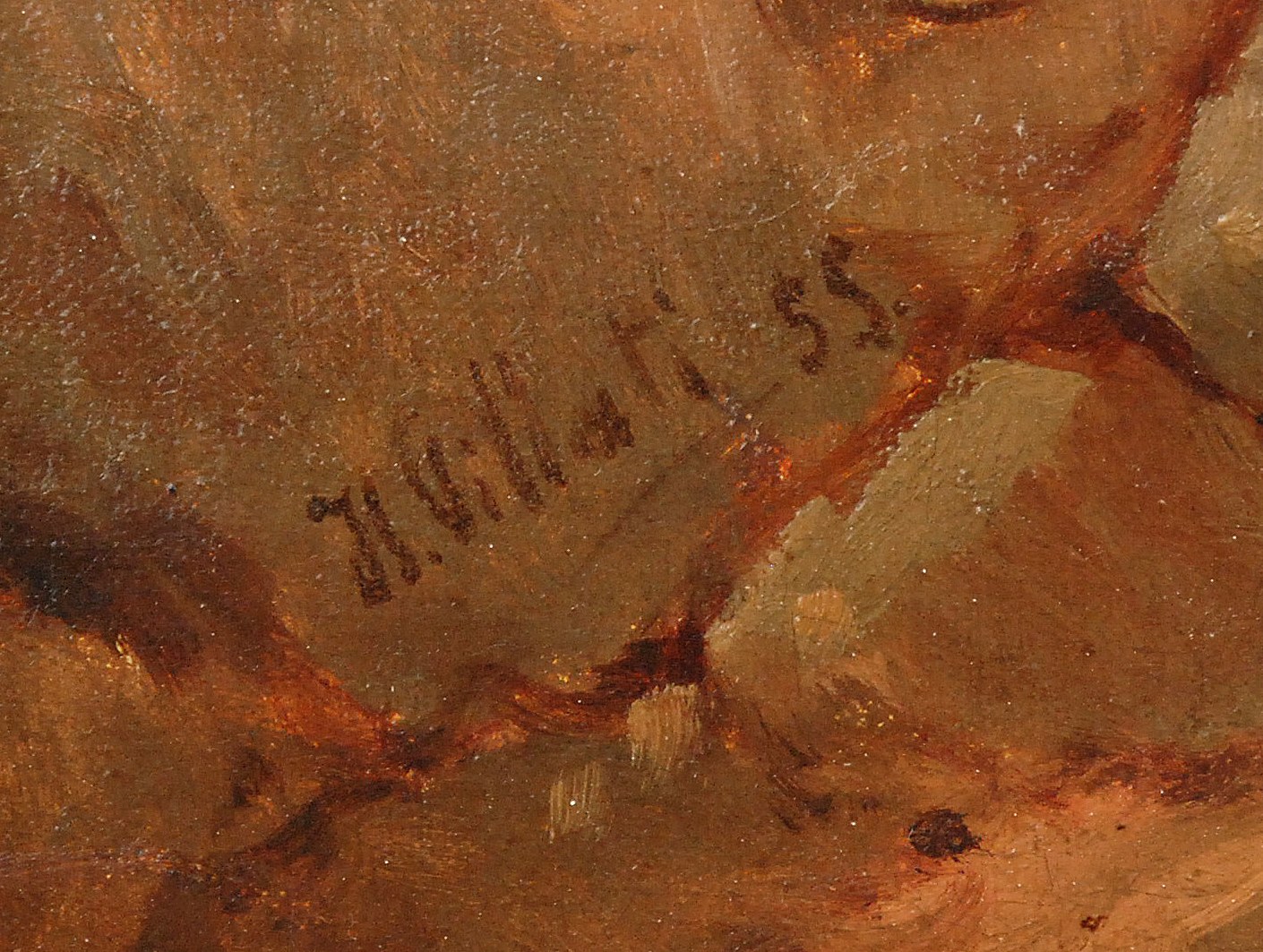
Signed and dated l. d.: H. Pillati 55
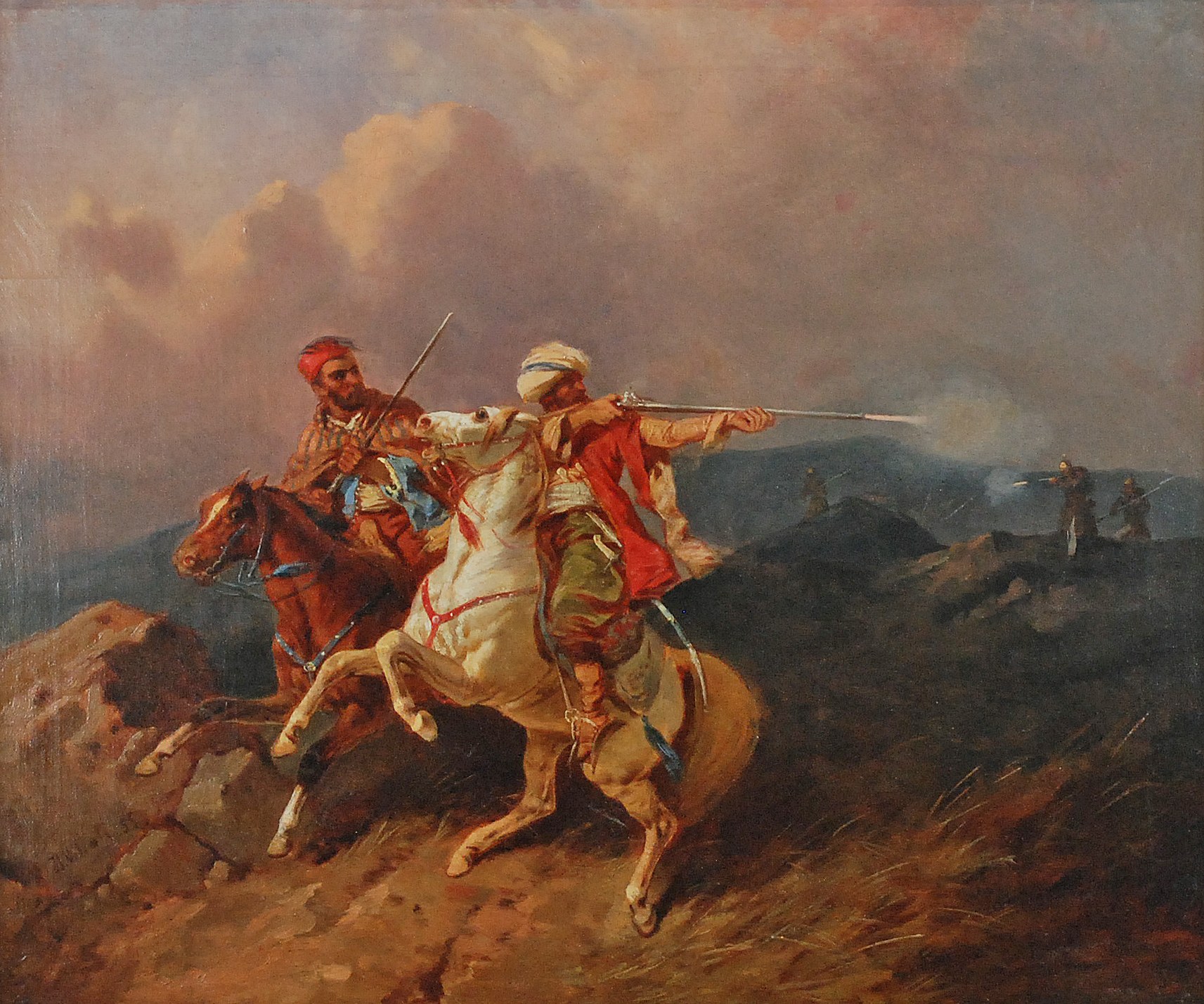
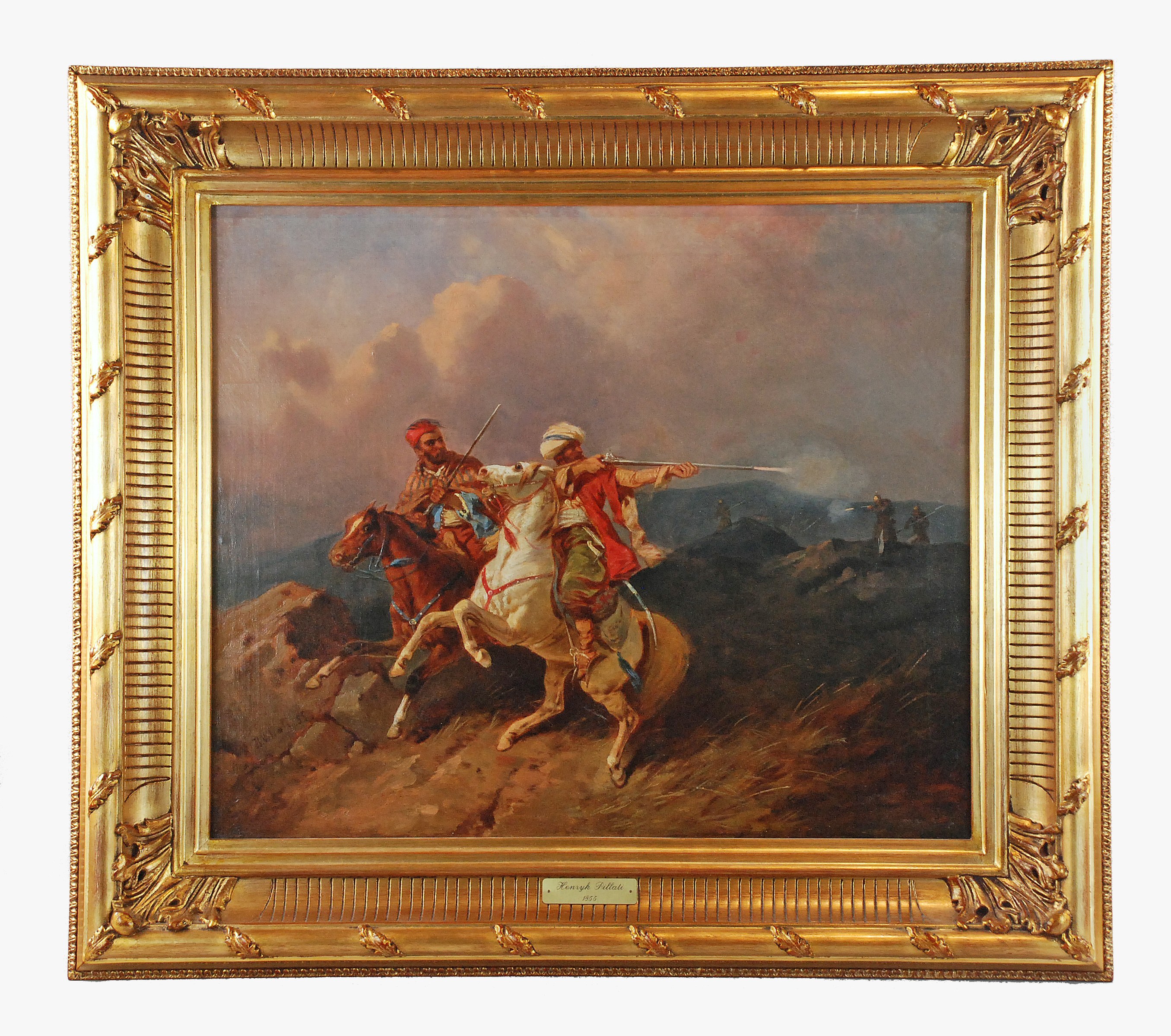
The offered painting is a battle scene set in mountainous terrain with two mounted Turks shown centrally from the left. Closer up on a white horse climbed on its hind legs, a rider dressed in green hayrides, a white shirt, a red cloak, with a turban on his head, turns back firing from a rifle held with both hands at the infantrymen visible in the distance. Beside him on a chestnut-colored horse his companion with a rifle pressed to his chest pointing his gaze toward the attackers.
Visible in the distance, the three infantrymen with rifles with bayonets holstered are dressed in military uniforms. One of the soldiers, advancing forward has just fired a shot at the horsemen. In the distance behind the stony, uneven terrain, in places covered with grass, distant mountains shrouded in a bluish mist are visible. The sky is pale pinkish blue, covered with billowing clouds on the left, overcast on the right in the distance.
Henryk Pillati is a talented creator of battle scenes and ro dza jo wych, highly regarded during his lifetime, one of the most popular artists not only in the capital center - he became one of the leading figures in Polish art of the pre-realism era. The painter, draughtsman and illustrator was a strong personality in the colorful life of Warsaw around the middle of the 19th century.
The painting, created in 1855, refers to the then ongoing Crimean War (1853-1856). The European community was influenced by it, which was reflected in the works of many artists. In Pillati's obra, we have a romanticized depiction of an episode from that war. Here the Turkish horsemen - shown with vigorous, chic prowess - were attacked by Austrian infantry. The pathos of the mounted warriors was contrasted with the onslaught of the soldiers' featureless indyvidualism. In addition to the three infantrymen, shown in fuller form above the running men, the glittering bayonets on the rifles of the advancing troop obscured by the rocks are visible in the distance.
The offered painting is distinguished by the compactness of its composition. At its center is an exquisitely formed group of horsemen. Their poise and prowess are juxtaposed here with the dynamically captured horses. Only in their eyes is the horror of the situation painted. The enemy emerges from the dark part of the picture, follows consistently in the attack. What also stands out in the painting is the magnificent drawing of the aforementioned Arabian horses, which equals in level to the best works of prominent animalists of the 19th century.










Laatst bekeken
Log in om de kavellijst in te zien
Favorieten
Log in om de kavellijst in te zien