


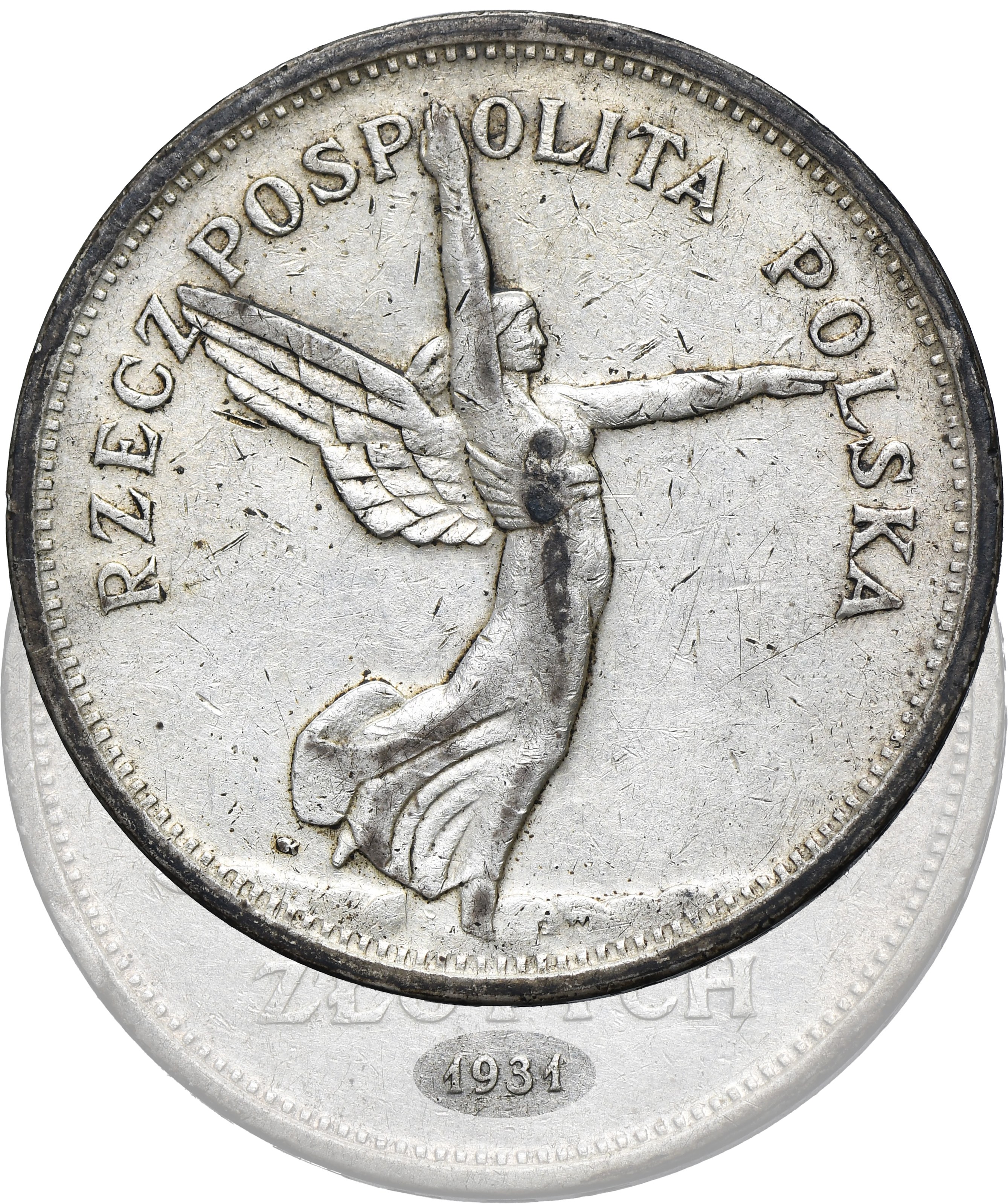
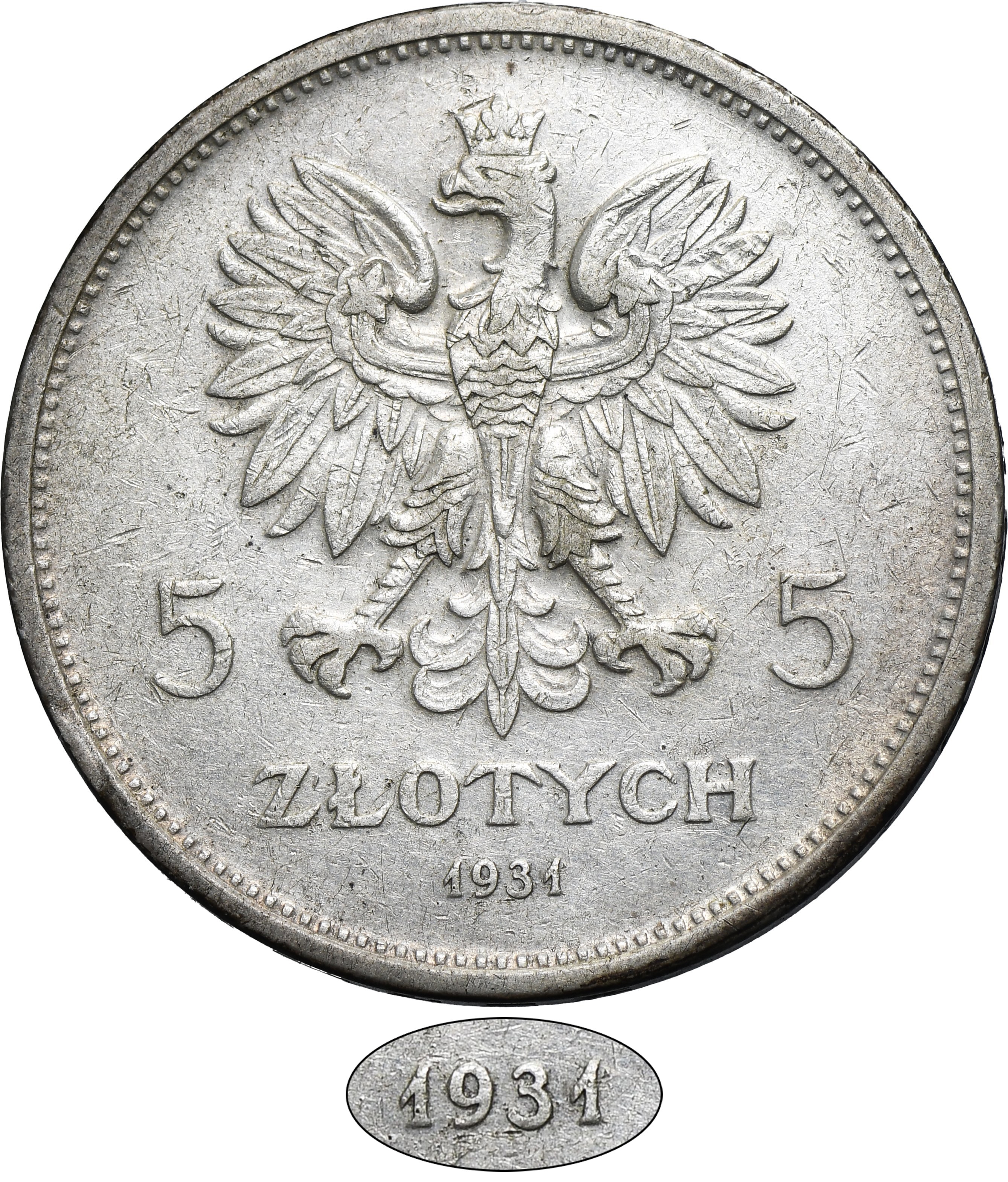
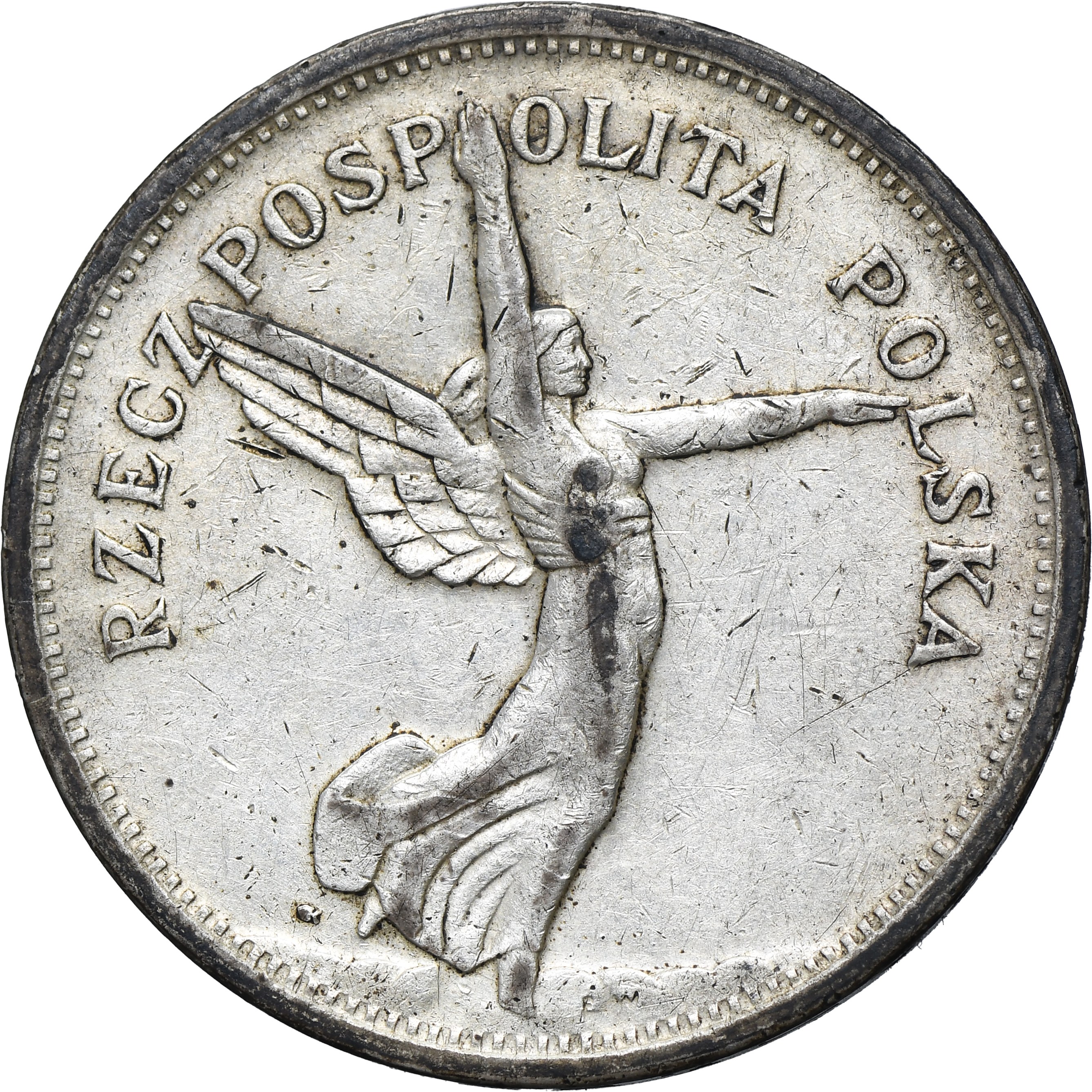
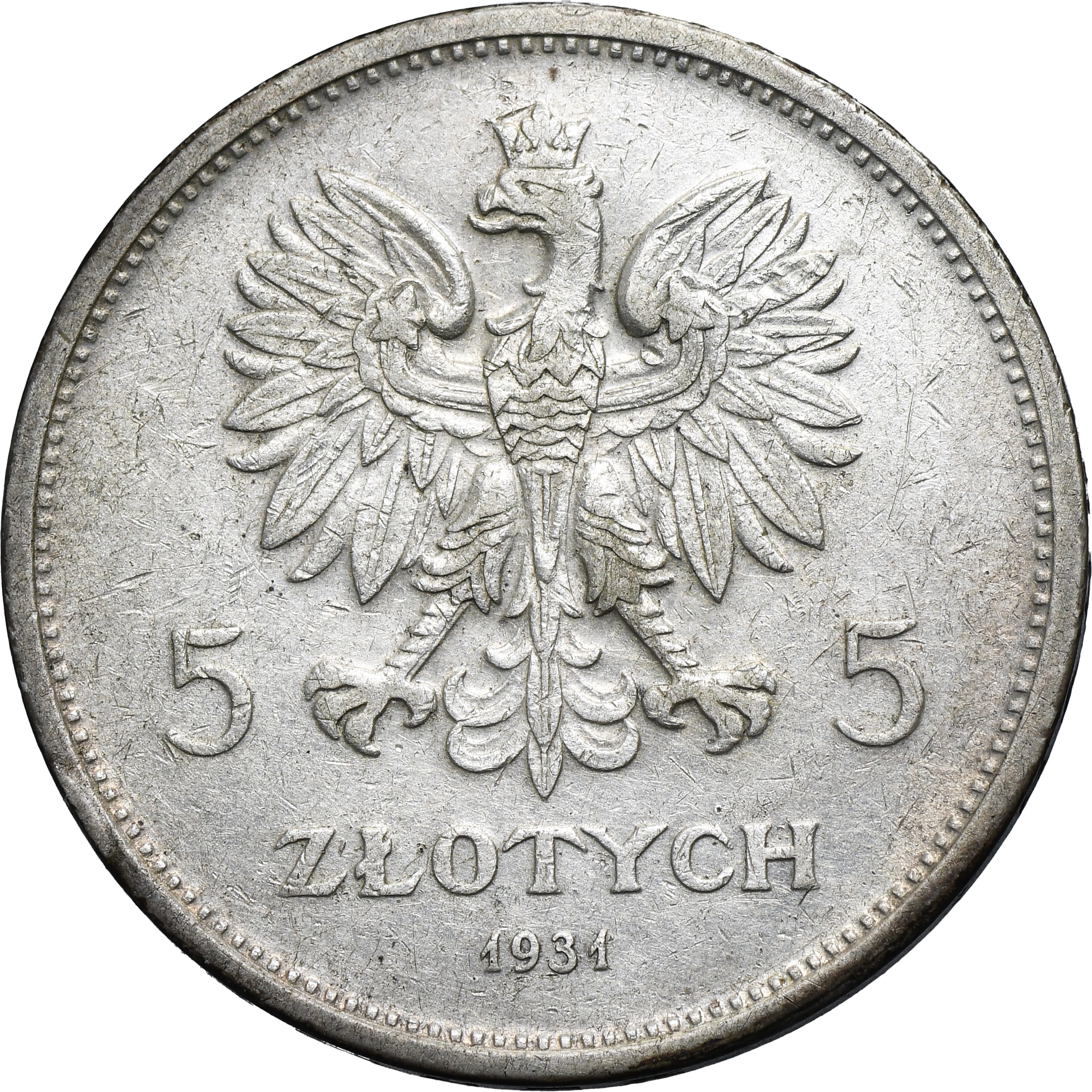
A rare and sought-after vintage.
One of the most difficult coins of the Second Republic.
Variant with a 13 mm gap between the LEX SALUS.
Fragments of mint freshness.
Jerzy Chalupki, in his "Specialized Catalogue of Polish Coins of the 20th and 21st Centuries," writes about the Nike five-dollar coins as follows: "The order of the Ministry of Treasury amounted to 28 million pieces of five-dollar coins, which put the mint in front of an extremely difficult task. In the initial period, the mint was not able to make a sufficient number of disks on its own, much less finished coins. By trial and error, it was determined that the most appropriate sequence of disc production stages was as follows: cutting discs from unbleached sheet metal, annealing, bleaching, surrounding. However, it turned out that the discs prepared in this way are dull and the silver from their surface sticks to the stamps during beating. The problem was solved by making automatic disc polishing machines (one was donated to the mint in Brussels).
Nike, is the first mass-minted coin of the Second Republic with an inscription on the rim. The inscription "SALUS REIPUBLICAE SUPREMA LEX" - the welfare of the Republic is the supreme law, was intended to justify the recent May Coup. Initially, the mint pressed the inscription on a machine in which a disc under high pressure was rolled over a flat plate with convex letters. The machine was too inefficient, so a new, more efficient machine was developed, in which the inscription plate was shaped like a disc. On some coins, distinctive "waves" can be seen on the rim. Where the lettering was imprinted deep into the disc on the rim, its surface became convex and better accepted the drawing of the stamp (in this case, the edge of the rim).
On Nike five-dollar coins, one can see different variants of the inscription on the rim.
The basic, most common two are
I - the gap between LEX and SALUS is 10 millimeters,
II - the gap between LEX and SALUS is 18 millimeters.
There are also coins on which the gap is 8 or 13 millimeters. Variant I is found on Nikes minted in both Warsaw and Brussels. This confirms the information that both here and there discs were used from a single source - from England."











